Titan II, Southwest Face
Greenland, South Greenland, Kangikitsoq Fjord
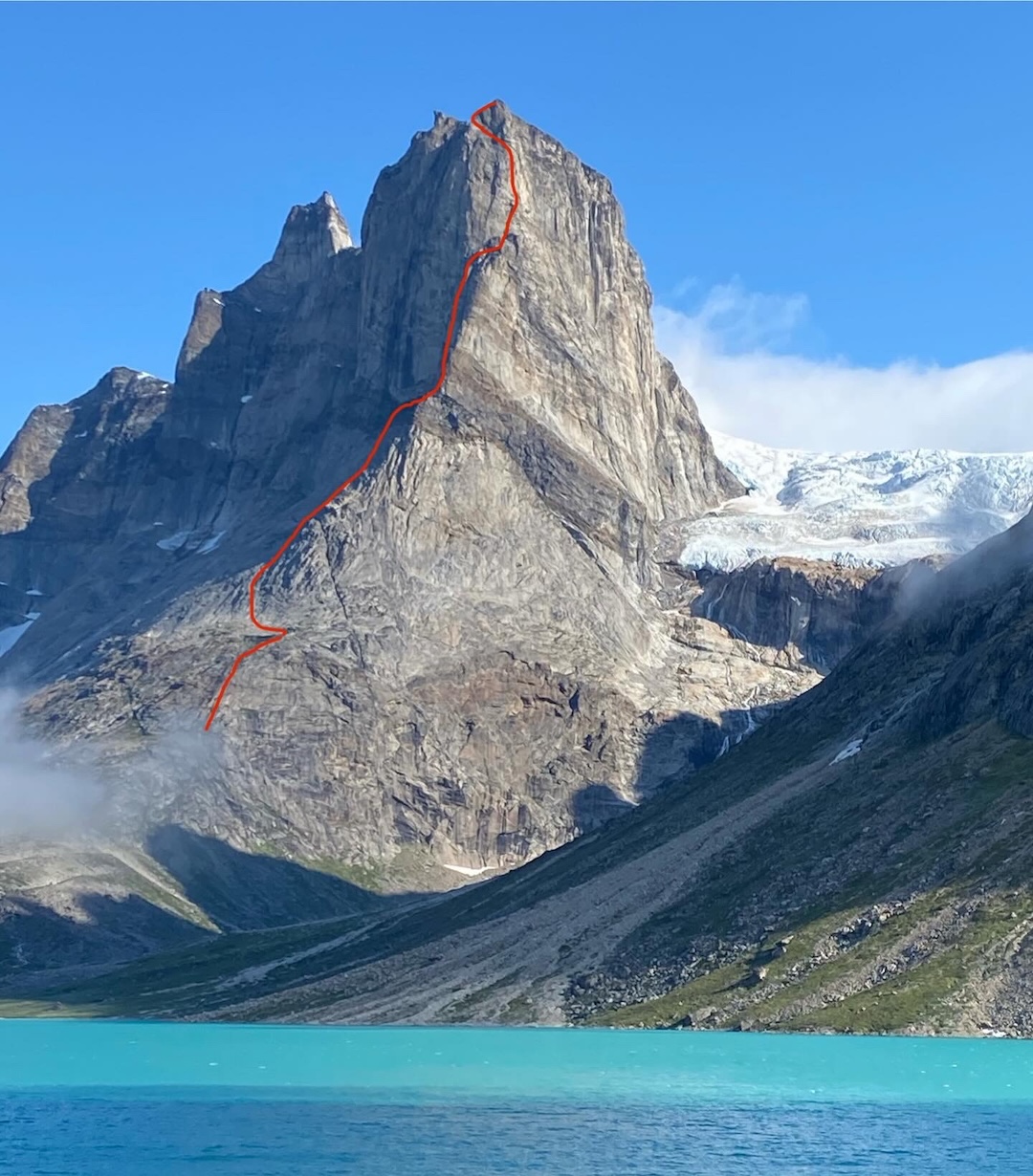
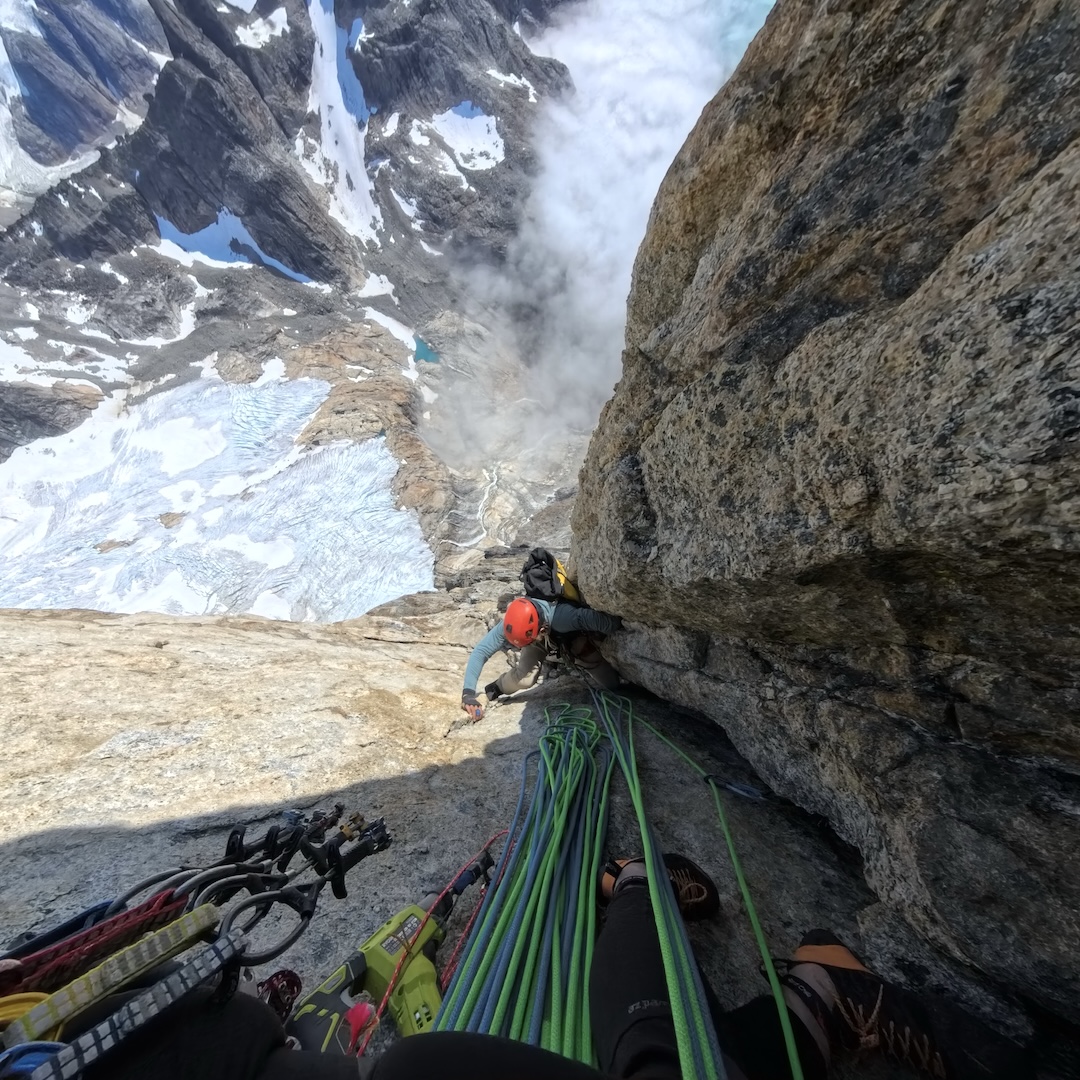
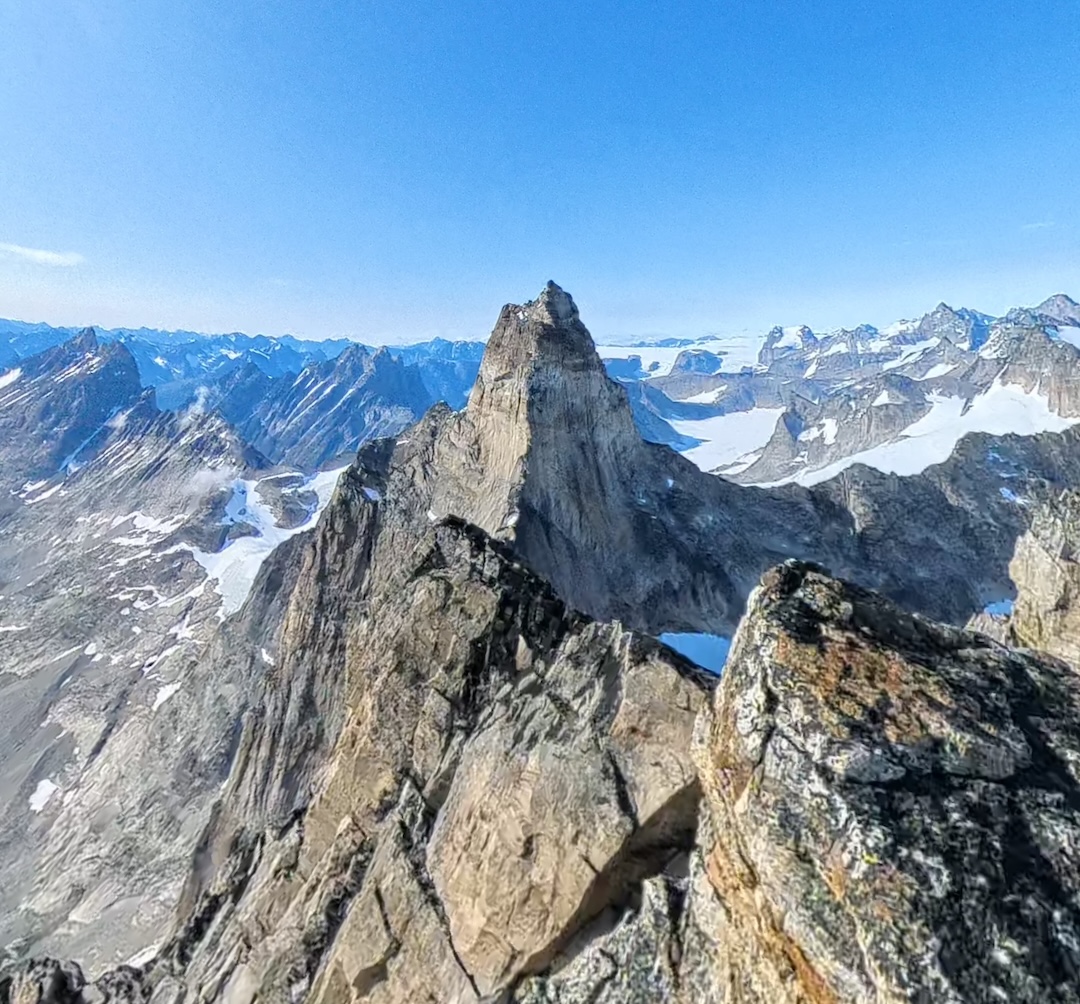
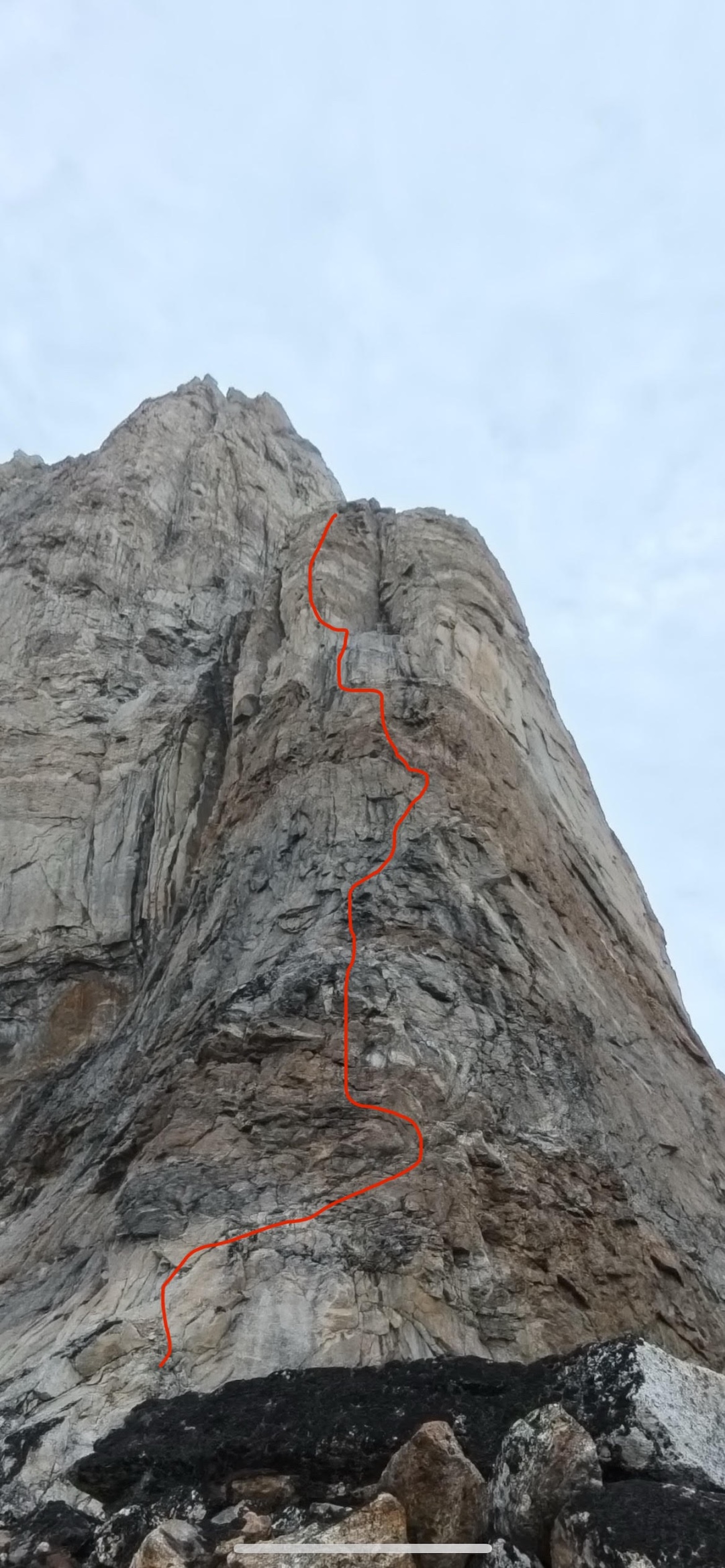
In July 2025, we—Luca Rosales and Marco Dattolo, both of Grenoble, France—established Rafale (1,200m, 7a max, 6b sustained) on the southwest face of Titan II (1,736m, 60.422119, -44.325757). This formation rises in the Tupaasat Valley, which extends north from the head of Kangikitsoq Fjord. Our line marks the first ascent of the wall and possibly the mountain.
The idea was born after reading a 2006 AAJ report describing Titan I and Titan II, two elegant granite towers. The report described the first ascent of the southwest pillar of Titan I (1,811m) by Dutch climbers Roland Bekendam and Martin Fickweiler, in July 2005. Bekendam reported that Titan I, the peak they climbed, may have been summited by its glaciated north side. [It was climbed in 1956.] However, Titan II is more vertical on its northern facet, and glacier access would be complicated.
Titan II’s clean, vertical southwest face captured our imagination. During the year preceding the expedition, we trained specifically for opening a big-wall route: long hauling sessions with 100-kilogram bags, nights in a portaledge, bolting practice, and mixed free and aid climbing in the Alps. When the time came to climb, we wanted to be ready.
We left Geneva on July 24 and reached Narsarsuaq, Greenland, the following day. After a long boat journey through icy waters, we were dropped deep in Kangikitsoq Fjord. It took us two full days and several carries to move our 140 kilograms of equipment across the eight kilometers from the fjord to our base camp, beside a glacial lake.
During our first night at camp, a violent storm hit, with gusts exceeding 120 kph, shredding our tent and forcing us to seek another solution. Earlier in the day, we had carried our climbing gear—including the portaledge—to the wall but hadn’t set it up yet. So when the storm arrived, we hiked back up, assembled the ledge amid the chaos, and hung it about five meters above the ground. It was an absolute mess: The wind increased to 150 kph and our flysheet leaked. We spent the night soaked—one of the worst bivouacs of our lives.
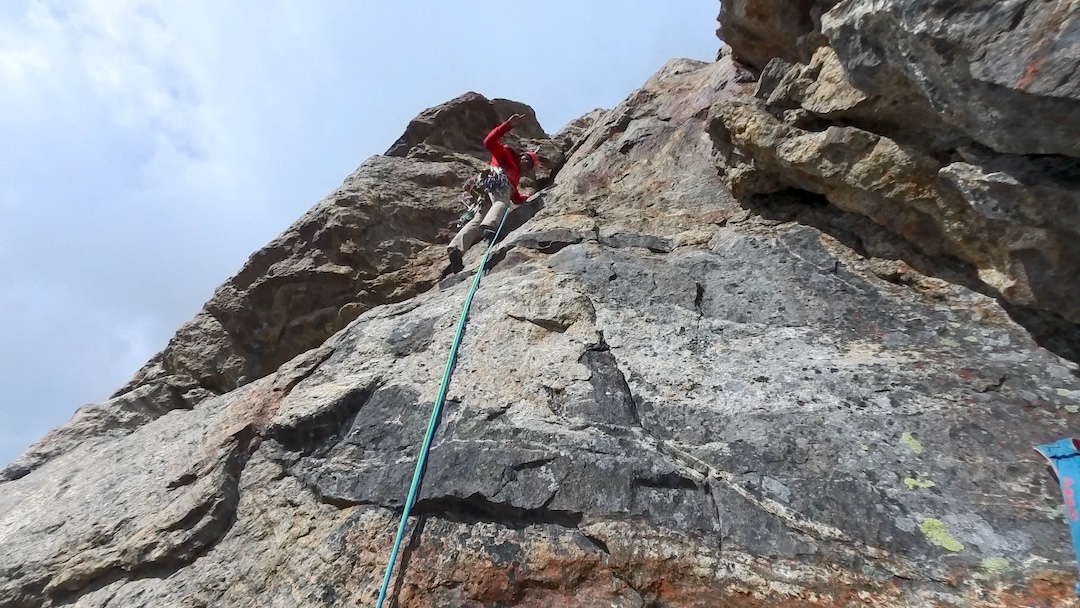
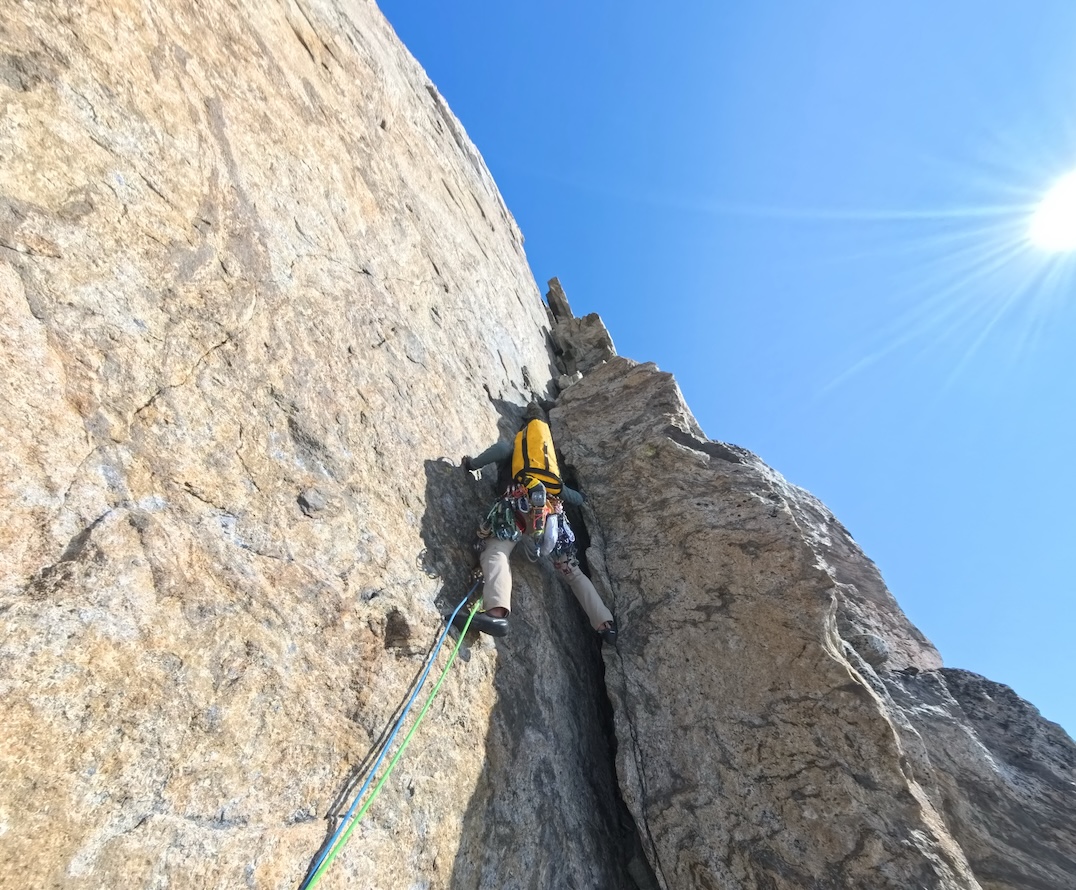
When the forecast via inReach showed a narrow three-day window before another system, we decided to commit. Our chosen line followed a logical and aesthetic path up the southwest face, comprising three main sections: two long slabs (500 meters total) with technical friction climbing; a steep central pillar of perfect granite cracks (400 meters); and a compact headwall leading directly to the summit ridge (300 meters).
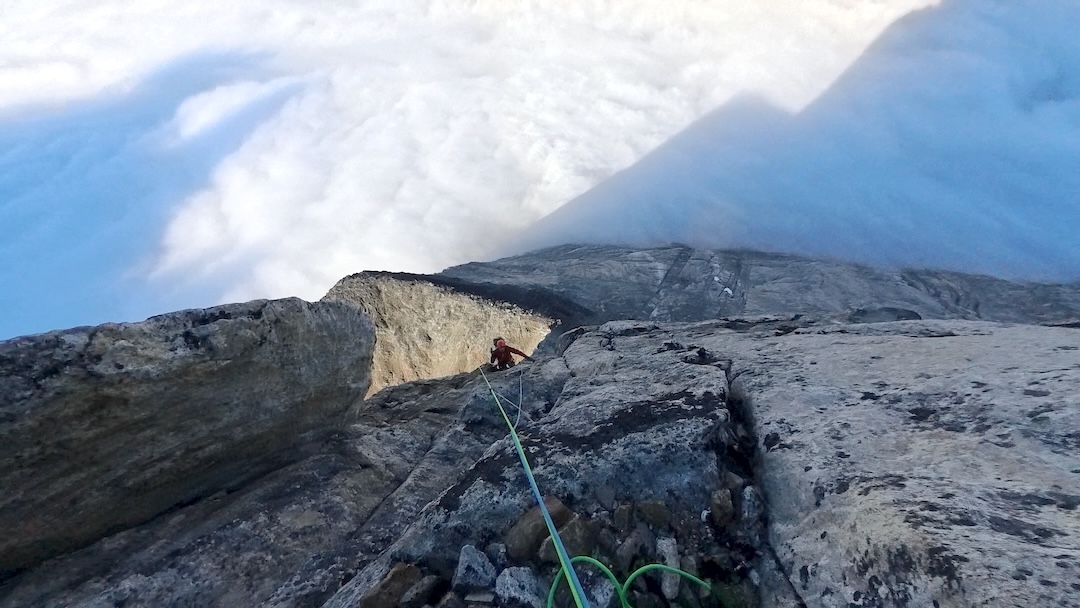
We climbed free, with short aid sections, installing two-bolt stations at the belays and using cams and nuts for lead protection but adding no lead bolts. The climbing was sustained around 6b, with a crux of 7a on pitch 17 (the fourth pitch on the big pillar) that reminded us of the famous dihedral of the Directe Américaine on Les Drus, above Chamonix. The rock quality was exceptional—compact and clean. Over our two and a half days of climbing, we dislodged only one small stone.
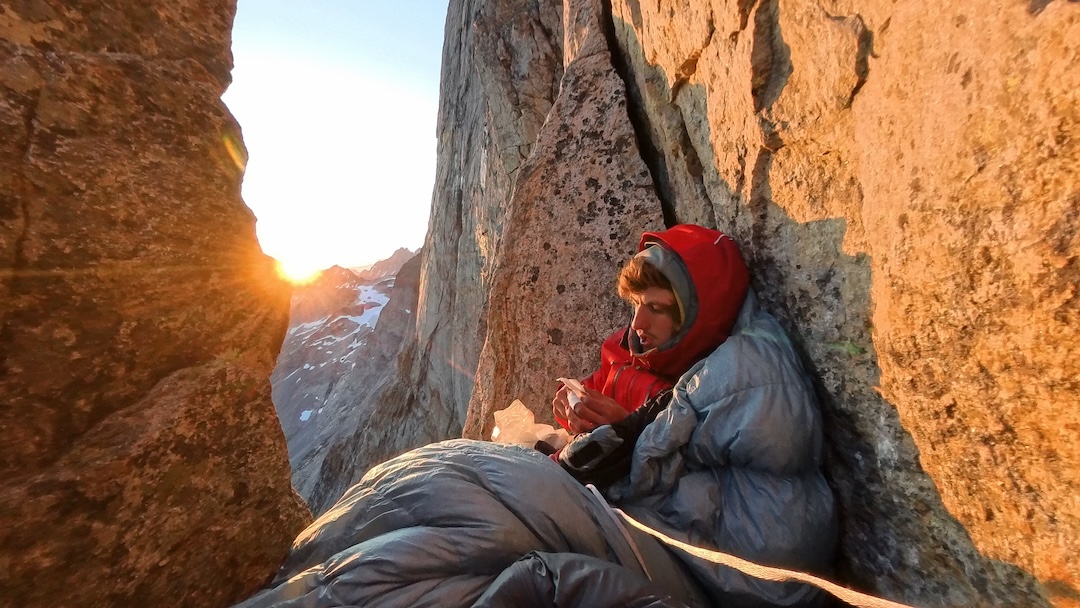
We bivouacked twice: on a comfortable ledge above the lower slabs and on a spectacular but narrow ledge halfway up the central pillar. On July 29, around 6 p.m., we summited Titan II. The feeling was unreal. No cairns, no traces of passage—just endless peaks fading into the Greenland ice cap. We feel we were almost certainly the first to stand there.
We rappelled the route, bolting a few additional stations on the headwall. The descent took the entire night, with a final bivouac at 2 a.m. near the base. The next morning, we reached solid ground as a new storm rolled in from the ocean. We named the route Rafale—French for “gust of wind”—in memory of the storm that nearly ended the climb before it began.
Titan II’s geometry and exposure are unique. Climbing it in such a short weather window demanded full commitment and precision. For us, Rafale represents the essence of modern exploration—light, fast, and uncertain. The rock quality was excellent throughout, and the wall still offers many potential new lines.
—Marco Dattolo and Luca Rosales, France
Media Gallery