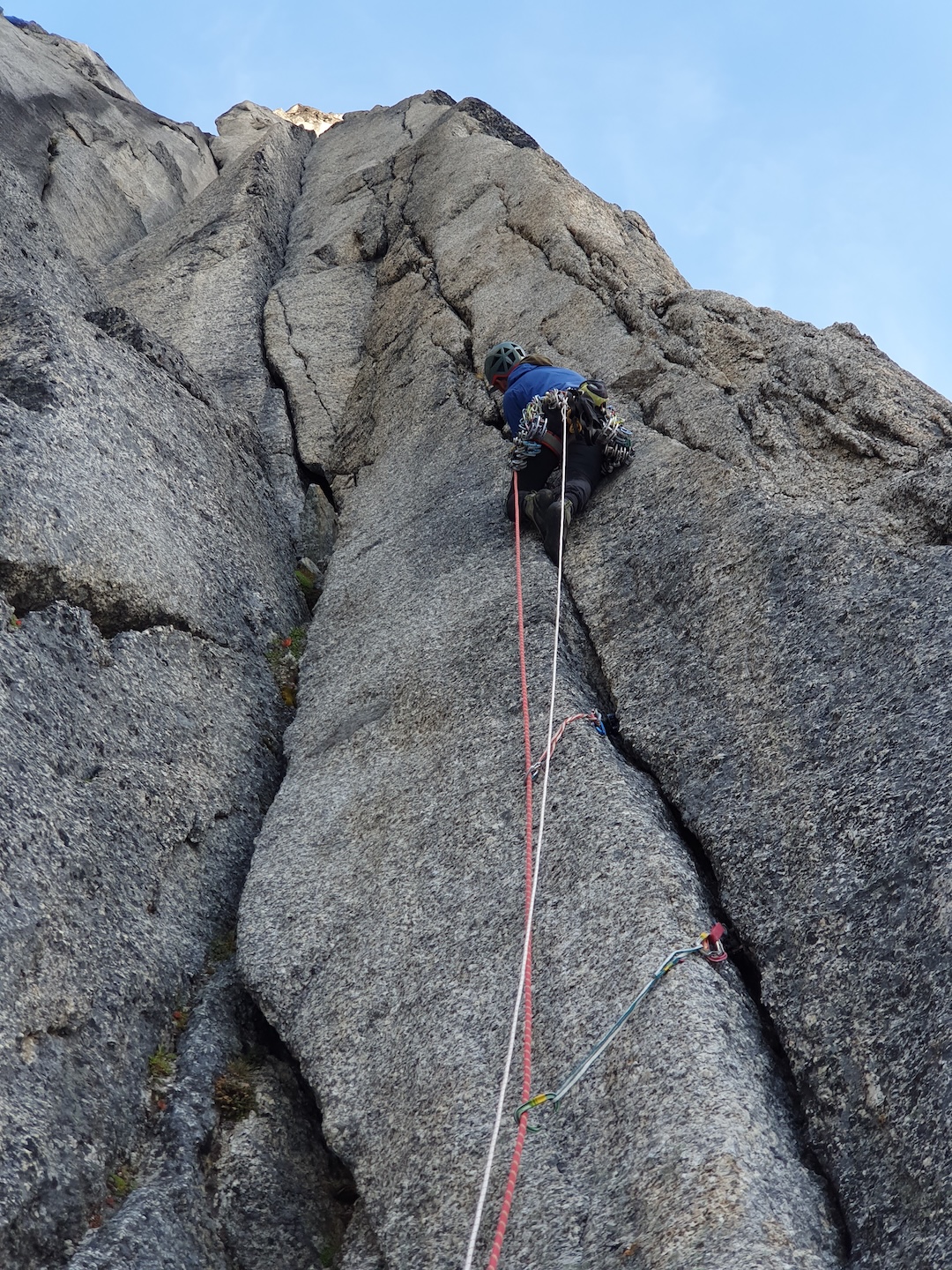

Ulamertorssuaq, Northwest Face, Big Kumura; Honey Buttress, Manuka
Greenland, South Greenland, Tasermiut Fjord
Six members of the New Zealand Alpine Team made a trip to breathtaking Tasermiut Fjord in August and September with the goal of climbing new routes and attempting other faces in the region.
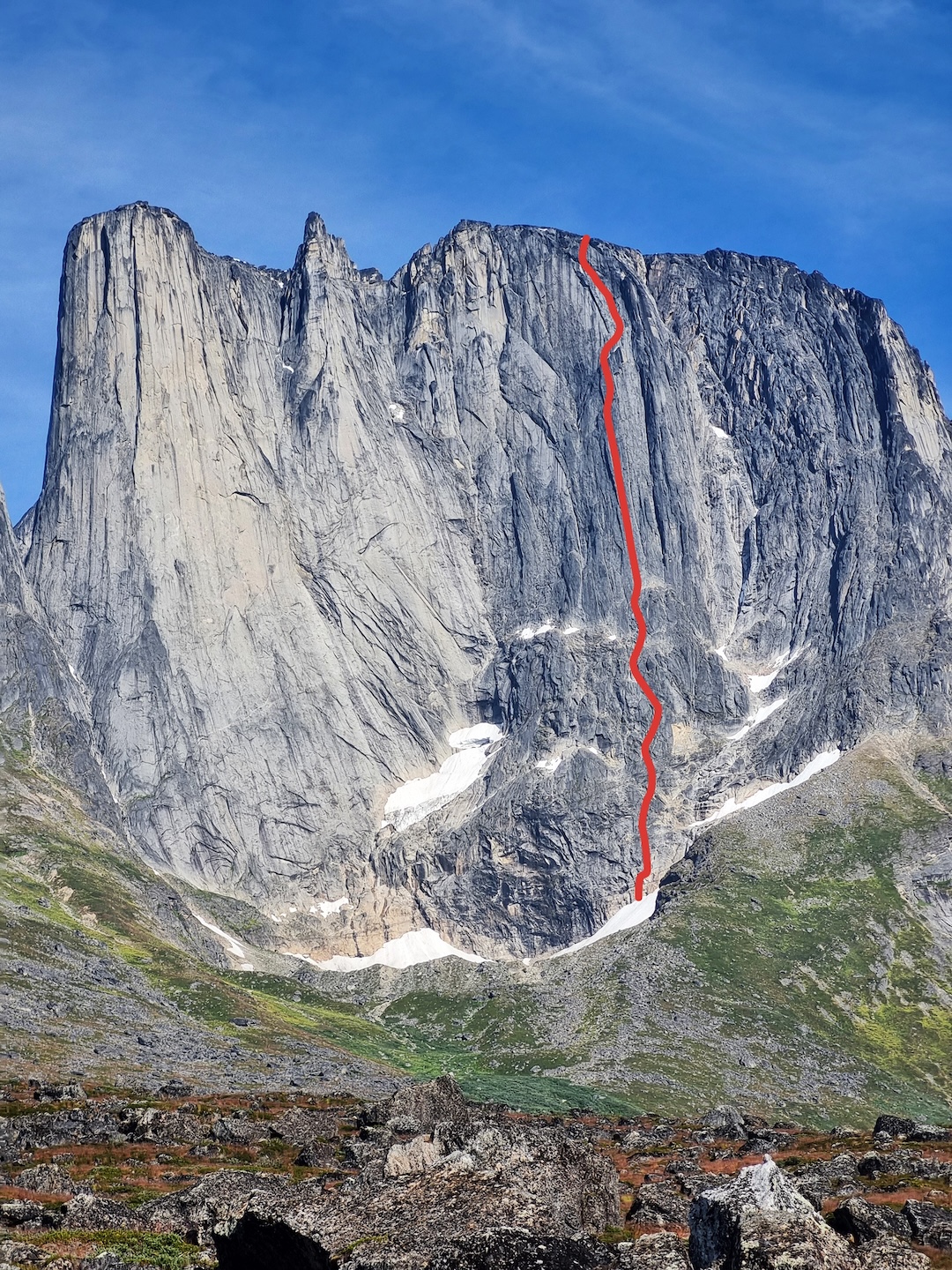
After traveling by boat from Nanortalik to the beach along Tasermiut Fjord on August 8, Mason Gardener, Jacob Kuchler, and Liam Pyott set their sights on Ulamertorssuaq, specifically on the dark northwest face, well to the right of the main tower—this may not have been climbed previously.
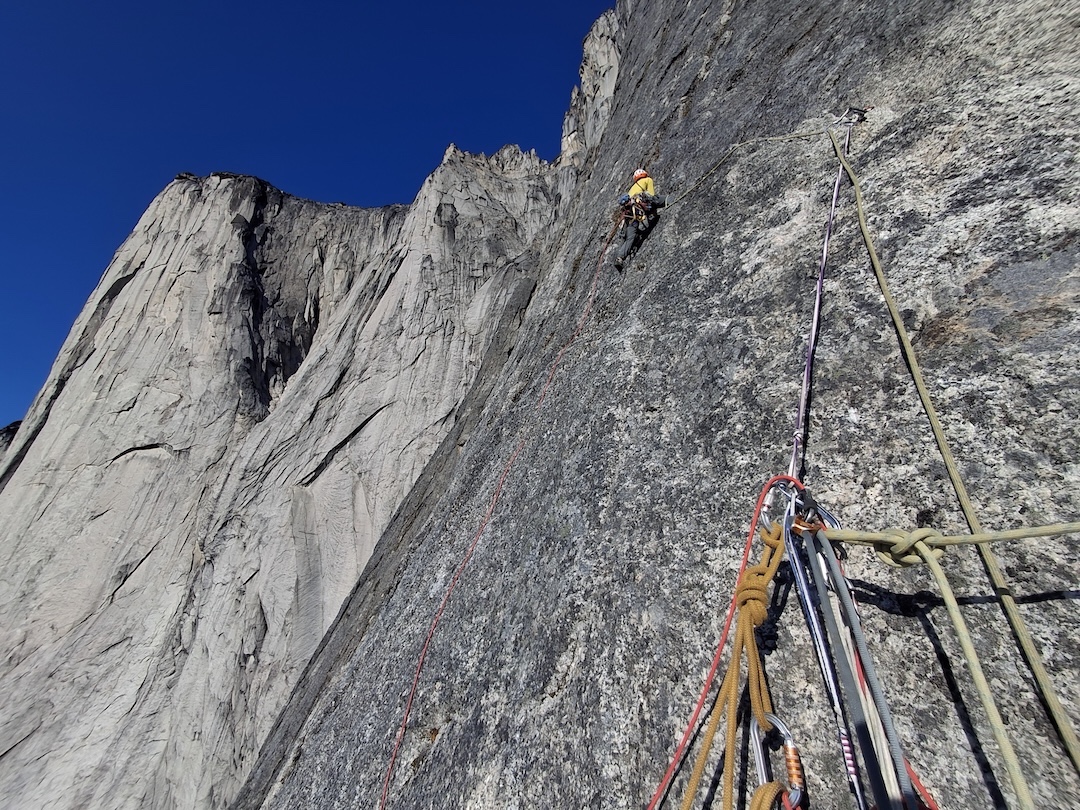
The planned route started up an appealing crack system from near the top of the snow cone beneath the face. Very quickly the rock quality deteriorated into a crumbly mess, inspiring little confidence. Progress was slow on the first day, with the team reaching their camp halfway up the lower buttress at midnight.
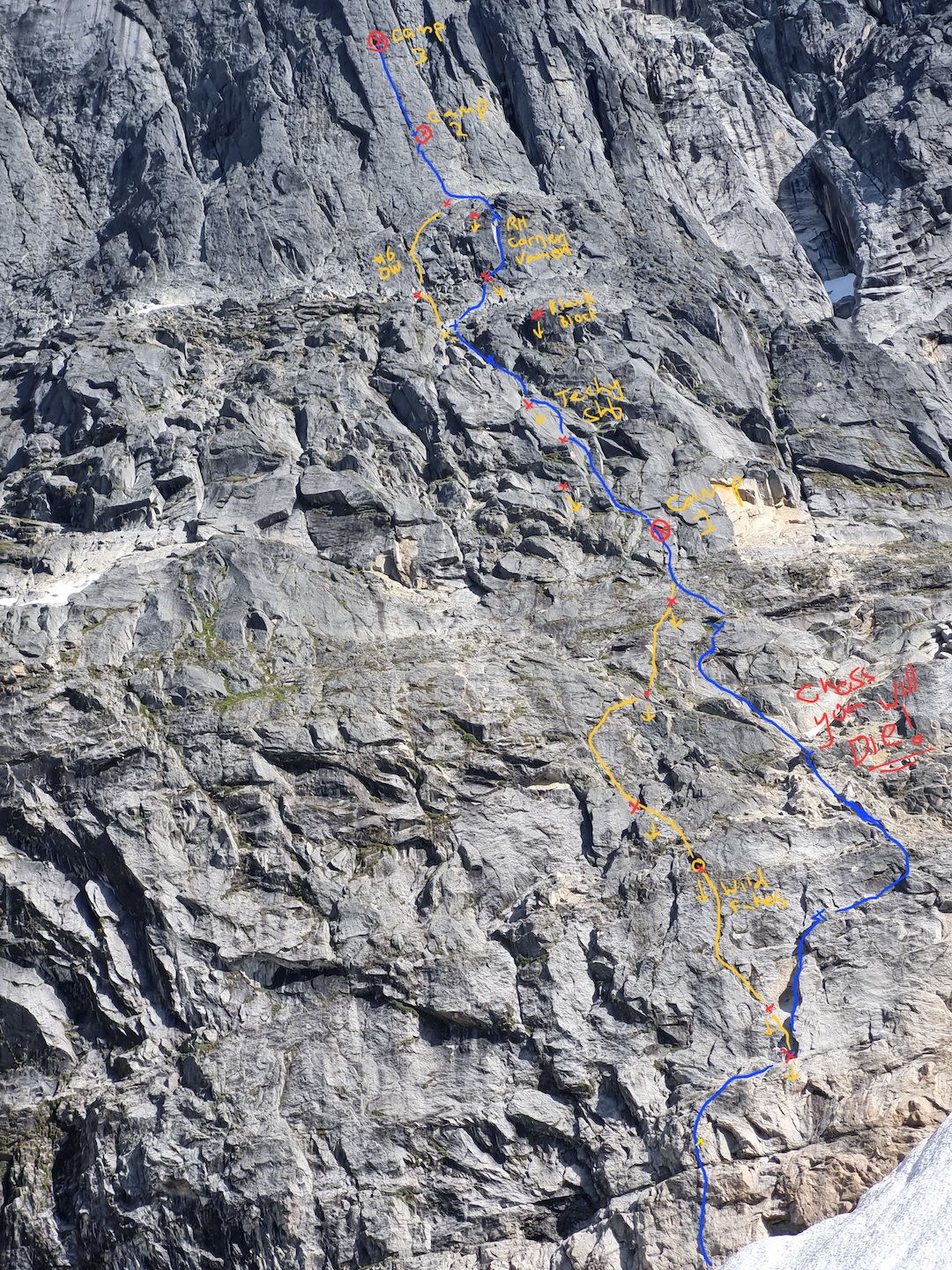
The following day, the team completed the lower buttress, finding a handful of excellent pitches dispersed among choss, and arrived at the base of a prominent pillar on the upper wall, which was split by a seam that can be seen from the ground—this had been the target for the route. Progress was very slow up this seam, with significant excavation of grass and moss. The team finished the day approximately a third of the way up the pillar. On day three, with incoming weather, they bailed from the top of pitch 12. During the descent, they bolted a rappel line to the left of their ascent route on the lower wall.
Two days later, with a good forecast, the team raced back up for a second attempt. This time, they climbed better rock near the rappel line, and they got to their first camp well before dark. (They found some old pitons on the left-hand line but could not determine their origin.) On the upper seam, the trio found excellent climbing now that grass had been removed from the crack. On the third day, with the weather closing in again, they decided to leave their haulbags and try to complete the route in a long day.
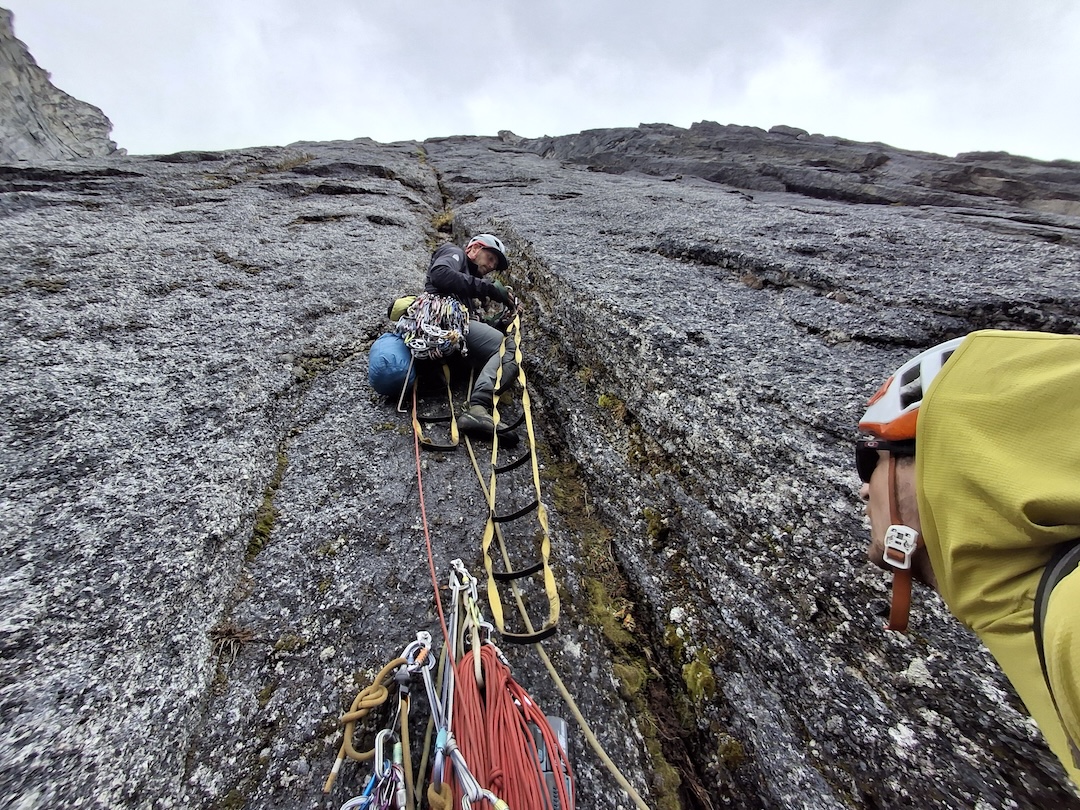
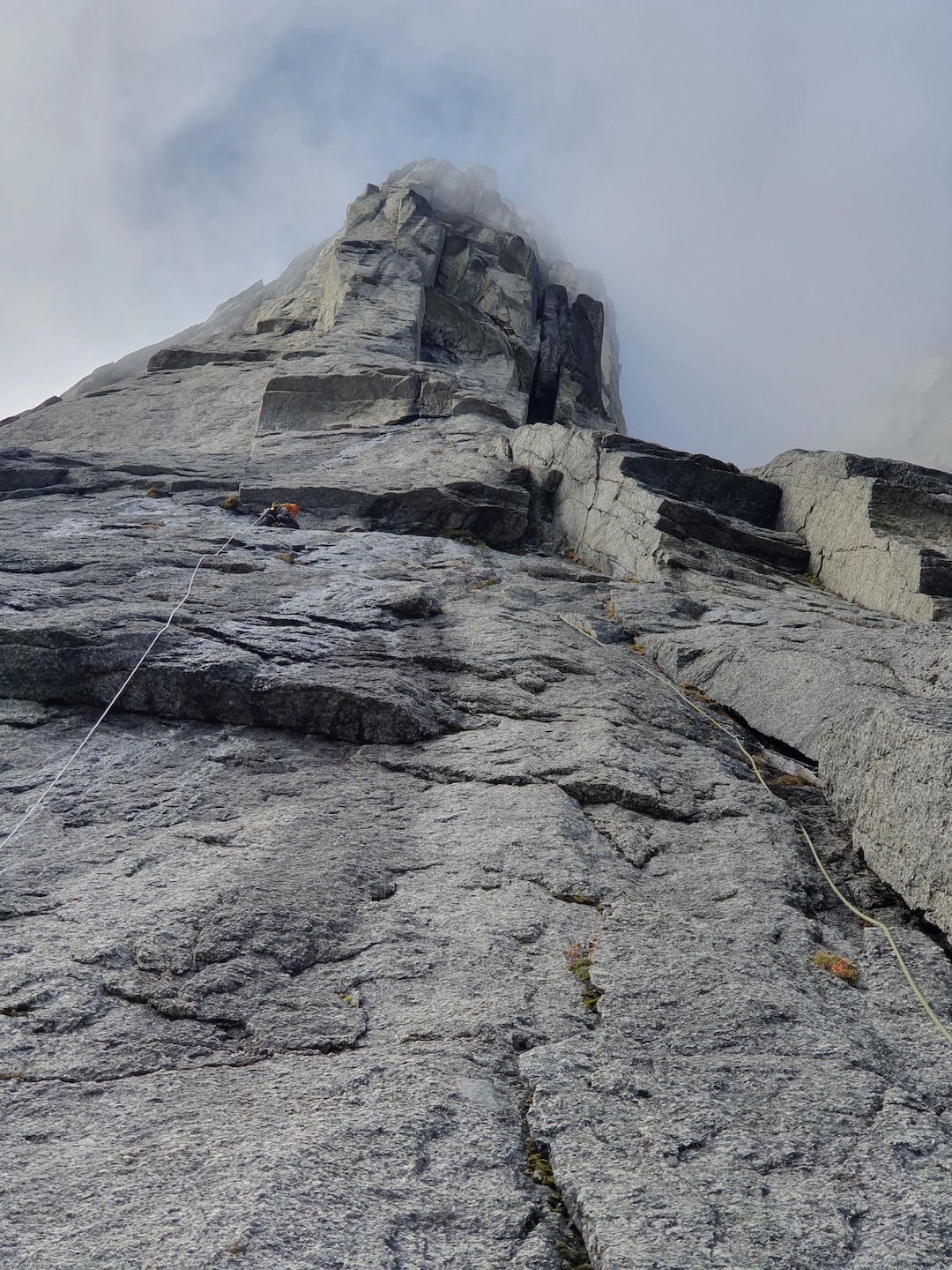
The seam fortunately opened up into a clean fist to offwidth crack, much of it aided on large cams. Near the top of the pillar, the climbers followed a hunch and moved right, around a corner, where a perfect hand crack appeared. Several moderate pitches along chossy shelves and a large, left-leaning slab took them to wet final pitches up a short headwall. They summited at 1:30 a.m. on August 19.
Rapping through the night, they reached the big ledge at the base of the pillar after 28 hours on the go. Barrages of rockfall in the gullies to the left and right didn’t allow them much sleep, and there was definitely a sense of relief when they reached the ground. They called the route Big Kumura (1,300m, ca 29 pitches, 5.10+ C2 R).
Six members of the New Zealand Alpine Team made a trip to breathtaking Tasermiut Fjord in August and September with the goal of climbing new routes and attempting other faces in the region.
After traveling by boat from Nanortalik to the beach along Tasermiut Fjord on August 8, Mason Gardener, Jacob Kuchler, and Liam Pyott set their sights on Ulamertorssuaq, specifically on the dark northwest face, well to the right of the main tower—this may not have been climbed previously.
The planned route started up an appealing crack system from near the top of the snow cone beneath the face. Very quickly the rock quality deteriorated into a crumbly mess, inspiring little confidence. Progress was slow on the first day, with the team reaching their camp halfway up the lower buttress at midnight.
The following day, the team completed the lower buttress, finding a handful of excellent pitches dispersed among choss, and arrived at the base of a prominent pillar on the upper wall, which was split by a seam that can be seen from the ground—this had been the target for the route. Progress was very slow up this seam, with significant excavation of grass and moss. The team finished the day approximately a third of the way up the pillar. On day three, with incoming weather, they bailed from the top of pitch 12. During the descent, they bolted a rappel line to the left of their ascent route on the lower wall.
Two days later, with a good forecast, the team raced back up for a second attempt. This time, they climbed better rock near the rappel line, and they got to their first camp well before dark. (They found some old pitons on the left-hand line but could not determine their origin.) On the upper seam, the trio found excellent climbing now that grass had been removed from the crack. On the third day, with the weather closing in again, they decided to leave their haulbags and try to complete the route in a long day.
The seam fortunately opened up into a clean fist to offwidth crack, much of it aided on large cams. Near the top of the pillar, the climbers followed a hunch and moved right, around a corner, where a perfect hand crack appeared. Several moderate pitches along chossy shelves and a large, left-leaning slab took them to wet final pitches up a short headwall. They summited at 1:30 a.m. on August 19.
Rapping through the night, they reached the big ledge at the base of the pillar after 28 hours on the go. Barrages of rockfall in the gullies to the left and right didn’t allow them much sleep, and there was definitely a sense of relief when they reached the ground. They called the route Big Kumura (1,300m, ca 29 pitches, 5.10+ C2 R).
During this period, Tanja de Wilde, Steve Fortune, and Daniel Joll attempted Moby Dick on the main pillar of Ulamertorssuaq, descending at pitch 22 because of approaching rain. In the next weather window, they switched routes to War and Poetry, which they found to be a better route. They upgraded the first 20 anchors with one new bolt at each station.
Various members of the team also climbed the British Route on Nalumasortoq, climbed Pedo de Placer, with probable variations, to the ridgeline on Nalu, and attempted two lines on the west face of RDVN at the head of the valley, both of which had poor rock.
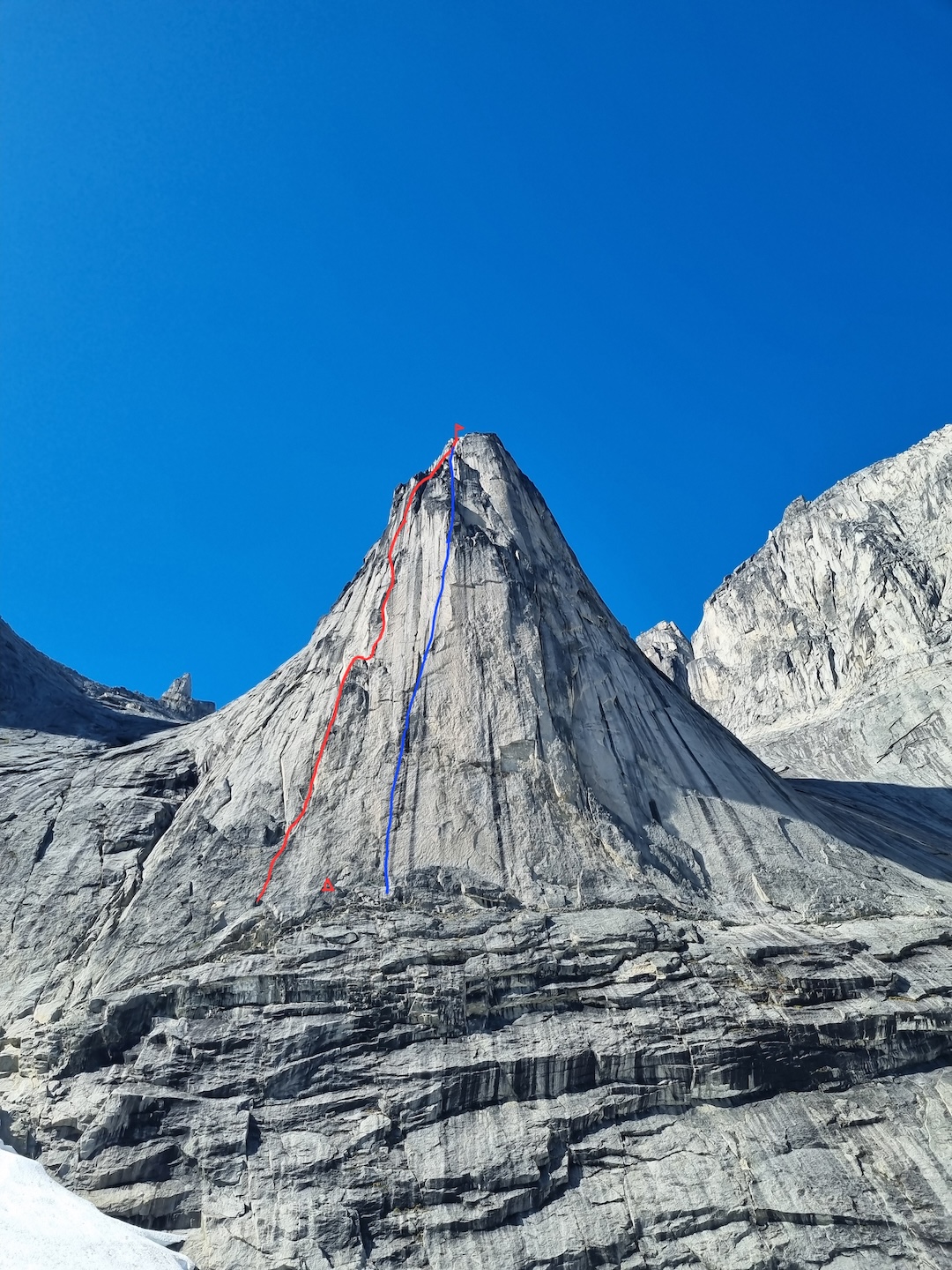
The team also explored Honey Buttress, climbing a ten-pitch line up the left side (probably repeating part or all of the 1998 British Route) and establishing a rappel route down the face. Dan, Tanja, and Jacob later climbed an 11-pitch route called Manuka (5.12), to the right of the original route, following excellent splitters in the middle of the face, gained by a crux three-bolt face traverse. [A detailed description is below.]
In early September, Liam, Steve, and Mason spent three days attempting a major dihedral on the nose of the southeast tower of Ulamertorssuaq, right of the 2016 route Qujanaq. Flaky rock led them to bail after seven pitches.
—New Zealand Alpine Team, alpineteam.co.nz
Manuka (5.12), Honey Buttress
P1. 25m up easy hollow flake to a three-bolt horizontal traverse. Belay on ledge; double bolt belay. 7 bolts. 12a for the crux sequence. You can A0 the bolt traverse with a pendulum off the last bolt to gain the belay ledge. There is a hole drilled after the last bolt just up and left where a final 8x75mm bolt could go.
P2. Up past three bolts to crack (30m). 5.11b. Double-bolt belay on small ledge. Single 0.2-2 with 2–3 number 3 cams, single set of wires.
P3. 30m, full rack. 5.10+. Single bolt and black Totem belay.
P4. 30m, full rack to 5, 5.10. Double-bolt belay on ledge.
P5. 40m, full rack to 4, 5.10+. Trad belay.
P6. 20m, fingers and hands to belay on small ledge near loose pillars, 5.10-. Single bolt and number 2 cam belay.
P7. 5.10+. 50m up and slightly right, using two cracks toward a corner/chimney. Near 40m, move from the left crack to the right and exit onto a ledge; save number 1 and 2 for the final hand crack. Full rack to 4. Belay bolt and number 2 cam in break.
P8. 50m, step left from the belay where the wide crack turns to hands. Follow this up until you move right to an easy chimney. Move right on the ledge and take the left-facing glory 5.8 hands to a natural belay.
P9. 50m, step right off belay into corner; watch for loose blocks at exit of first corner then continue up to a hanging corner crack on a ramp. 5.7.
P10. Up and right, then a rising leftward traverse through a series of large, detached chimney flakes, looking for a weakness to the top. Fairly easy 70m pitch.
P11. 60m of ledges and slabs to summit.
Rap from summit down to slab climber’s left to single bolt (45m). Straight down 40m to single rap ring in chimney (hard to see—don’t go too far). 40m to massive ledge. 45m down and trending left to single ring. Rap straight down on single bolts to main ledge or rap back down the climber’s line—both are equipped.
Media Gallery