
Graahs Fjord and Skjoldungen, Various Ascents
Greenland, East Greenland
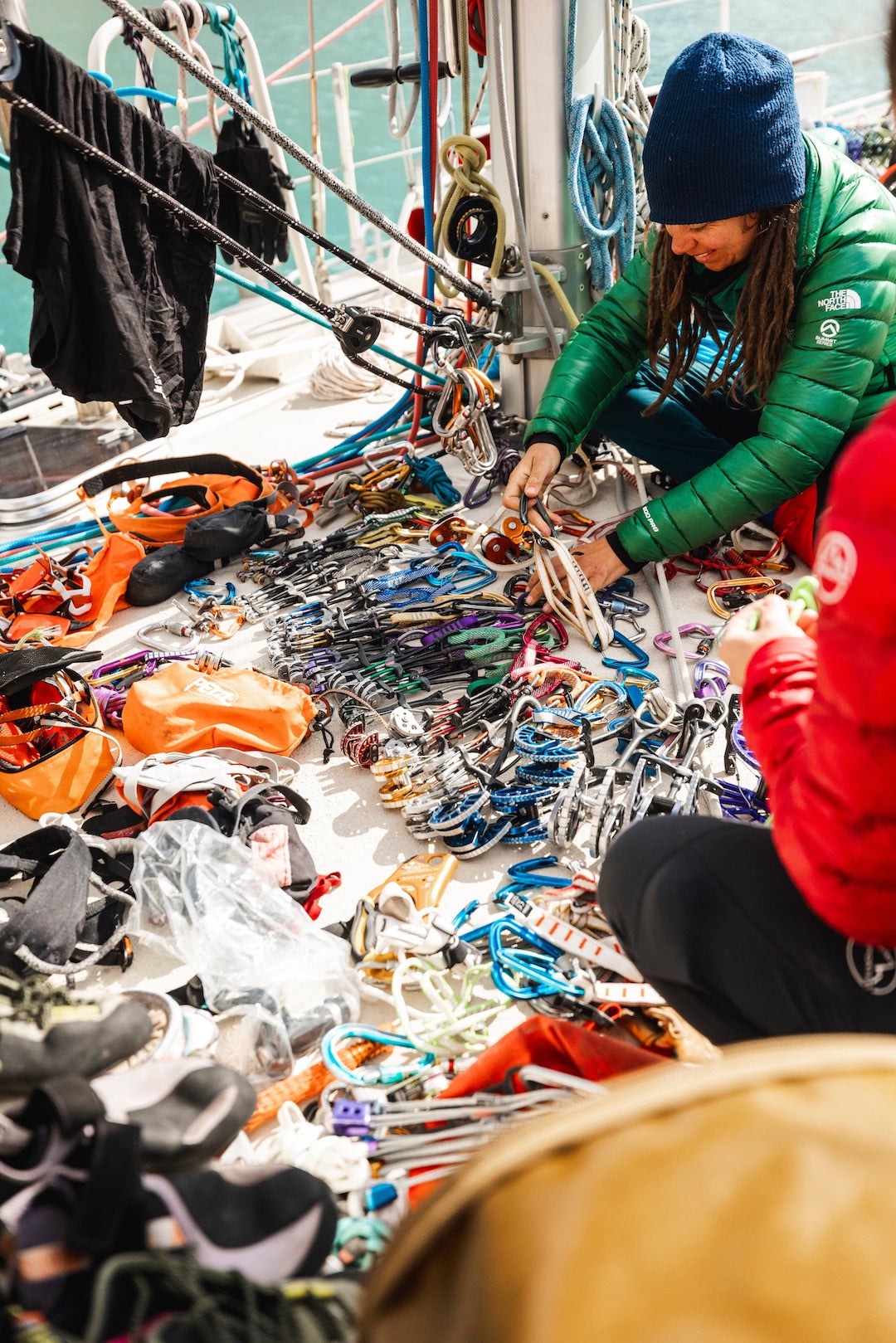
On July 20, the all-woman team of Naomie Bürki, Pauline Laubscher, Gianna Müller, Caro North, Lea Schneider, Melanie Tenorio, Ramona Volken, and Coraline Weber departed from Basel, Switzerland, by train toward Hamburg, Germany, where we transferred onto a FlixBus to Aalborg, Denmark. Our “fair means” adventure—which for us meant no air travel to reach Greenland—meant traveling by public transport with 350 kilograms of big-wall and expedition gear—predictably a challenge. (We also shipped two packages with expedition food and static ropes to Iceland, but this is not recommended, because we had to pay more in taxes than we’d paid for the gear.)
The Swiss Alpine Club Women’s Young Alpinist Team is a two-and-a-half-year program designed to prepare women ages 18 to 25 for a culminating expedition. After a demanding selection process, six women were chosen. I began training them across all alpine disciplines—occasionally joined by fellow mountain guide Ramona Volken—while we also focused on team-building, mental preparation, and sport-psychological coaching, all of which proved invaluable in forging a strong and cohesive group.
Drawing on the experience from my 2022 sailing and climbing expedition to Greenland, “Via Sedna” (AAJ 2023), we began planning our journey. During the research for Via Sedna, I had explored the region around Skjoldungen, and additional photos from our boat captain, Vicente Castro, convinced us to head to this little-explored area. Vincente also introduced us to the intriguing climbing potential of Graah Fjord (a.k.a. Langenaes Fjord or Devold Fjord), just to the north of Skjoldungen.
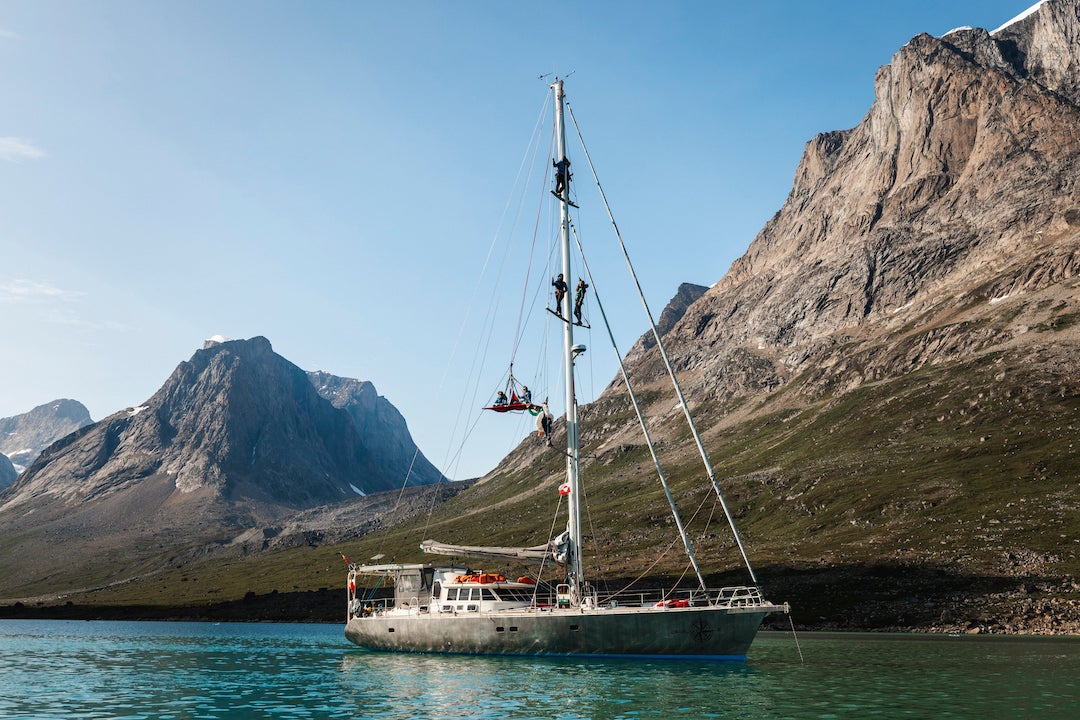
From Hirtshals, Denmark, we caught the ferry to Seydisfjördur on Iceland’s east coast. We rented a minivan to traverse the country and arrived in Reykjavik on July 25. After a day of preparation and buying final groceries, we set sail on the Cavalou on July 27 with Vicente and photographer Ramona Waldner.
The first few days of the voyage to Greenland were rough—strong winds and high seas caused several of us to be bedridden with seasickness for up to 58 hours. Those who felt well shared night shifts. Eventually, the seas calmed and everyone made it back on deck, finally able to eat again.
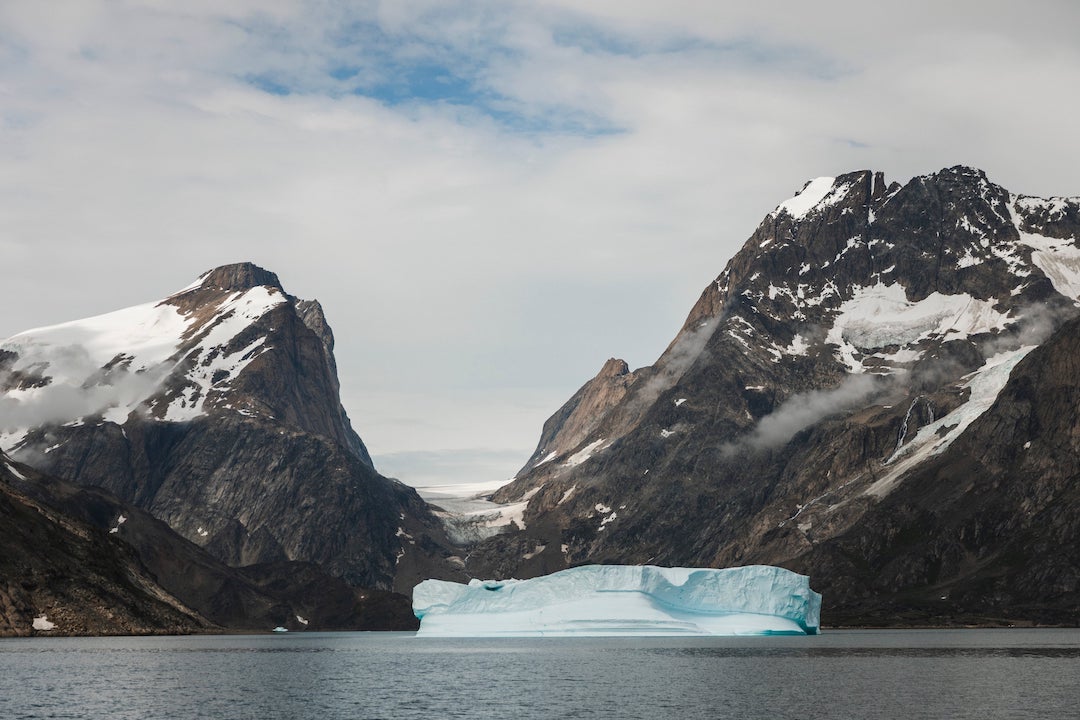
On July 30, ten days after leaving Switzerland, we finally spotted Greenland, nearly 100 miles away. Huge icebergs drifted around us—an awe-inspiring sight. Seeing land after four days of rough sailing suddenly gave sense to the hard time on board. That evening, we anchored at the entrance of Graah Fjord on the southeast coast.
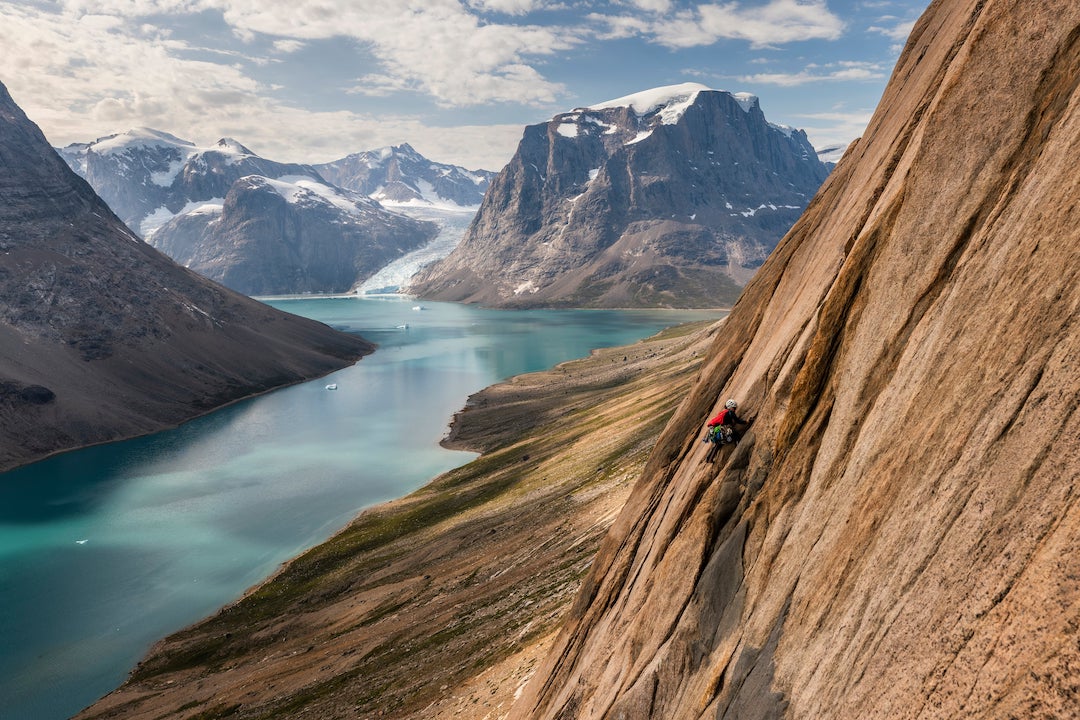
The next day, we familiarized ourselves with the rifles we would carry for polar-bear protection and moved our boat to the head of the fjord’s northern arm, where we anchored for nine days (63.533681, -41.520347). We hadn’t found any information about existing climbs in the area—I don’t think any of the walls had been climbed.
A glacier flowed into the fjord from the north, with rock walls to the left and right. On our first hike up this valley, we scouted numerous impressive faces, from 600 meters to more than 1,000 meters tall.
On August 2, Naomie, Lea, and Ramona attempted an obvious dike line on the first major rock formation to climber’s left, about 2.5 kilometers up the glacier, but poor rock quality forced them to rappel after three pitches.
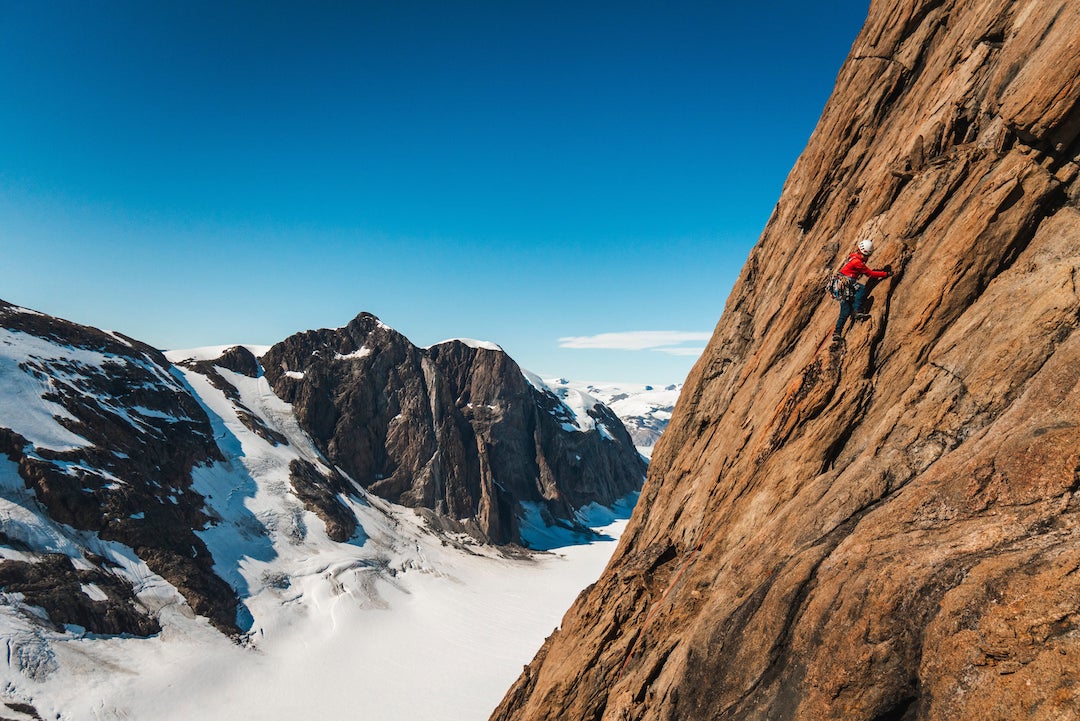
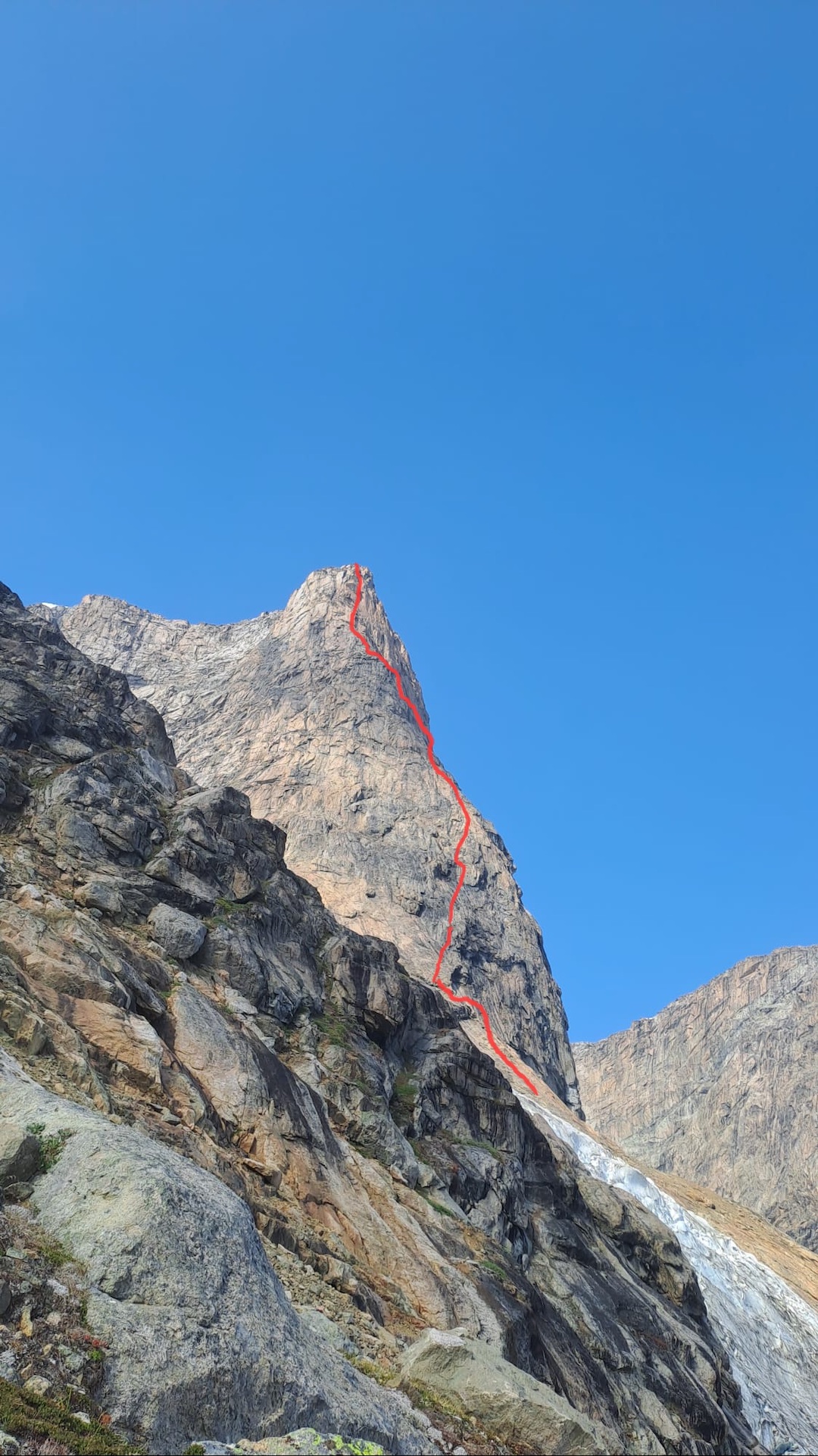
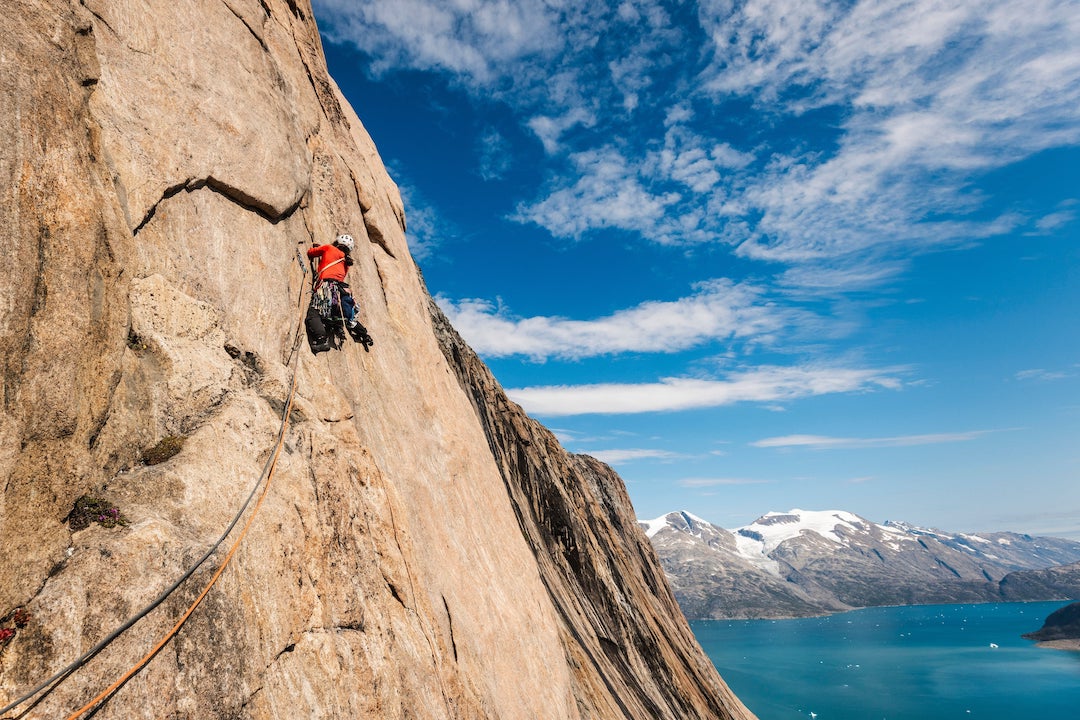
The next morning, they shifted to an adjacent pillar to the right (63.557342, -41.530782). Over two days, they opened a 1,000-meter line, with difficulties up to 7a and a bit of aid. After 13 pitches, with beautiful cracks, offwidths, and dihedrals, mostly on very good rock—and already 16 hours on the move—they arrived at the final pitch below an expected bivy ledge. Of course, it was the hardest pitch of the route: slightly overhanging and initially difficult to protect, before entering a crack system on excellent rock. After a bivouac on a ledge, they continued up a magnificent dihedral on solid rock. On the summit (1,315m), they were joined by Vicente, who had scrambled up. They descended via easy rock and snowfields (no crampons required). The line is called Imaqa (1,000m climbing distance, 7a C1).
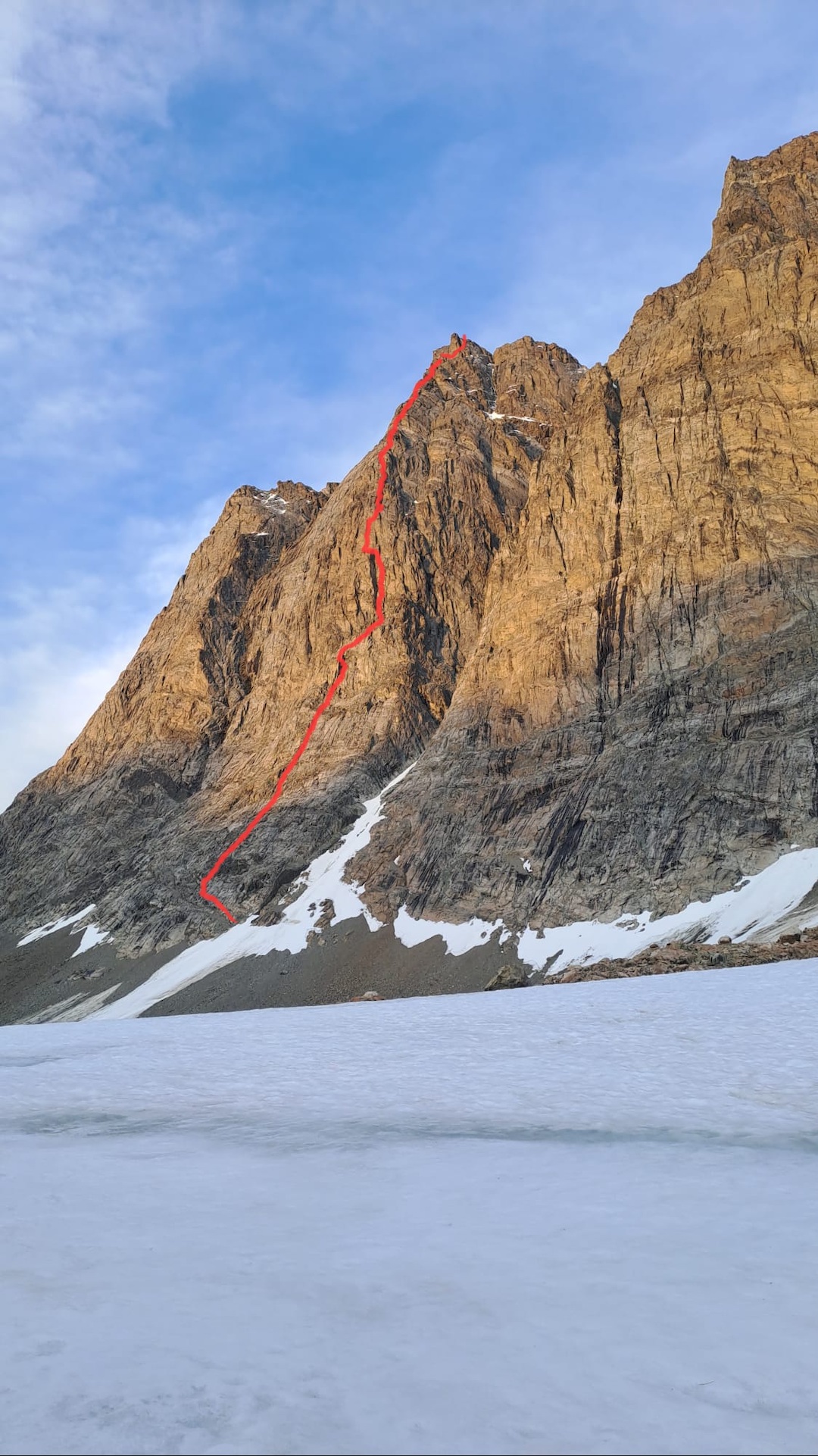
Meanwhile, Pauline, Melanie, Gianna, and Caro established Ilumorpooq (670m, 6a) on a broad wall farther up the glacier, on the right side, which they named Les Droites (top of the route at 63.579622, -41.514008). They encountered mostly good rock, though the upper section was loose. On day one, they fixed over 300 meters of static line. After a rest day at the boat, they returned, climbed seven more pitches, and reached the summit at the same time as the team climbing Imaqa, across the glacier. They rappelled down a line to climber’s right of their new route. [See rappel details at bottom of story.]
A few days later, another team (Naomie, Lea, Caro) opened a line farther left on Les Droites in a single-day push: Namenlos (600m, 6c).
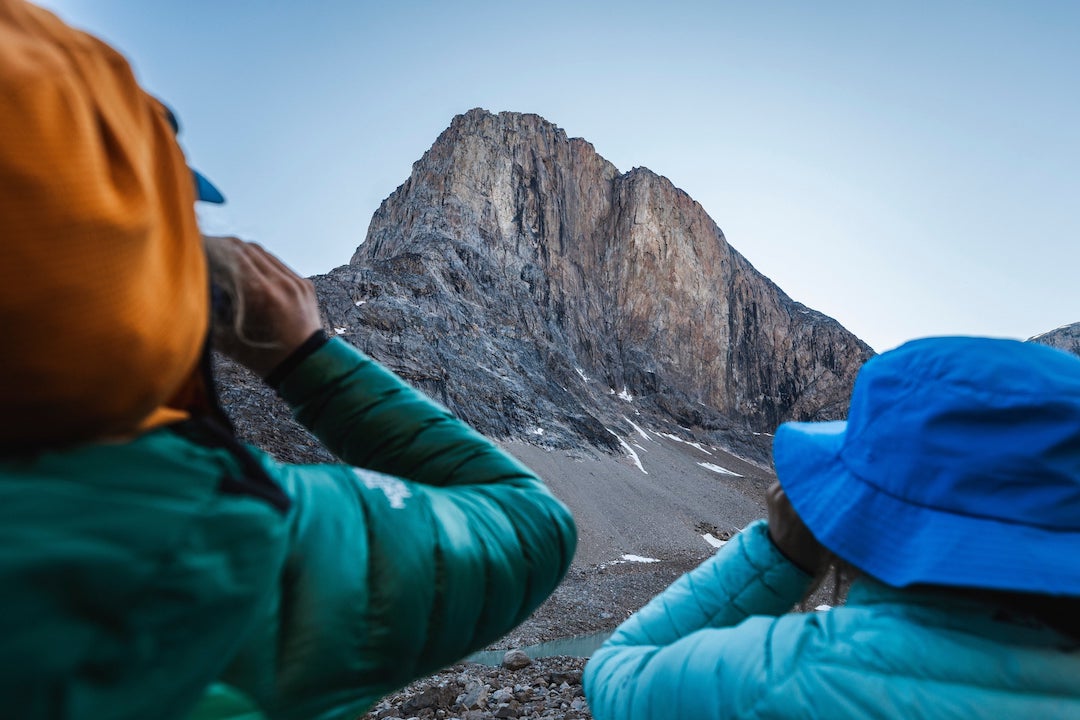
At the same time, a separate party (Melanie, Pauline, Gianna, Ramona) headed up the leftmost of three towers that we called the 3 Cime (a.k.a. Three Sisters, 63.506732, -41.522858; top elevation 1,330m). This is located on the west bank of the fjord, about 2.5 kilometers south of our anchorage. After bivying high on the wall, they were woken by strong winds. Though they attempted to continue, gusts up to 60 kph forced them to retreat below the summit. Their climb to this point was named Naammassineqanngitsut (757m, 6c).
On August 12, after sailing south to Skjoldungen Fjord, we established a base camp near the head of the fjord, at a small lake beneath the unclimbed northeast face of Mt. Queen Lilliana (63.486556, -42.060886). This tower was first climbed in 2003 by the east ridge and subsequently by two routes on the south side, all involving Mike Libecki (USA). The next day, we began opening a new line on the face to the right of the east ridge. We fixed ropes to the ground and worked in rotating teams to maximize our collective effort. After four days of climbing and dodging frequent rockfall, we determined the upper wall’s rock quality was too poor to continue. We made a careful retreat by rappel, having established Luca (11 pitches to the high point, 6c+ C1).
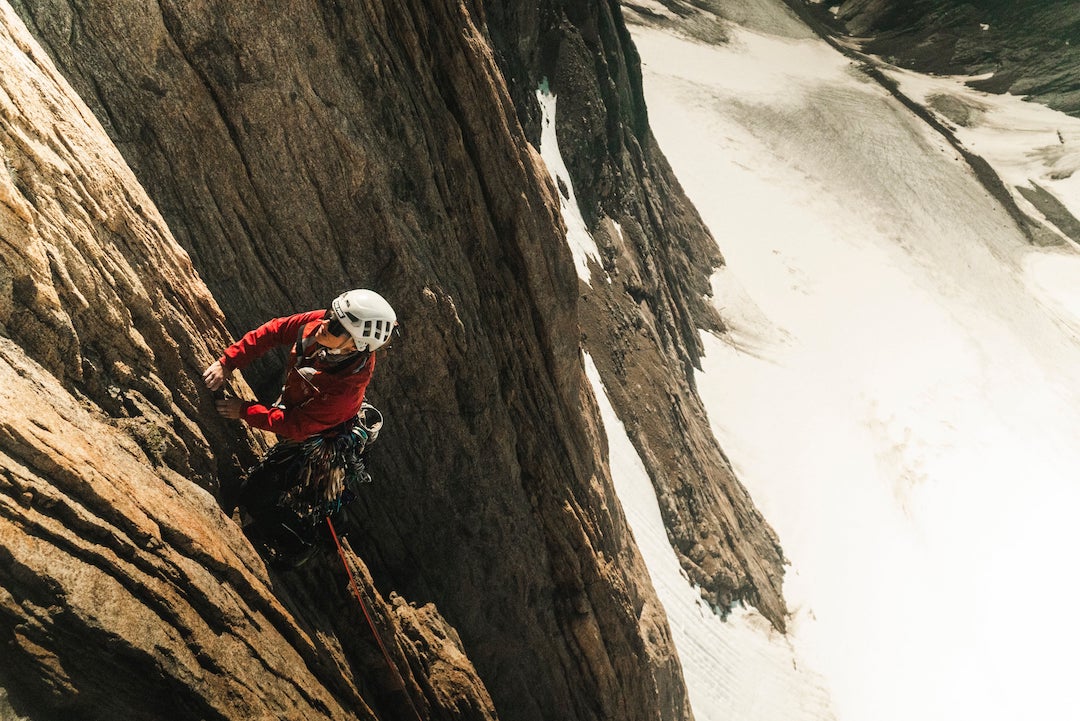
On August 20, we turned our attention to Caval’ou Wall (63.492332, -41.843877; top elevation 960m), a formation with high-quality cracks, corners, and roofs, rising above the water of Mørkesund, the sound connecting the two arms of Skjoldungen Fjord. Over two days and in two teams, with both parties sleeping on the wall, we established two parallel routes: I’m About to Lose Control and I Think I Like It (745m, 6c C1) and Geraldine (740m, 6c A1). We reached the summit in the golden light of sunset—an unforgettable moment. We descended via a glacier directly to the sea, where Vicente picked us up to begin the journey home.
Our expedition had been extraordinarily successful: We’d opened six new lines and attempted two others—all without injury or incident, and all while keeping morale high. We placed no bolts. [Photo-topos of all routes and attempts are at the AAJ website.] Every decision, every setback, and every summit was shared by the team; we supported each other unconditionally, worked with trust and joy, and turned challenges into motivation. And we journeyed there without using a plane, from Switzerland to the remote fjords of eastern Greenland, and back home again. To our knowledge, this was the first time a young alpinist team has done so, proving that with commitment, creativity, and collective effort, bold objectives can be pursued with minimal environmental impact—and maximum spirit.
TOPOS: A PDF with all routes and attempts completed by the women’s team can be downloaded here.
MORE CLIMBS IN GRAAH FJORD AND SKJOLDUNGEN: During the Swiss women’s expedition, Kaspar Grossniklaus and Thomas Senf, who had sailed to Greenland on their own to film the team for Swiss television, climbed the middle of the 3 Cime, above Graah Fjord, by the east pillar (63.505741, -41.538890 at the summit), with 900 meters of elevation gain and a crux of 6c. In the Skjoldungen area, above Mørkesund, the two climbed the southeast pillar of an unnamed peak (63.494479, -41.917225) by a route that gained about 600 meters (mostly 5 with a crux of 6c).
RAPPEL DETAILS FOR LES DROITES: Start at a big block in a col and rappel 30 meters straight to a ledge. The second rappel anchor is nuts: 60 meters, then scramble down 40 meters in scree, a bit left and then right, looking downward to find the anchor for rappel three: two pitons (50m). Rappel four: big block, 60 meters. Rappel five: two nuts in an obvious corner (60m). Rappel six: nut and piton (25 meters to little ledge). Rappel seven: horn (60m). Rappel eight, in dihedral: two nuts (60m). Rappel nine: stopper and piton (60m). Rappel ten: horn on small ledge, a bit left (60m, rappelling a bit to the right. Rappel eleven: piton and nut (55m). Rappel twelve: horn (50m).
—Caro North, Switzerland
Media Gallery