Siguniang, north ridge
China, Sichuan, Qionglai Shan, Siguniang National Park
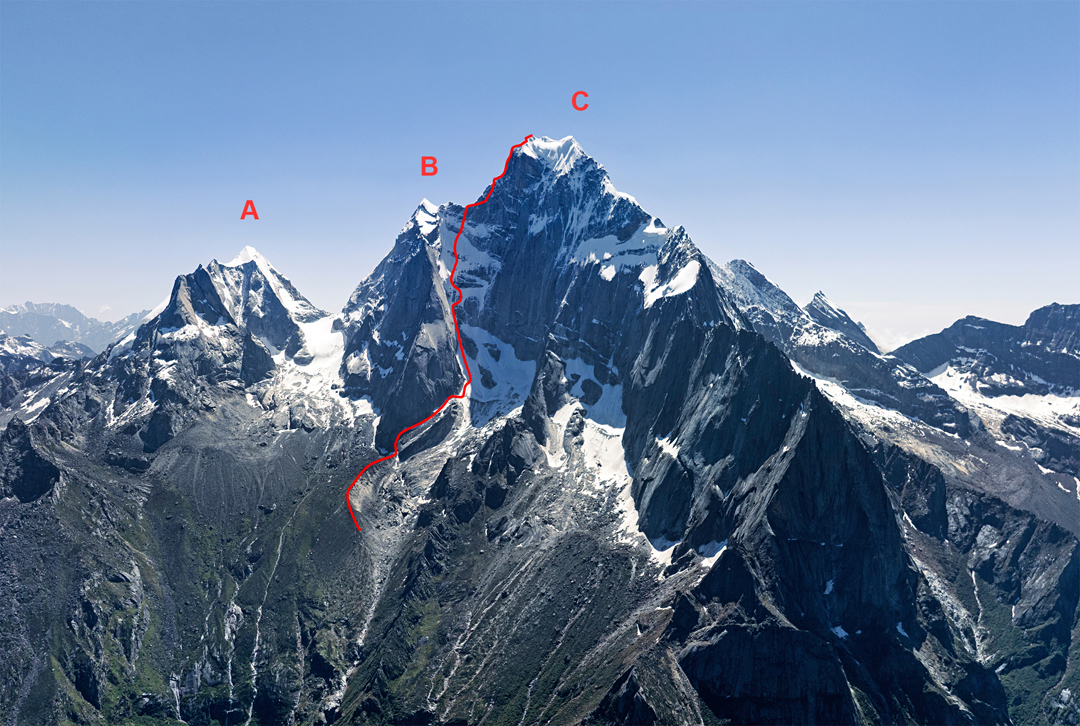
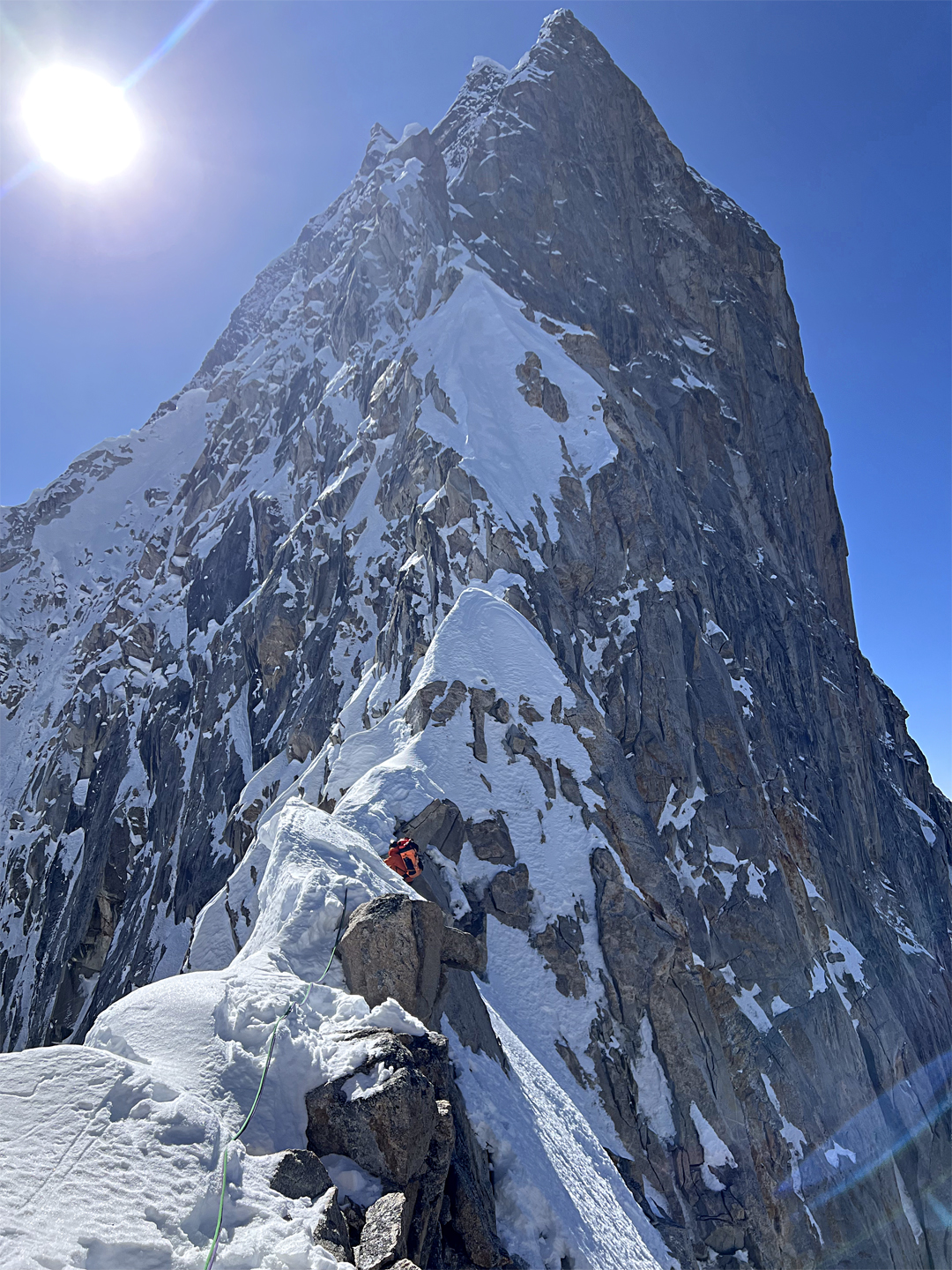
The north ridge of Siguniang (6,250m), the highest point of the Qionglai Mountains, was descended from the summit by Mick Fowler and Paul Ramsden in 2002 after their ascent of a spectacular ice line on the northwest face. Fowler noted at the time that the ridge would have been “a nightmare” to ascend (AAJ 2003). The north ridge also was descended by French climbers (AAJ 2012) after an ascent of a new route toward the right side of the northwest face. Two attempts to climb the ridge had failed relatively low on the route, and before November 2024, it was still unclimbed.
Permits for technical climbing and overnight stays in Siguniang National Park are not issued, but low-profile ascents are still sometimes made. On November 15, 2024, Zhang Qingwei and Zhou Song entered the park, aided by two friends who accompanied them as high as a camp at 4,400 meters, a couple of hundred meters lower than Zhang and Zhou had planned. Before sunrise the next morning, they set off toward the mountain’s west face, reaching 4,700 meters before midday.
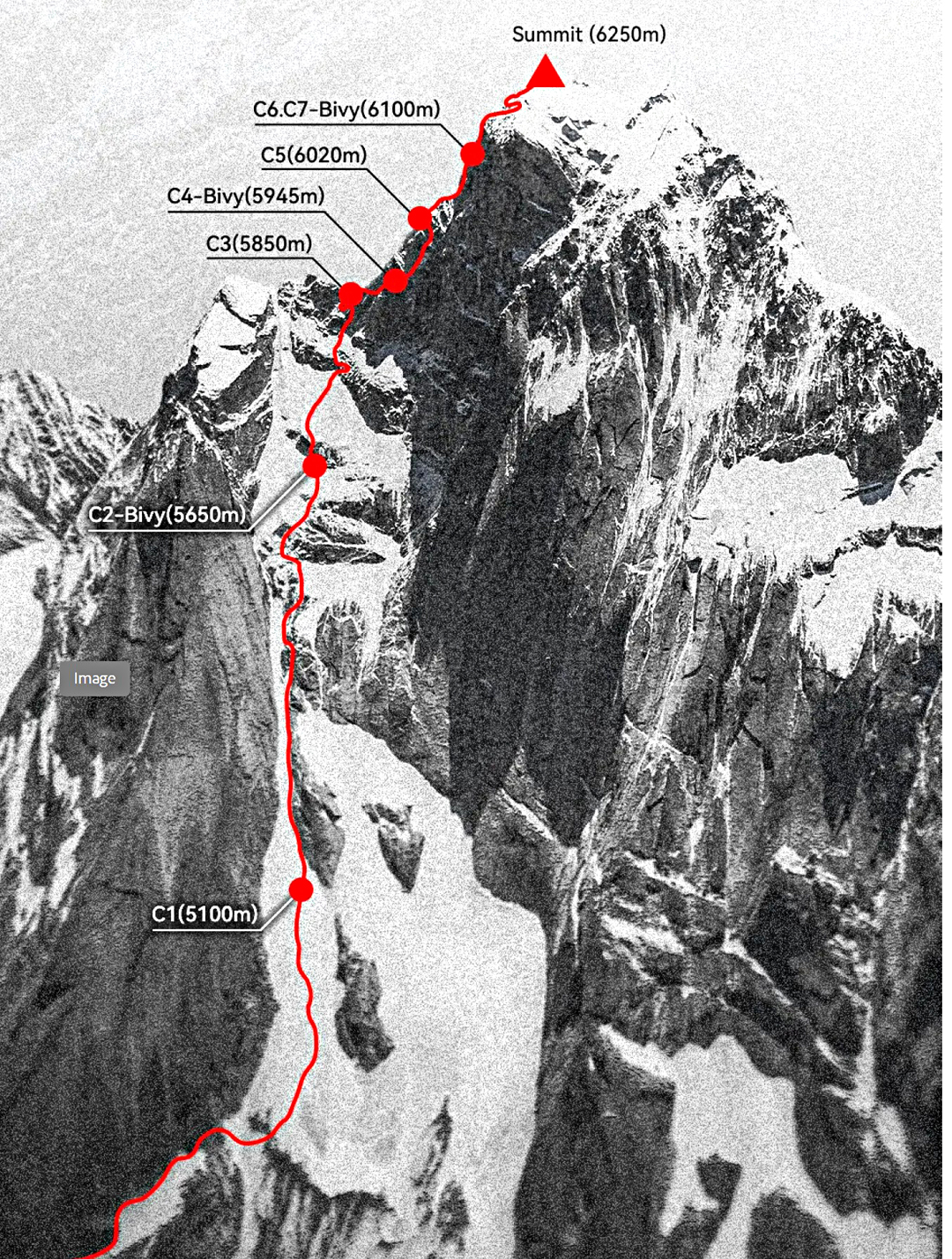
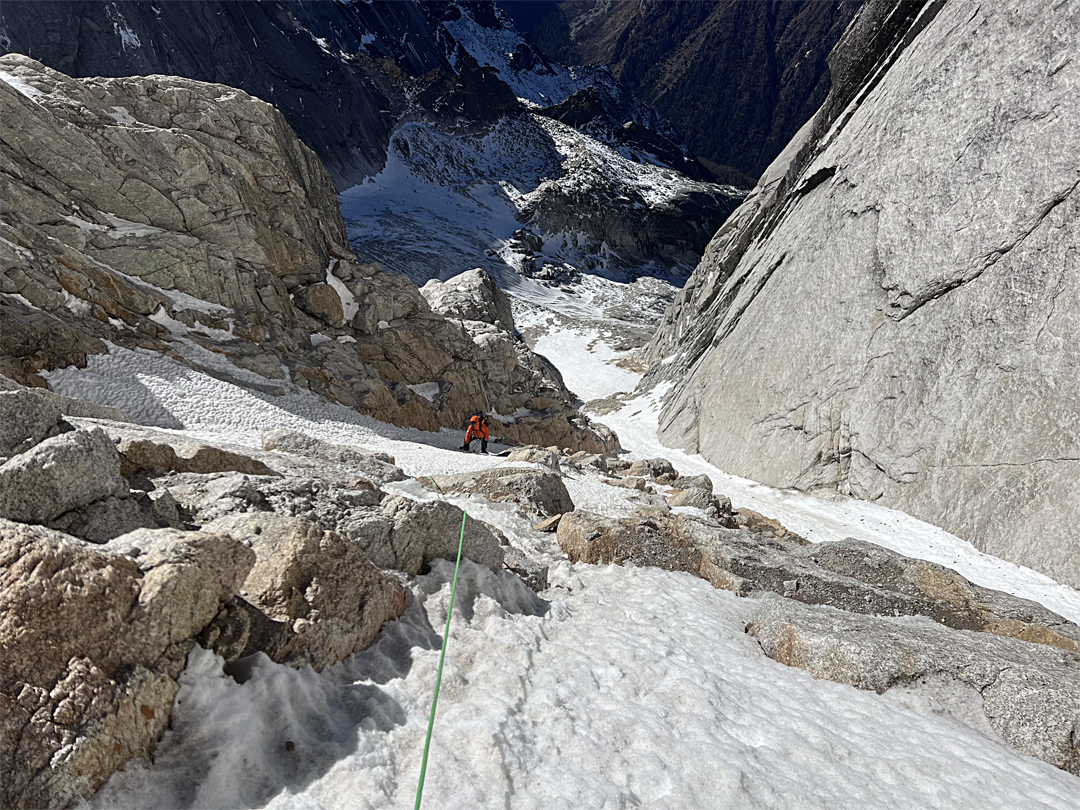
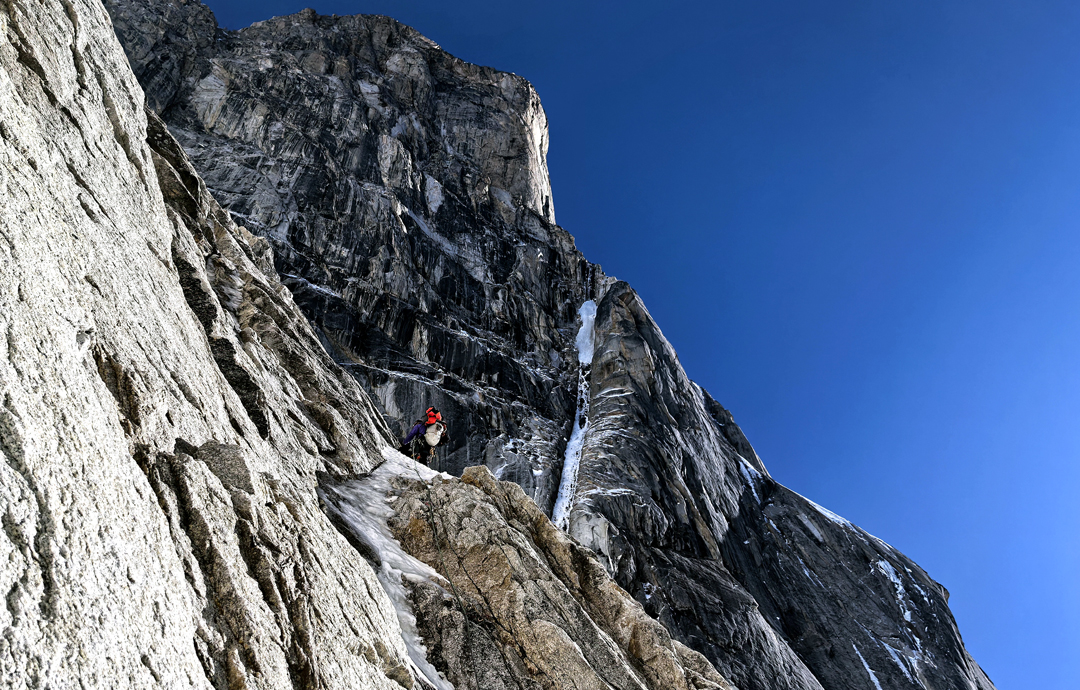
From there, Zhang and Zhou saw a potential route to access glaciated slopes on the west flank, between Siguniang and Siguniang North (Yangangzi, 5,900m), that in turn would lead them to the north ridge. Zhang changed into rock shoes and climbed a pitch of 5.6/5.7 to reach easier ground and subsequently a scree ramp. At the far end of this, a six-meter descent deposited them on moraine, where they found a bunch of old ropes. The two were then able to progress more easily up snow slopes to a point alongside a rock island, where a convenient crevasse at 5,100 meters provided a tent site.
When they woke at 5 a.m. the next day, they discovered that Zhou’s boot, left outside the tent, was now full of melted snow. They dried it with the stove as best they could, then Zhou put a plastic bag on his foot, donned the wet boot, and the two set off at midday. Keeping to the left, they simul-climbed 30°–40° firm snow, then moved to a rocky section, which they followed to a 40° snow slope. At 6 p.m., and at an altitude of 5,650 meters, they cut a good ledge in the snow beneath a rock wall for their second bivouac.
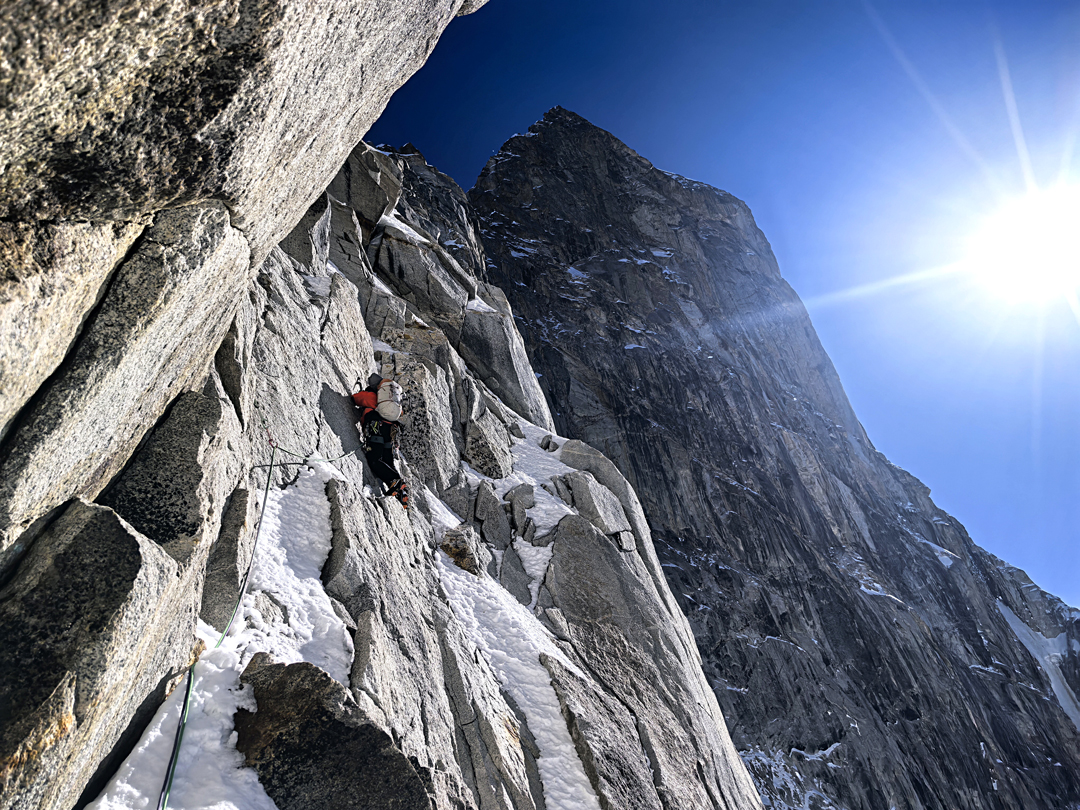
Leaving at 10 a.m. on the 18th, Zhang and Zhou climbed three pitches to the next rock barrier, where Zhou led an M4+ gully. They climbed another two loose pitches and, finding no bivouac sites, continued in darkness up a difficult vertical depression. Sparks flew from Zhou’s crampons, and at one point he was left hanging from his axes when both feet came off. The 30-meter pitch was graded M5+ and took them to the crest of the north ridge at 5,850 meters, where they set up their tent on a solid cornice.
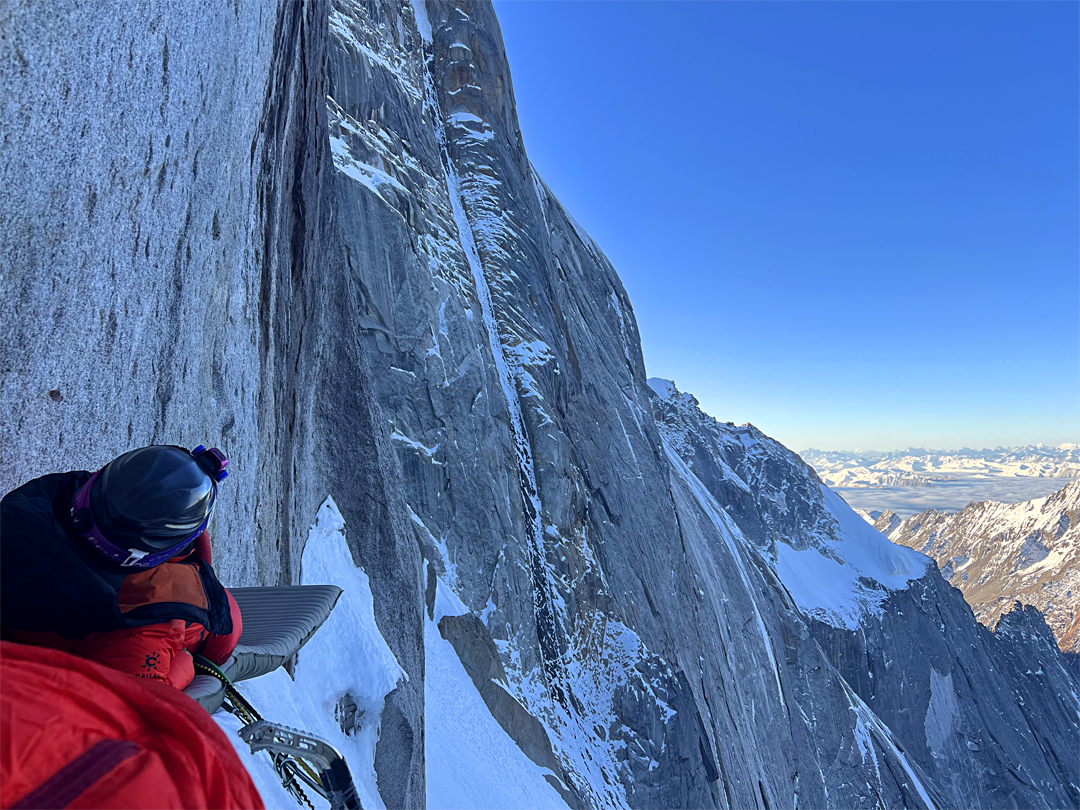
In the morning, they saw that Siguniang’s north ridge was much narrower and steeper than implied from the pictures taken by the 2006 French team that made the first ascent of Siguniang North (AAJ 2007). Zhang led up the exposed crest until he could go no farther. Zhou then lowered him onto the west flank, where at 6 p.m. he discovered a small cave just below the crest, at around 5,945 meters, where they could make a sitting bivouac.
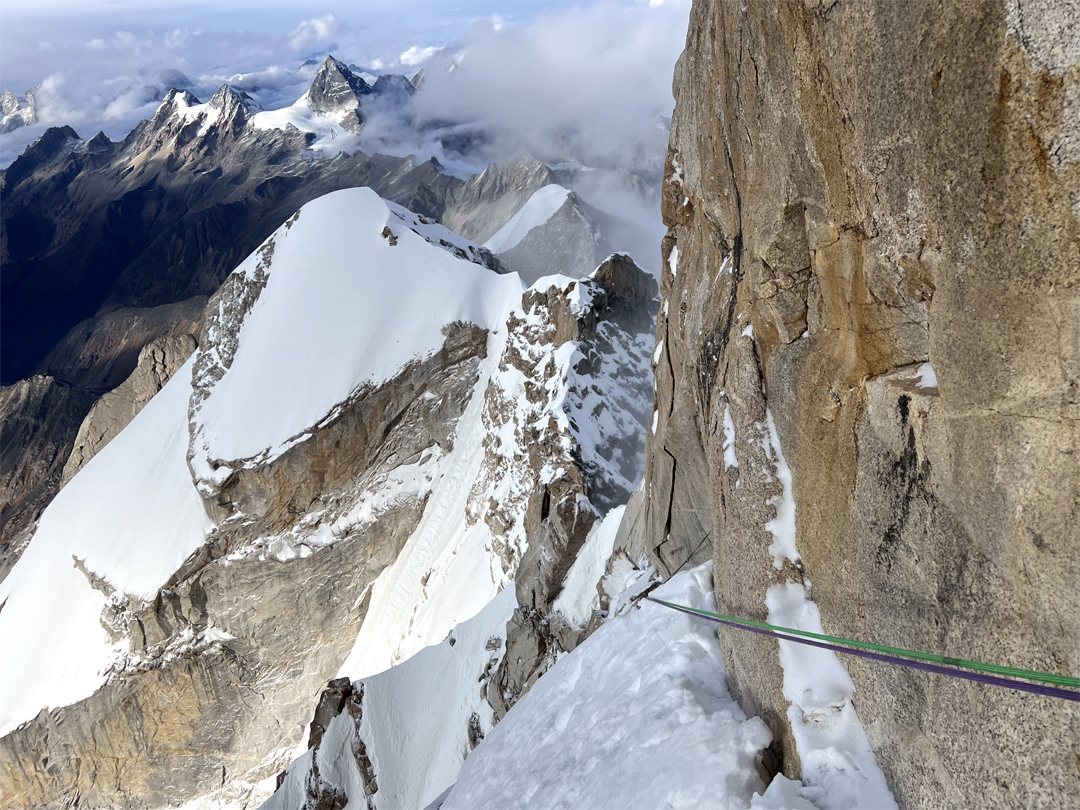
On the 20th, an initial, overhanging rock buttress on the ridge proved time-consuming. Zhang changed into rock shoes again and found the step of about 12 meters exhausting. The climbers hauled their boots and packs. The two then climbed on the west flank of the ridge, across snow-covered compact rock with little protection. They climbed back to the crest, then dropped down on the east side to bivouac beneath a cornice at 6,020 meters. They now had only one gas canister left, and checking supplies and the weather forecast, they decided they had a two- or three-day window of opportunity to reach the summit and descend.
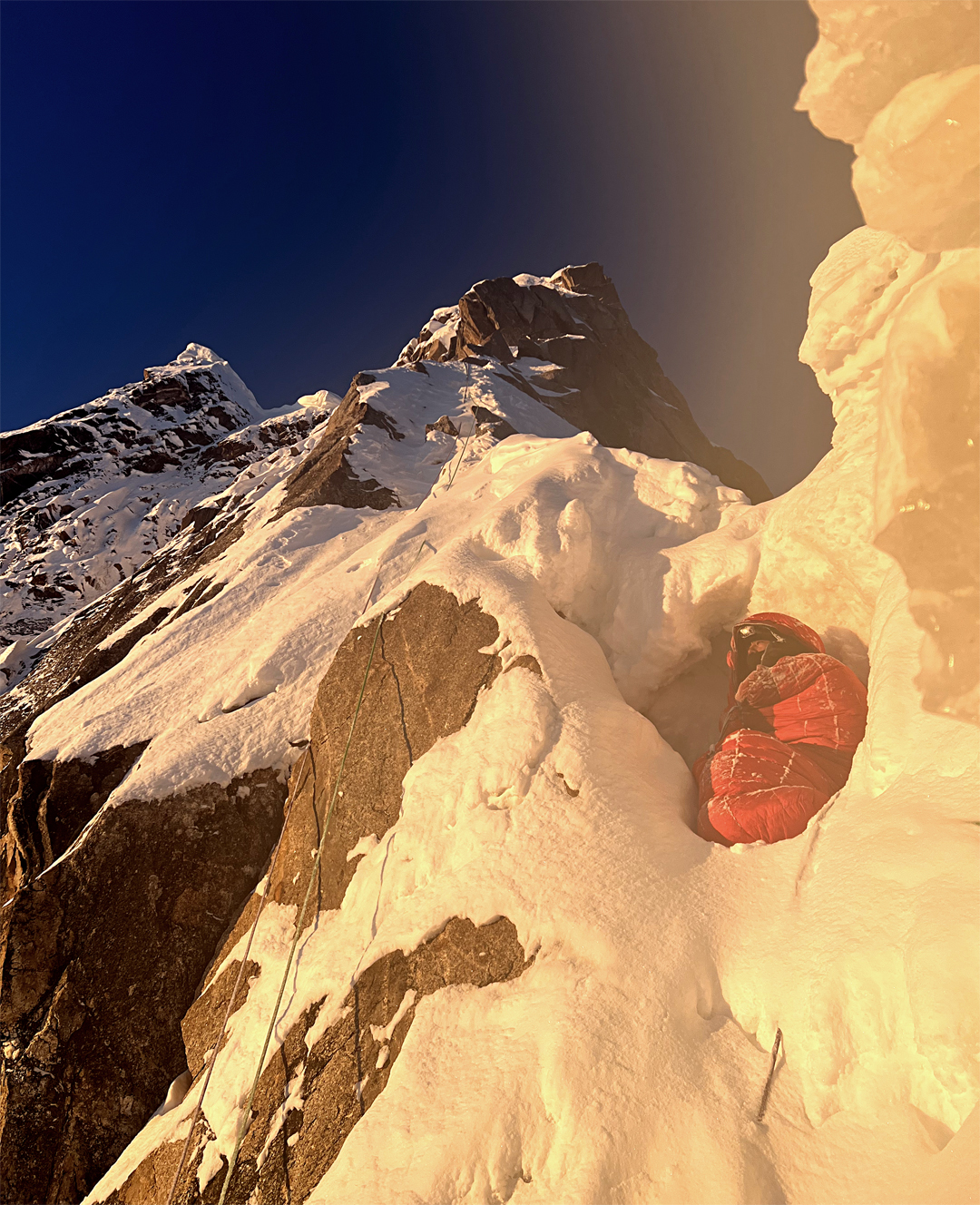
On the 21st, the two continued along the east flank of the ridge. At one point, before a difficult rock traverse, Zhou backed off the pitch and there was some discussion on whether they should retreat. However, Zhang completed the lead, and they progressed upward for a few more pitches (up to M4/5) before digging a small snow cave for the night. The altitude was 6,100 meters—they had gained only 250 meters in three days of climbing. It snowed that night, and by morning their sleeping bags were wet.
With no more gas—and therefore no drinking water—the two made their summit push knowing that, whatever happened, they had to start back down that same day. The terrain did not let up, and both climbers were exhausted when they gathered beneath a four-meter rock step. Zhou said to Zhang, “If we are going to continue, you will need to lead this pitch, after which I will lead the rest.” Zhang continued.
Above the step, waist-deep powder had to be cleared to reach climbable snow or rock. Finally, they reached the northwest face, and after two more pitches, they arrived at the north summit at 5 p.m. [Siguniang has three summits—north, central, and south—all more or less the same altitude, though the south is considered the highest.] After half an hour on top, they began the descent, reaching their 6,100-meter bivouac at 10 p.m.
After a night with little sleep, and with Zhang now slightly frostbitten in the fingers, they battled their way down the route. Close to the 6,020-meter campsite, where they had left the tent, Zhang slipped on a traverse and made a downward pendulum. He was unable to regain the ridge, so the pair had little option but to abandon their equipment at the 6,020-meter bivouac and make a direct descent. On reaching the 5,100-meter bivouac, they found a half-empty gas cylinder they had left at this spot and were able to make drinks. They arrived at their campsite below the mountain around 9:30 p.m. and continued down to the valley with a friend who had come to meet them.
The two climbers noted that during their ascent of the ridge they climbed around 50 percent of the time on the east flank, whereas Fowler and Ramsden, as well as the later French party, had descended mostly on the west flank. Their 1,400-meter route was graded ED AI4 M5+/6 75° snow.
—Xia Zhongming, Luxembourg
Media Gallery