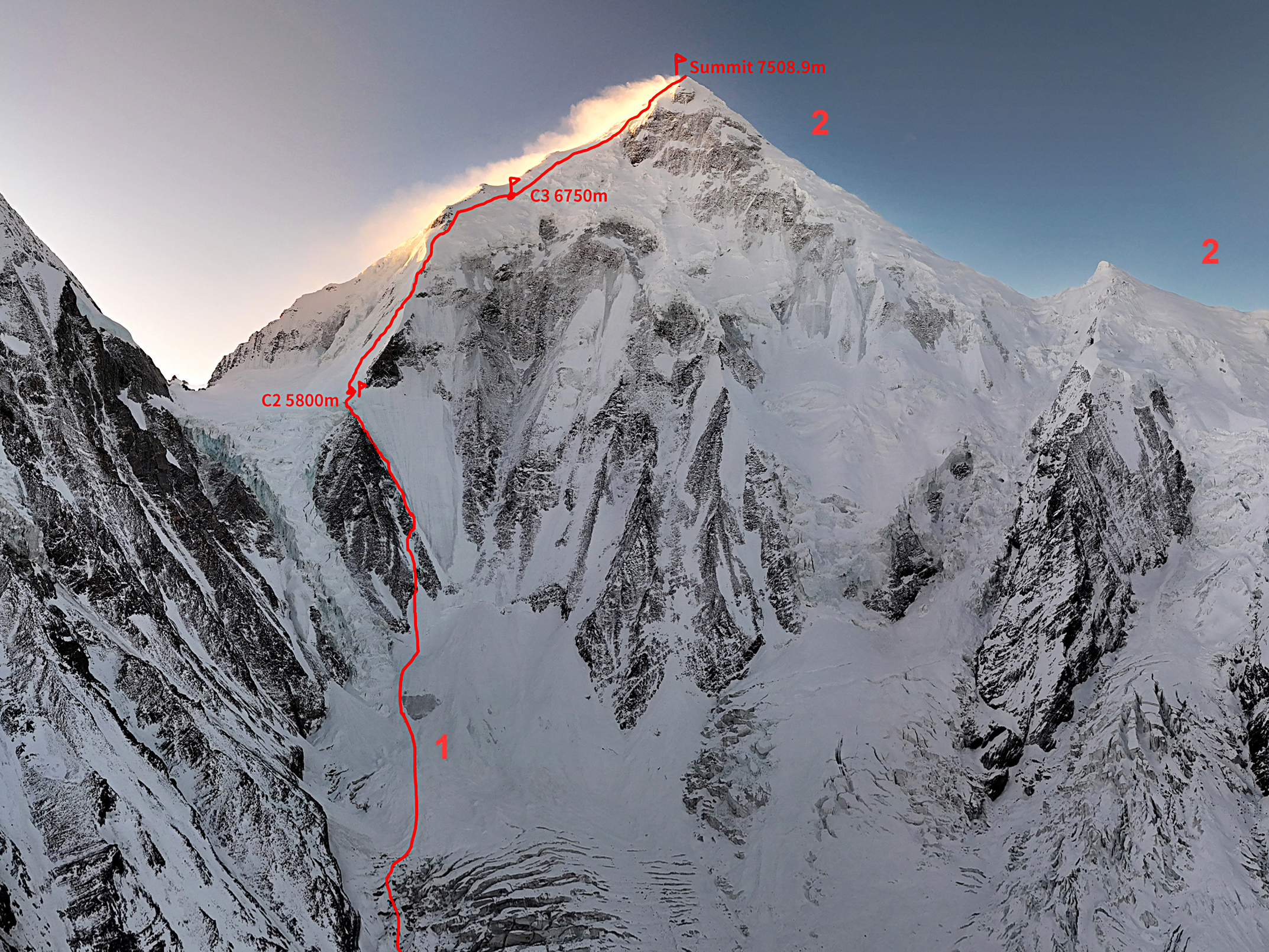

Minya Konka, north spur and northeast ridge, ascent to highest point
China, Sichuan, Daxue Shan
In October 2018, Li Zongli and Tong Haijun made an alpine-style ascent of Minya Konka (Gongga Shan, 7,556m), climbing a new route up the north spur and northeast ridge. [In the report in AAJ 2019, Tong is referred to by an alias, Xiao Hai.] The pair reached the top in a complete whiteout, and during their descent they were unable to regain their top camp and had to sit through a cold night in the open, risking serious frostbite.
Tong later would start to doubt if he had actually been to the highest point of Minya Konka. In the stormy weather, he had been unable to see or find anything higher—had he continued quite far enough? Unable to accept a Minya Konka dream that still posed questions, he returned in the autumn of 2024 to repeat the ascent with Chen Chujun and Wang Yongpeng.
The three acclimatized with an ascent of Nyambo Konka (6,114m), sleeping on the summit for two nights. Unexpected heavy snowfall almost buried the tent, and on their descent they witnessed widespread avalanche debris.
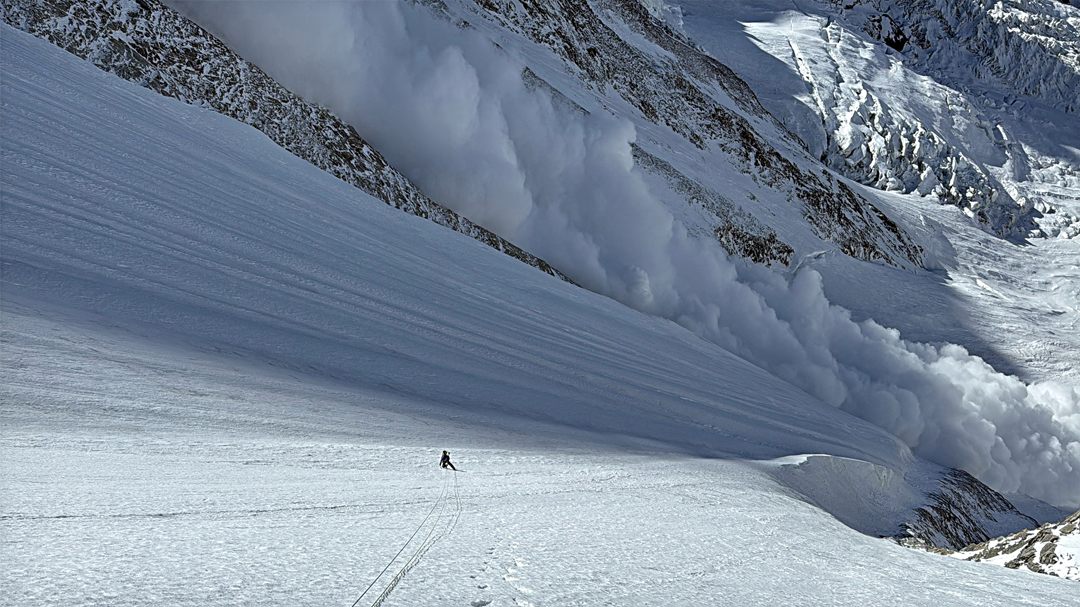
On October 25, the climbers set off for Minya Konka from Yanzigou (3,600m). The next day, they camped at 4,962 meters, on the way discovering sleeping bags, clothes, cameras, notebooks, and other debris from a previously unreported Japanese expedition to the mountain in 1994, during which four climbers were killed in an avalanche. (The Chinese climbers would later bring these items down, and in March 2025, Chen and friends visited Japan to return the equipment to the families.) On the 27th, they approached the north face, where they had to pass through active avalanche zones.
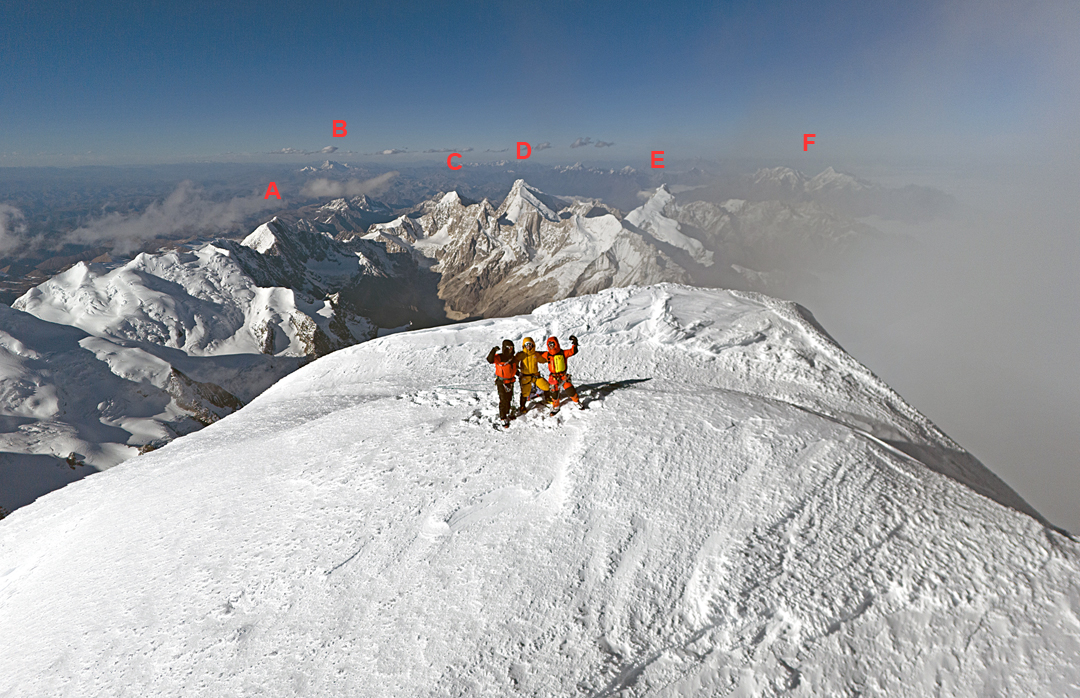
Following their previous route, they put a high camp at 6,750 meters on the 28th, after a hard day in continuous 60–70 kph wind. Next day, in decreasing wind, they summited at 4:30 p.m.
Tong was at last able to see the full summit area from the top, and he noted his previous high point had been around 30 meters short and perhaps 10 meters lower, in a depression on the summit plateau. The intervening ground was easy walking. The three returned to high camp without problem that evening.
—Xia Zhongming, Luxembourg, with additional help from Kaoru Wada, Japan
Media Gallery