Eglinton Tower, Northwest Buttress, Lemnos in the Clouds
Canada, Nunavut, Baffin Island, Arviqtujuq Kangiqtua
From June 6 to July 15, our all-female+ team of four—Natalie Afonina, Shira Biner, Heather Smallpage, and I—set out on a 42-day, multisport expedition across eastern Baffin Island. (We were a team of three women and one non-binary person. Respecting the complex workings of gender identity while also highlighting the importance of all-female+ spaces and achievements, we describe our team as female+.) Our goal was to reach Arviqtujuq Kangiqtua (Eglinton Fjord) under our own power, establish new routes on big walls, then get ourselves home again—ideally with no toes lost to frostbite or egos to team dynamics. After 29 days in the wilderness, covering approximately 300 kilometers of Arctic terrain via skiing, rafting, and hiking, we succeeded in establishing the longest, hardest route put up by an all-female+ team in the Canadian Arctic.
Travel logistics were their own kind of alpine route: bus to Vancouver, red-eye flights through Ottawa and Iqaluit, and finally a small plane to Clyde River, Nunavut. Our first base camp would be a patch of dirt next to the frozen sea with a tattered fence resembling a backstop—locals informed us this was the town’s baseball diamond.
We spent the next 24 hours wrangling sled parts, packing bags, and fending off children who alternated between curious play and mischievous pranks. Levi Palituq, our outfitter, became both a lifeline and a friend: caching gear at our planned base camp, keeping watch over us, and sharing local knowledge that would quietly shape our success.
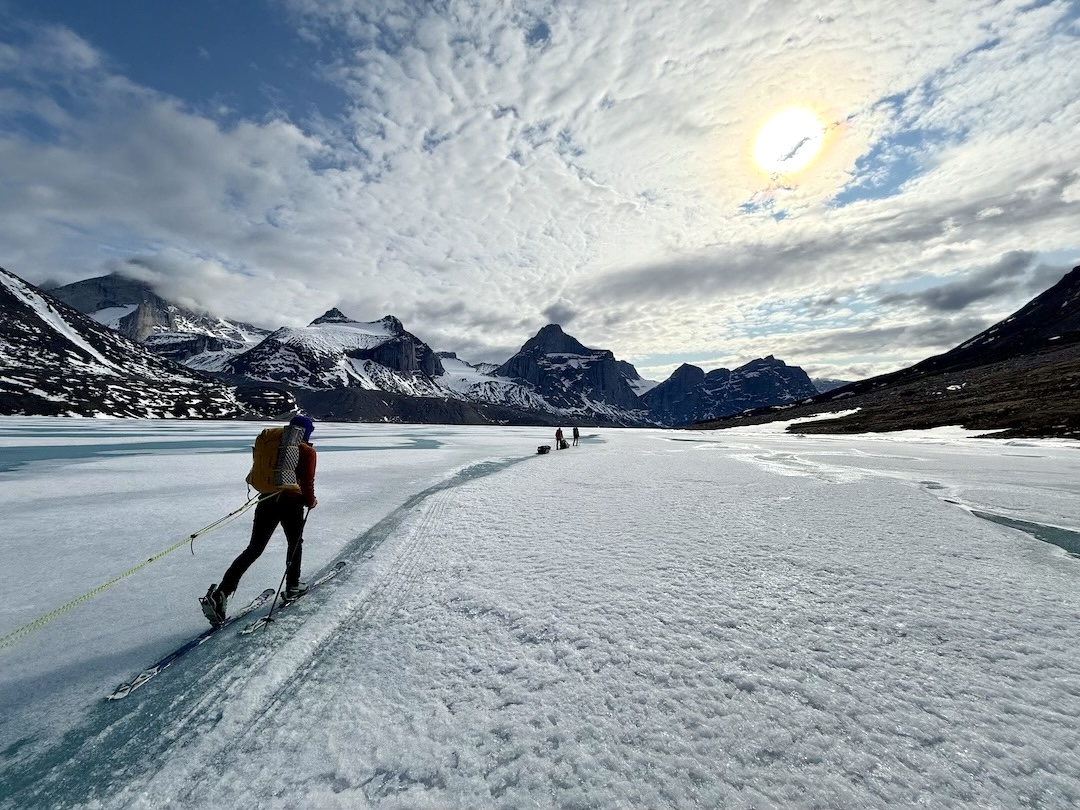
On June 9, we headed out onto the sea ice, with skis on our feet, aiming for Arviqtujuq Kangiqtua to the northwest. The first days were a master class in suffering and adaptation: blisters blooming, sleds breaking, faces burned by alternating wind and sun. A turning point came a few hours into day one when Levi (who had been watching us struggle with binoculars from shore and was amused by our clumsy homemade sleds) rode out to us via snowmobile and lent us proper pulks in exchange for giving him two tents at the end of the trip. Our pace improved, and we settled into Arctic time—skiing 18 to 30 kilometers per day and switching to night travel to optimize prime ice conditions for skiing. Polar bear tracks along the way reminded us that we were never truly alone.
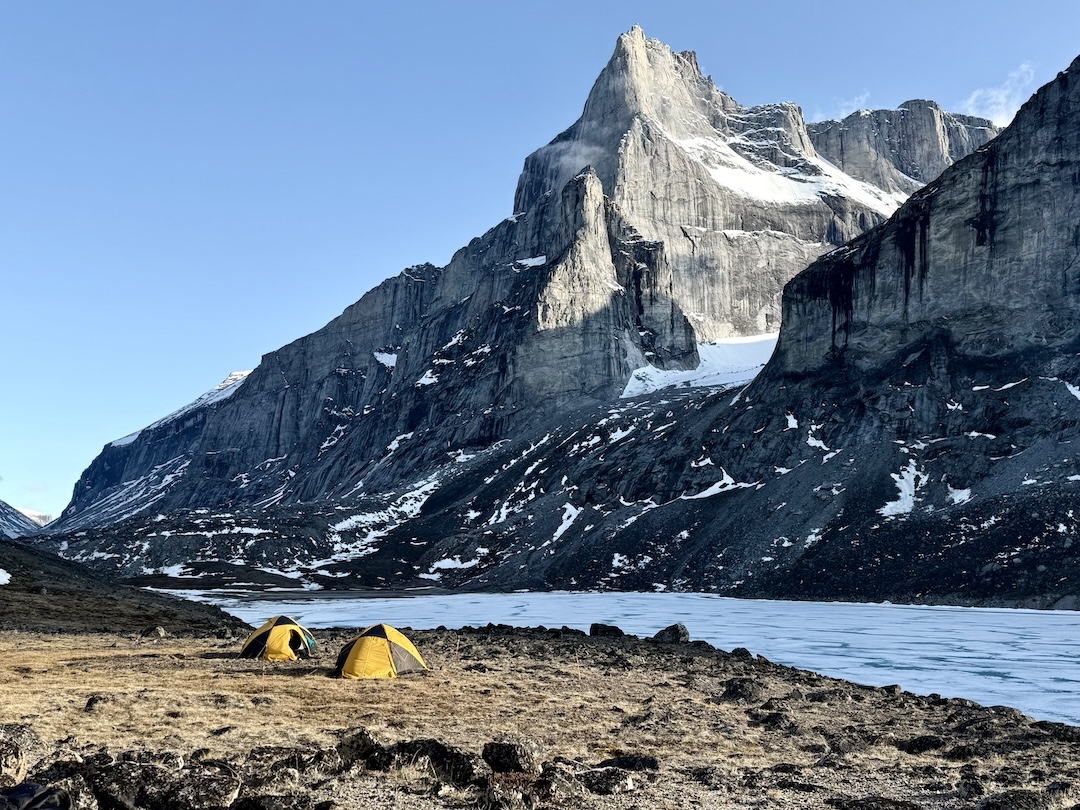
After 186 kilometers and seven days of negotiating ever-changing sea ice and open leads, we reached our cache at the fjord. We established a proper base camp the next day, directly below the northwest buttress of Eglinton Tower (ca 1,232m, 70.45897, -70.56799).
After a couple of days of rest and preparation, three of us—Heather, Shira, and I—set out to attempt the tower. Natalie supported from below but chose to sit out the technical ascent.
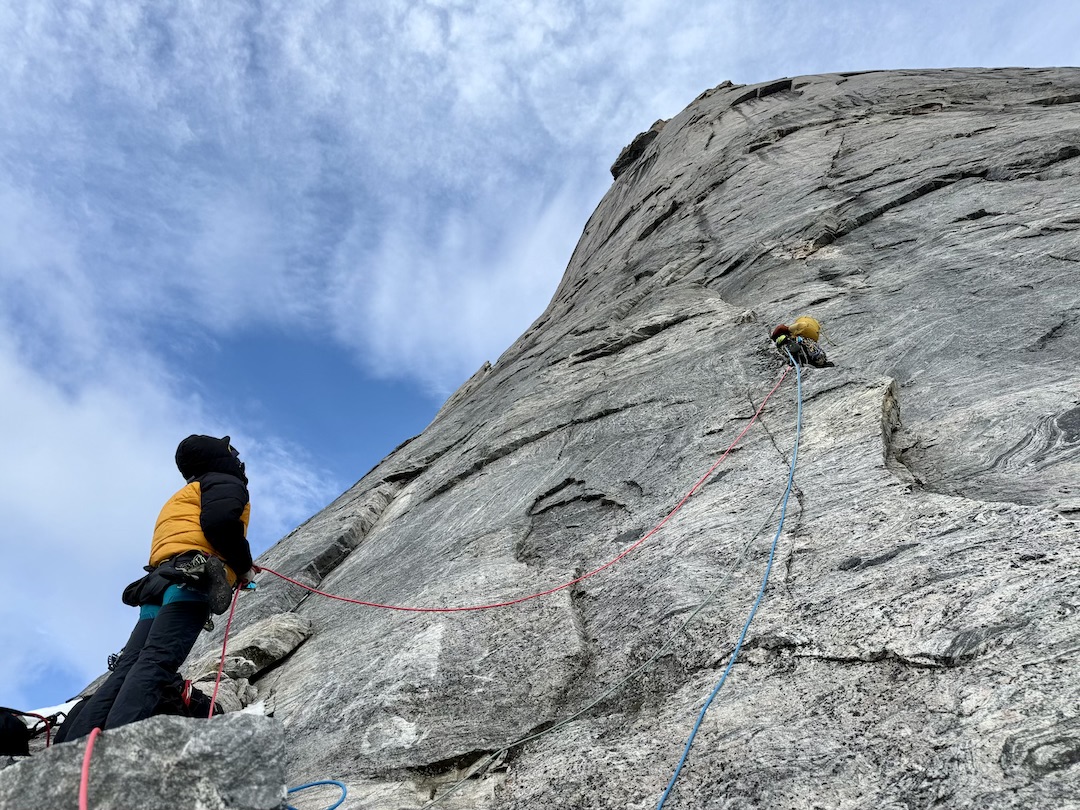
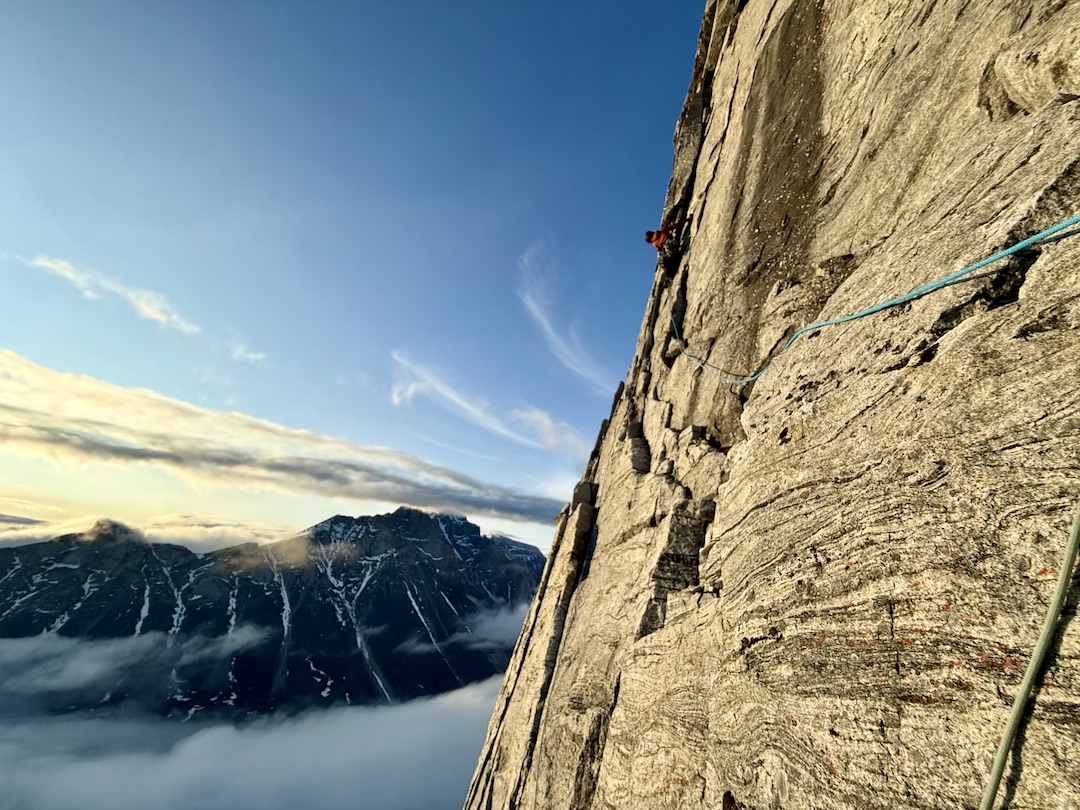
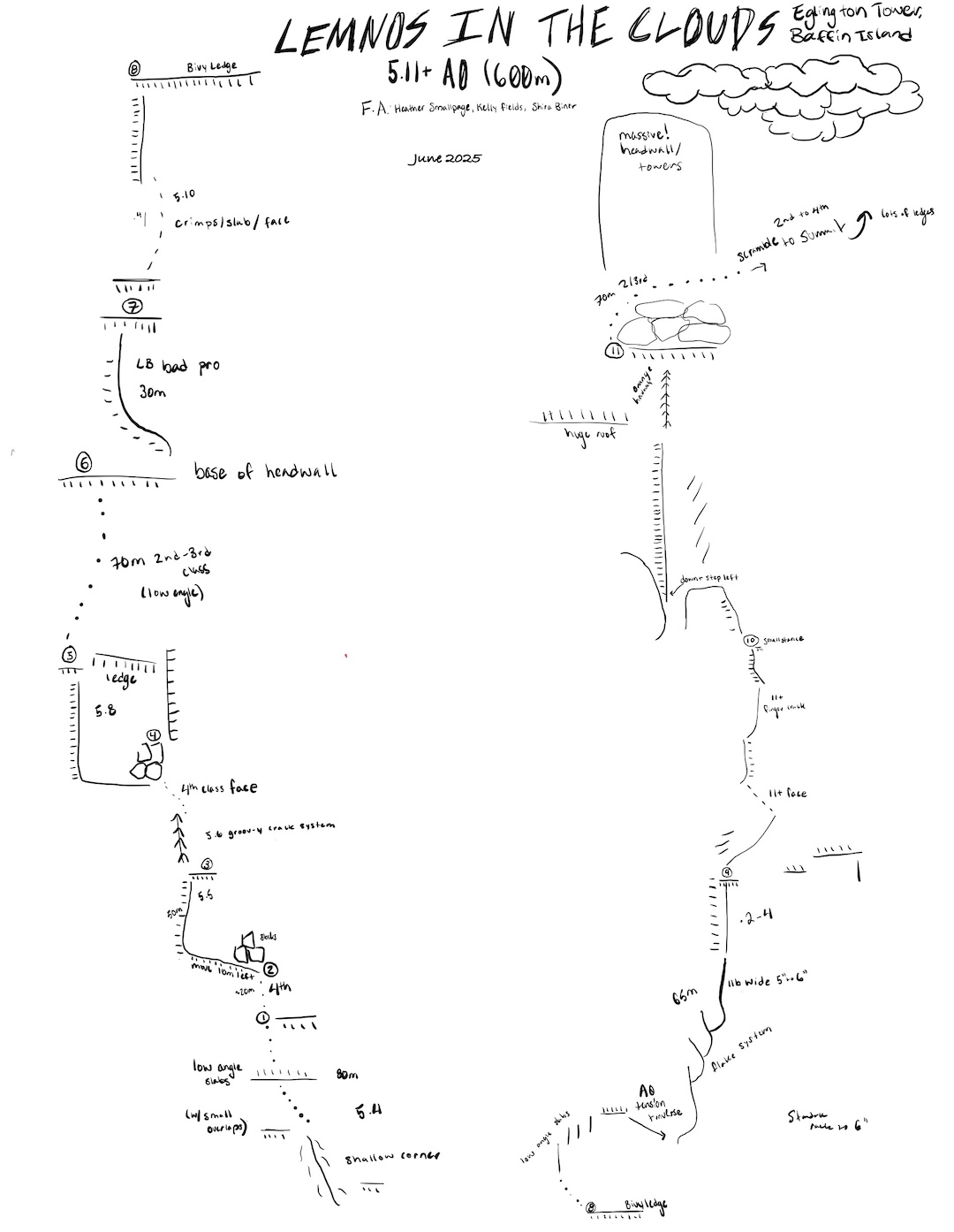
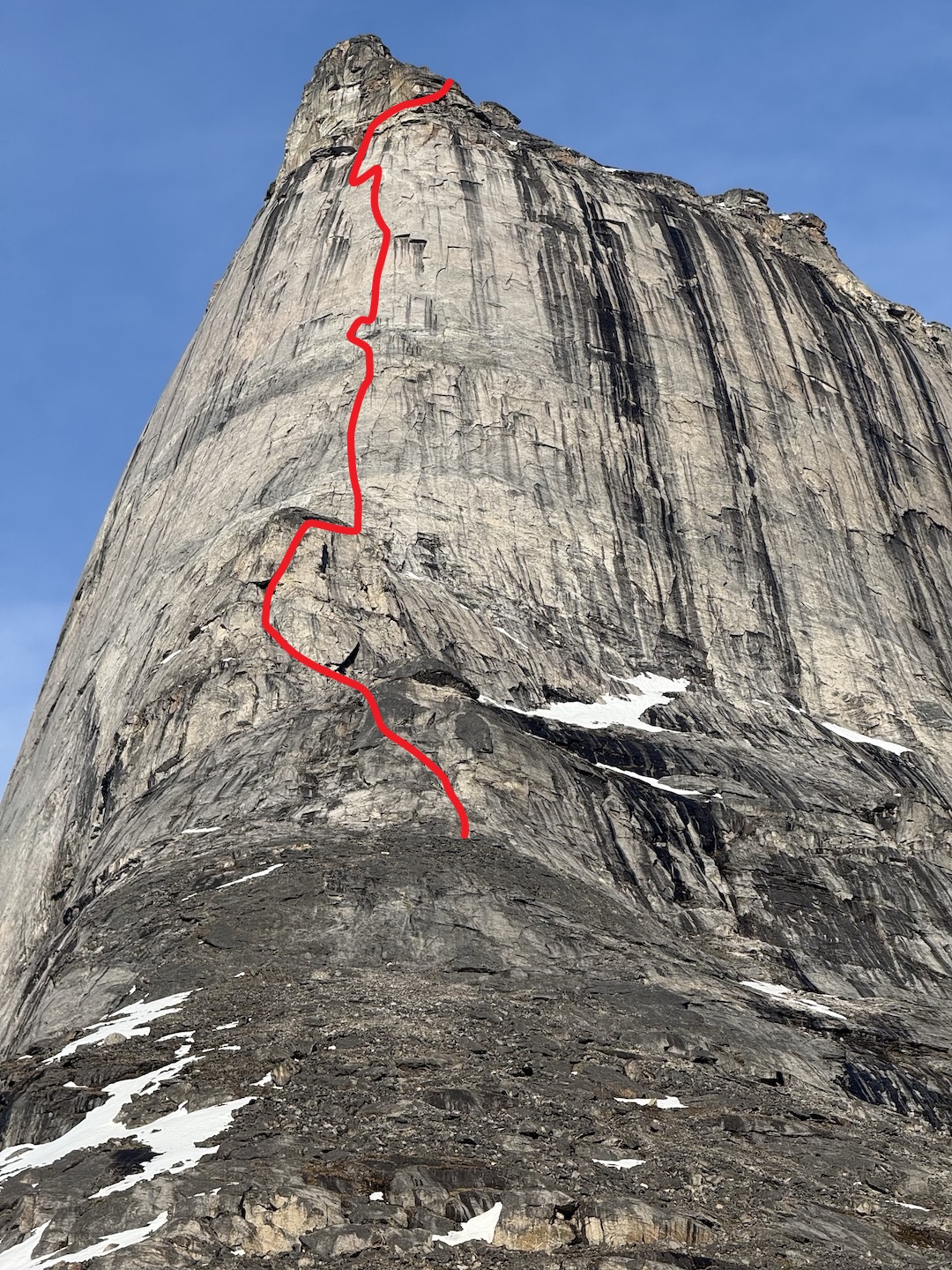
We left camp at 9:30 a.m. on June 19 and hiked for one and a half hours before roping up and climbing eight pitches of moderate slabs, cracks, and corners to reach the base of the steepest section. Heather led a memorable tension traverse connecting us into a wide crack, sparing us the need for bolts. I pushed on a bit more, but with the blankest section of rock above us, we decided to fix ropes and bivouac on a narrow ledge just below. After leveling out the ledge, exhausted and cold, we went to sleep at 4 a.m., after 19 hours of continuous movement.
We woke seven hours later and continued upward, with the followers doing a combination of jugging and free climbing. The rock proved to be excellent, with small finger cracks through steepening granite, each with hanging belays. This section, which had looked blank and questionable from below, turned out to have just enough natural features to allow us to free climb the rest of the way.
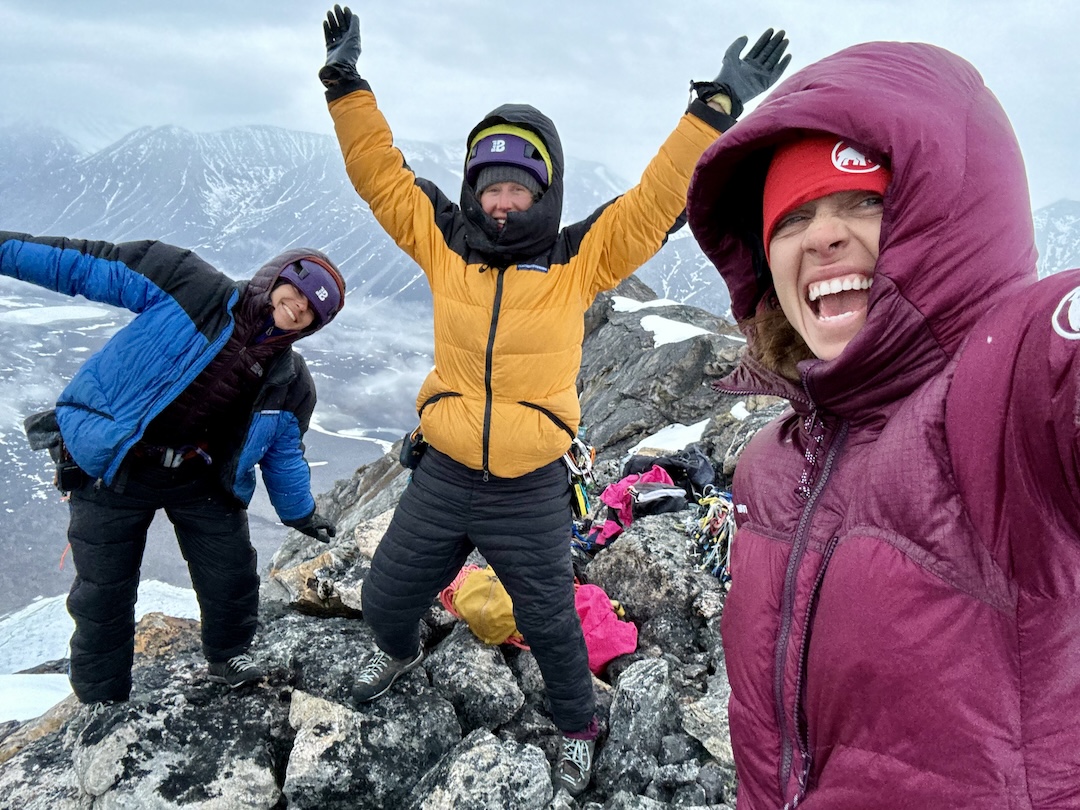
After three more long pitches, we topped out the headwall and scrambled higher through icy chimneys, snowy ledges, and loose blocks. At 10:30 p.m. on June 20, the three of us stood atop the buttress, clouds drifting around us and the fjord stretched silent below. The true summit of Eglinton lay beyond a long ridge and another 250-meter headwall; ours was the first ascent of the northwest buttress. (Eglinton Tower was first climbed from the south, in 1934, by Sir John Hanham and T.G. Longstaff from Great Britain.) We named the route Lemnos in the Clouds (600m of climbing plus scrambling, 5.11+ A0).
After traversing the ridge toward the upper headwall for a ways, we started down to the southwest at 11 p.m.—a long and complex descent with about eight rappels and downclimbing. Ropes were snagged and retrieved, anchors tested our creativity, and fatigue slowed us to a crawl. We returned to base camp at 10 a.m. on June 21—49 hours after leaving.
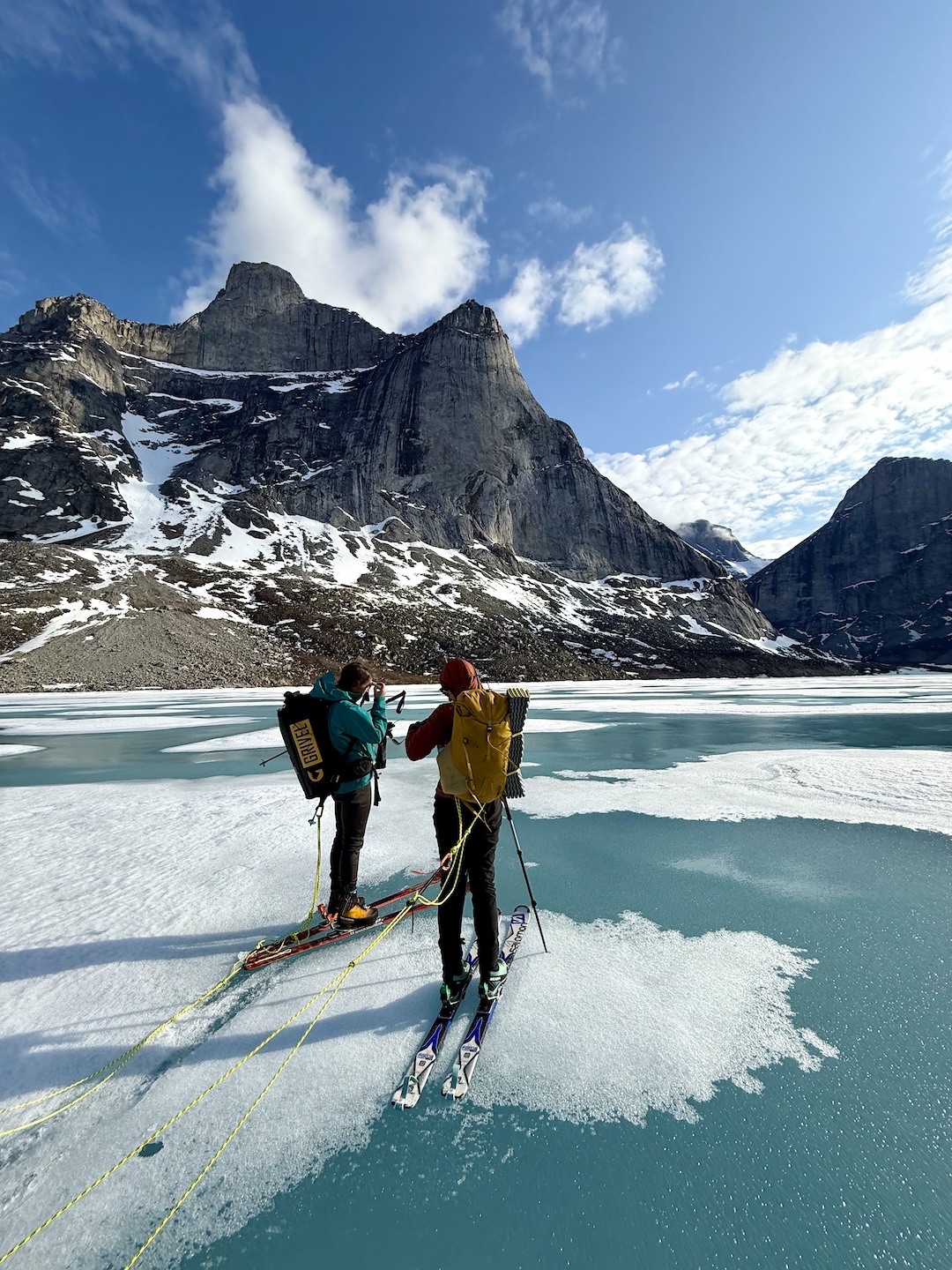
We assessed the possibility of another big route, but with the team divided and with rapidly changing ice conditions, we pivoted to the second half of the journey: finding our way back to Clyde River by a different route. From June 23 to 29, we ferried loads across sea ice and over Ayr Pass to reach Ayr Lake.
Crossing Ayr Lake was surreal—we were mesmerized by glittering freshwater ice crystals that were vastly different from the sea ice. Happy to have been wrong about melting ice conditions, we covered 27 kilometers of ice on Ayr Lake to reach the Kuugaaluk River in two days with relative ease. We established a base camp at the head of the river on June 30 and sat out the first of our truly bad weather, confining us to our tents. After attempting and bailing from a shorter, more moderate climb on an unknown formation on July 4, we decided it was time to head back to civilization.
On July 5 we inflated packrafts and floated for 20 kilometers of mostly mellow current with sections of Class II. Large portions of the river remained frozen, forcing us to drag boats across ice. On July 6 we cached unneeded gear for Levi to pick up and started hiking east, back to Clyde River. Backpacking over untouched earth, tussocks, and bogs that tried to swallow your entire leg whole proved to be an adventure in its own right.
On July 7, 23 kilometers of hiking brought us full circle into Clyde River, where Levi met us with our cached gear and called us “tough.” We felt like superheroes receiving such a compliment from a born and raised Inuit who grew up not only on Baffin Island, but spent five years living in a cave with his family in the exact fjord we had just explored. Natalie departed soon after, while the three of us remained for the following week.
Although a month of strained dynamics had frayed our team, the final week of the expedition unfolded as a gift. We rested and celebrated Nunavut Day with the locals, sharing meals with elders, playing games with children, and even encountering narwhals offshore. We listened to stories of hunting, survival, and resilience. The climb had been our technical goal, but this was the expedition’s heart: a chance to connect, exchange, and bear witness to a community thriving in the same Arctic that had tested us. [This expedition was supported by a McNeill-Nott Award from Mountain Hardwear and the AAC.]
—Kelly Turner, USA
Media Gallery