
Mont de l’Equerre, Les Chercheurs d’Or
Canada, Quebec, Hautes Gorges de la Rivière Malbaie
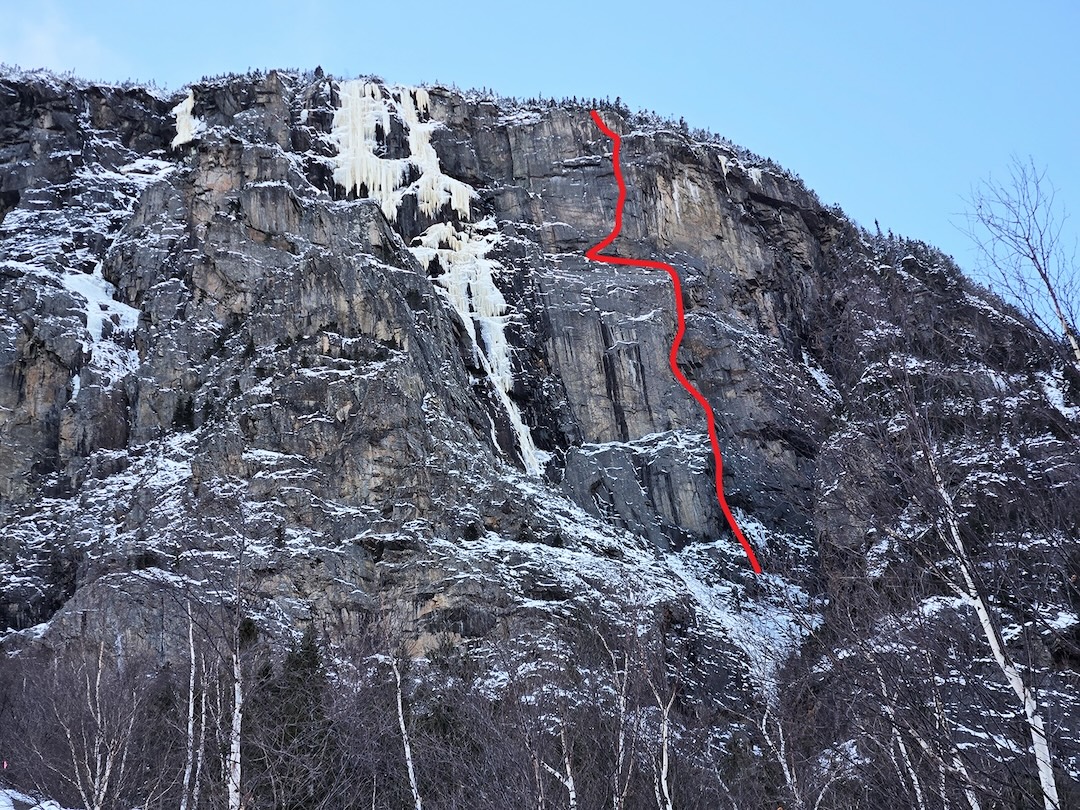
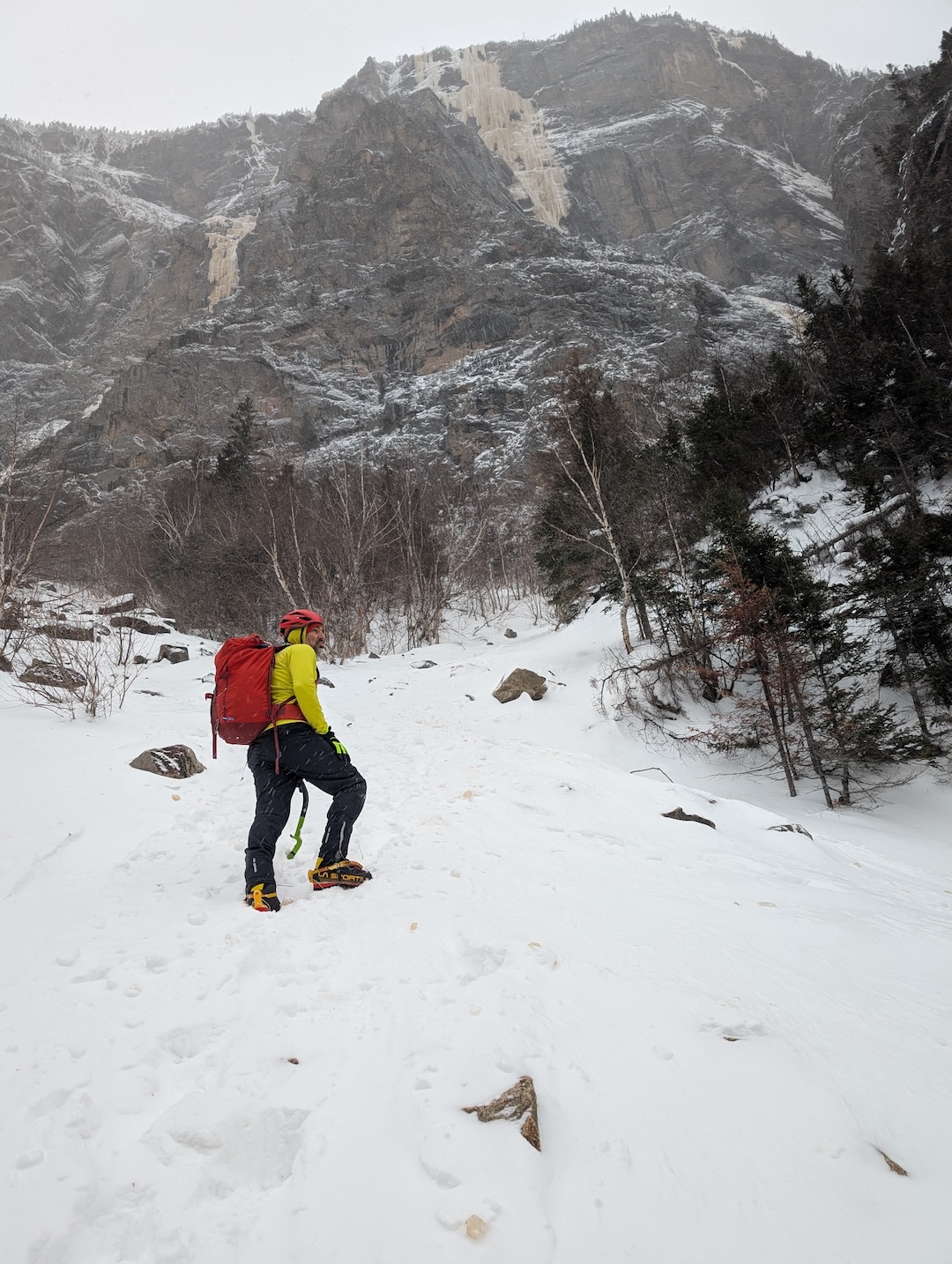
Patrick Brouillard is a regular in the Hautes Gorges de la Rivière Malbaie National Park and has established many long adventure routes there. On the east face of Mont de l’Équerre is a 1,200-foot wall holding the famous ice climb La Pomme d’Or (Tierney-Winkler, 1980) and its mischievous cousin La Ruée vers l’Or (Morin-Peloquin, 2001). These two ice routes frame an immense, imposing rock wall where Pat imagined a line. The catch is that the national park does not allow climbing in summertime on certain walls in the valley, including this one.
Aid climbing in winter—is that what you’re telling me?
I had already done some of that, so I hesitated when Pat proposed the project. This is no game for the soft. The weather window in January 2025 that our schedules gave us had nothing tropical about it. In fact, it turned out to be the coldest week of the winter, with temperatures between -20°C and -30°C and winds strong enough that we often struggled just to stay on our feet. Fixing ropes and returning to sleep in the warmth of our vehicle seemed to be the best strategy if we wanted to pull this off.
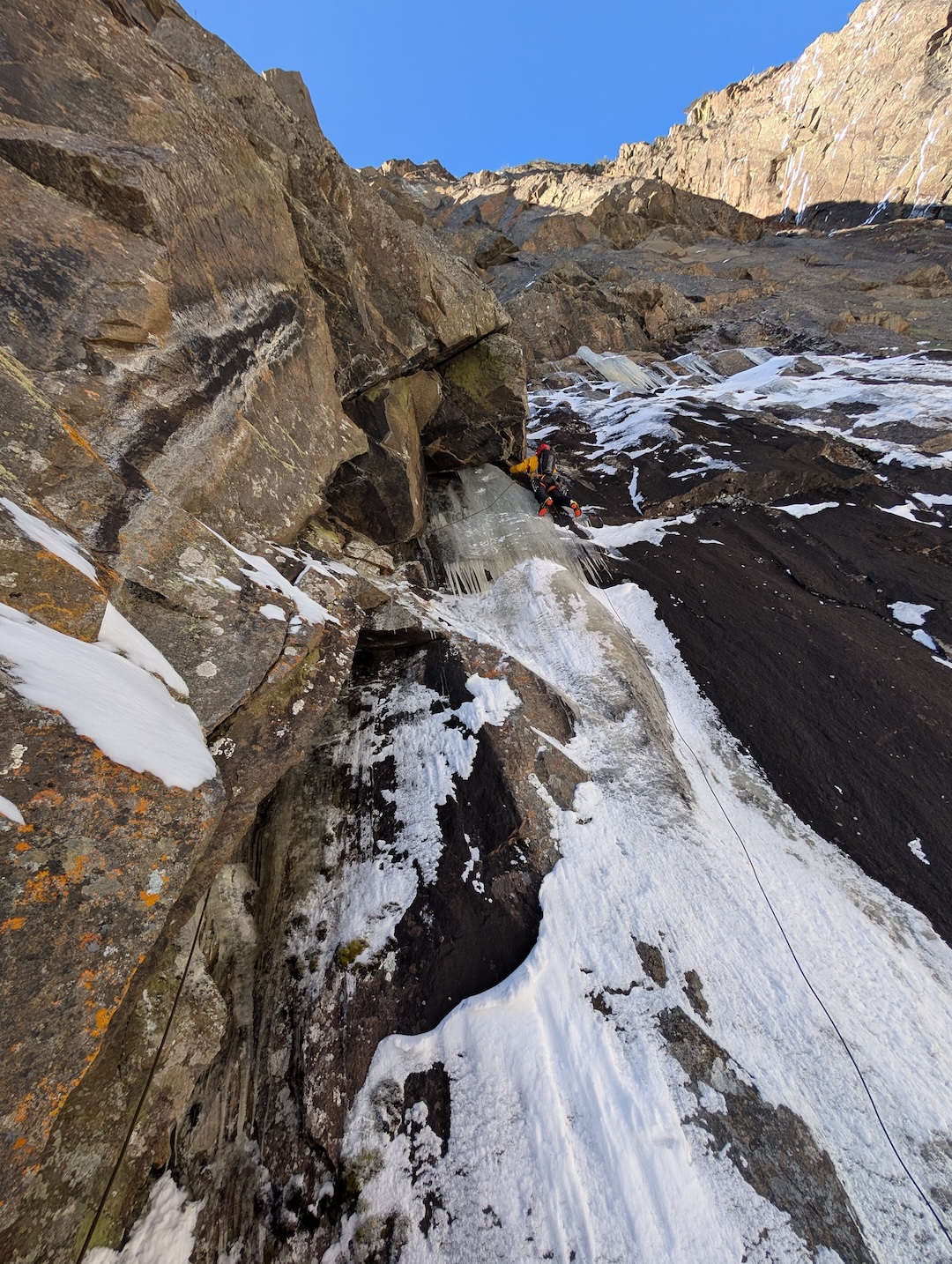
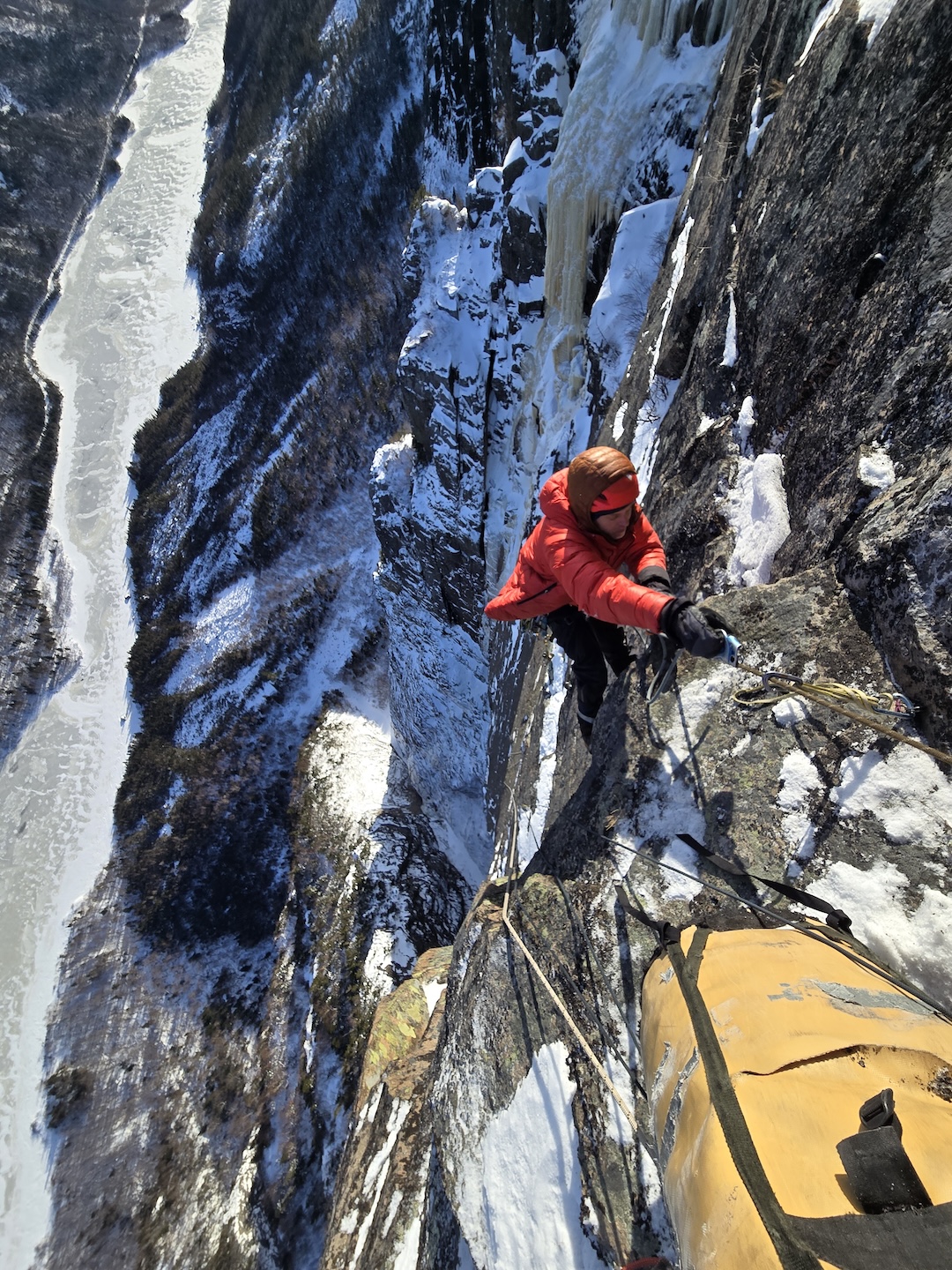
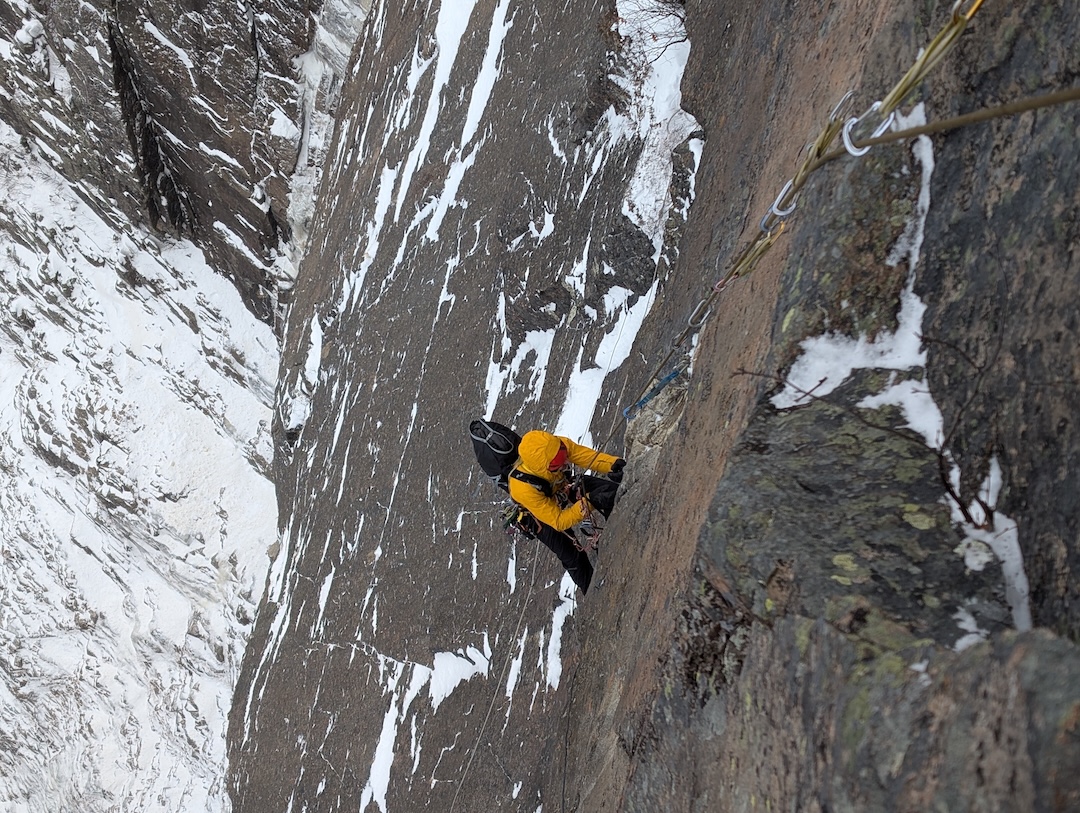
When we began climbing the initial ice and snow pitches, the line through the rock above was not clear. Only when we got there did the line reveal itself. Massive, clean, and overhanging—I couldn’t help seeing free climbing potential. At a daily rhythm of two pitches, we worked up the crack system, which was remarkably overhanging, making the jugging increasingly demanding. It should be noted that the approach—five kilometers followed by a very steep scree slope to reach the fixed ropes—took four hours round-trip each day and consumed a great deal of energy.
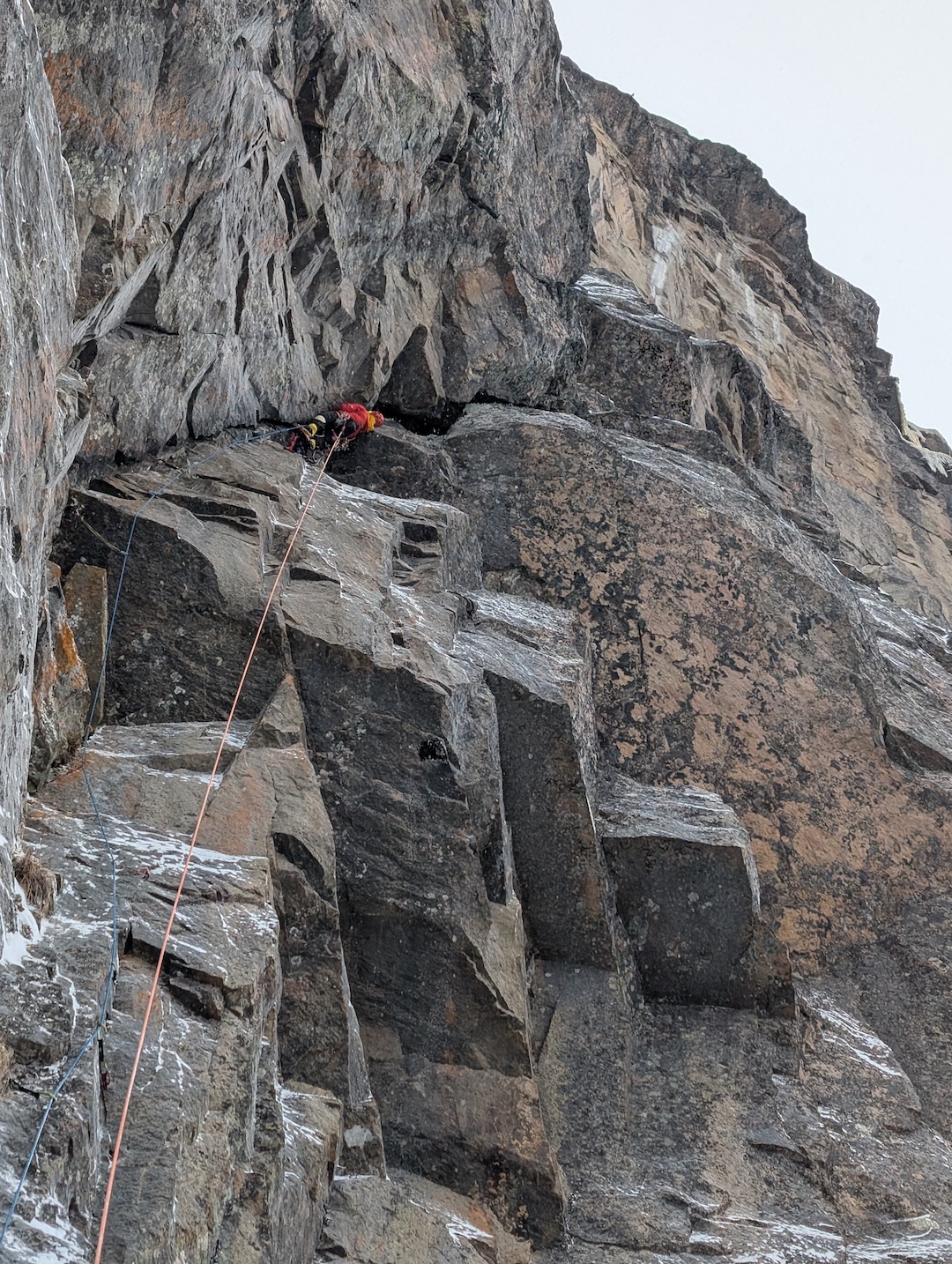
Managing the cold was our main challenge. Bringing a sleeping bag for the long hours of belaying proved a lifesaver. After pitch 11, our momentum was abruptly halted, about 60 meters below the summit, by family obligations. As we began the descent, we promised ourselves we would return.
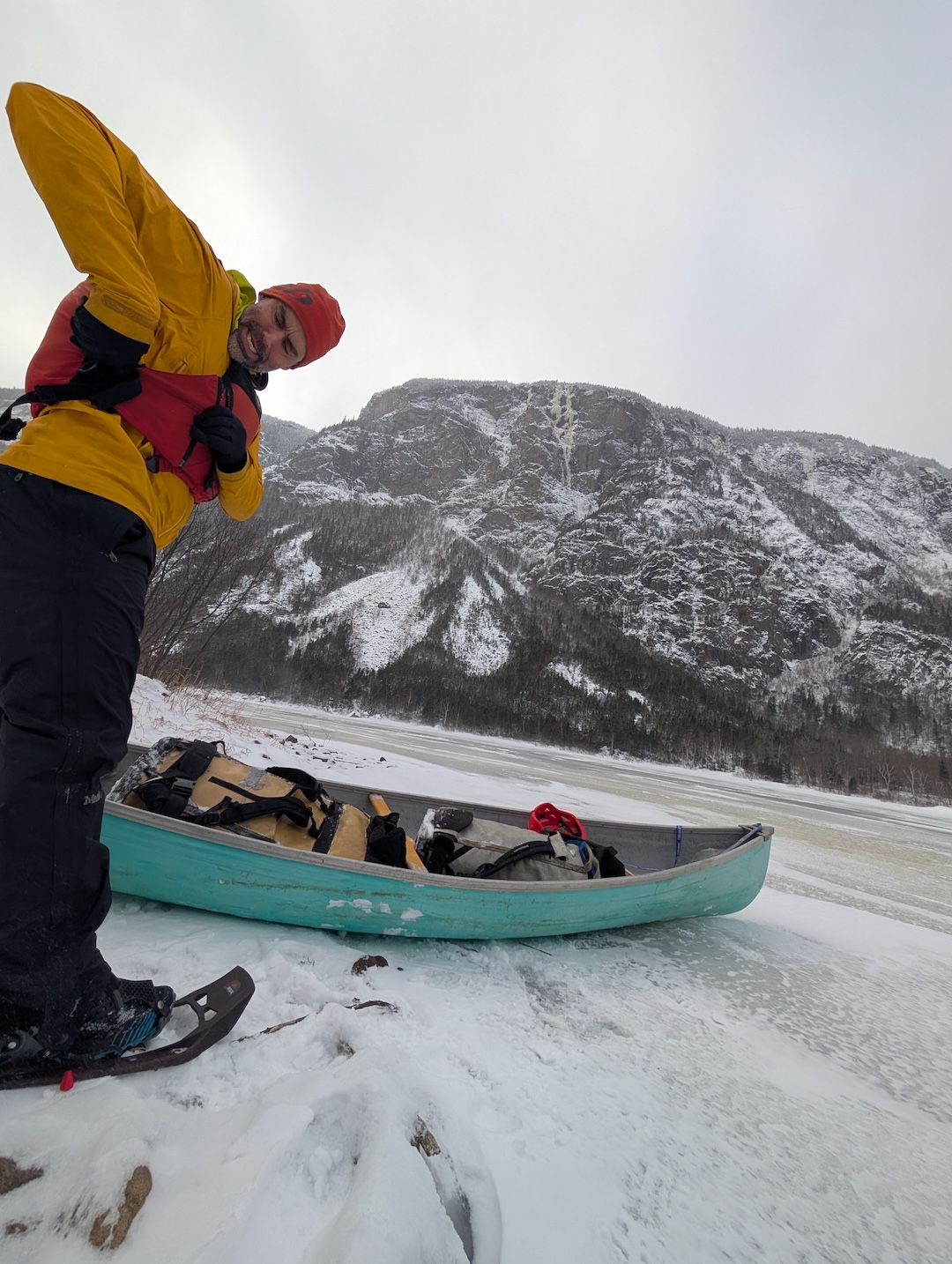
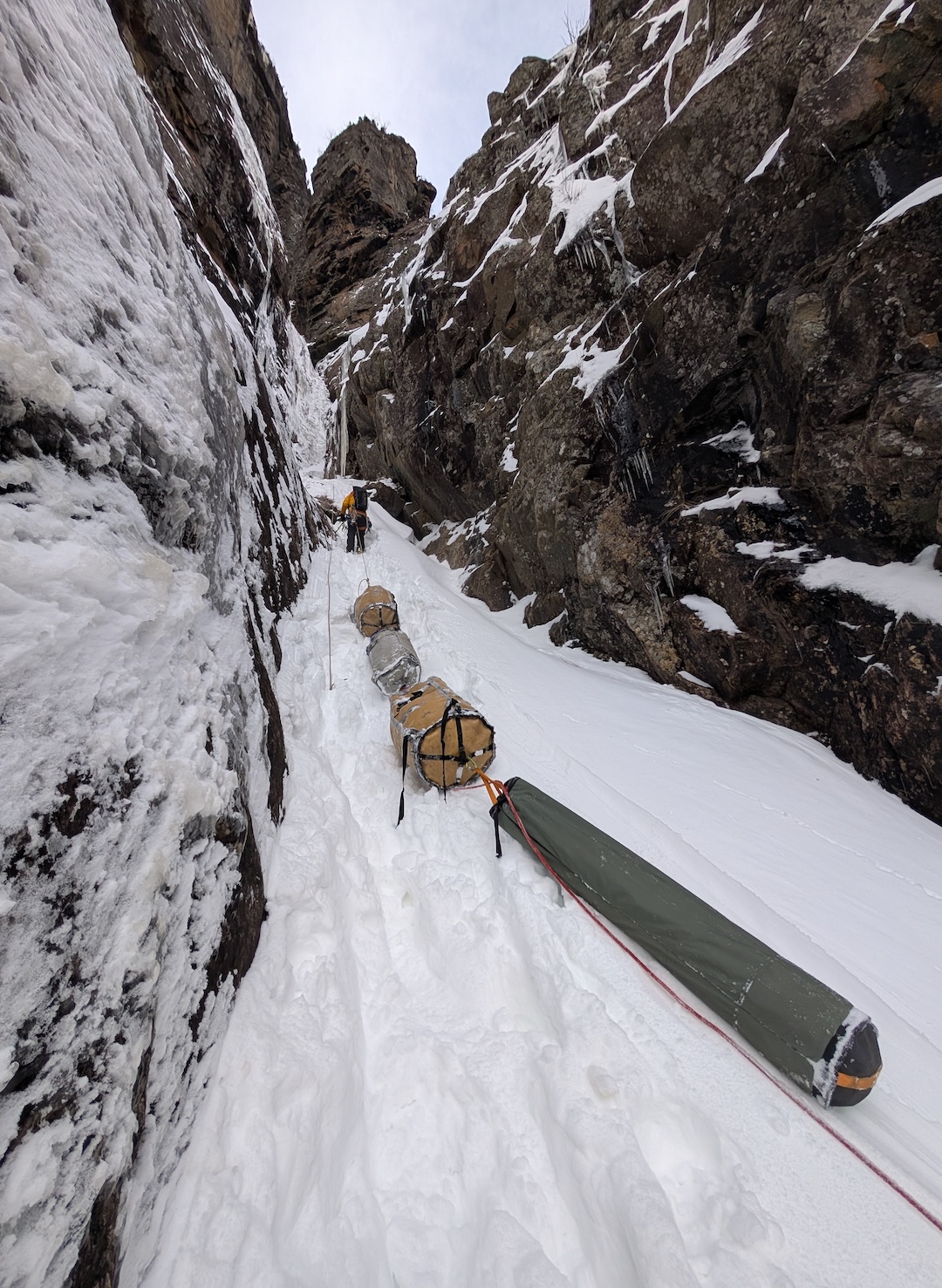
In late autumn 2025, the first freezes reminded us of that commitment. Hoping for milder conditions than before, we chose the first week of December for our second attempt. We also opted for a more committing style that we hoped would also prove less exhausting: staying on the wall. Hoping to finish in six days, we packed for eight, and in the end it took seven. The approach was no less an ordeal than on the first attempt. We even needed to carry in a canoe to cross the river, where ice had only just begun to form.
Although the forecast looked rather favorable and mild when we set out, the early arrival of an Arctic air mass by the second day put us back into extreme conditions. Managing the cold once again became our main challenge, especially since we were equipped for somewhat milder conditions. It was impossible to dry our clothes or move quickly enough to warm up. The cold was such that the stoves struggled to light, and in the cramped space of the portaledge every maneuver became complicated.
It was in this setting, at the end of our third day, searching for a little warmth in our sleeping bags, that a deafening roar erupted and vibrations came from every direction. A massive collapse! There was nothing to do but wait and hope through seconds that felt like an eternity. Then silence. Our hearts began beating again. The main pillar of La Pomme d’Or, hundreds of tons of ice, had collapsed only a few dozen meters from us, producing a cataclysmic sound. We were safe beneath an overhang—which, until that moment, we had forgotten all about!
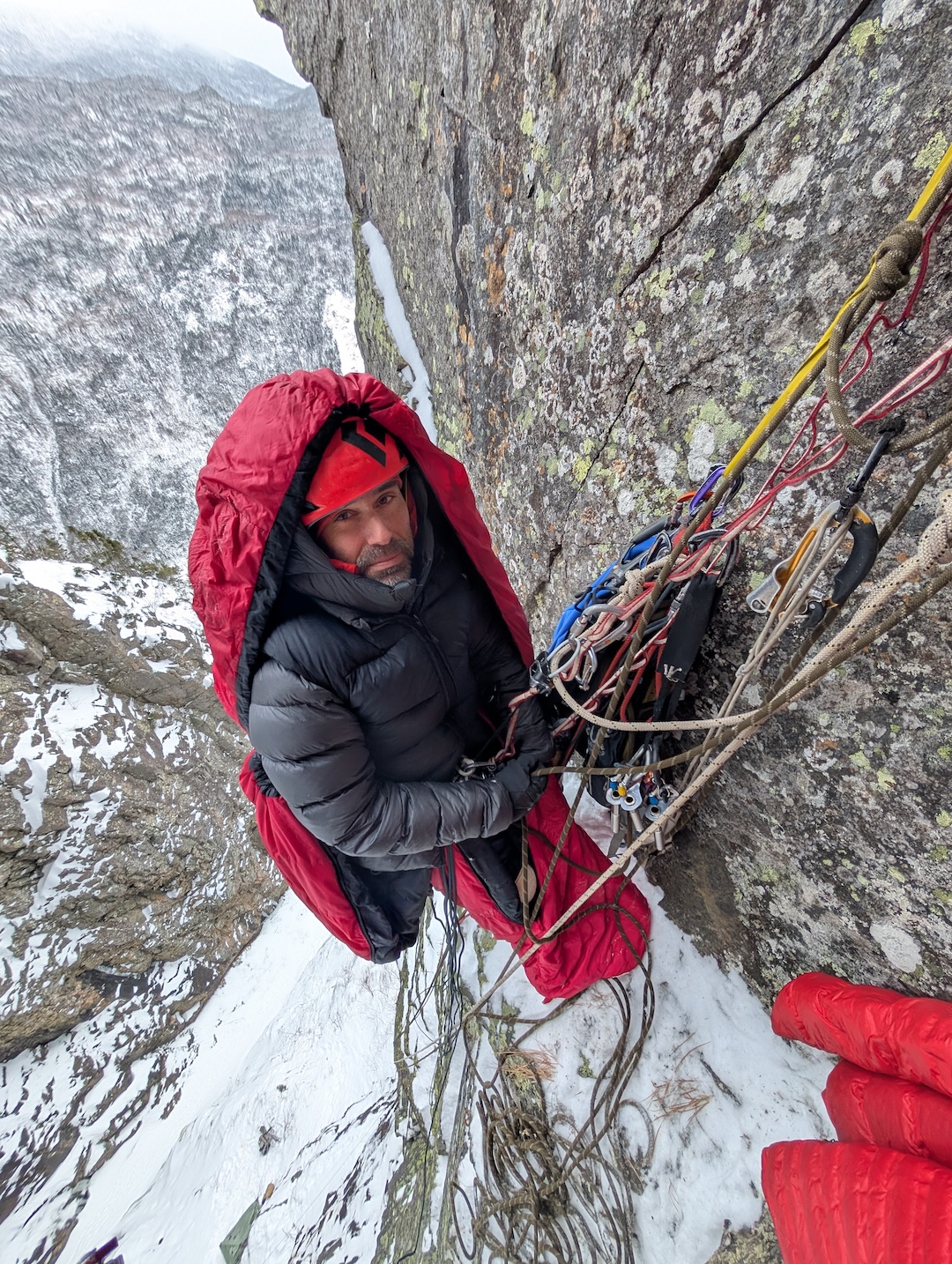
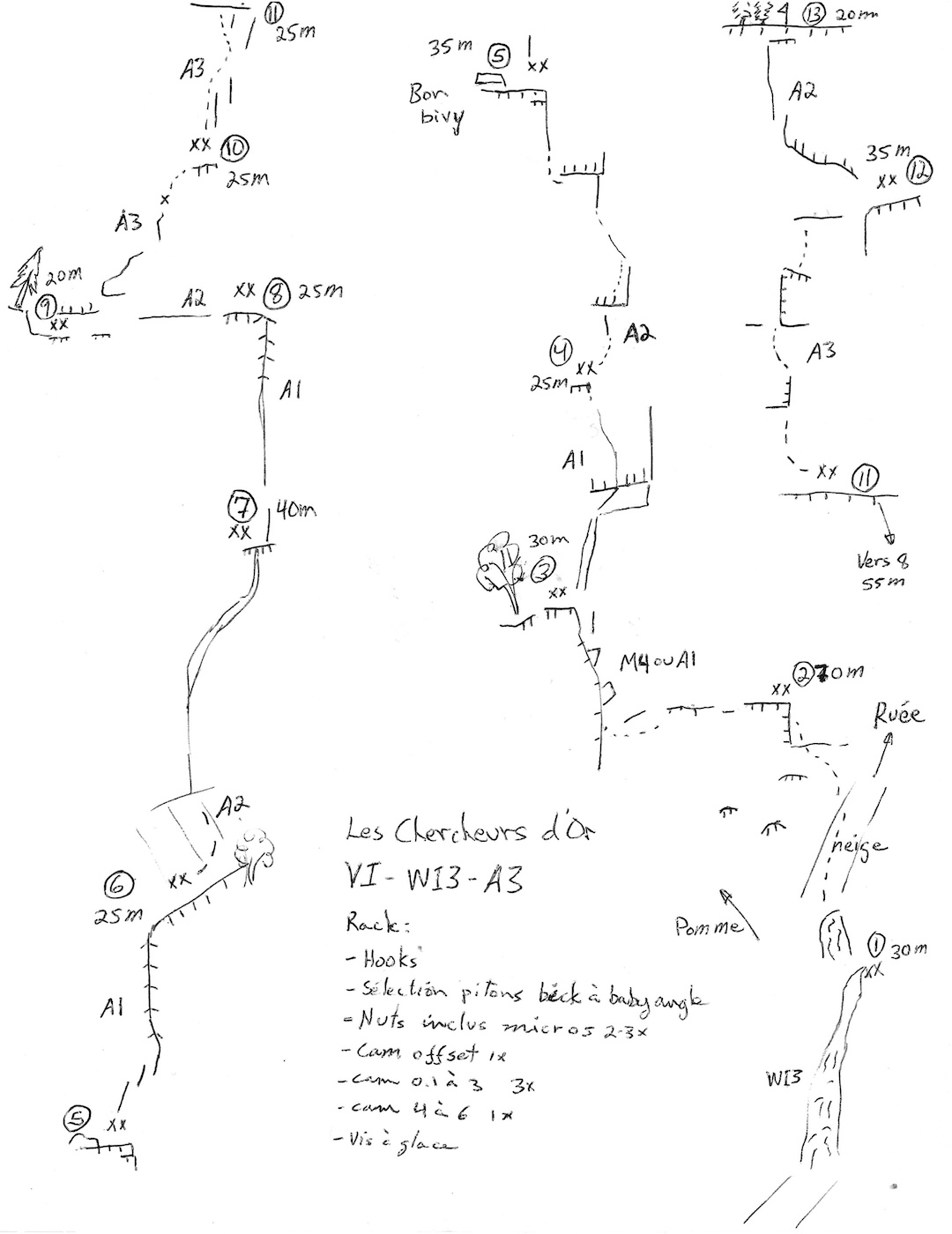
We placed our highest bivouac at the top of the eighth pitch, the last place on the cliff that still offered protection from possible ice fall, but exposed to the wind. Above here, the cracks closed down and the climbing stepped up a notch—we had reached the A3 pitches. The climbing was slow, and belaying became an exercise in survival. Despite endless precautions, Pat would feel the bite of the cold in his hands and feet.
By the end of the fifth day, shaken by strong winds, we reached the high point of our first attempt. If the wind and cold remained in the morning, continuing would probably be too risky. Even a minor incident could have serious consequences.
Fortunately, the sun appeared and we enjoyed it for a few hours before it slipped behind the wall. Our excitement grew. This might just work. Still doubtful, Pat examined his numb fingers and blue toes.
You sure, Pat?
It’ll be fine. Don’t worry.
His determination impressed me.
As I set off on the sixth day, the sensation of being such a tiny figure in the middle of this immense wall was indescribable: strength, vulnerability, excitement, fear, all blended in a grand moment. After 35 meters, I had one last hook move to reach the belay. The ground above the belay looked reasonable. We’re going to make it, that’s certain, I told myself, and then I was dropping. Several placements ripped out until the rope wrapped around a block of rock and stopped me after 20 meters. Oof! I had never taken such a long fall—luckily it came without consequences.
By late afternoon on the sixth day, we stood on top. We took some time to savor the moment, then orange tones in the sky suggested it was time to descend to our bivy, where we would spend one last night.
The following morning, the wind picked up again, and not by half. The temperature was still below -20°C, and we were back in survival mode. The descent was painful because of the cold, but by midday we were down at the base. Only that evening, exhausted after the long walk out, did we finally claim victory. The cold had bitten. Fingernails would fall off. But it was worth it. [The two named their route Les Chercheurs d’Or: 13 pitches, VI WI3 A3.]
—Jean-François Beaulieu, Canada
Media Gallery