Sikunga Mountain, West Face, Sikunga Express
Canada, Nunavut, Baffin Island, Eastern Fjords
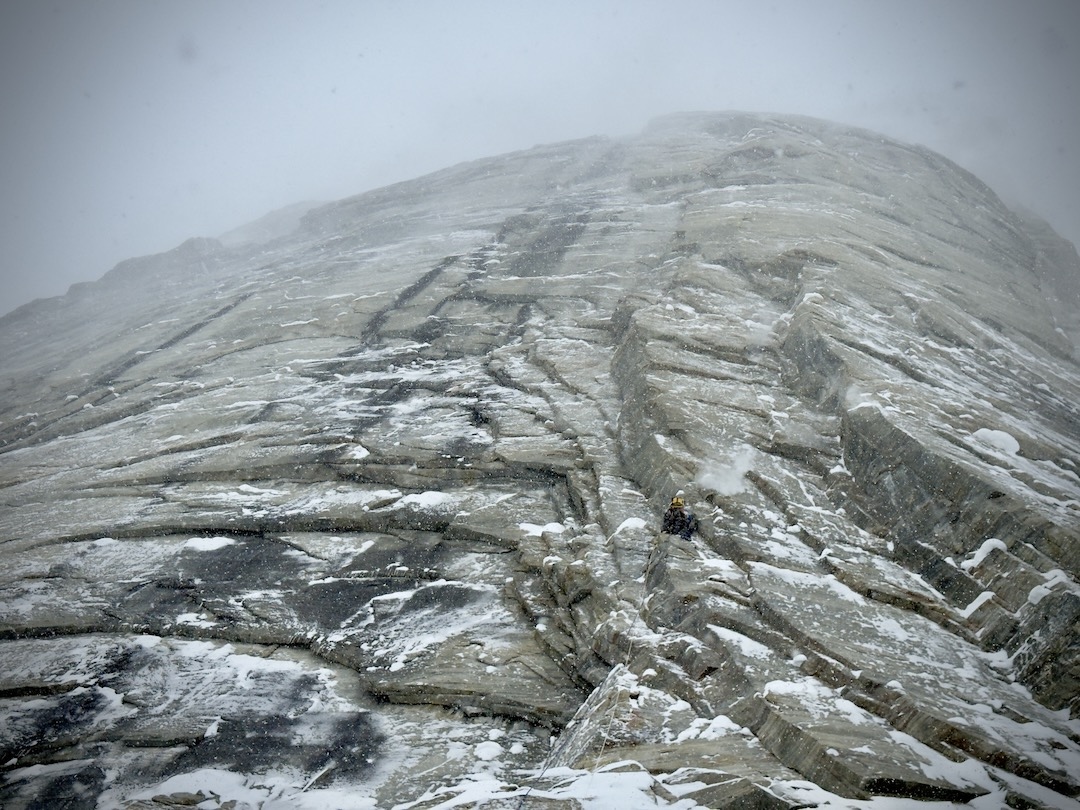
“How cold is it going to be?” I asked Erik Boomer. “Hmm, hard to say—definitely won’t be hot.” Over the course of 30 days, from April 30 to May 28, we had a couple of afternoons that reached a high of 7°F. This trip was exploratory for both Boomer and me: He had never spent a proper night in a double portaledge, and I had never been properly introduced to Arctic survival.
Boomer had sent me many photos of Kangiqtualuk Uqquqti (Sam Ford Fjord), and Tugalik Peak (1,481m), with over 1,280 meters of unclimbed rock, was the major formation that drew our attention. However, after the six-and-a-half-hour snowmobile ride from Clyde River, we scoped the wall from the sea ice and decided Tugalik would be too dangerous for the weather window we were heading into.
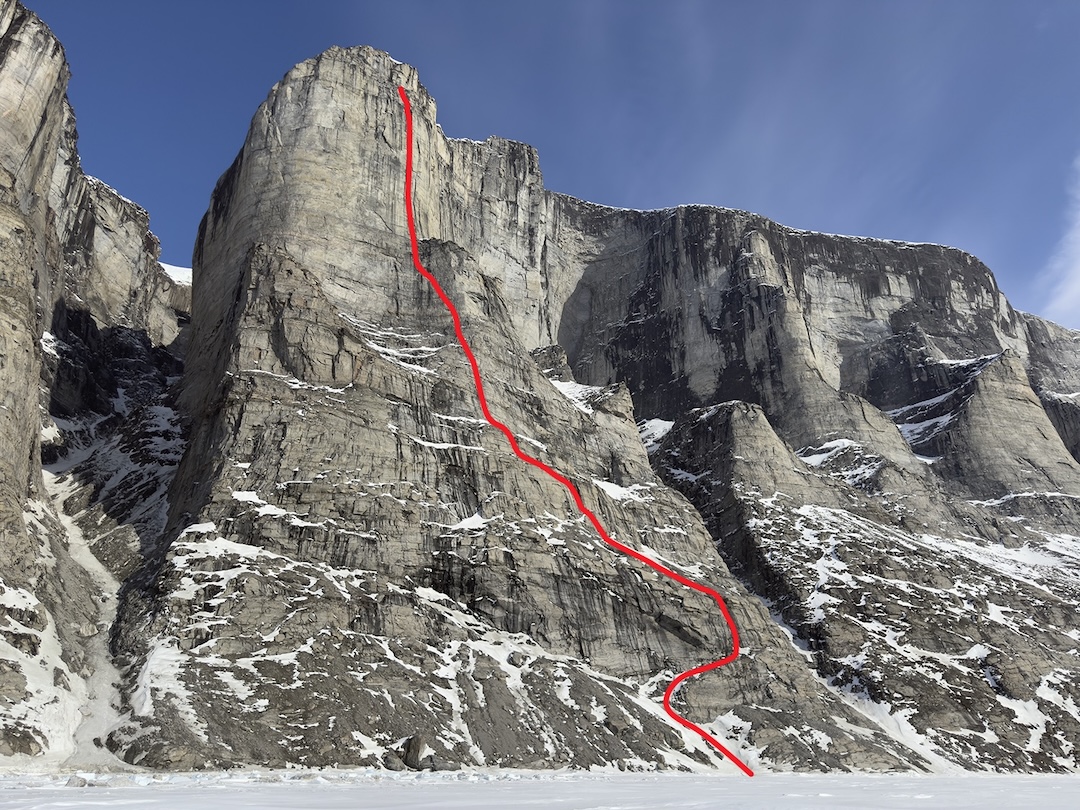
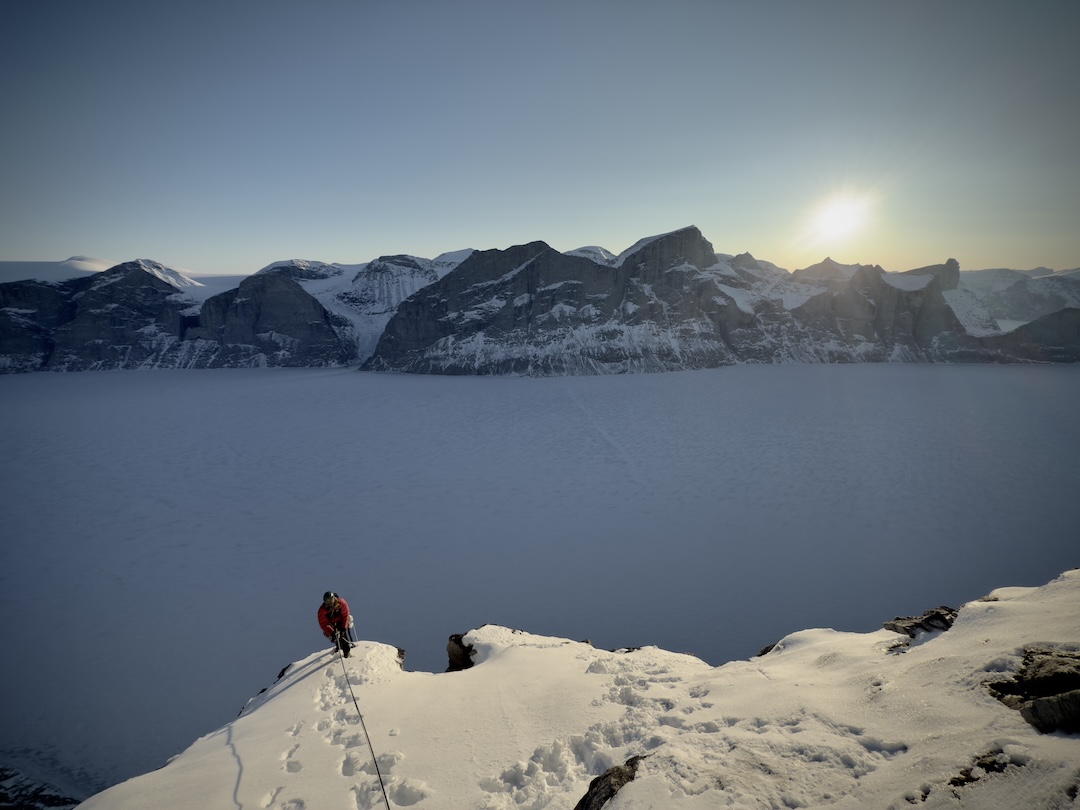
Looking about one kilometer farther south into the fjord, we noticed a beautiful, looming headwall on the west face of Sikunga Mountain. [Sikunga (1,593m, 70.457332, -71.052632) is on the east shore of Kangiqtualuk Uqquqti fjord. Many of this area’s most famous walls, including Polar Sun Spire and Walker Citadel, rise above Kangiqtualuk Agguqti (a.k.a. Walker Arm) to the west.] We had no information about the face, but it had minimal water streaks and an extremely steep headwall laced with cracks. After two hours of looking through the binoculars, we decided to attempt it.
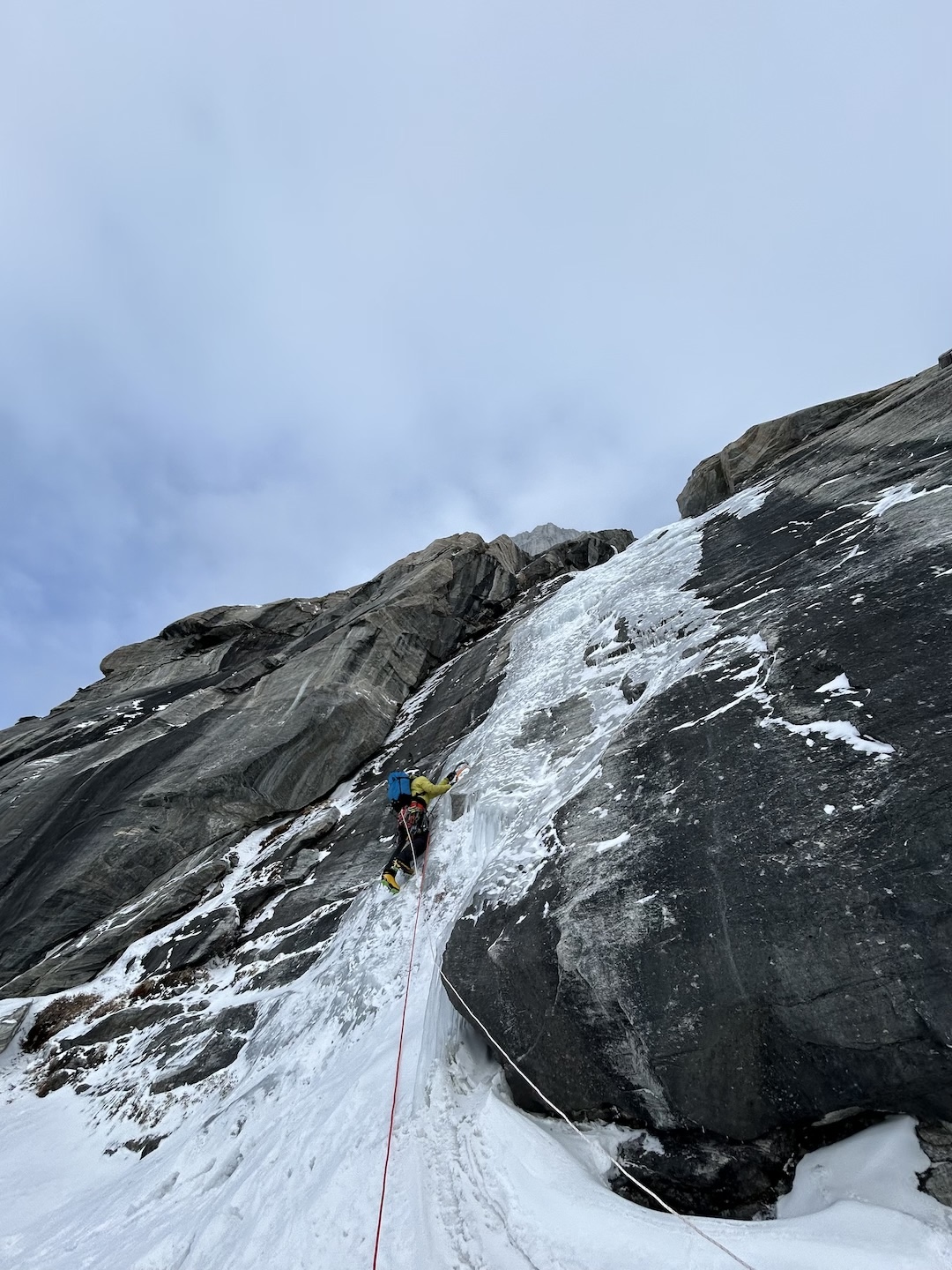
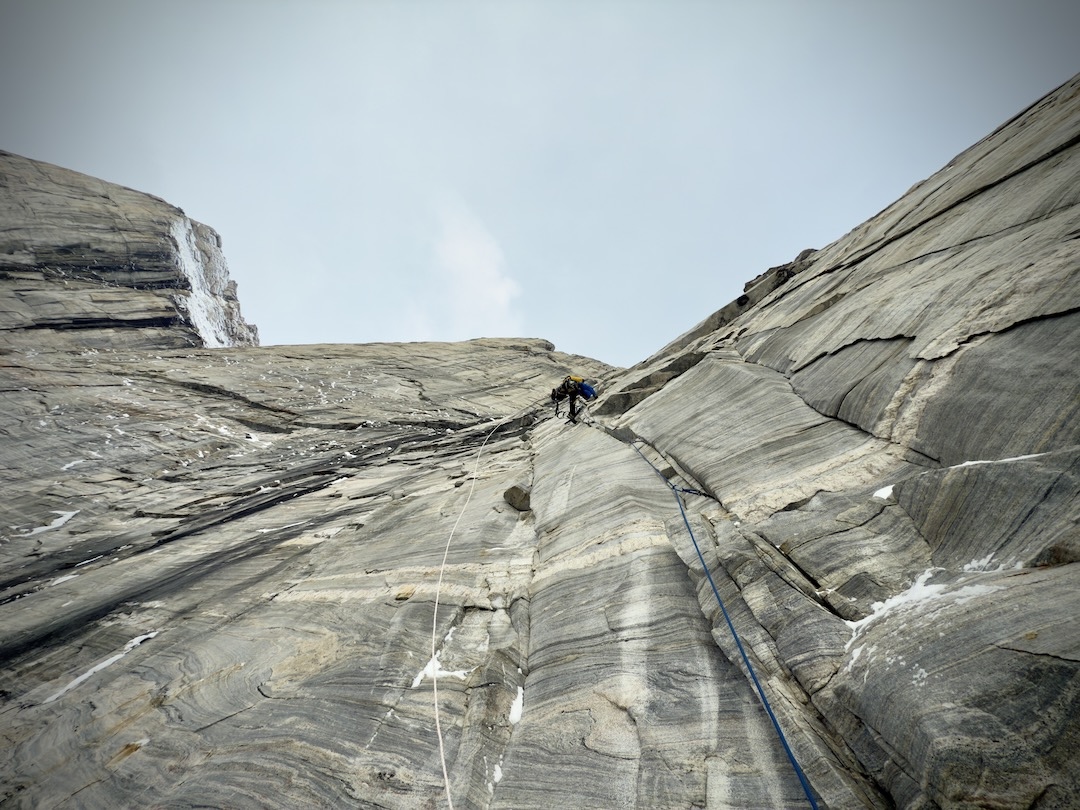
Starting a short way off the sea ice, Boomer led a 60-meter ice pitch (which disappeared a few days after we began). From there, we installed our first set of bolted anchors, fixed a line to the ground, and started shuttling loads. Over the next four days, we climbed the opening pitches of rock, snow, and ice, pushing the rope higher. After one last night sleeping on the sea ice, we committed to the route with all of our food rations and gear.
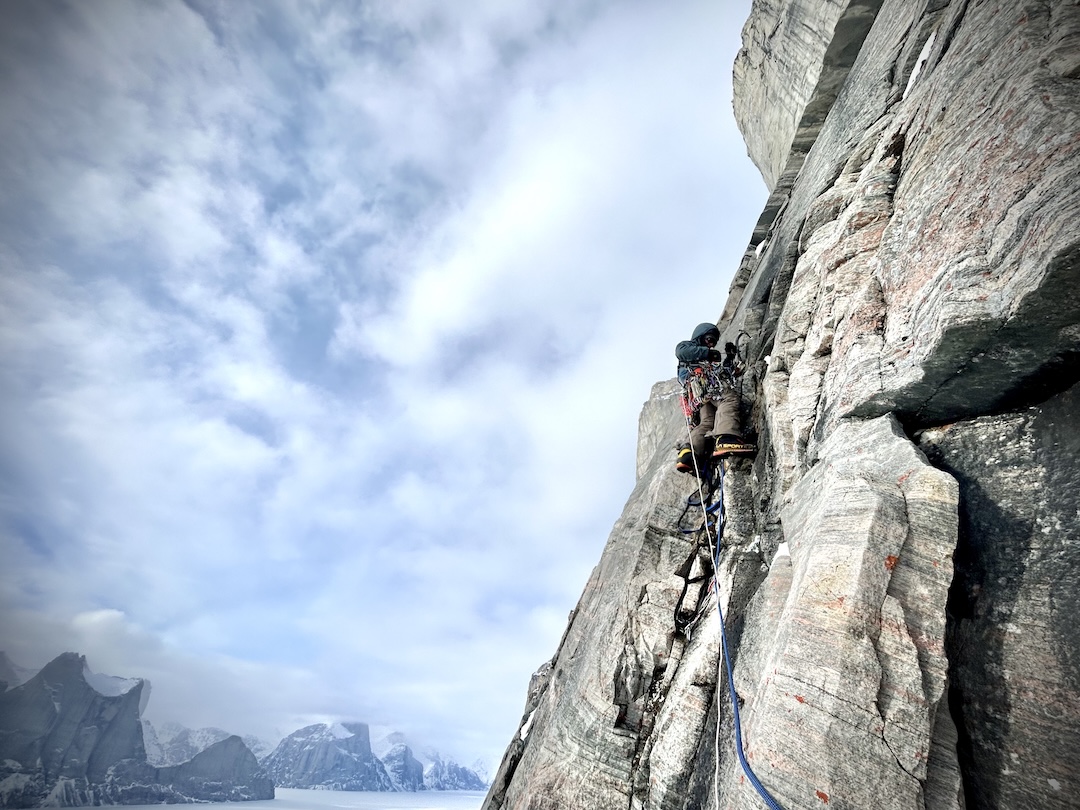
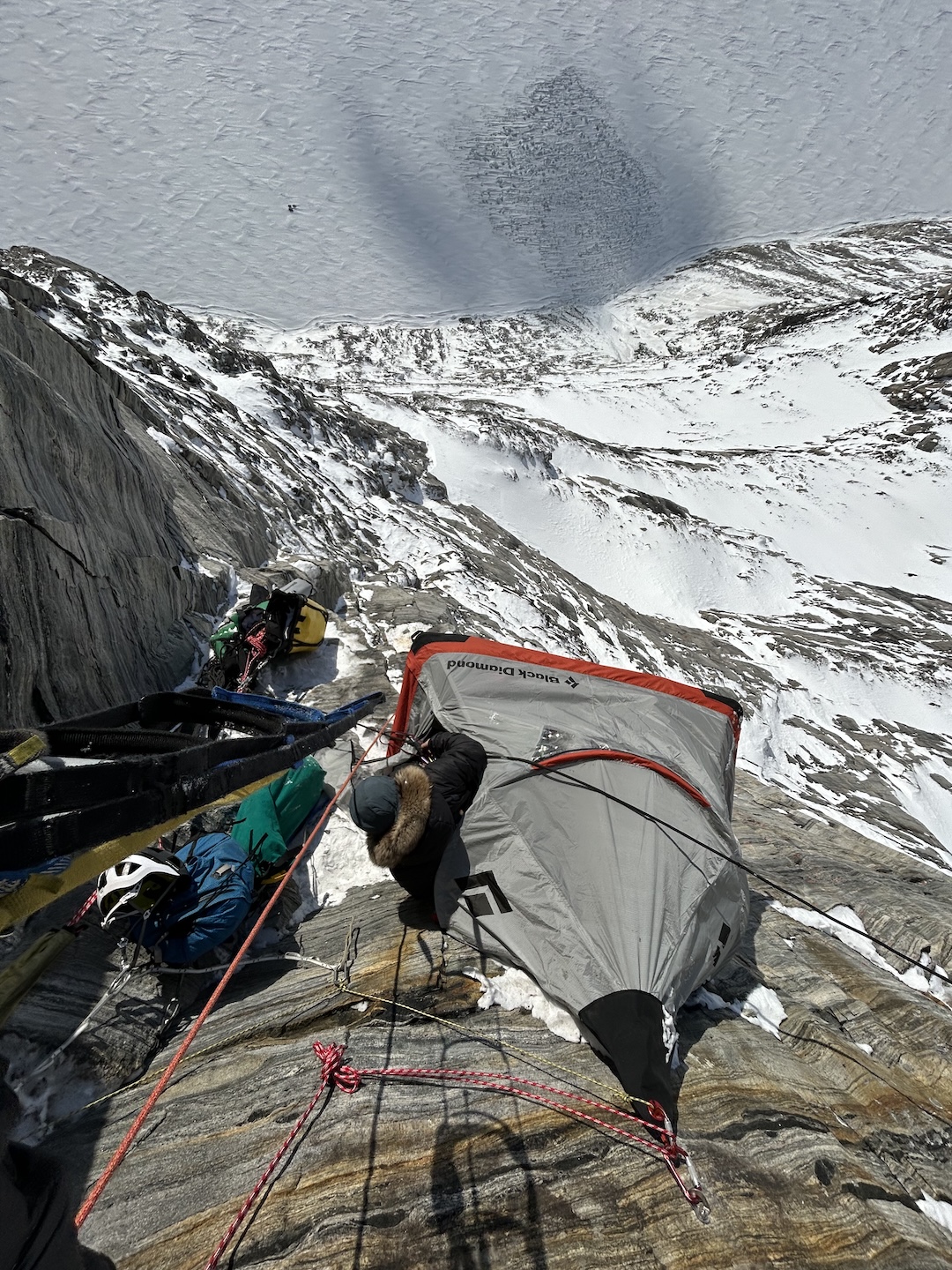
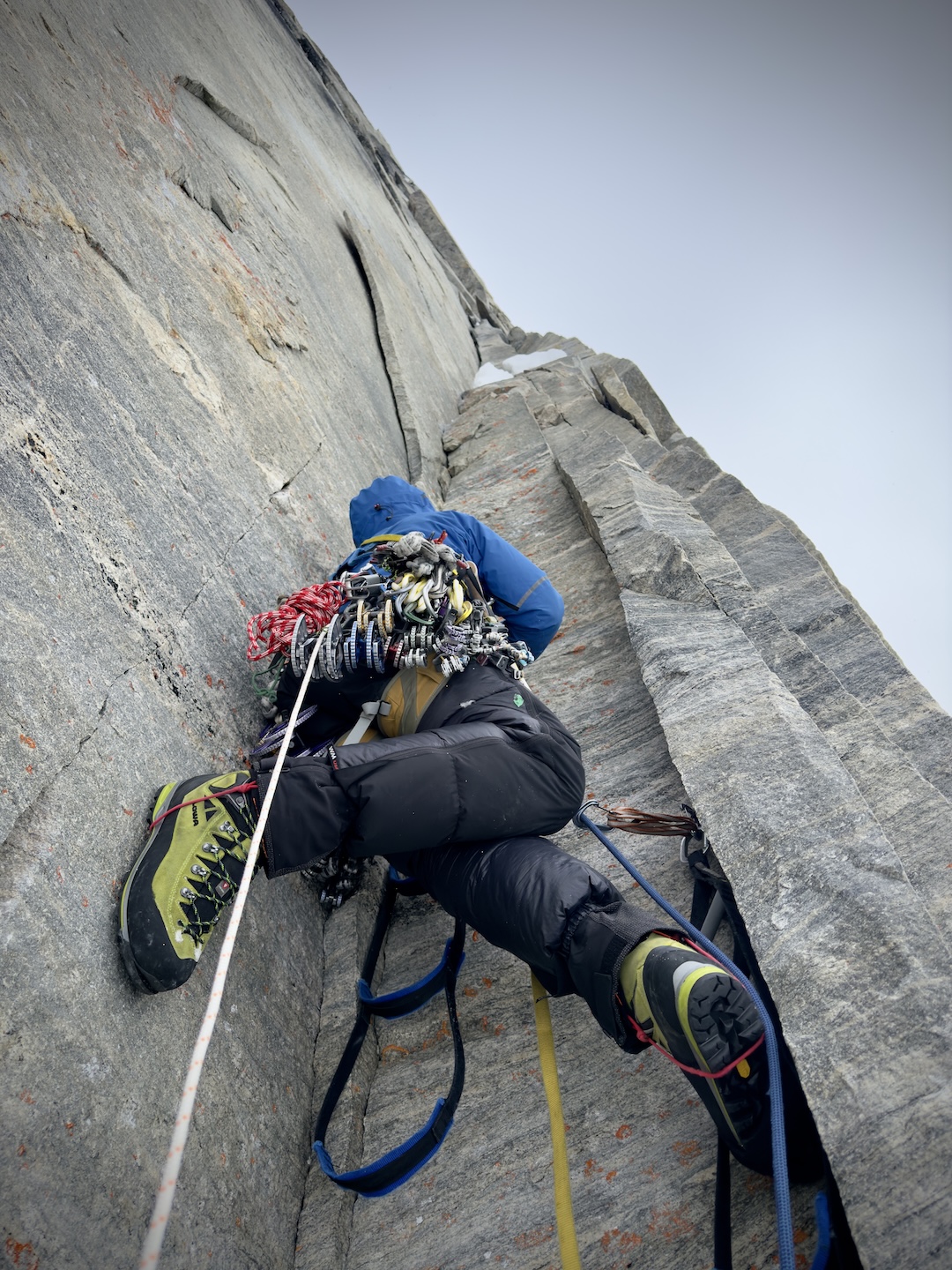
The cold and wind made it difficult to climb more than three pitches a day, and many of the cracks were filled with dirt and frozen tundra. With constant snow, wind, and freezing temperatures, the leads were taxing. Each day, we pushed our ropes to a new high point and then hauled the entire camp—the hauls were punishingly heavy. Once we were fully committed to the vertical world, the snowy ledges disappeared and we were forced to haul blocks of snow in an 80-liter bag—hopefully enough to last until we reached the next snow ledge about 250 meters above.
After leaving the “mid-mountain bench,” at about 600 meters up the wall, we started up the headwall splitters. These next four days were defined by long, bitterly cold hours, and my frostnipped toes were becoming an issue. After talking it over, we decided it would be just as cold down on the sea ice as it was on the headwall, so we continued upward.
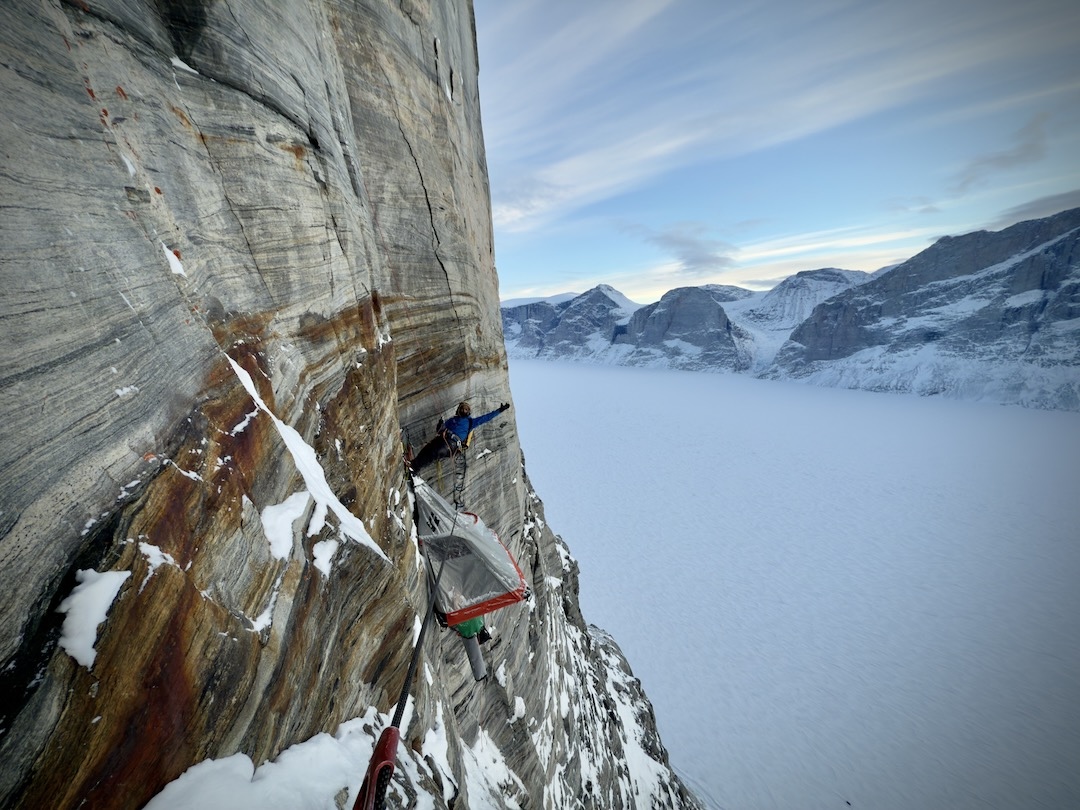
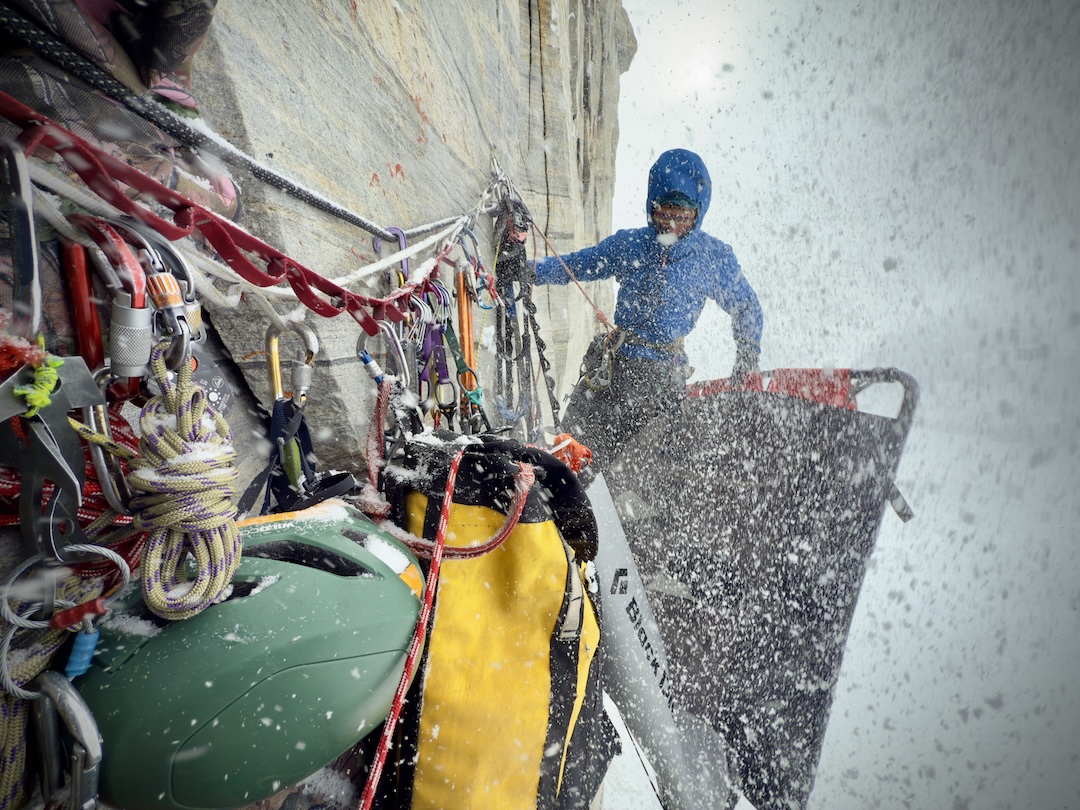
About three-quarters of the way up the headwall—roughly 800 meters above the ground—we were hit by the first of the major wind events Boomer had been warning me about. The wind was strong enough to lift two grown men in a portaledge for hours on end. We estimate gusts reached around 60 mph. It wasn’t our best night’s rest. Once the storm cleared, we made our final push, climbing the last 250 meters up beautiful seams and roof cracks, with stretches of natural hooking. It took us 20 more hours to reach the top of the wall. [The top of Sikunga Mountain is a couple of kilometers east and about 500 meters higher than the top of the wall.]
On May 22, with three of our four ropes core-shot, we descended the wall in a 16-hour push and reached the sea ice—relieved to finally be out of the rockfall, spindrift, and mayhem. Back at our campsite, we were happy to find that some Inuit friends we’d met on the ride into the fjord had left us a frozen fish buried beneath the tent.
Over the course of the climb, we tested several new big-wall tactics we’d been eager to try: burning a WhisperLite in the portaledge for every meal, hauling snow for water, dealing with overflowing teapots, and watching how fast spilled water can freeze beneath you. I popped a sleeping pad one night, and I woke up covered in snow despite a fully zipped rainfly. The trip was full of small epics and big surprises that humbled both of us.
Spending 23 nights in a portaledge in the Arctic was an unforgettable experience—witnessing one of the most brutal environments transform into a place of such solace and beauty is hard to explain. We named our route Sikunga Express (975m, VII 5.10 A4 WI3 M6).
—Kylus Hart, USA
Media Gallery