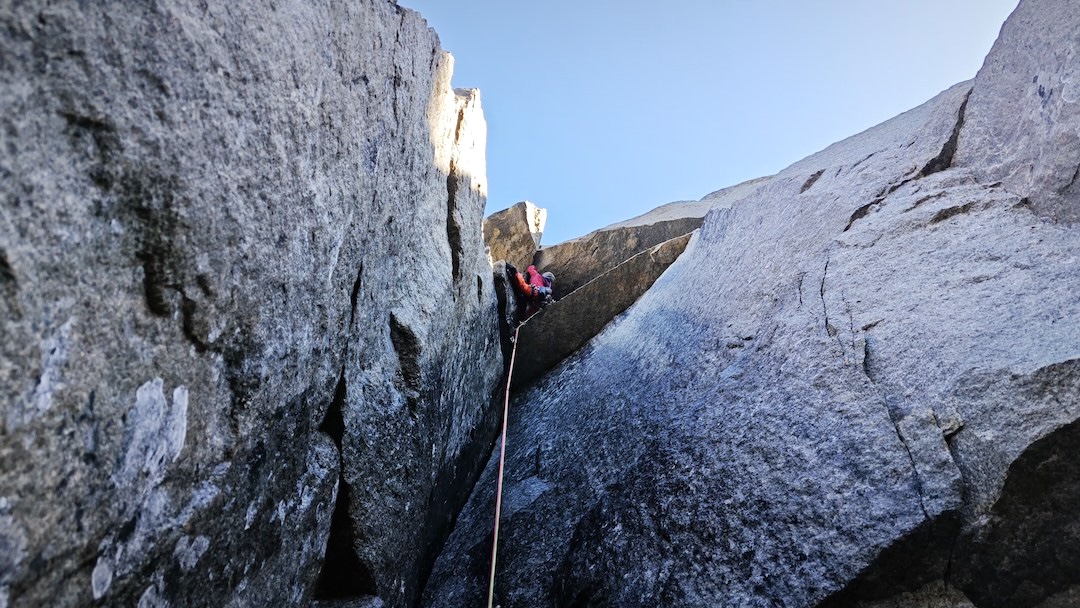

Freya Peak, Northwest Face; Mini-Asgard, La Casa de las Diosas
Canada, Nunavut, Baffin Island, Auyuittuq National Park
In mid-July 2025, I set out with Chilean climbers María Paz “Pachi” Ibarra and Violeta Sepúlveda on a monthlong, all-women, self-supported expedition through the glacier systems of Auyuittuq National Park. Our goal was to spend time in the heart of Baffin Island, embracing the rhythm of the mountains and climbing when weather allowed. The expedition was supported by Patagonia and the Grit & Rock Expedition Grant, and we are deeply grateful to both of them.
The community of Qikiqtarjuaq on Baffin’s southeast coast, where I have lived for more than a decade, served as the expedition’s starting point and logistical base. There, we prepared homemade dehydrated meals, modified gear, and carefully packed each essential item.
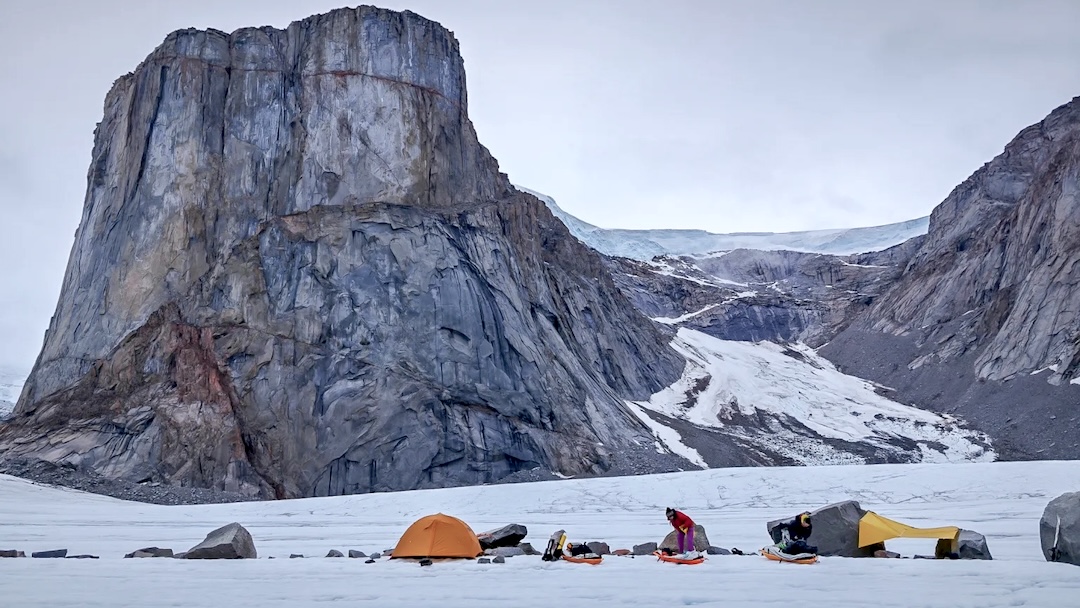
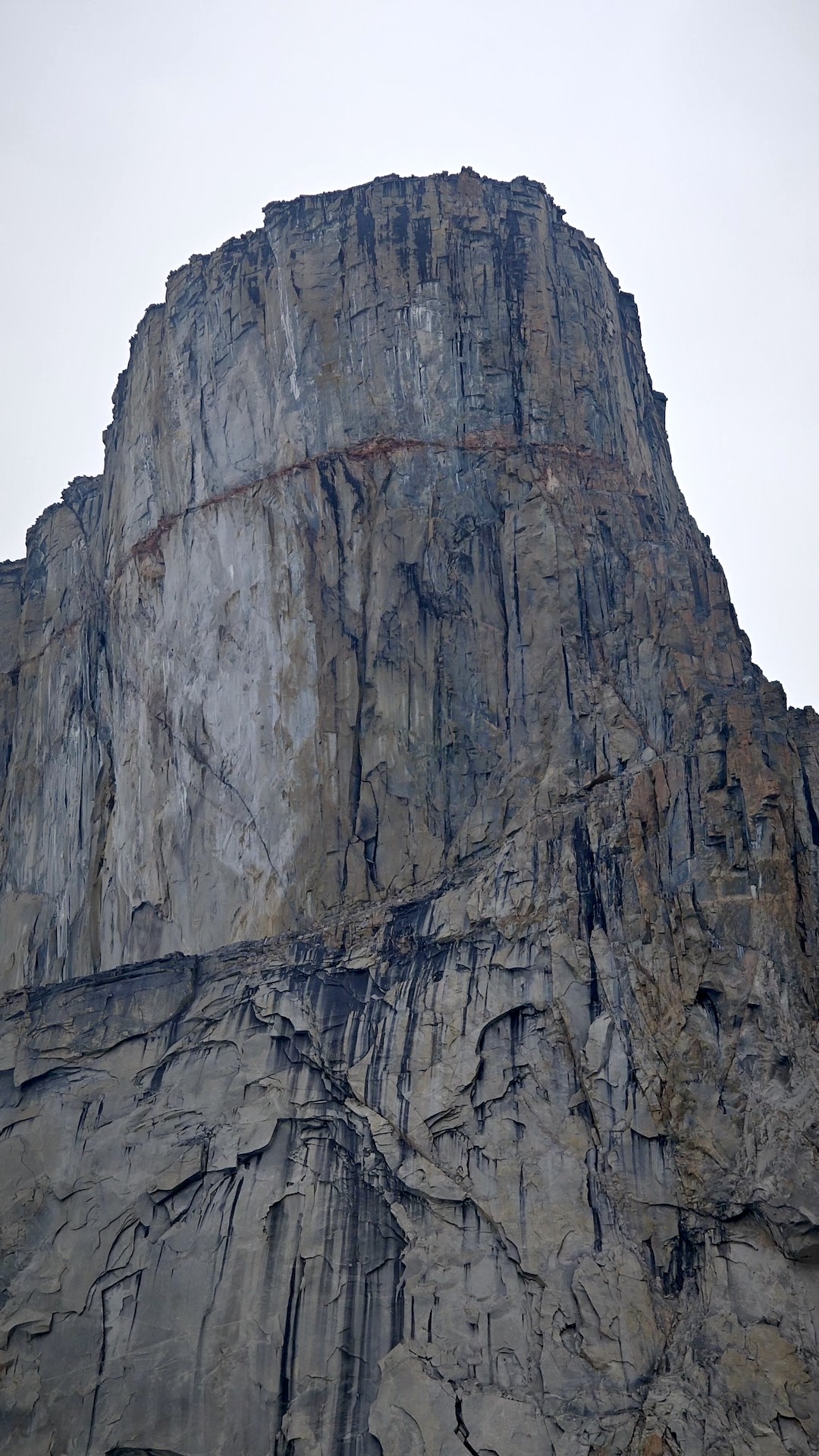
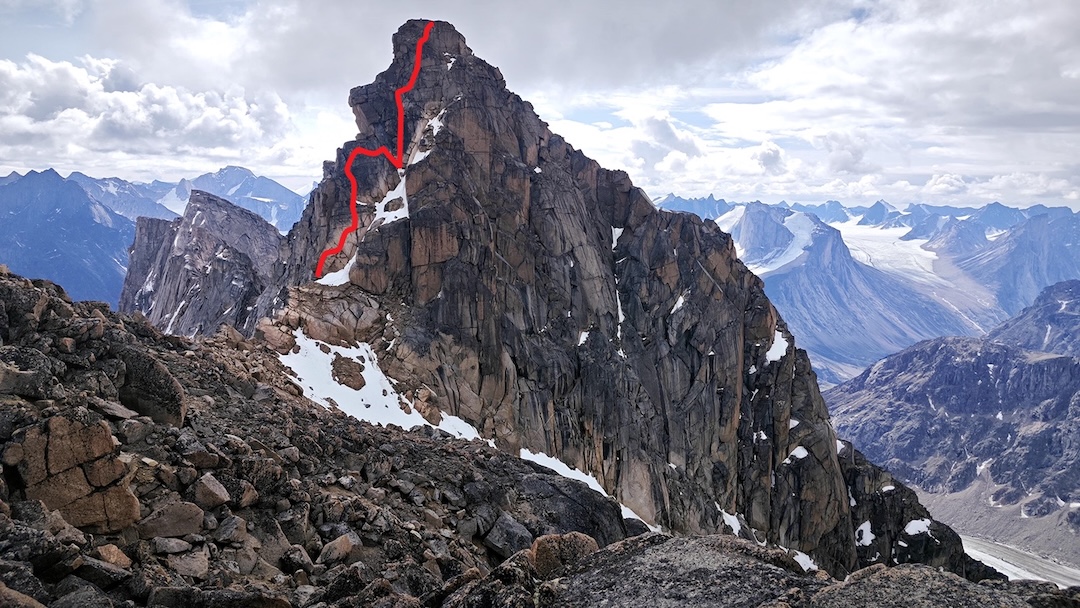
On July 14, once the ocean was free of ice, my friend Billy Arnaquq transported us by boat 70 kilometers south and then west along Coronation (Illaulittuuq) Fjord to the mouth of the Coronation Glacier, where we stepped onto the ice and began hauling sleds loaded with gear and supplies for the coming month. After two days of travel up the glacier, we made our first attempt on the north face of an unnamed 400-meter granite tower, informally known as Mini-Asgard (66.9745, -65.3011). We retreated 60 meters below the summit due to rain.
We then continued our traverse, ascending the Penny Ice Cap. From a high point of about 1,900 meters, we descended along several glacial arms toward the Parade Glacier and the foot of Mt. Asgard (2,015m), known in Inuktitut as Qattaujannguaq. Once there, in a stretch of ideal weather, we repeated the Swiss Route (Marmet-Röthlisberger-Weber, 1953) on Asgard’s north tower, summiting under blue skies and pausing for a comfortable nap on the summit.
We followed this with a new route on the northwest face of Freya Peak (1,831m). We scrambled up the long west ridge, with short technical steps, to reach a first top, then connected through a pass to the base of Freya’s summit tower (66.6466, -65.2577), which required three pitches of moderate climbing.
Based on local knowledge, available records, and the absence of inukshuk or rappel anchors on the top, this line—Celine’s Boot Camp (800m, IV 5.8)—may represent the first ascent of Freya’s true summit. The previously known lines all climbed the east face and reached a top marked at 1,754 meters. Reaching the true summit from these routes would require traversing the long, technical southeast ridge, with various gendarmes, which was never mentioned in accounts of earlier ascents.
Our next objective was Mt. Loki (1,920m), where we attempted the prominent south buttress (Lee-Parker, 1982). Excellent climbing was interrupted by heavy rain midroute, forcing a difficult retreat with waterfalls pouring down the rock.
After waiting without luck for a stable window to try again, we headed back across the ice cap for another attempt on Mini-Asgard. Our second effort was cut short by high wind and snowfall. We spent the following three days tent-bound in a windstorm, physically bracing the walls from inside to keep the shelter intact.
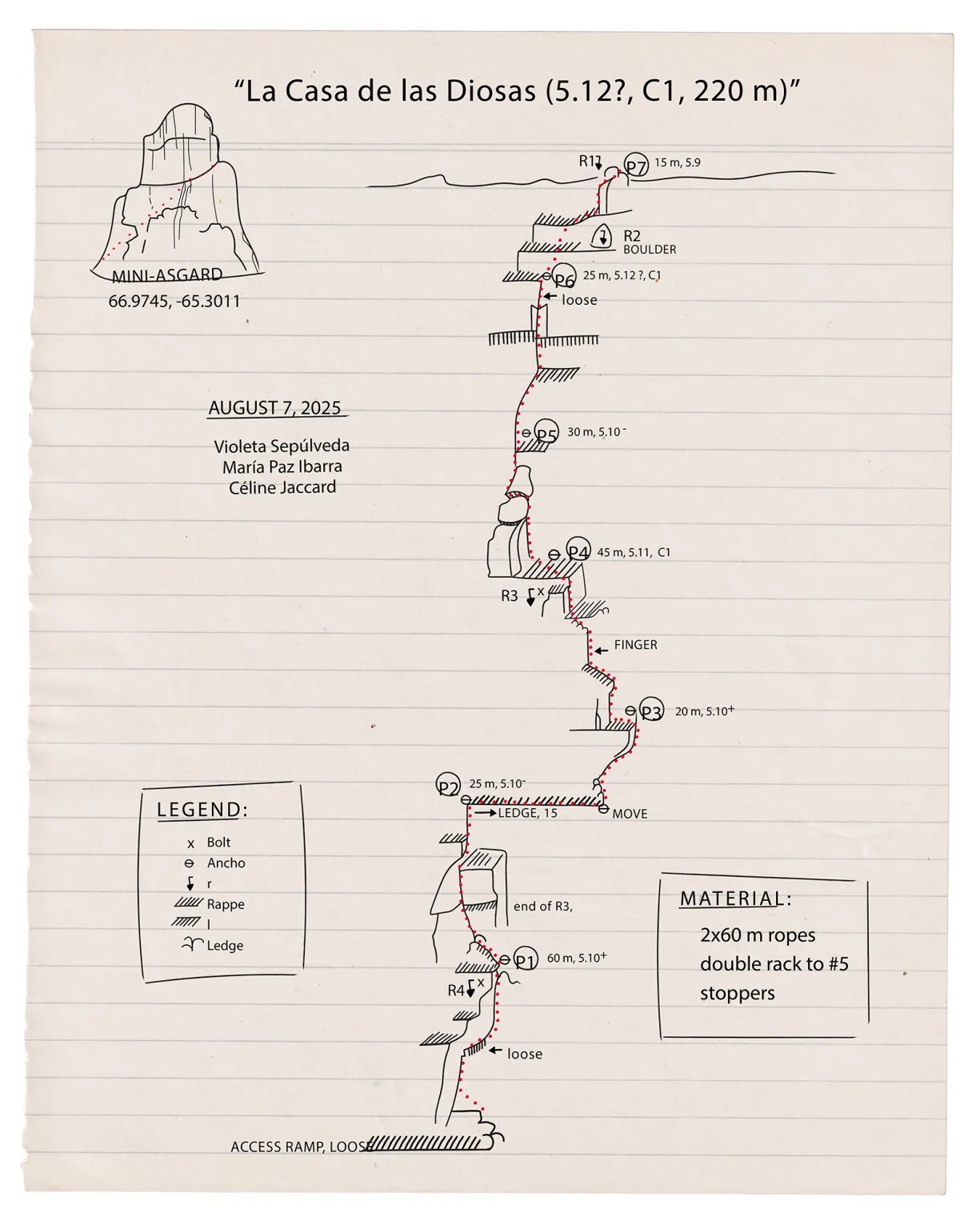
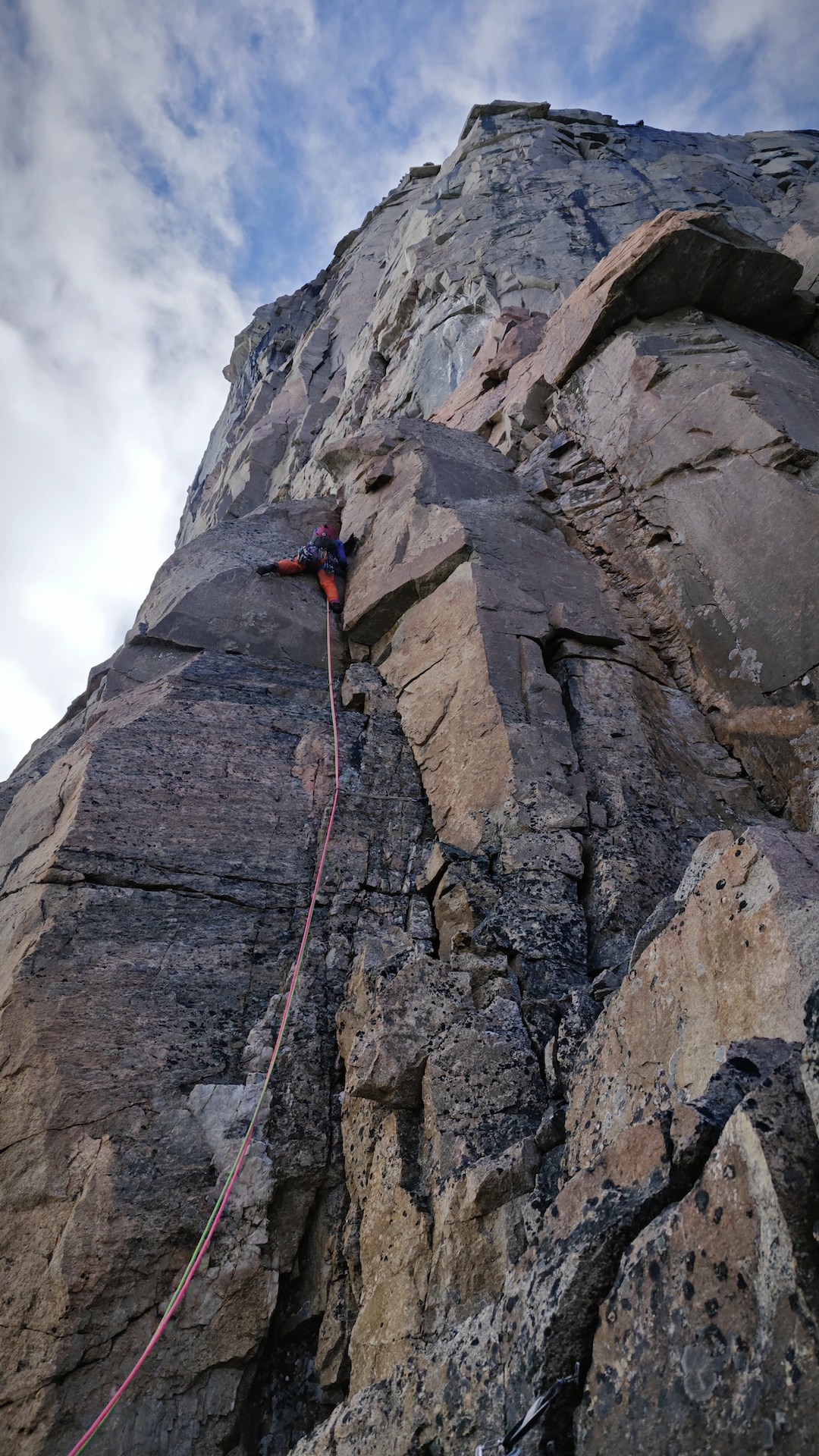
Despite fatigue and worsening conditions, we gambled on one final window. August 7 was our last possible climbing day before beginning the 34-kilometer return to the coast for pickup. The gamble paid off. On our third attempt via the same line, we completed the first ascent of Mini-Asgard via La Casa de las Diosas (220m, 5.11+ C1), a steep and varied granite route that tested our endurance and commitment.
We began our hike out the following day, leaving just a short section to travel on August 9. That morning, while crossing the lower Coronation Glacier, we encountered a polar bear—a stark reminder of the wildness and purity of this living environment.
Along with our climbing, we conducted maintenance on GPS sensors monitoring the melt and movement of the Coronation Glacier, contributing to ongoing climate research in the region.
—Celine Jaccard, Canada
Media Gallery