Castle Mountain, Northwest Headwall, Confessions of a Choss Gobbler
Canada, Alberta, Rocky Mountains
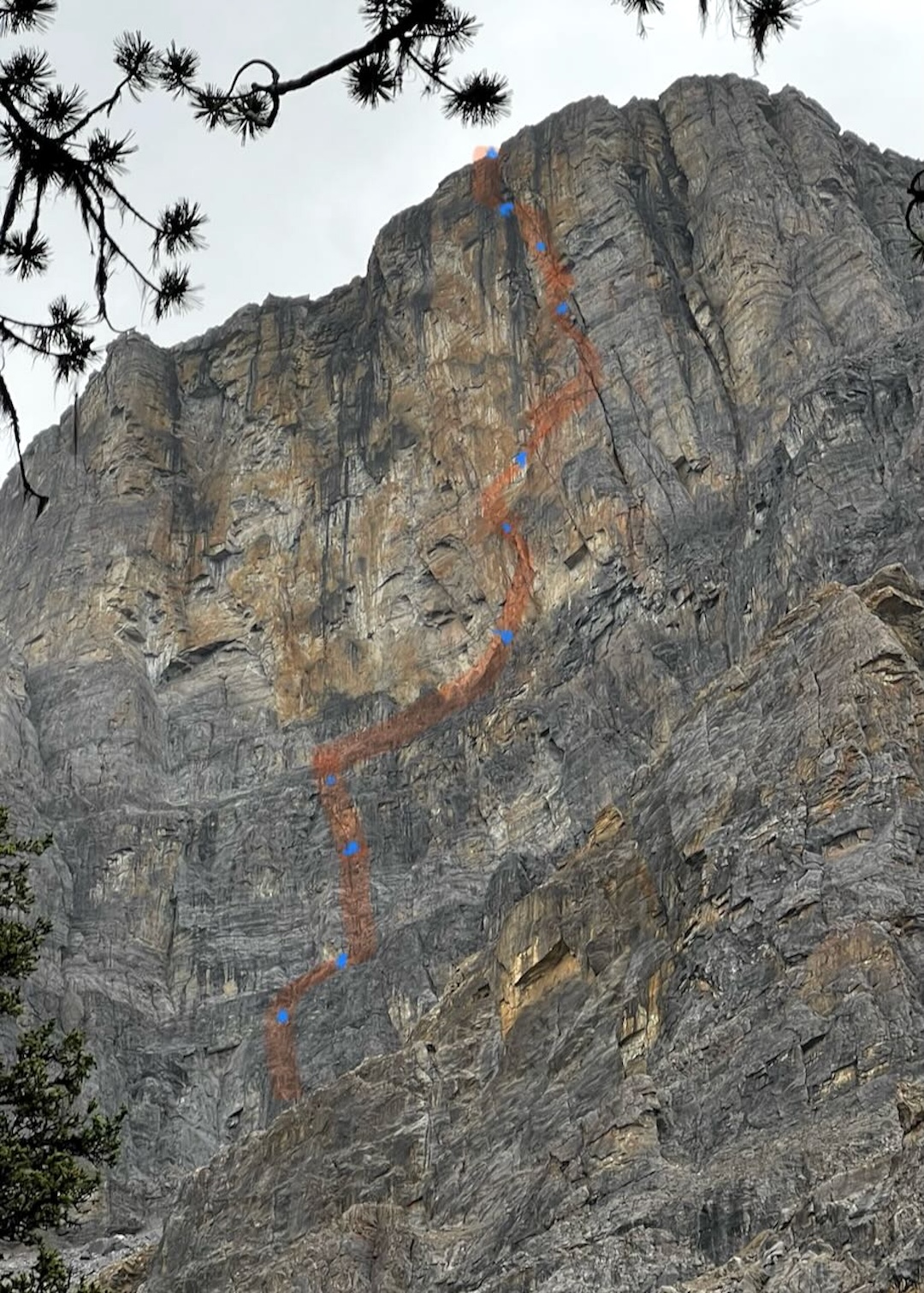
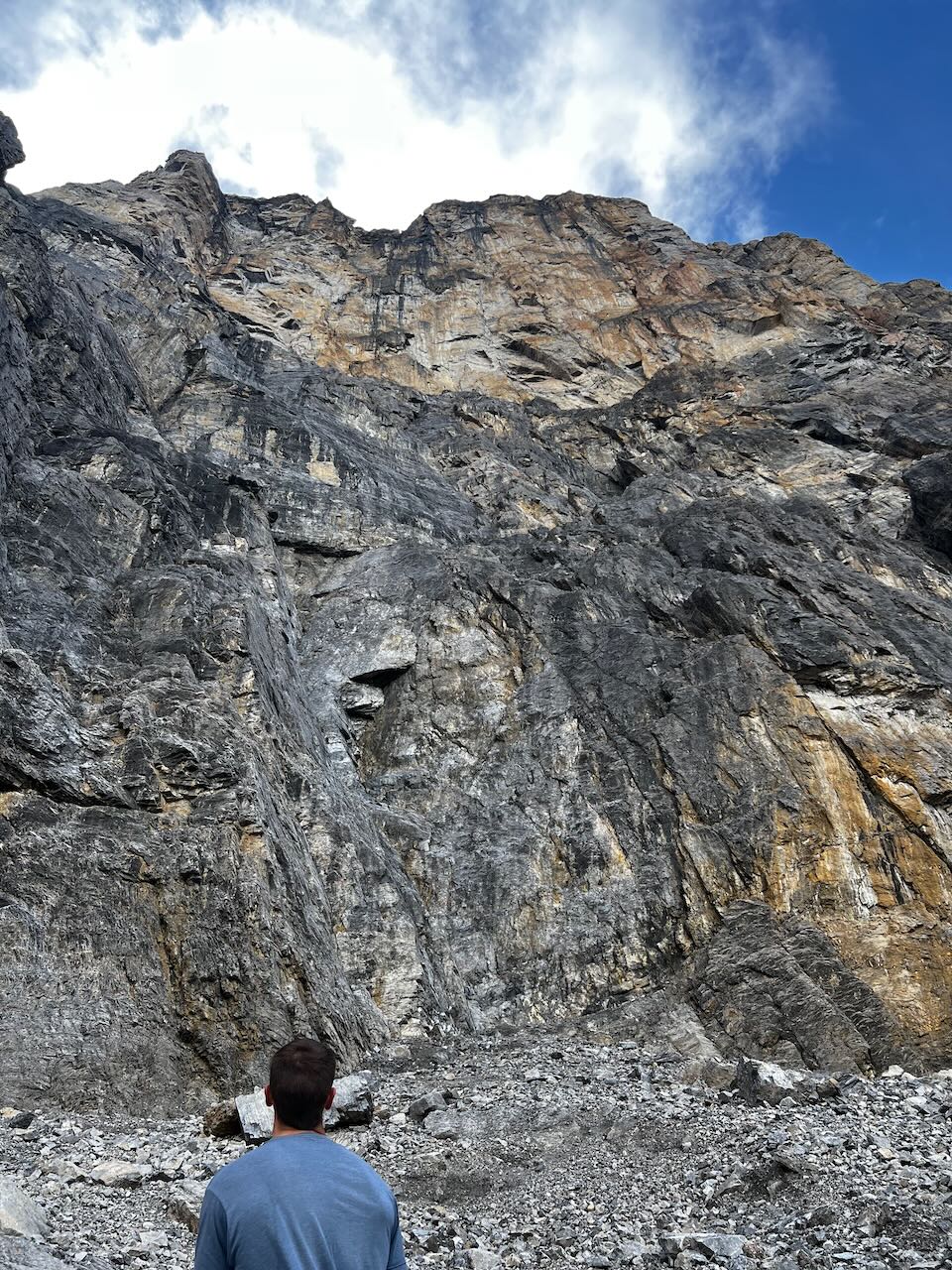
The striking northwest headwall of Castle Mountain jumps out in the setting sun while you’re driving south on Highway 1. I texted my extremely dialed friend Greg Barrett about it—all I could promise was a slog to an unclimbed wall and the vague possibility there was a route to the summit. Greg was immediately in.
On July 12, three hours of approaching from Protection Mountain Campground, generally heading northeast up the Protection Valley drainage, got us to the base of the cliff. I knew it was going to be an interesting day when I emerged from the trees, looked up at the face, and felt both giddy and nauseous.
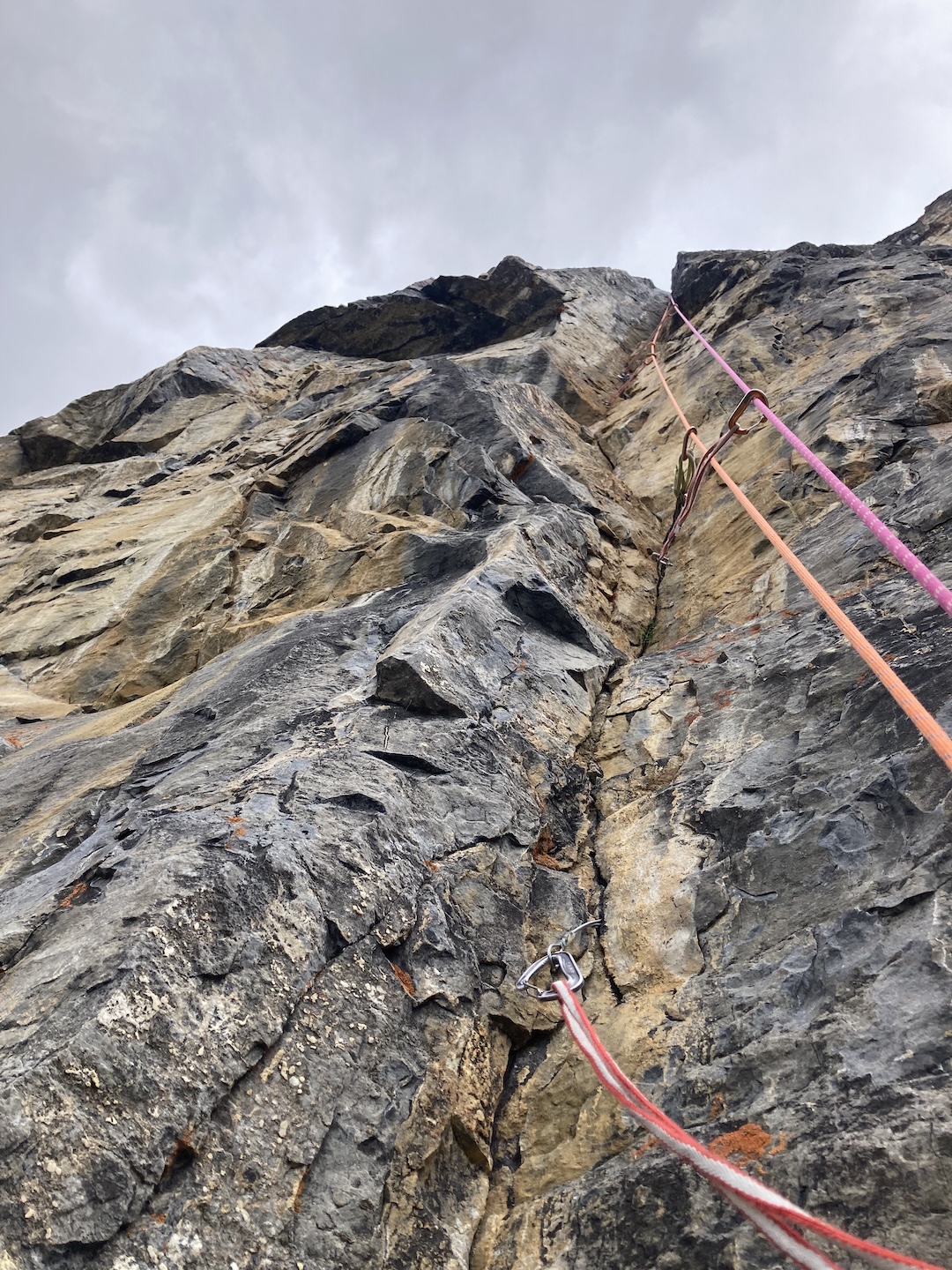
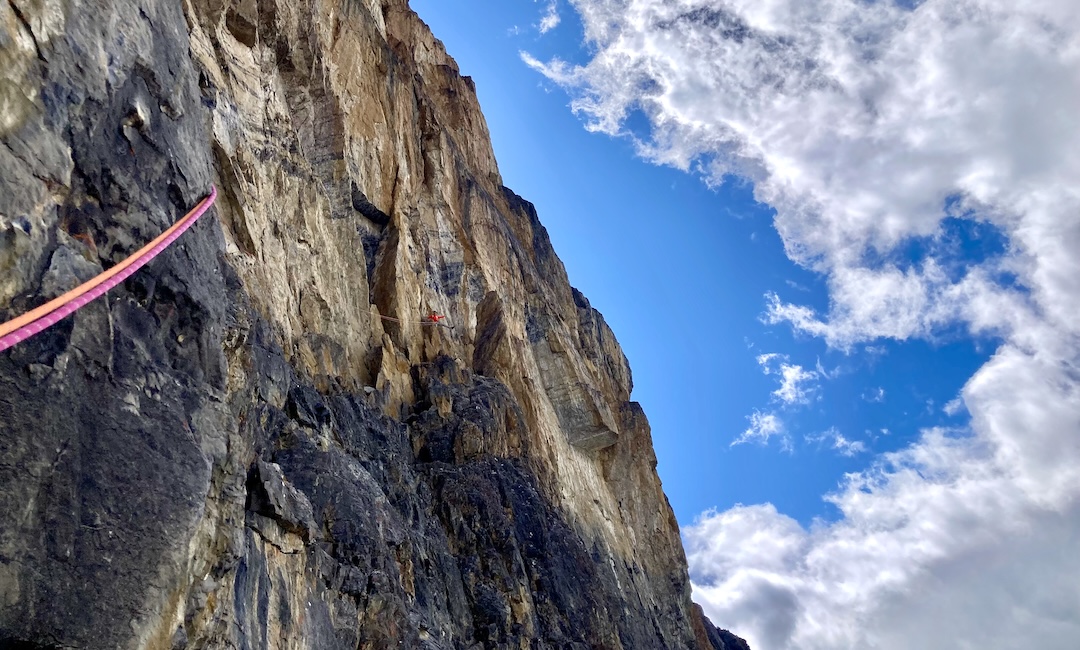
We started climbing 200 to 300 meters northeast of the Northwest Buttress (Klassen-Webster, 1990). [This is approximately five kilometers to the north of the Castle Mountain Cabin and the well-known climbs on the southwest face.] The first few pitches went smoothly. Beautiful dolomite edges led to a steep, wide crack. A splitter tips crack then brought us to a ledge system halfway up the face, followed by a classic Rockies wager: If you don’t like what’s above you, traverse and hope for the best. Thirty meters to the right, an overhanging chimney of choss blocked access to what seemed like a plausible crack system.
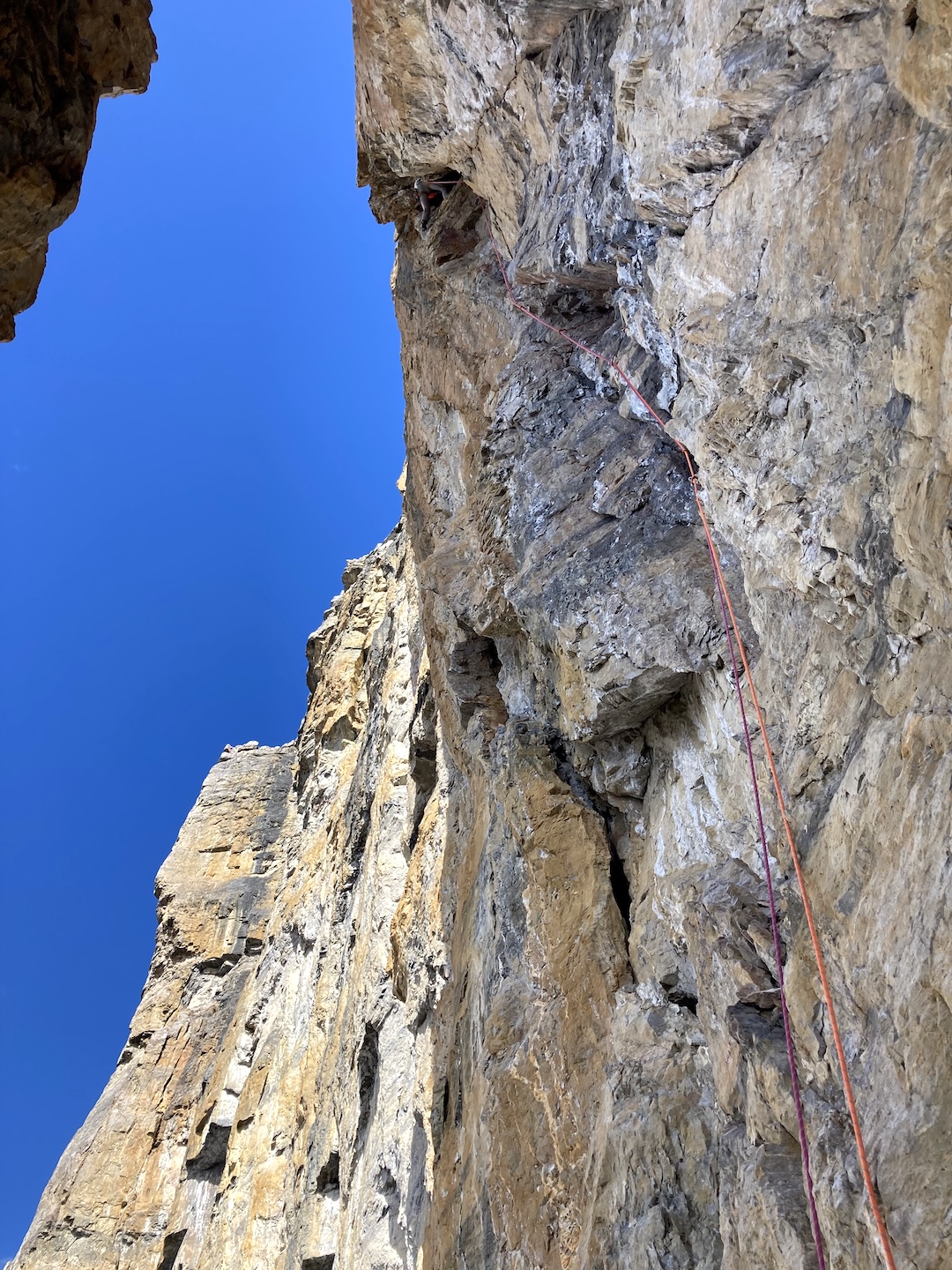
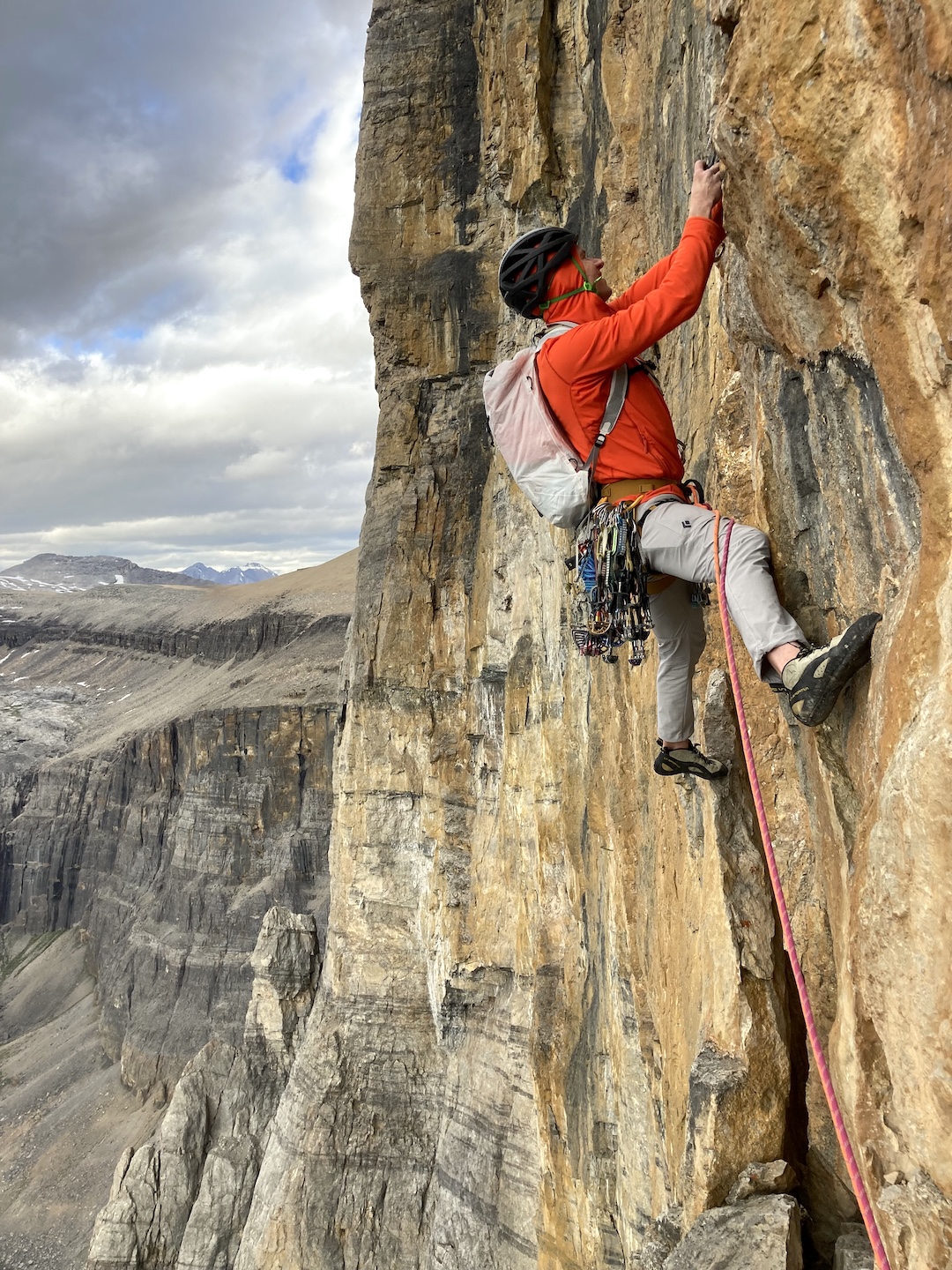
This is when a sensible party might have retreated or explored other options. But the choss gobbler in Greg couldn’t resist. A run-out start led to vertical rock that was just as bad as it looked. The gear was questionable and the holds more so, but Greg was determined. An hour later, he pulled past the final roof and brought me up to join him. As is often the case, the boredom and impatience I had felt while belaying gave way to desperate effort and horror as I realized what Greg had just climbed.
We hoped the climbing above was easier, and we had plenty of daylight left. We joked that we’d get home at 7 a.m., and that we’d finish covered in blood and in tears. My next lead, while not as steep, contained some of the worst rock we’d ever surmounted. Cams sat limply in gutters of kitty litter while I stemmed up exfoliating rock.
A quality pitch got us incrementally closer to the top, and we thought the difficulties had eased. The next pitch had other ideas. Greg found himself pumped at the end of a sequence of technical climbing he could not rewind, cleaning rubble out of a slot, desperate for any feature that would let him shake or get meaningful protection. The fall would be terrible, and he was uncharacteristically out of control of the situation. I floated up a token, “You got this, buddy!” He moved upward, found gear, and ended the pitch at the first opportunity.
When I arrived at the belay, Greg looked shell-shocked. He claimed there was no way he could safely take us any farther, and he gently but repeatedly suggested he would be okay with trying to descend. But if I were willing to take us to the top, he would follow. The top was so close, and I thought of the effort and risk involved to reach this point. It was my turn to push us on. First, though, we yielded to the temptation of mechanized drilling and placed two bolts as reinforcements for the questionable trad anchor.
The wind was howling, and night had fallen. Two pitches with a mix of aid climbing and bold free sequences got us to the top. I sat down in the scree to belay. When Greg arrived, it was 2 a.m. There were no tears, but there was blood and a bit of vomit.
The descent was time-consuming and arduous, first east across the top of Castle Mountain to avoid cliff faces, then scrambling around toward the west to a 60-meter rappel into Protection Valley. After a dreary slog, we finally made it back to our truck at 8:30 a.m., 26 hours after we started.
We called our route Confessions of a Choss Gobbler (440m, 5.11- A0).
—Gavin McNamara, Canada
Media Gallery