
Red Alert Wall, Time
Canada, British Columbia, Coast Mountains, Daniels River Valley
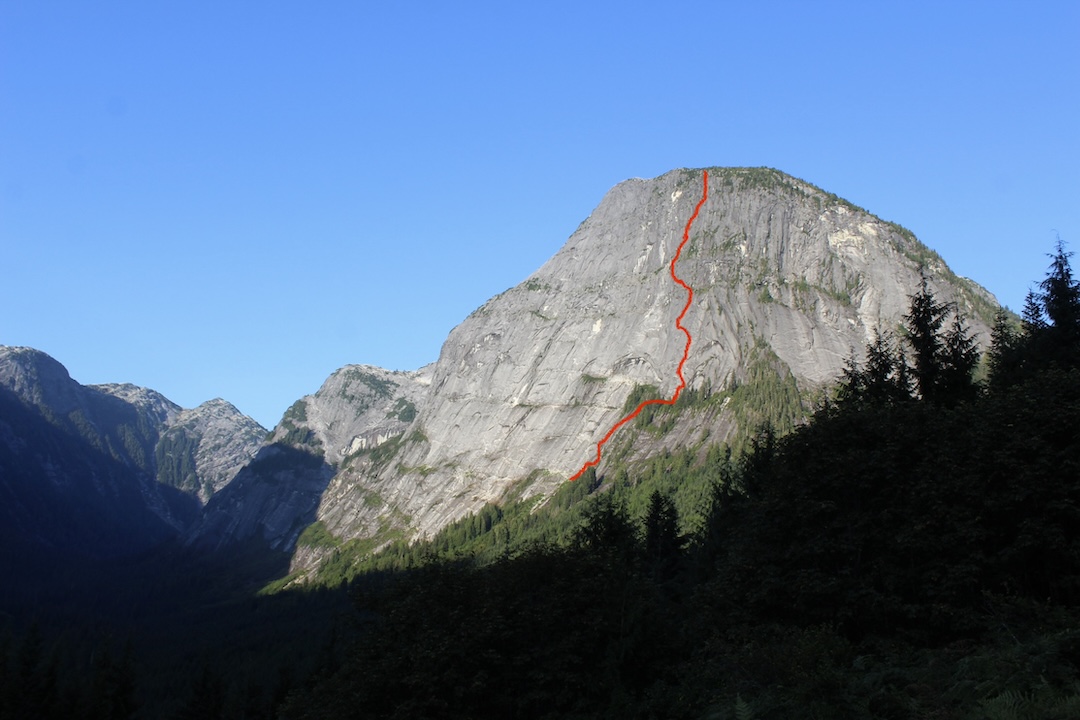
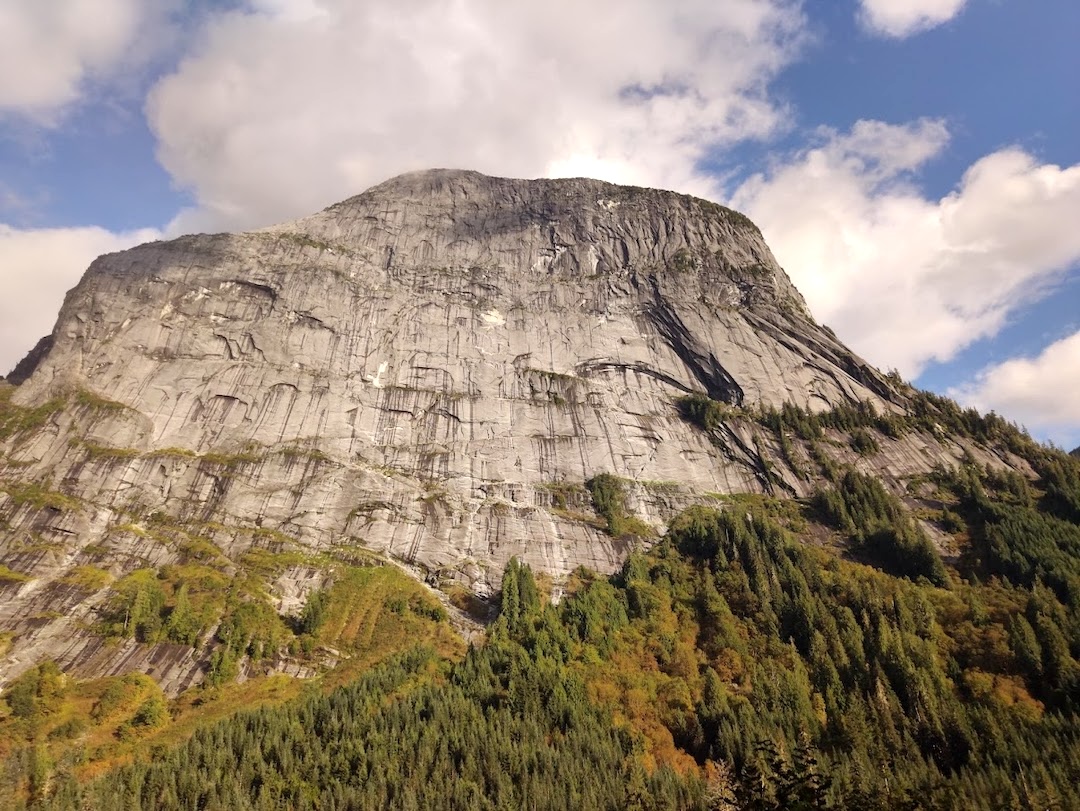
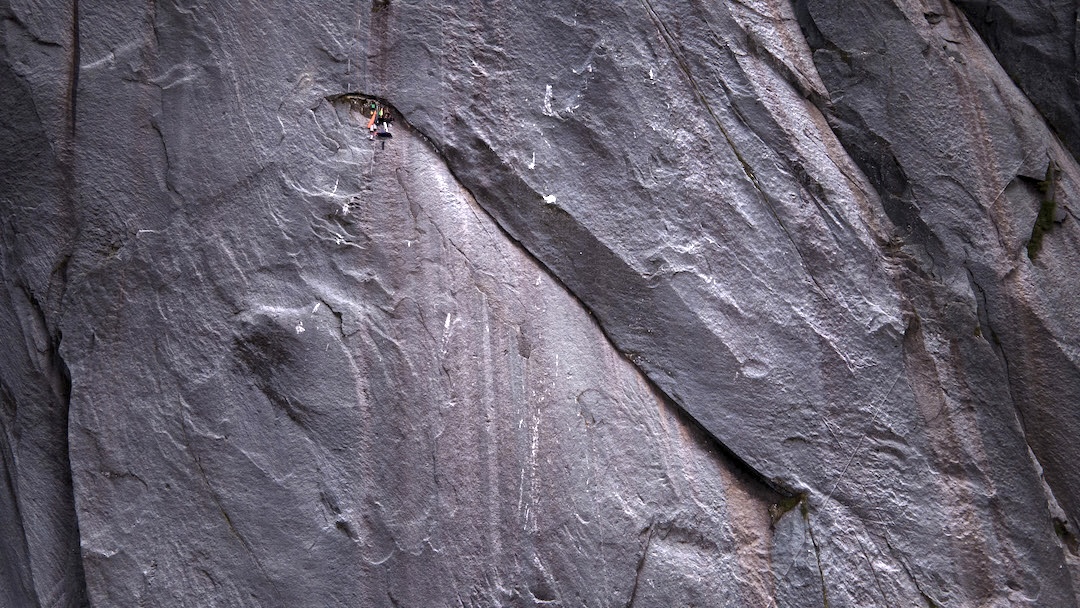
Since first learning about the Daniels River Valley (DRV) and Red Alert Wall (50.37517, -124.35519), I’ve spent countless hours on CalTopo, staring at a map of the valley and dreaming about climbing there. In 2025, I was presented with the opportunity to join an expedition organized by Louis Kierstead, whose primary goal was to re-establish trails and a climber camp in the DRV. And so, on August 20, I found myself sitting on an ATV with Louis and Mike Friesen as we rounded a corner and I caught my first glimpse of the 3,500-foot Red Alert Wall.
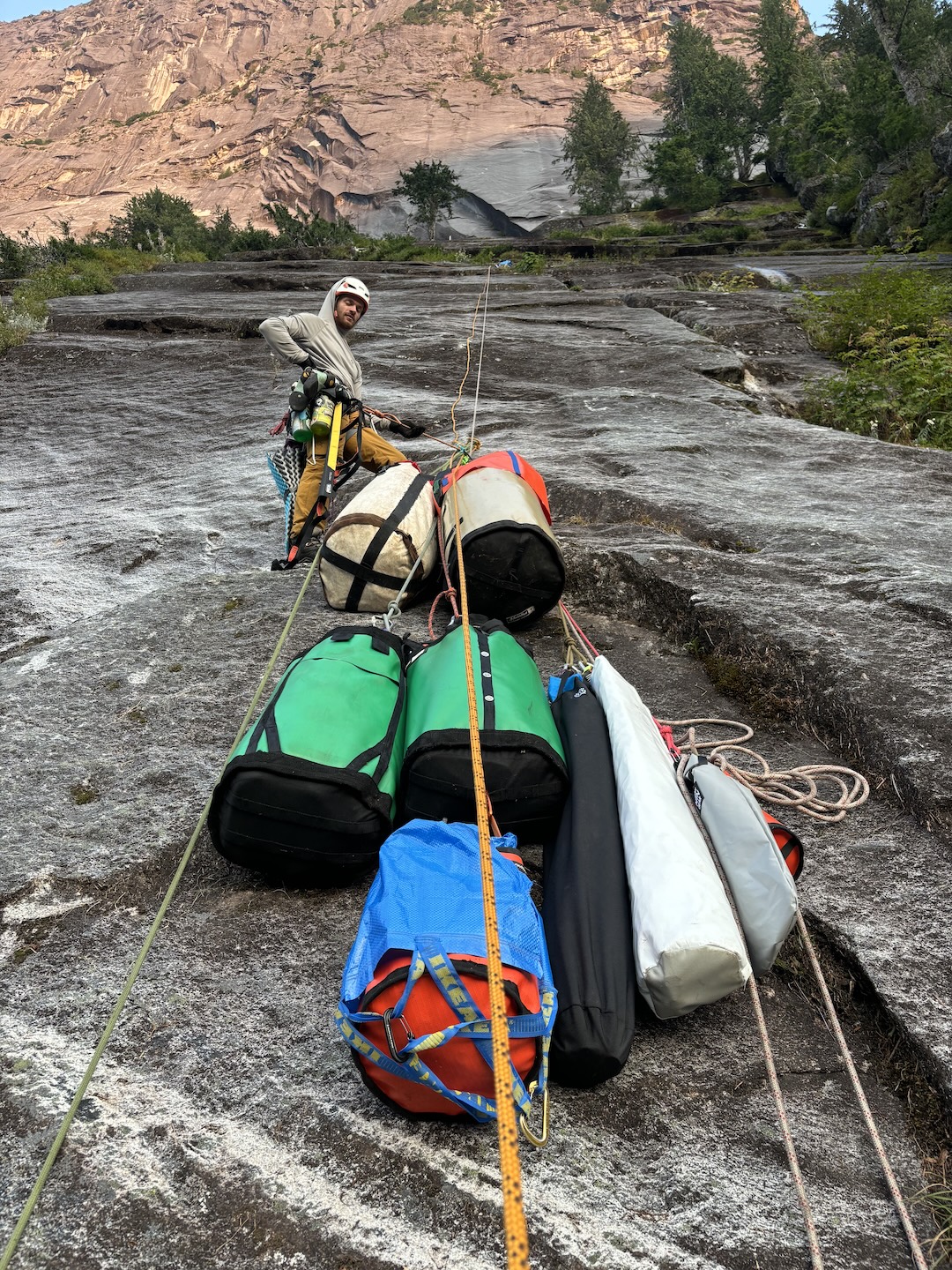
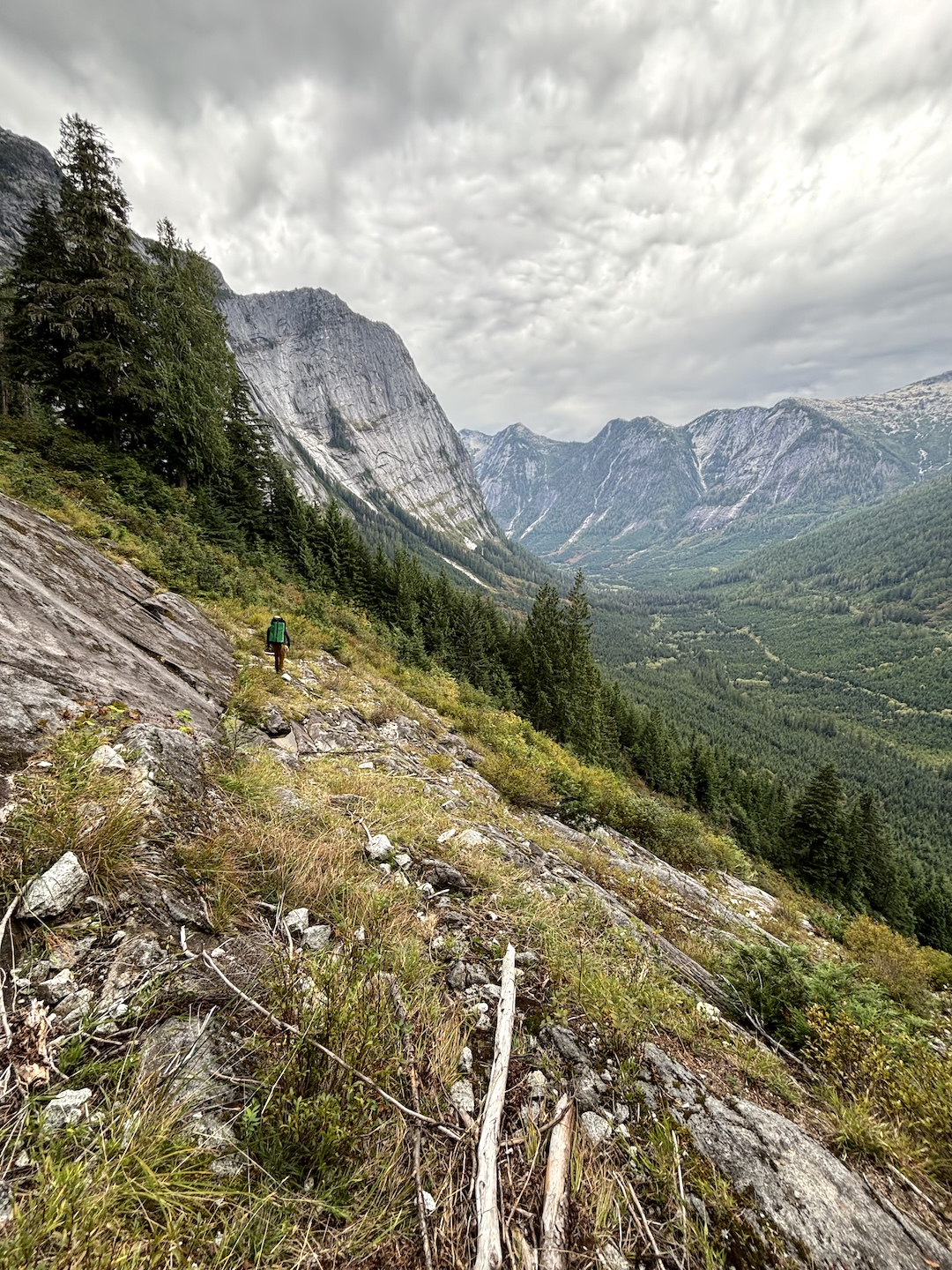
Although the DRV lies only about 100 miles northwest (as the crow flies) from Vancouver, getting there is convoluted. From Vancouver, two ferries and some driving took us to Powell River, from where we chartered a flat deck barge for the approximate 30-mile ride up Lake Powell. After being dropped off at the north end of the lake, we used an ATV and trailer to shuttle loads and people toward the DRV via old logging roads. About 12 miles in, there was an impassable washout at the entrance of the valley. From there we proceeded on foot into the valley, carrying all our gear and supplies in one unergonomic haul bag at a time.
No matter what happened, I knew this trip would be unlike anything I’d ever done. Mike and I had set out to answer the call to climbers that John Clarke put out in the late 1980s when he first saw the Red Alert Wall (see the 1990 Canadian Alpine Journal). Since then, there has only been one successful team to climb the wall: Drew Leiterman and Travis Foster’s 2017 route Jungle is Massive (1,290m, 25 pitches, VI 5.10 C2; see AAJ 2018). We entered the DRV with the hope of making the second ascent of the west-facing Red Alert Wall via a new route.
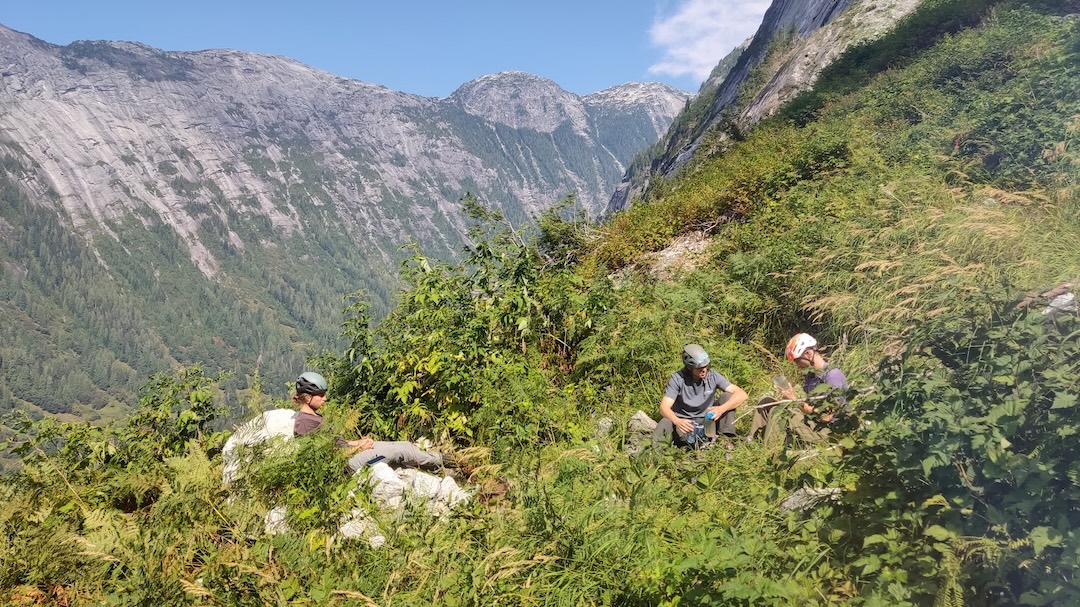
The first few days of the expedition consisted of cutting trails, establishing a new climbers’ camp with a bear hang, and hiking a few tons of gear (between the entire group) deeper into the valley. Our first roadblock happened before we even started climbing: three huge and new rockfall scars that had not been present in any pictures we had (some as recent as one year ago). For our safety, we decided to scope a new line located a few hundred meters to the right of Jungle is Massive and the rockfall scars.
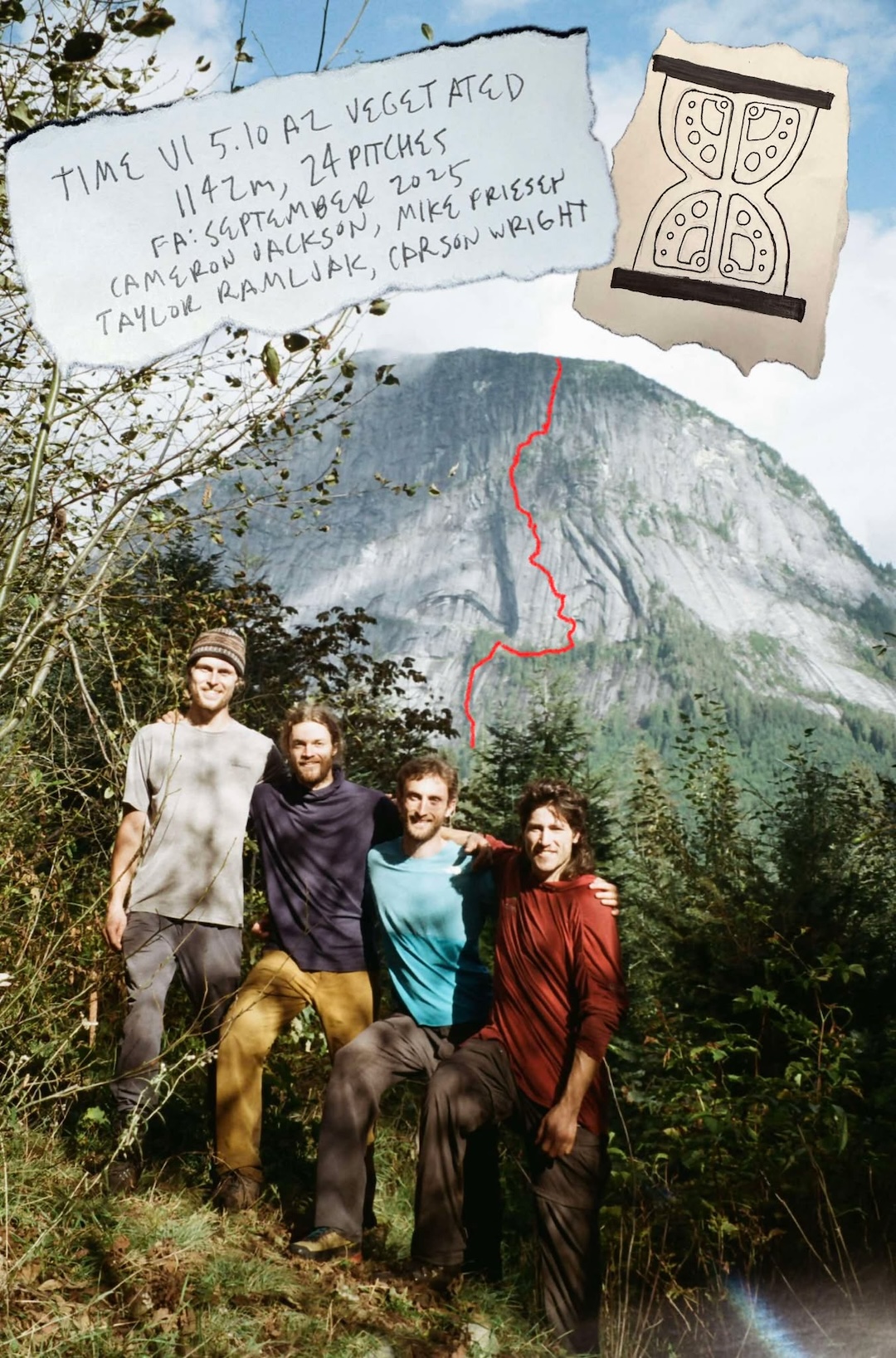
On the sixth day of the expedition, August 25, Mike and I began fixing the first segment of our climb. We were joined by Taylor Ramljak and Carson Wright as camera and support crew. After five pitches of fixing, a few days of getting the rest of the gear to the base, and waiting out weather, the four of us committed to the wall on September 2.
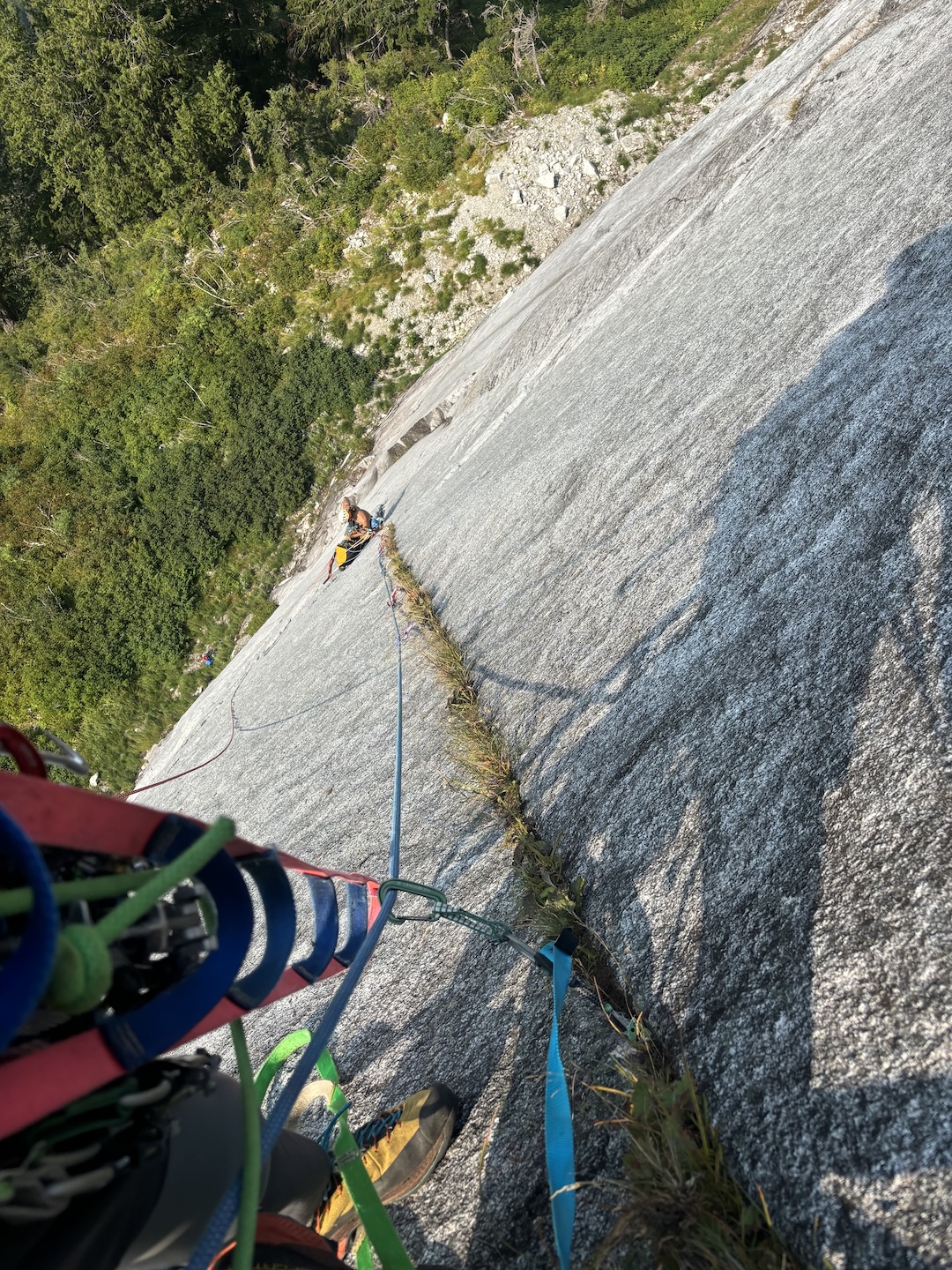
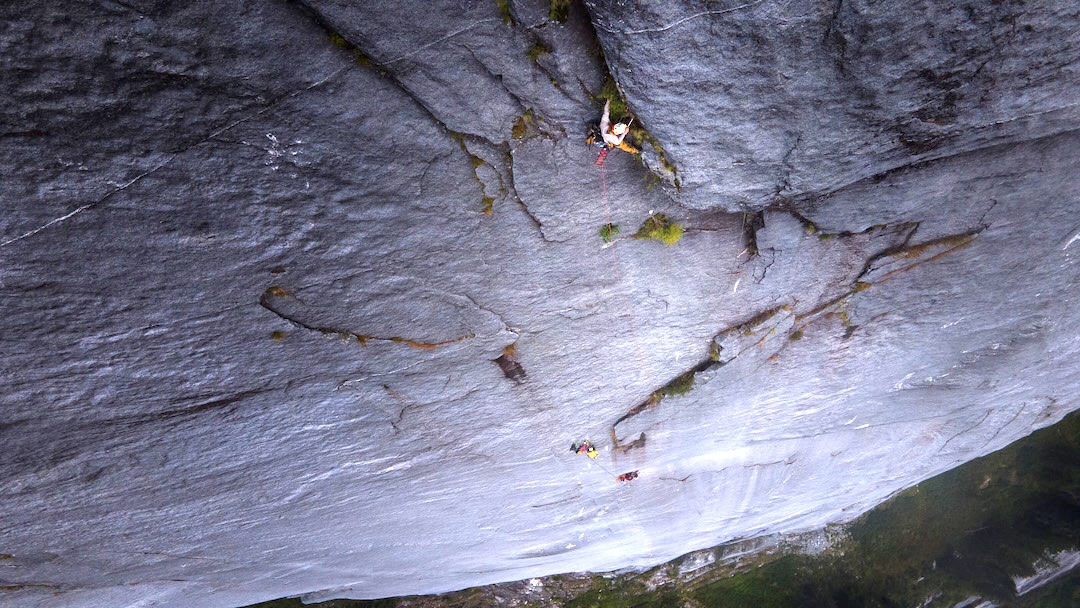
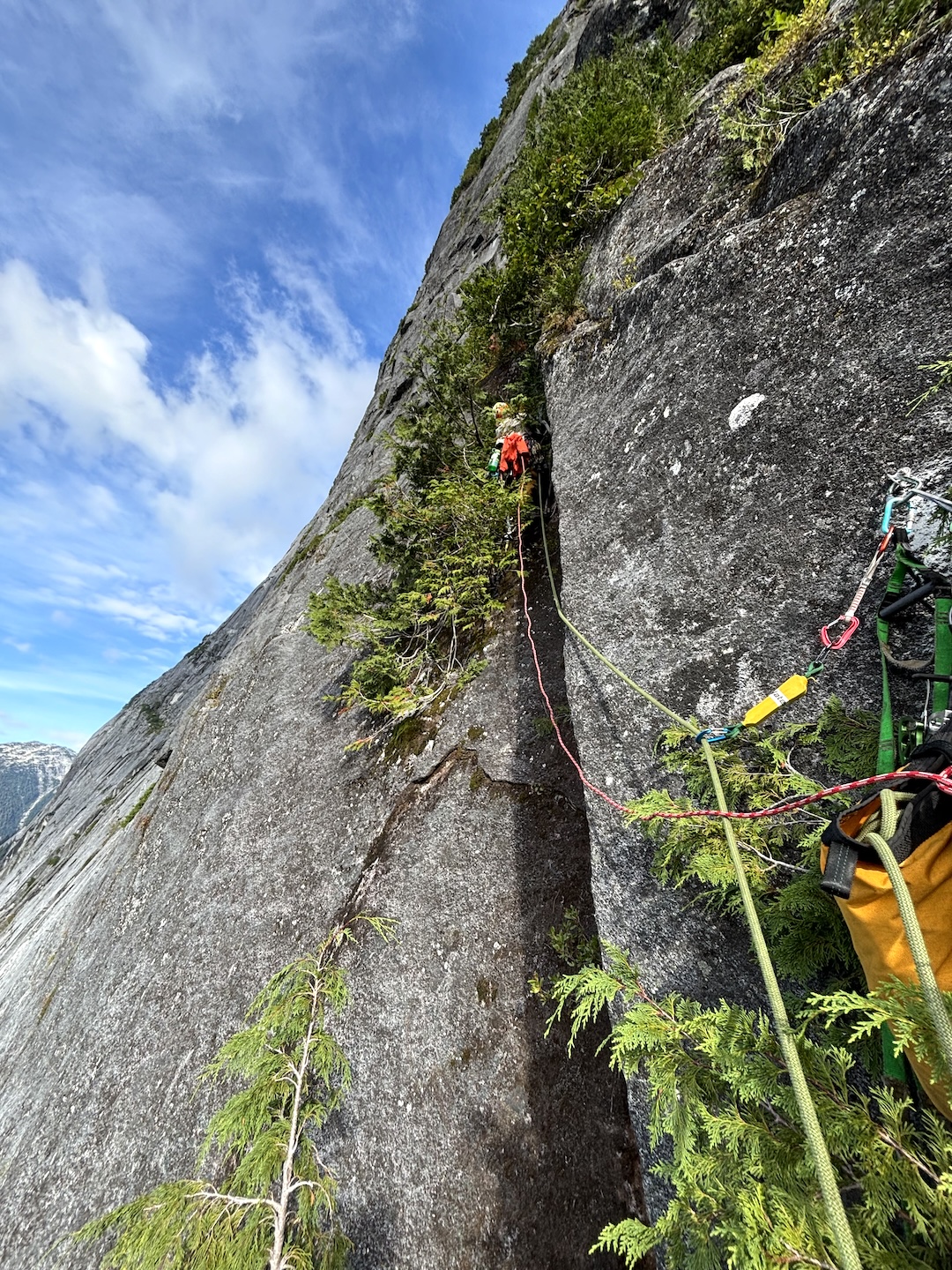
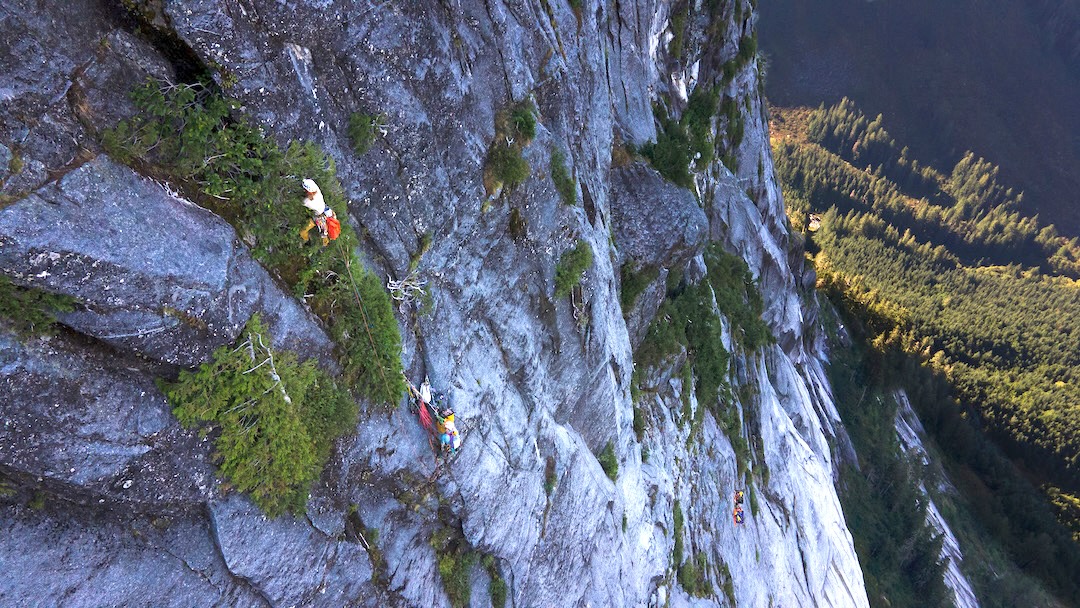
From our first camp, which we dubbed Loitering Ledge, we spent the next five days fixing five pitches, including a memorable feature we dubbed the Wing: a shallow, flared roof crack that ran up to the left for a 70-meter pitch. Our progress was slower than expected due to the vertical gardening required on each pitch and the fact that no one on the team had done a big-wall first ascent before. That night, we received a message that heavy rain would start the next afternoon and last for a few days. We had just enough rope (about 500 meters) to fix from our high point to the ground and escape the rain.
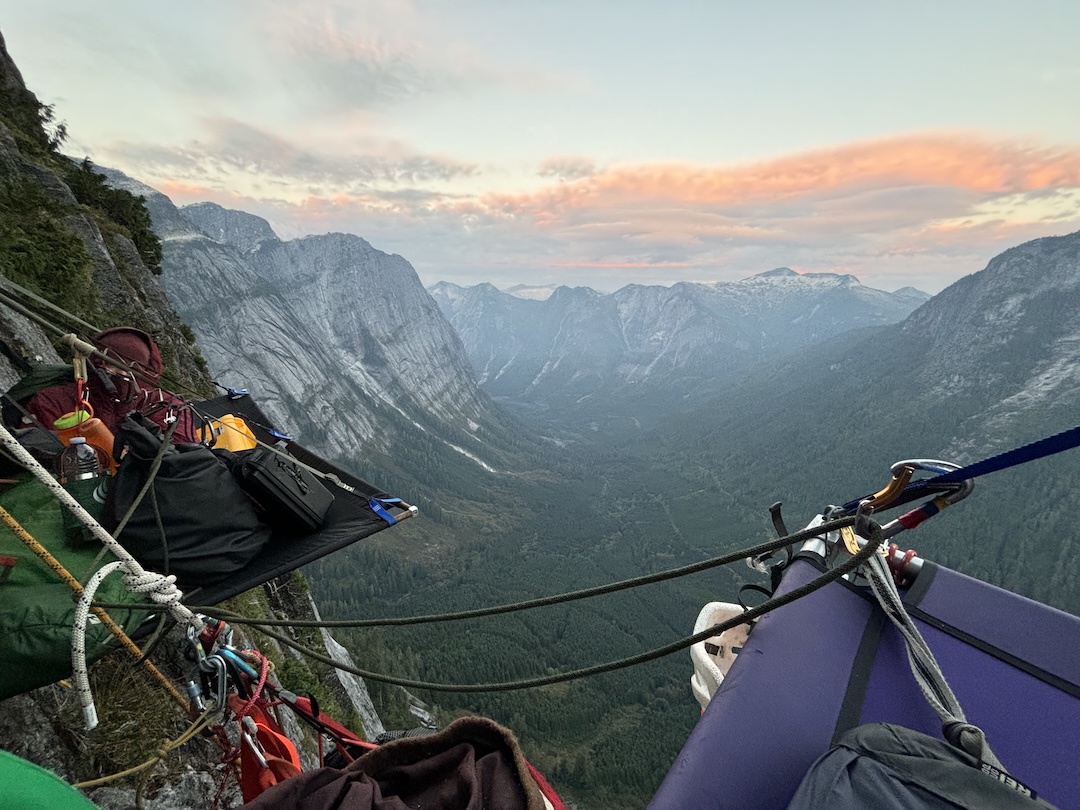
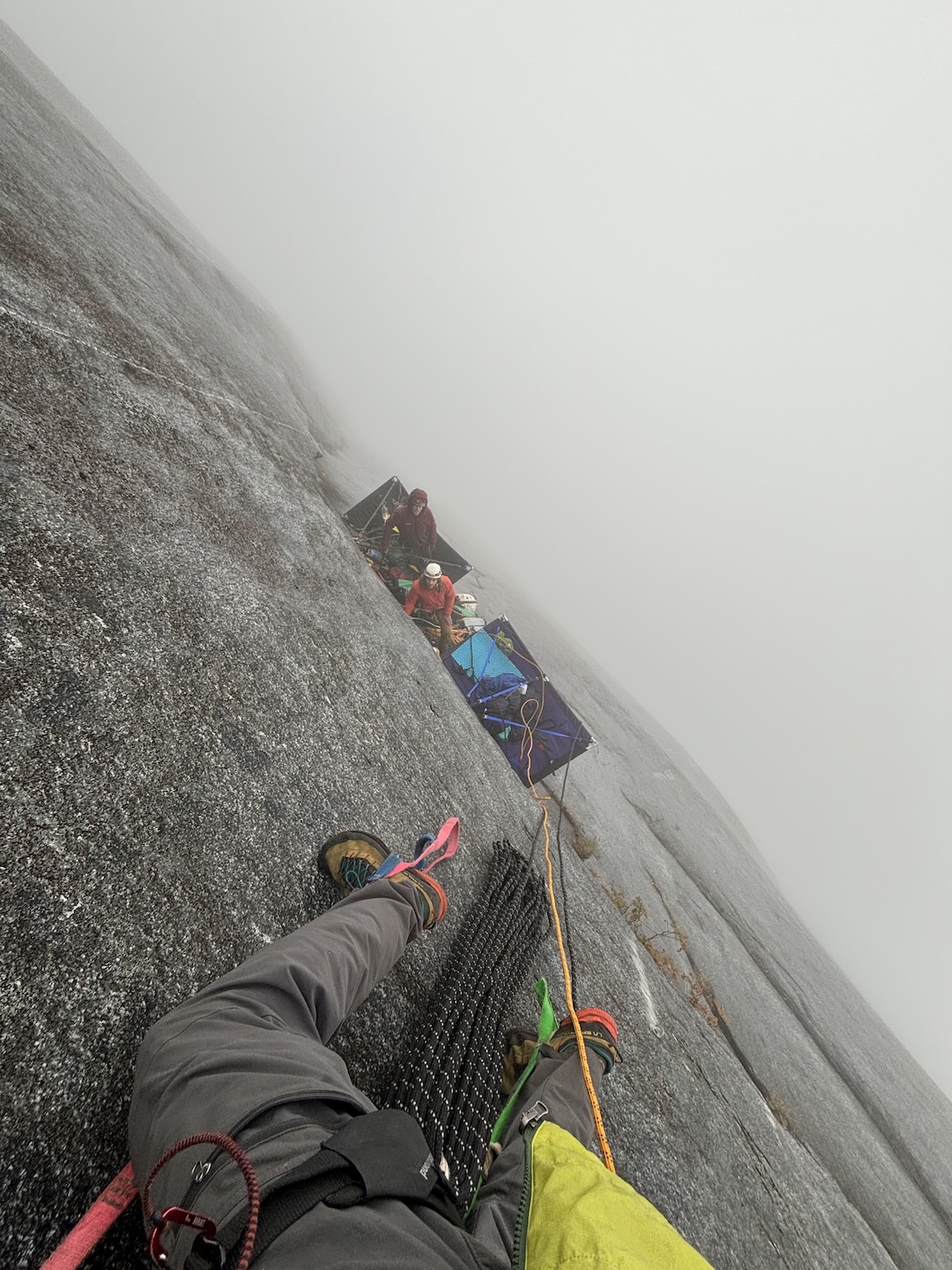
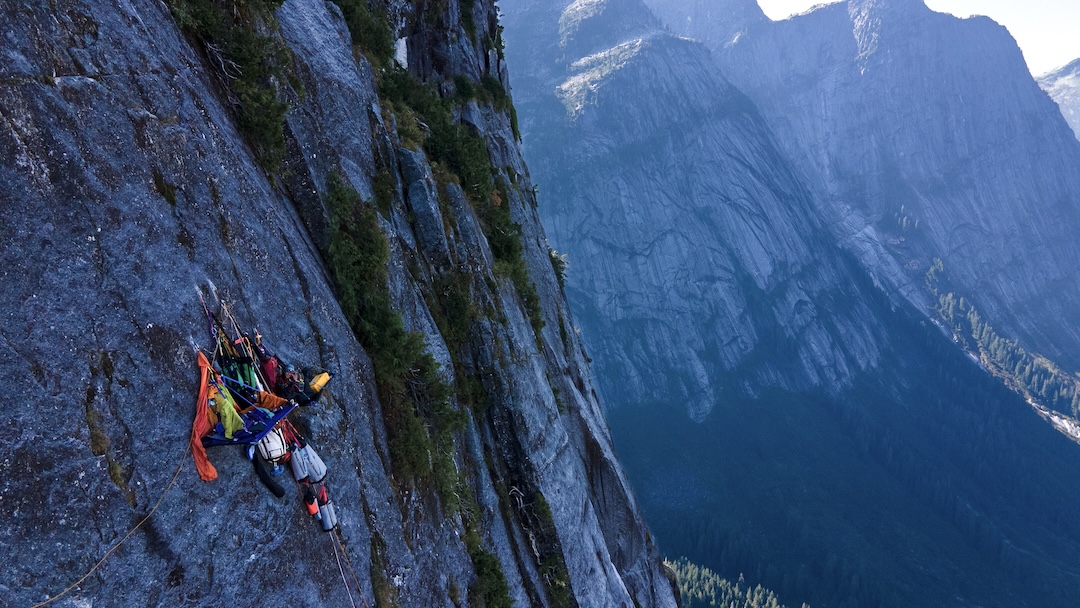
After a few gloomy rest days, the weather cleared. On September 11, Mike, Taylor, and I rushed to get back on the wall. After a brutal 25-hour push, the three of us had hauled all our gear to the high point and set up our second wall camp, dubbed Wing Camp. We fixed a few more pitches, then hunkered down in our portaledges for another brutal storm. We soon realized we had set camp under what became a roaring waterfall in the rain.
After the storm cleared, we dried everything off and moved our camp about 140 meters up to its final spot. Some of the smaller micro-cams had seized, leaving us with a few gaps in gear sizes, but luckily the large quantity of ball nuts I brought made up for it.
At this point, the route traversed hard left for a few pitches before we joined the final corner system we had scoped from the ground. The commute to our high point each morning consisted of rappelling sideways out of camp, then jugging the lines, which got increasingly longer and more miserable with each pitch we added.
On September 18, the eighth day of our second push and the 30th day of the expedition, the three of us made it to the top of the Red Alert Wall. We had a wonderful summit bivy, but we weren’t safe yet; we summited on a Thursday, and there was a storm forecasted to hit Saturday. At 8:30 a.m. on Friday, September 19, we began rappelling the route and touched down 20 hours later. From the summit, our rappel line followed our route down to the top of the Wing and then straight down to the ground via the line we previously bolted.
Our route Time (1,142m, 24 pitches, VI 5.10 A2, Vegetated) contained the full spectrum of climbing: insecure slab climbing, runout free climbing, hooking, slimy wide climbing, loose dihedrals, tree and bush climbing, thin nailing, and more gardening than I’ve ever done in my life. Our climb was not on the cutting edge of the sport. The free climbing was never extremely hard nor was the aid ever super technical, but that was not the goal. We simply hoped to explore a destination less travelled and have an unforgettable new experience. In that sense, I would say that we succeeded in the highest regard.
Without Drew and Travis’s ascent of Jungle is Massive, I’m not sure I would have discovered the DRV and there is no way I would have had the courage to attempt our climb. Unfortunately, Travis passed away in 2020, and I never had the chance to meet him. We want to dedicate this climb to Travis, as a reminder to never stop chasing and sharing your dreams, because you never know how far they will reach.
—Cameron Jackson, USA
Media Gallery