
The Rimwall, Iron Tears
Canada, Alberta, Canadian Rockies
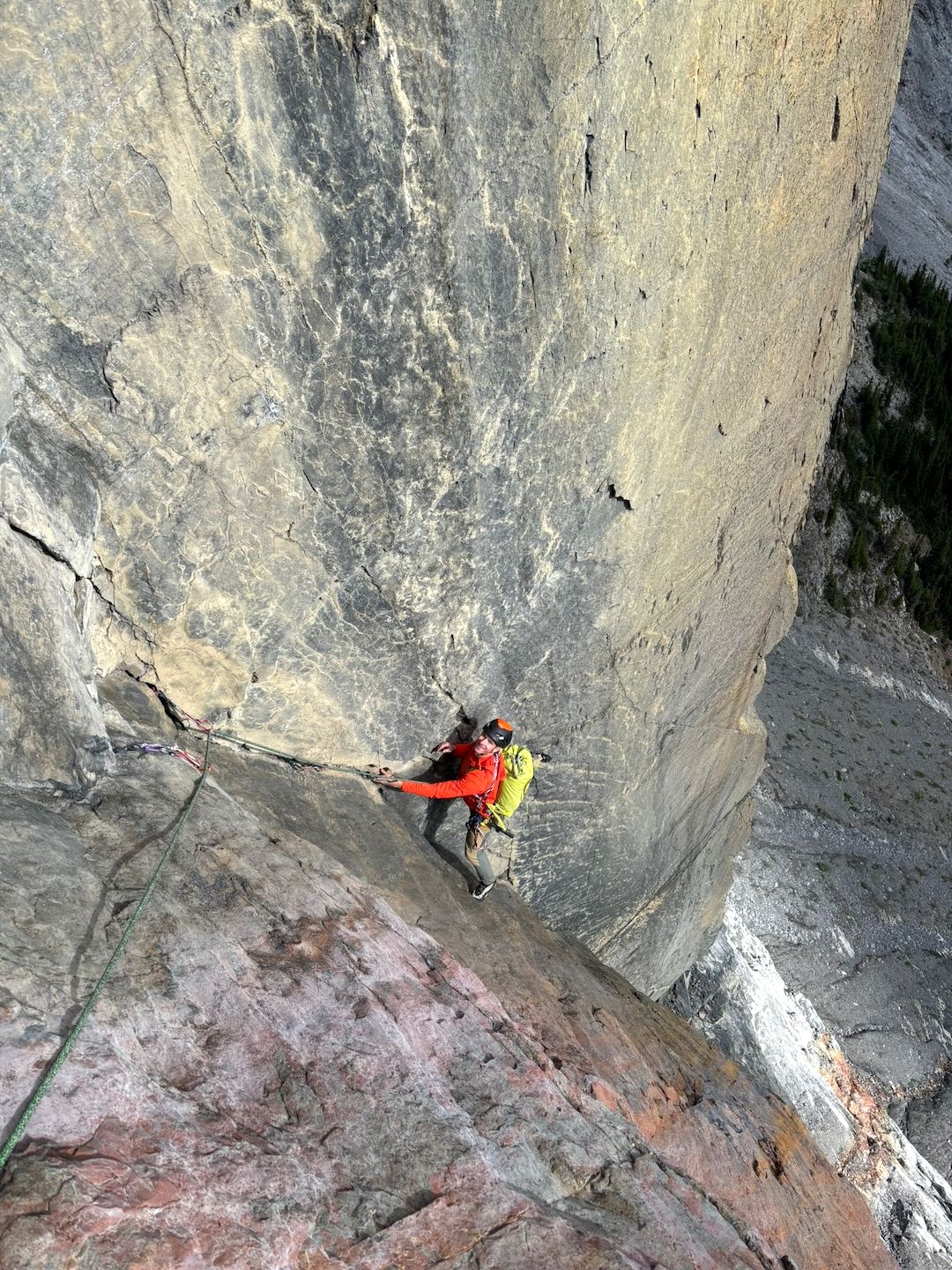
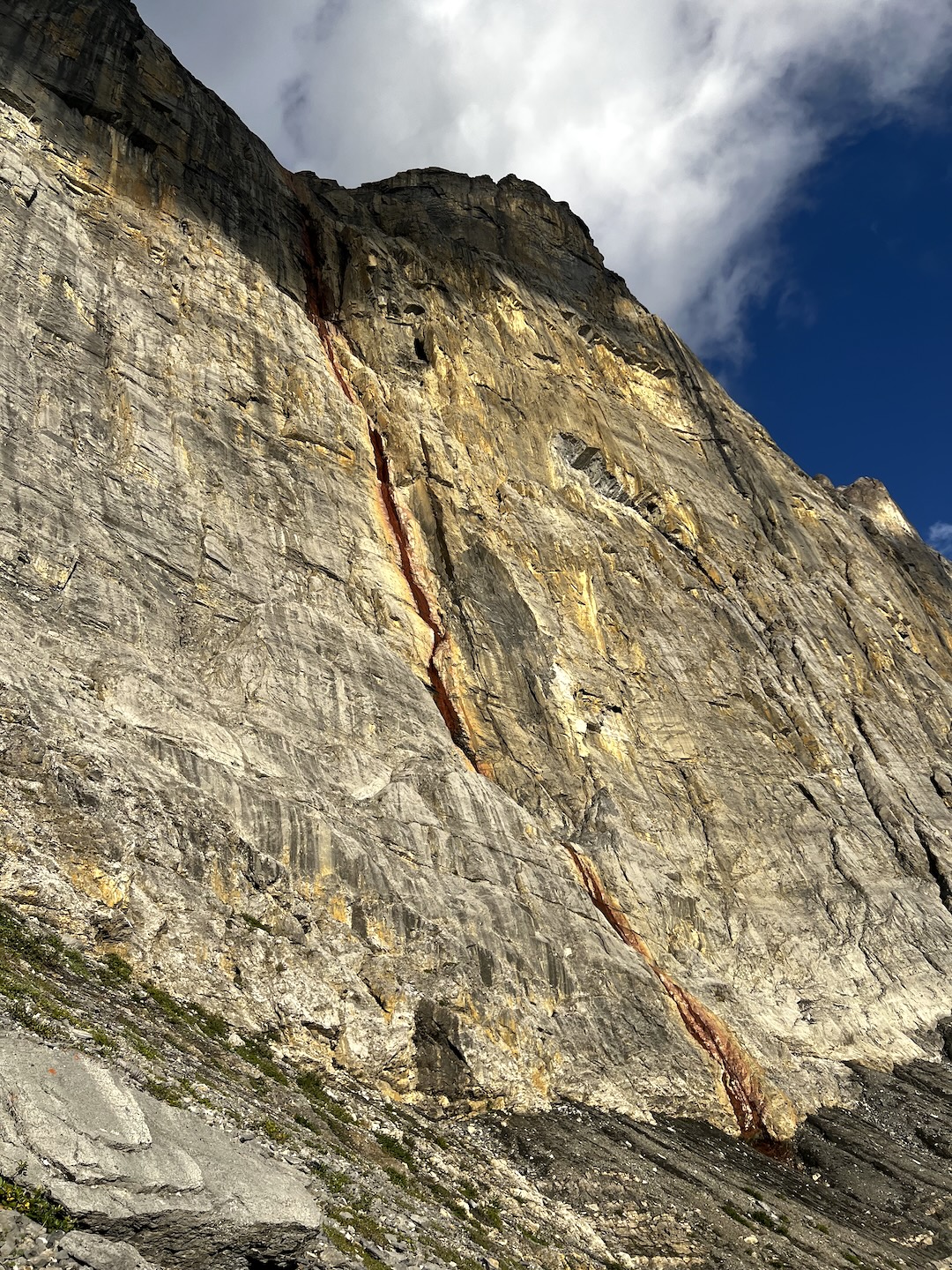
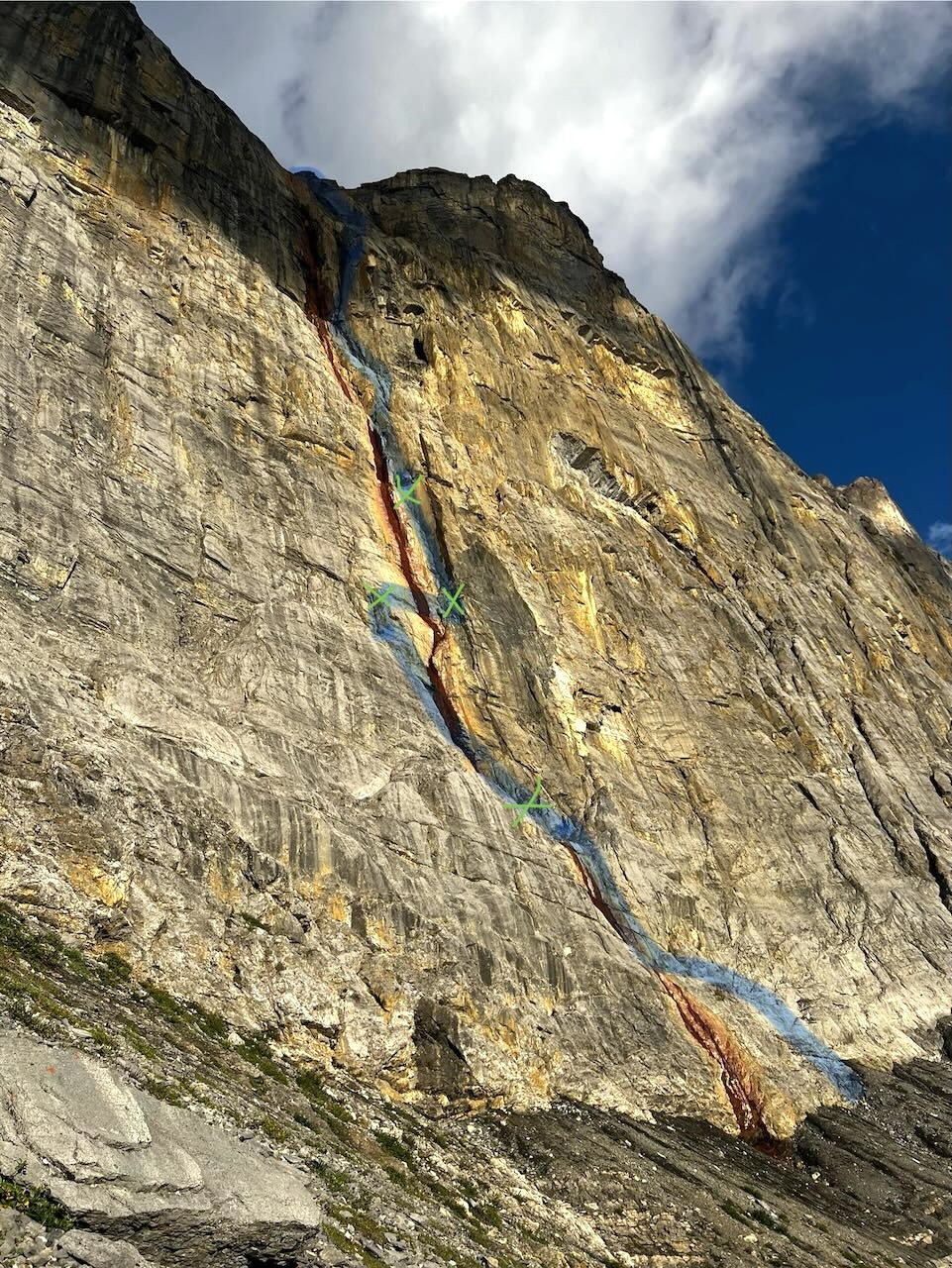
On August 17, 2025, Gabs Clark and I set out to repeat Murder by Numbers (5.11, Ruddy-Slawinski, 2007) on the east face of the Rimwall, but on our way to the route, a striking dihedral caught her eye. The corner was a few pitches up the face, beside a giant streak of red rock that is visible from the highway far below. We just had to check it out.
We abandoned our original plans and scrambled up to the start of the route, a couple of hundred meters south (left) of Murder by Numbers. After racking up, I ventured onward to the top of a pedestal, where I found a two-bolt anchor. We were not on untrodden ground after all. I traversed right from the belay and found a bail anchor, about 130 meters up the wall.
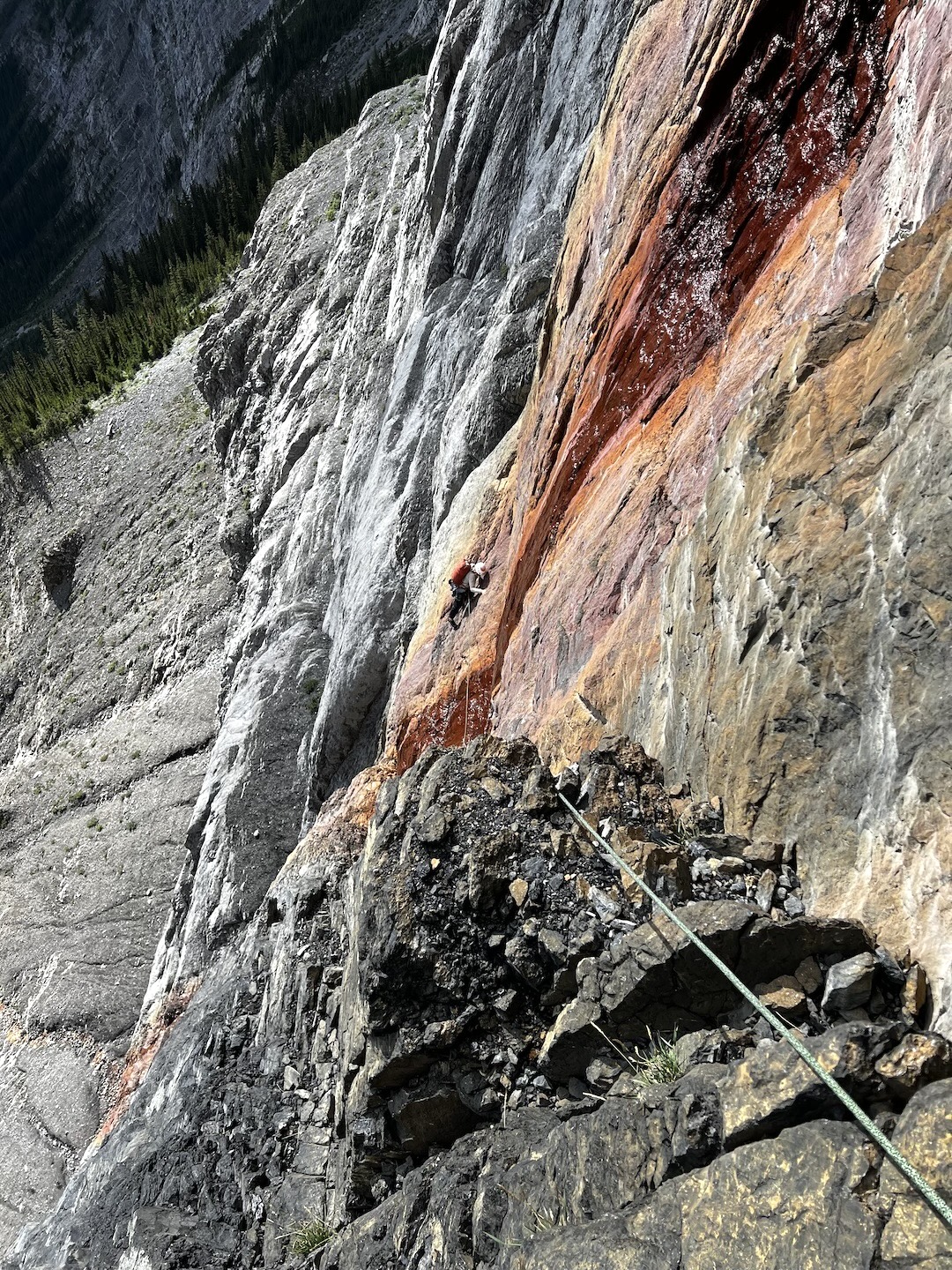
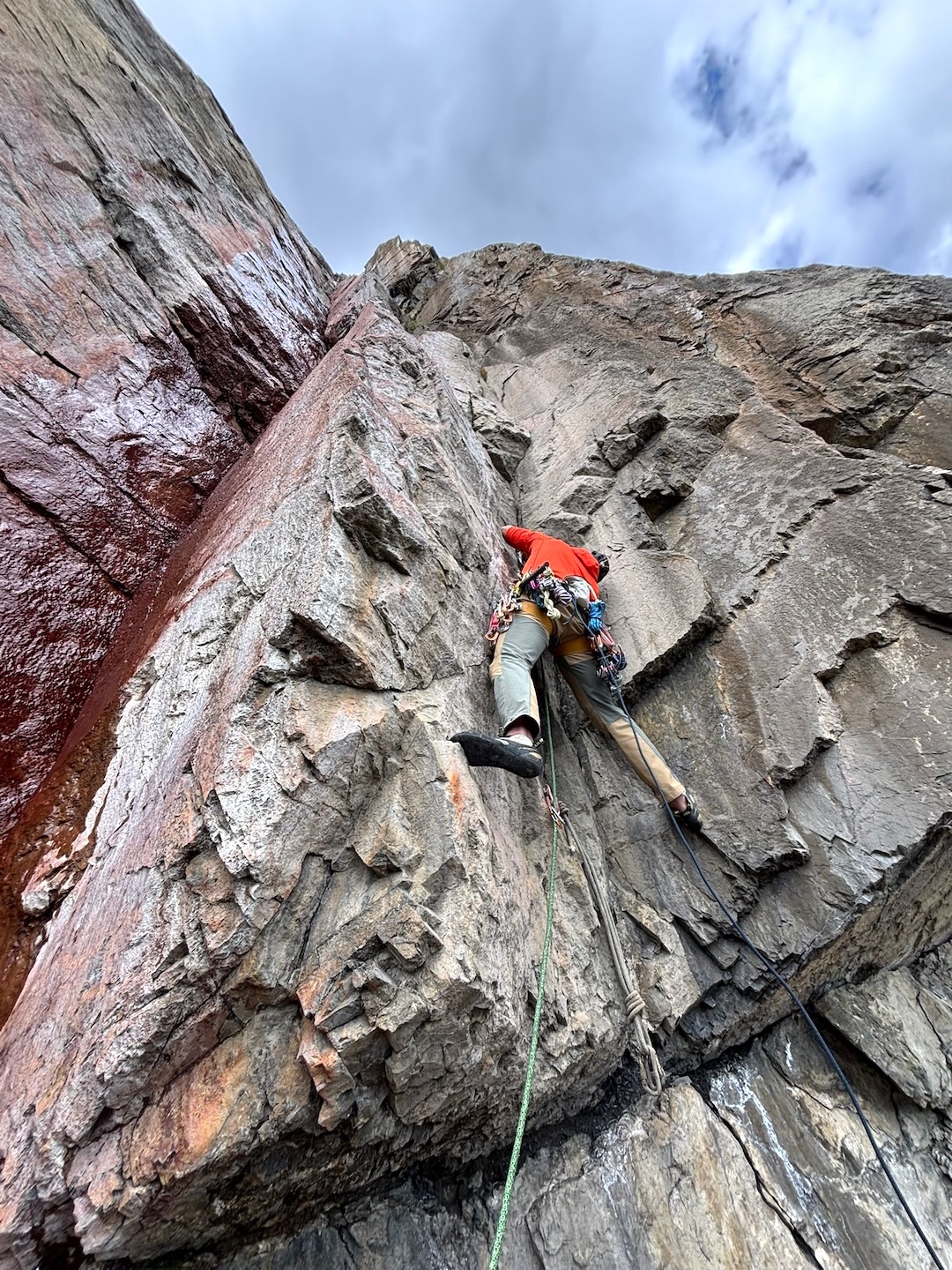
I continued up and right to the base of the dihedral that had initially caught Gabs’s eye and handed the rack to her. She picked her way up through bulges, with an inviting crack in the corner but blank walls with slippery patina from the waterfall spray. She worked her way through it, breaking up the pitch when gear ran low. The corner was a delight to follow, a true treasure of a pitch.
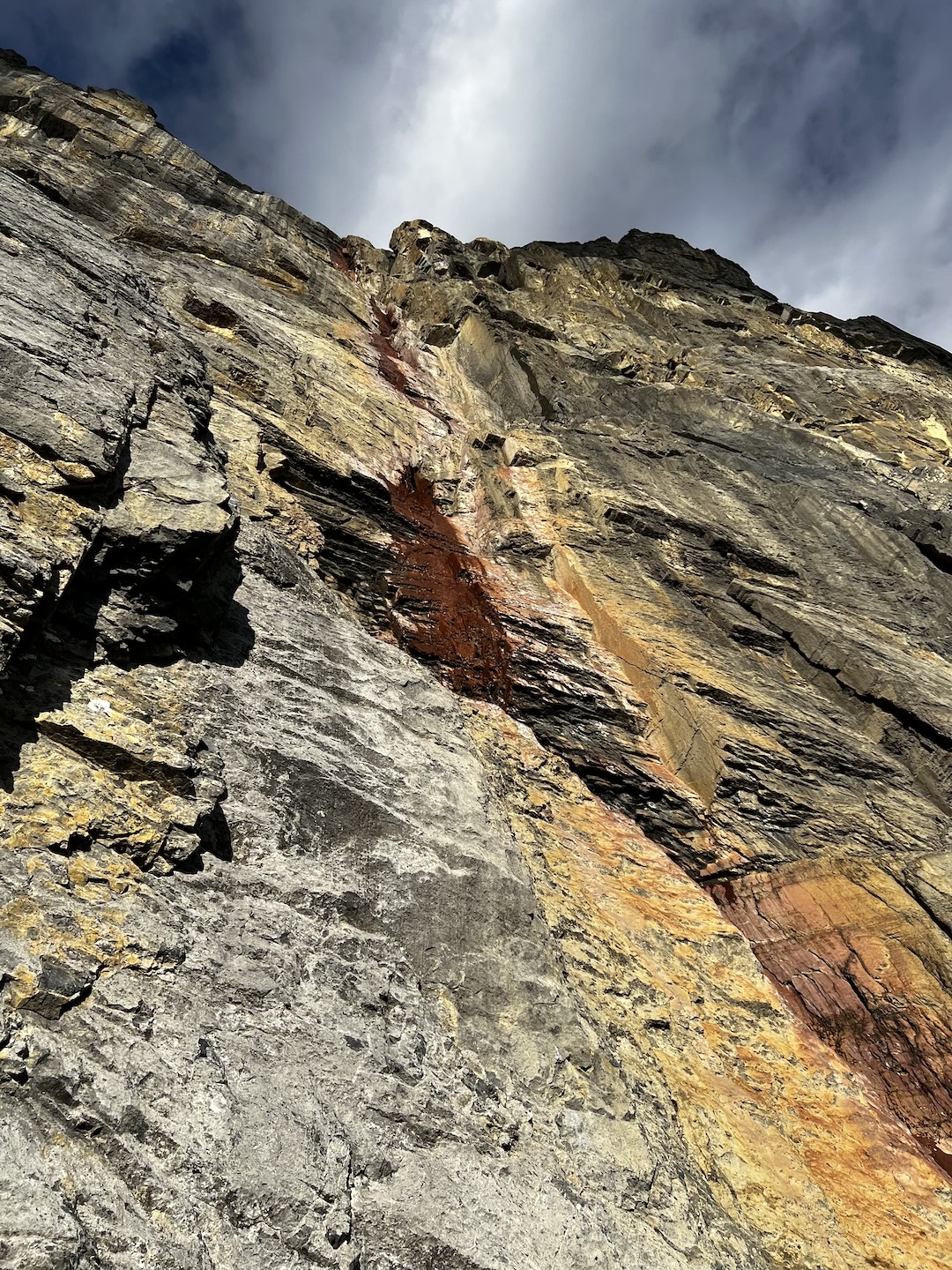
This brought us to a beautiful ledge where the waterfall splashed down the rock into a pool. We were surrounded by the reds and oranges of rust on the wall, the sound of water pouring down into the pool, and the backdrop of Windtower (2,695m) in the distance. It was a perfect setting for a terrifying lead.
If the waterfall were dry, we could have climbed a lovely chimney. But, since we hadn’t planned on doing a first ascent, we’d neglected to bring a snorkel. This forced me to go right, into a steep, shallow corner with very thin cracks. I’d like to think the sound of the waterfall drowned out my whining. At a stance before what seemed to be the most challenging climbing, I couldn’t get any protection besides the smallest nut on my rack. Eventually I sat on the rope to place a better-than-nothing knifeblade. After a series of reachy face moves, the difficulty eased and the protection improved.
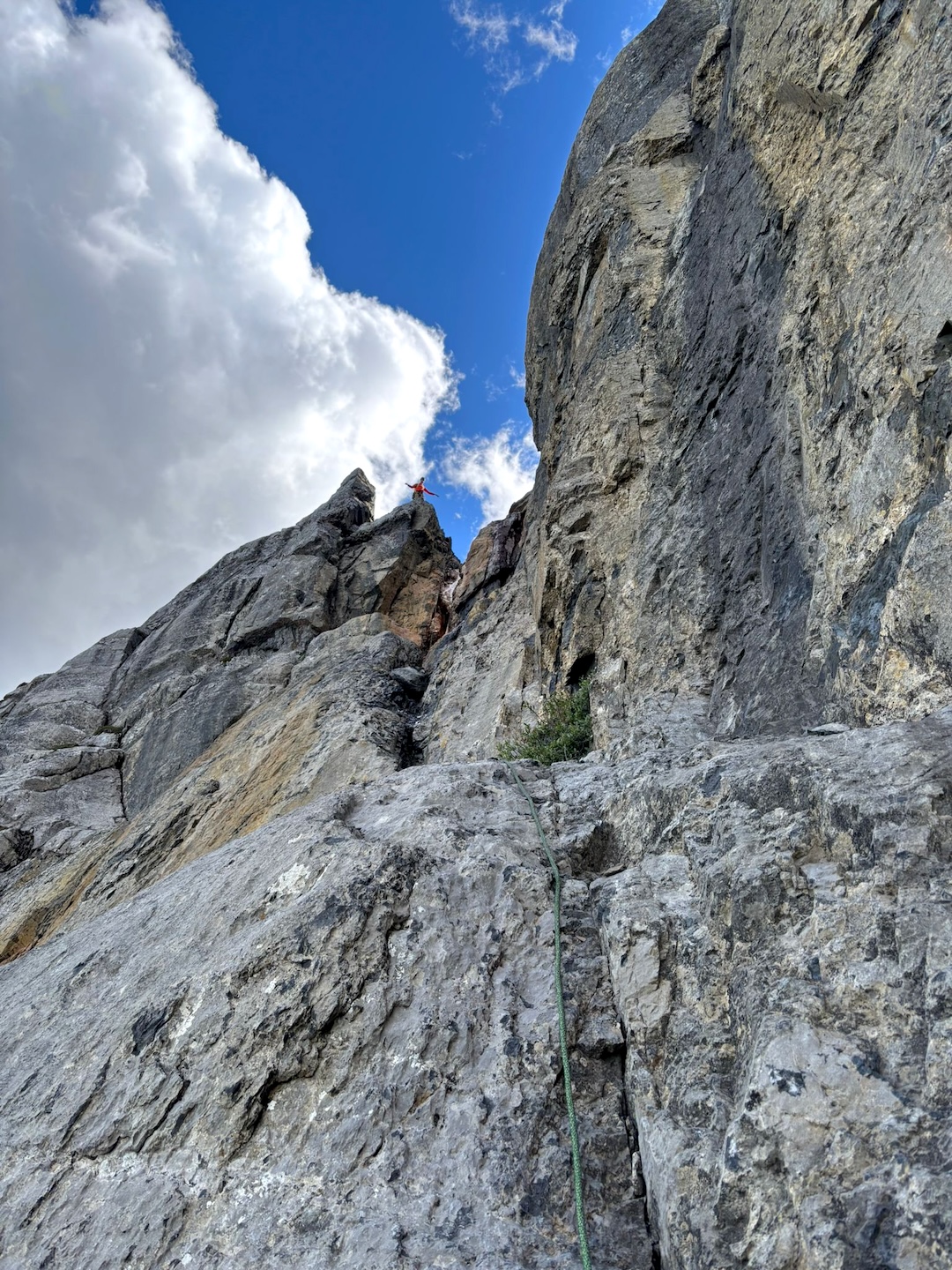
The higher we got, the more committed we felt. We arrived at a sopping wet cleft that, to my eyes, looked borderline unclimbable, but Gabs thought otherwise. She took the rack and splashed her way up without hesitation. From a large ledge above, we climbed an oddly technical pillar, smeared up a slabby dihedral, and puckered our way up one final poorly protected step. A ramp led back to a scrambling exit pitch and the source of the waterfall: a streak of bright white muck that gave way to the wild oranges and reds we had seen below.
We hadn’t seen any sign of travel since the top of the fourth pitch, and we later learned the fixed gear had been from attempts to climb the frozen flow in winter. For now, Iron Tears (465m, 11 pitches, TD- 5.11-) is a summer line.
—Greg Barrett, Canada
Media Gallery