
Mt. Chephren, East Face, Snafflehound Spine
Canada, Alberta, Canadian Rockies
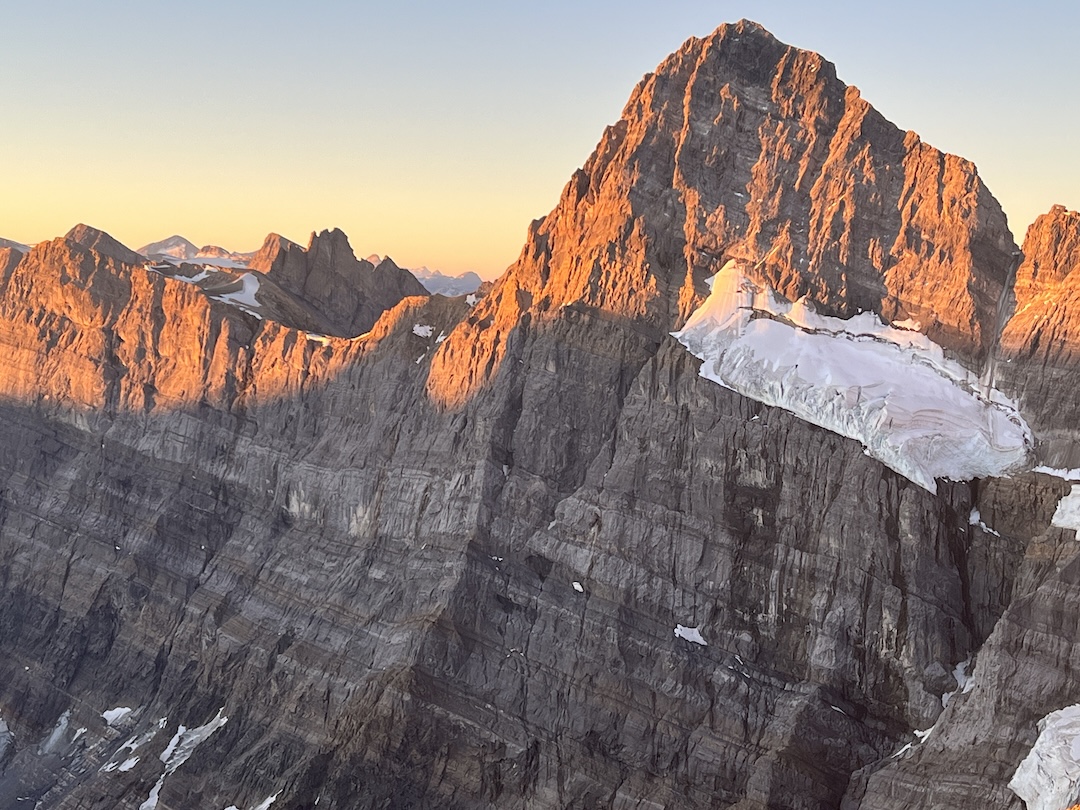
On August 4, 2024, at 4 p.m., Greg Barrett and I left Waterfowl Lakes Campground, eyes set again on the east face of Mt. Chephren (3,274m). We had previously been shrugged off the final headwall of Leftover Rib (Sevigny-Slawinski, 2000) by weather—this time we hoped for a new route.
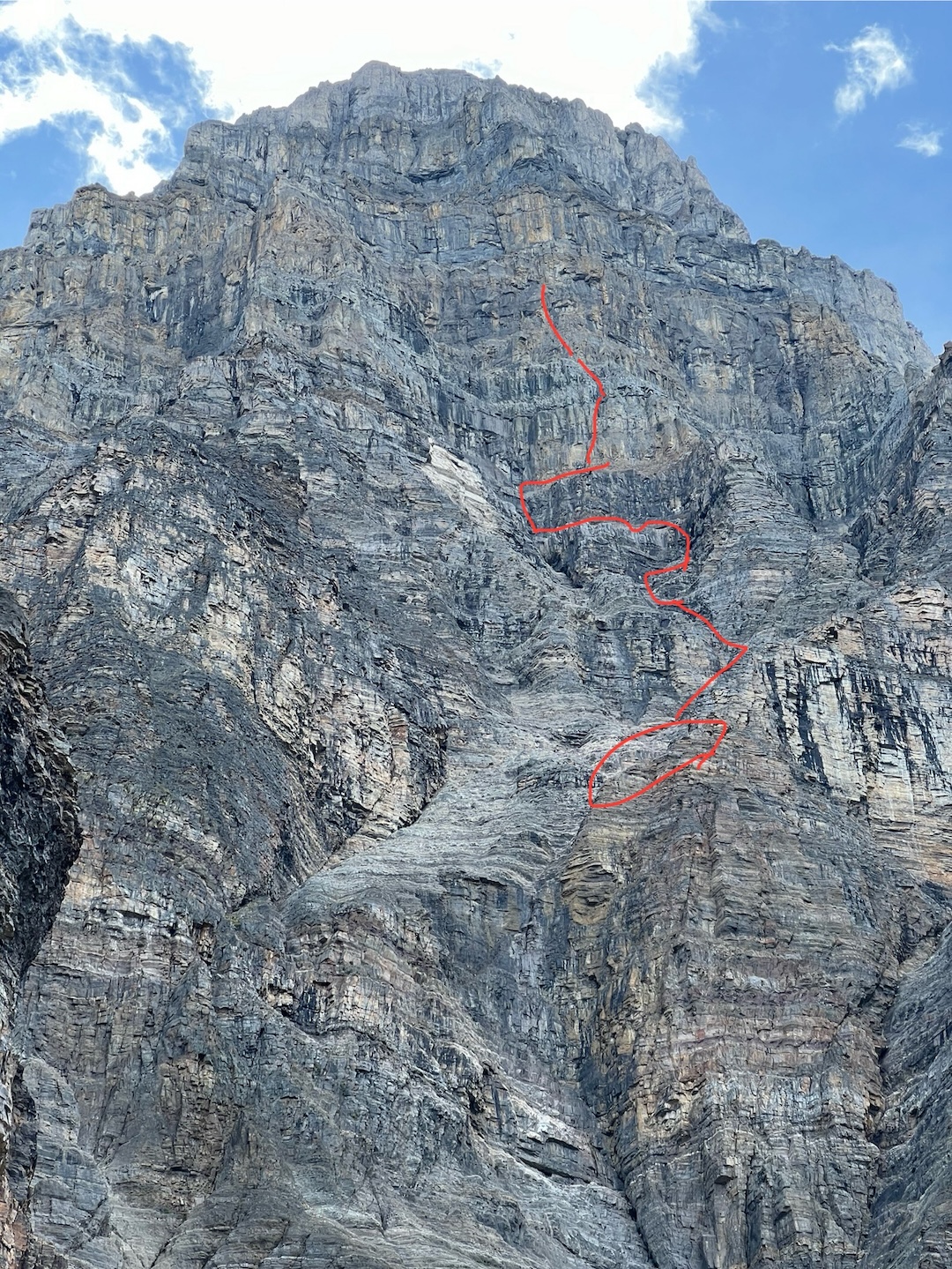
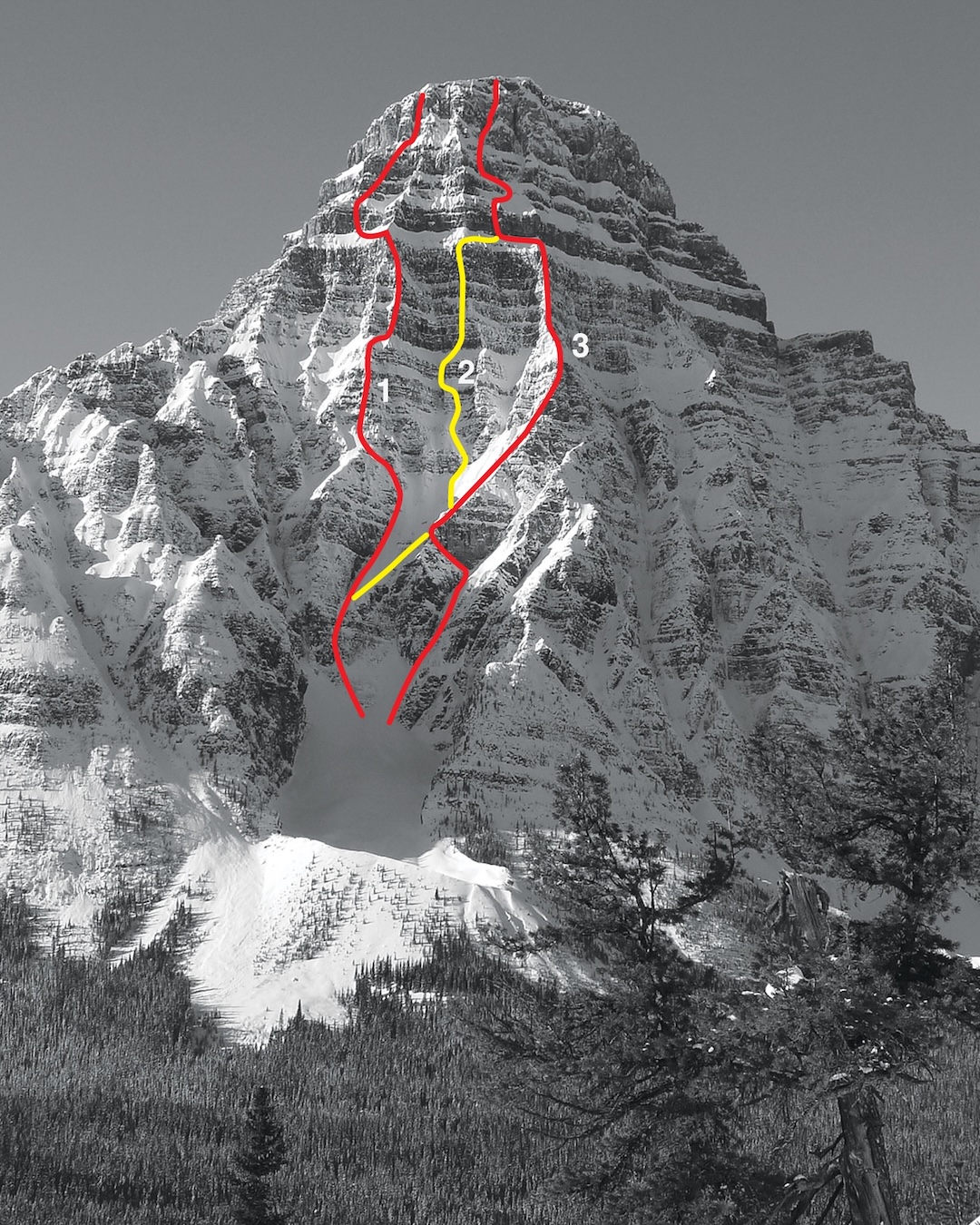
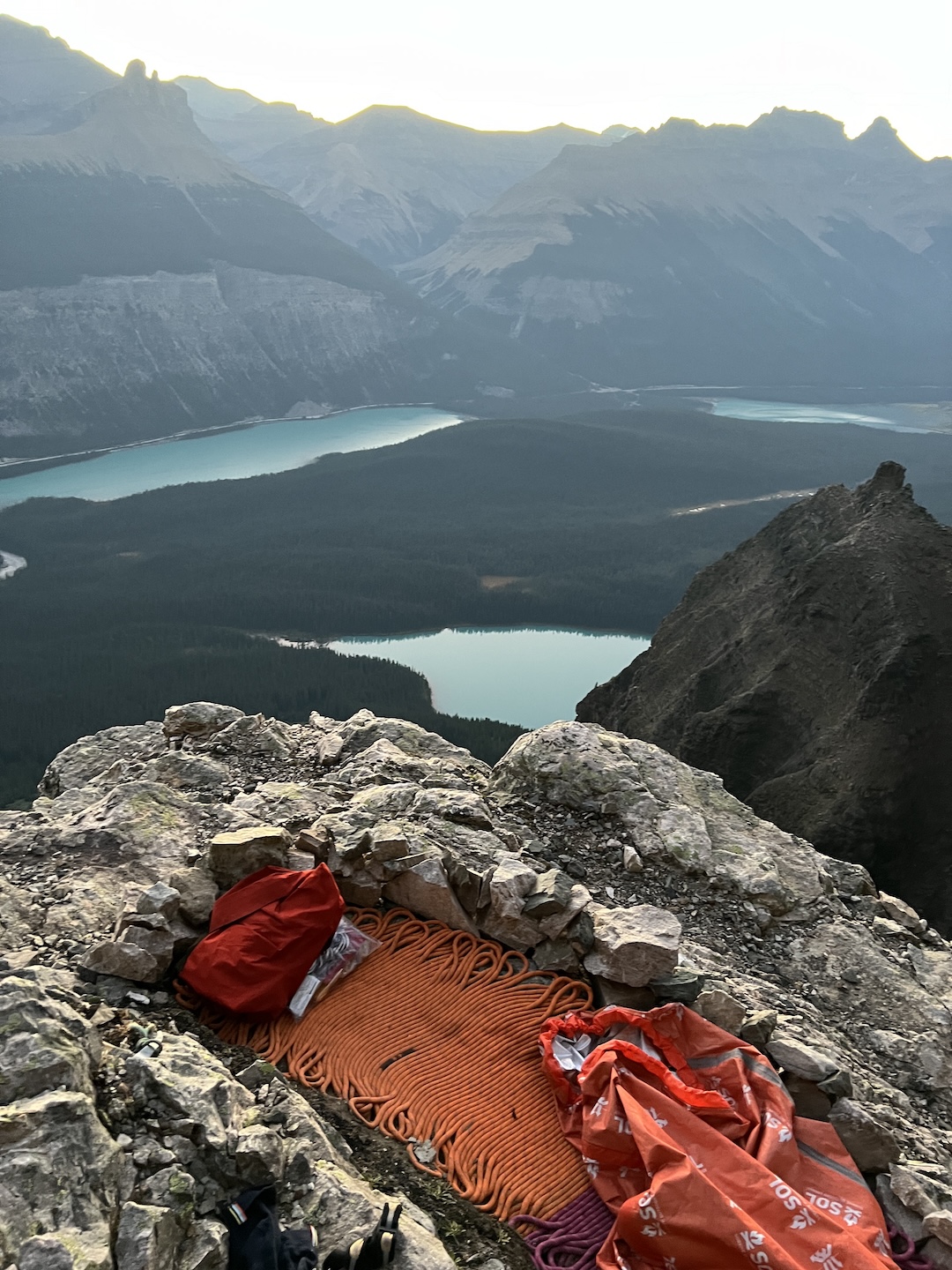
We raced the sun as we schlepped up the pocket glacier below the face and the shared pitches of Leftover Rib and the Gran Route (the original east face route, Geiser-Gran-Hudson, 1965). Our planned line would wander up along a rib between the two older routes. Greg found us a bivy ledge, and with no signs of rats, I emptied my pack to use as a bivy bag. An empty dried-meal bag would serve as bait and an alarm to wake me if snafflehounds were about; I figured they would go after the noisy packaging first.
Foolish! Every mountaineer knows the salty brine of sweat and nylon is a snafflehound’s preferred diet. The rat went after my helmet, eating the straps and pads, then trundling the brain bucket. Any nervous misgivings about the unknown ground ahead fell away alongside the headgear. I was left with the stark realization of how badly I wanted to climb the route. Alternate bad ideas were discussed (do we really need two helmets?). It began to get light, and Greg manifested an unlikely reality where the helmet was a hundred meters below on a ledge. After he found and recovered it, I used tape, a piton-screwdriver, a glove, and ingenuity to fashion a decent hantavirus melon-saver.
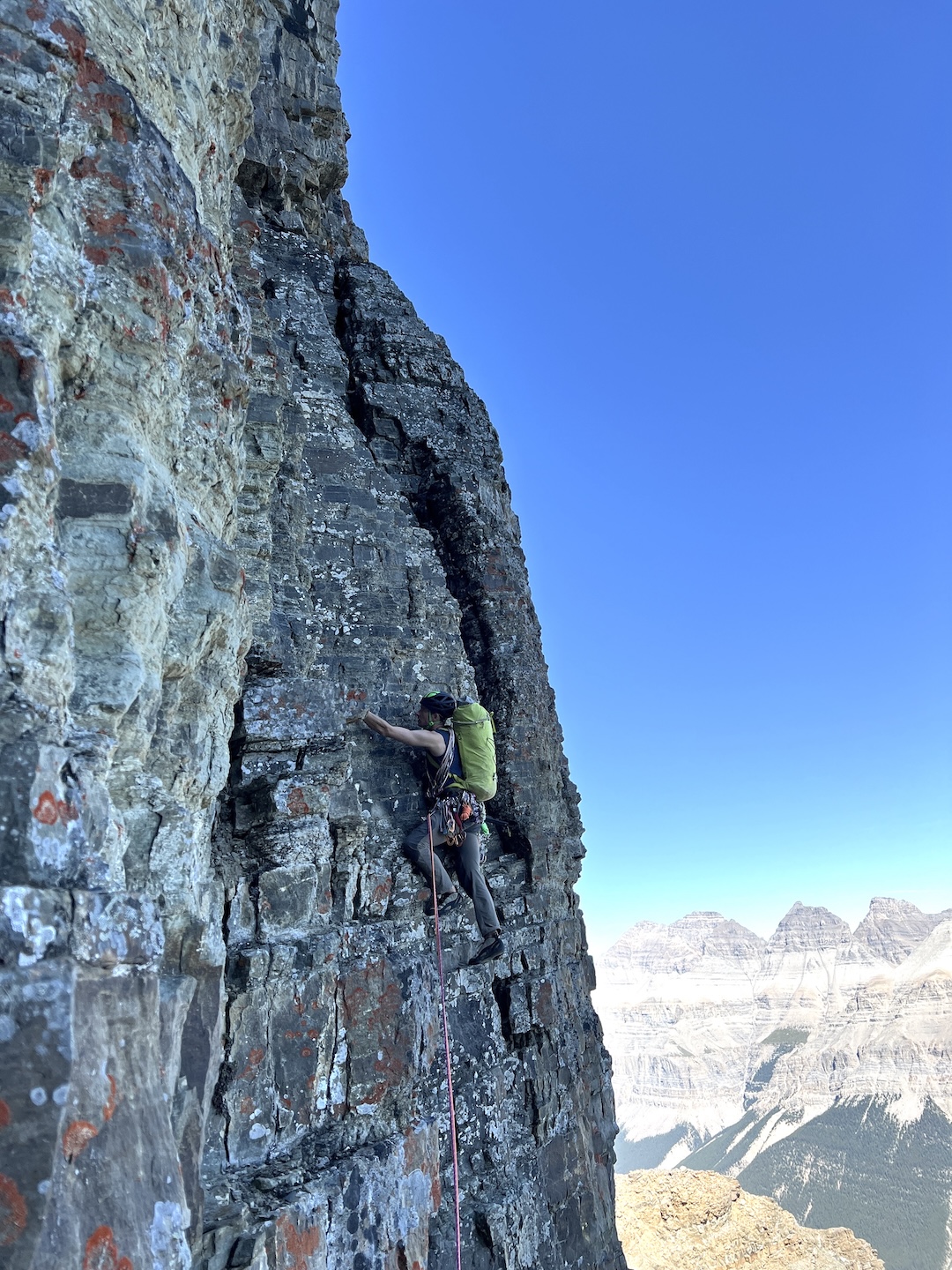
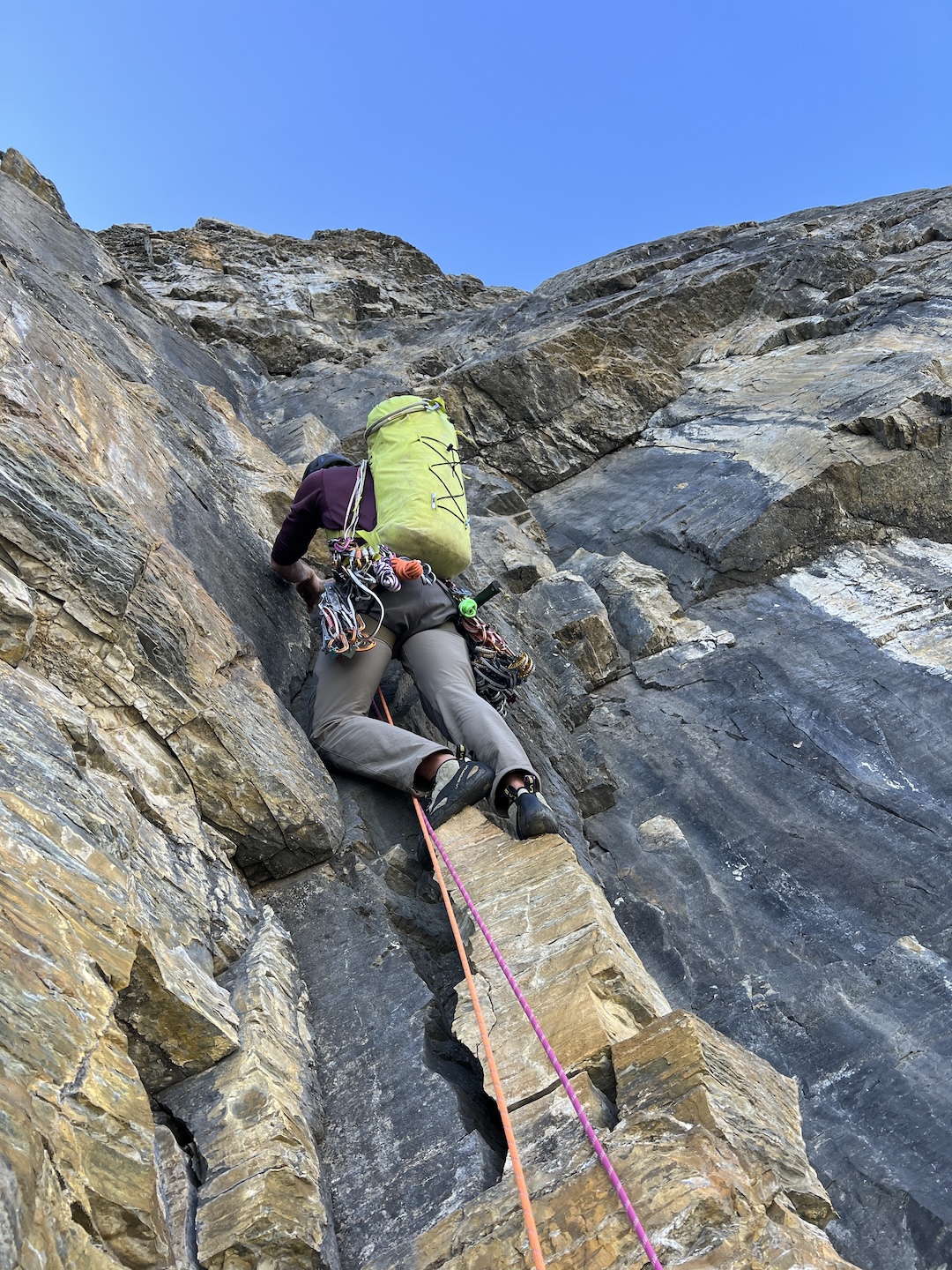
As we started up again, we quickly dispatched a few loose scrambling pitches heading up and left of the bivy, then roped up and headed right for about 20 meters on a ledge to a 5.8 chimney. At the next ledge, we veered left for our final water seep and the start of the real climbing. At this point, we would continue straight up between the previously climbed ribs.
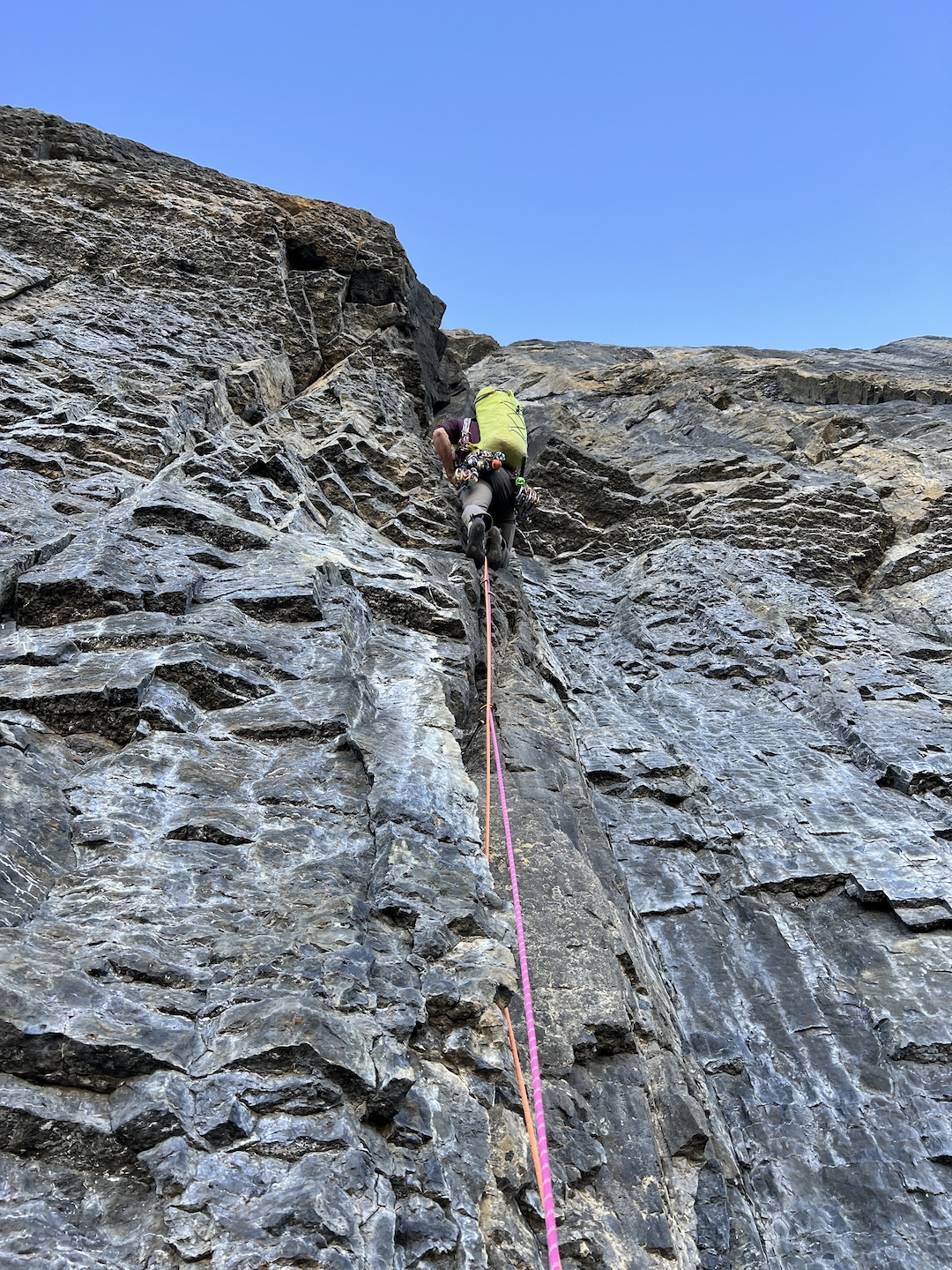
As rambly choss gave way to vertical walls, we took turns being impressed with each other’s boldness while swapping leads through some decent rock. The daunting headwall roofs we scoped from the highway now had their sights on us. We weaved around a plethora of death blocks while the ledges around the belays became shell-shocked with falling rock. At one of the largest cross-mountain ledges, we moved our rope rightward about 100 meters to a weakness. A new route seemed within our grasp! However, as Greg led, I spotted a piton high on the pitch, and we realized we had joined the crux of the Gran Route. Our route had swerved right where the Gran swerved left at the headwall.
Our 450 meters of new territory had ended, but we would be consoled if we avoided another bivy on the face. We located the exit gully with minimal remaining light, but the Gran didn’t let up—I found myself jamming wet seams in darkness, followed by Greg fighting tooth and pin for an anchor. To have a proper adventure, the outcome must be uncertain, and Chephren wasn’t ready to yield. Night fell, a “few” more pitches had turned into “many,” and we began to worry more about survival than the summit as Greg rained rock down at me from a belay that would hold little more than a stern glance. Finally—and in awe of the difficulty surmounted by the 1965 Gran team—we greeted midnight at the summit. We called our partial new route Snafflehound Spine (850m, 450m of new terrain, TD+ 5.10+).
—Nic Houser, Canada
Media Gallery