
The Rimwall, On the Wings of Maybe
Canada, Alberta, Canadian Rockies
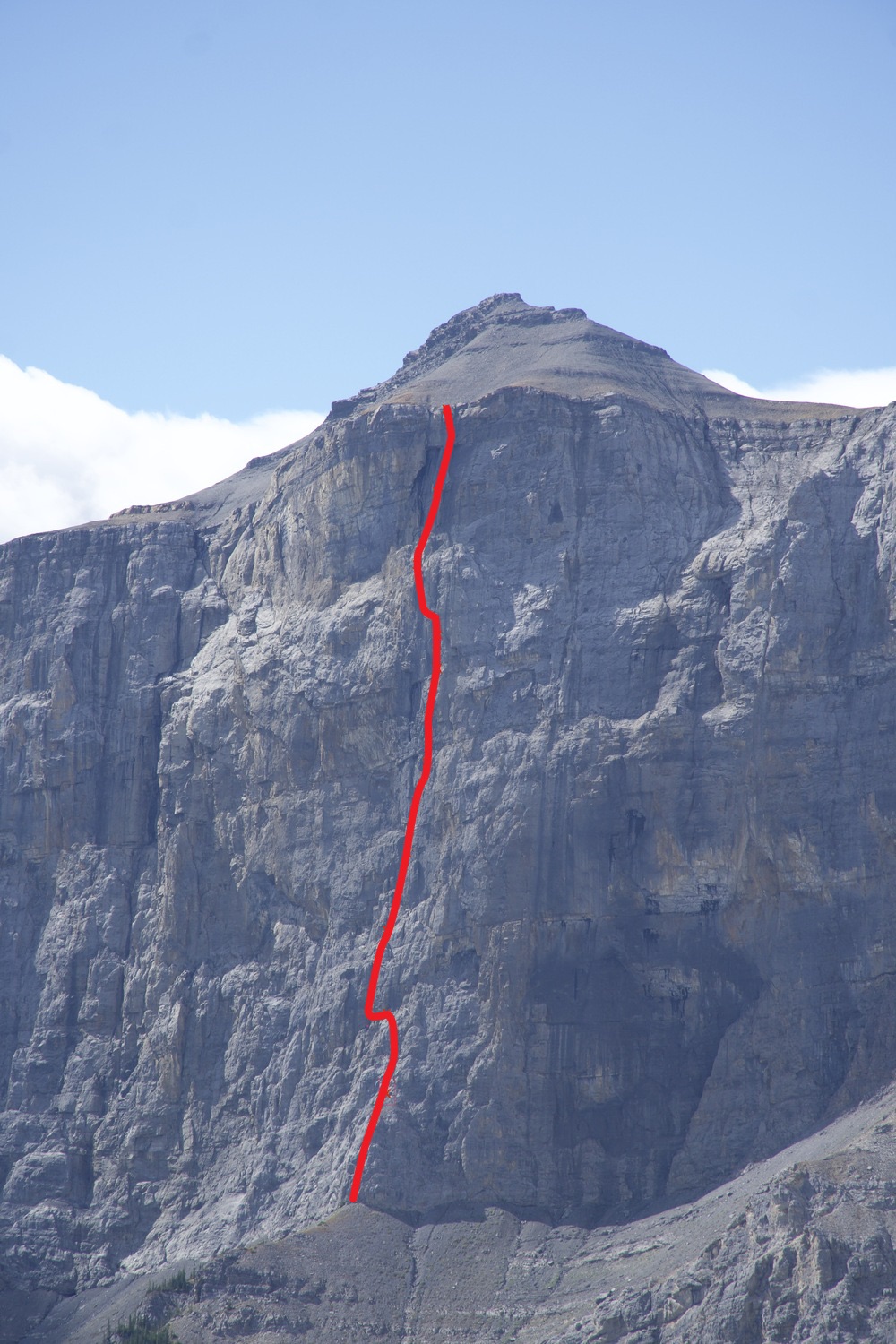
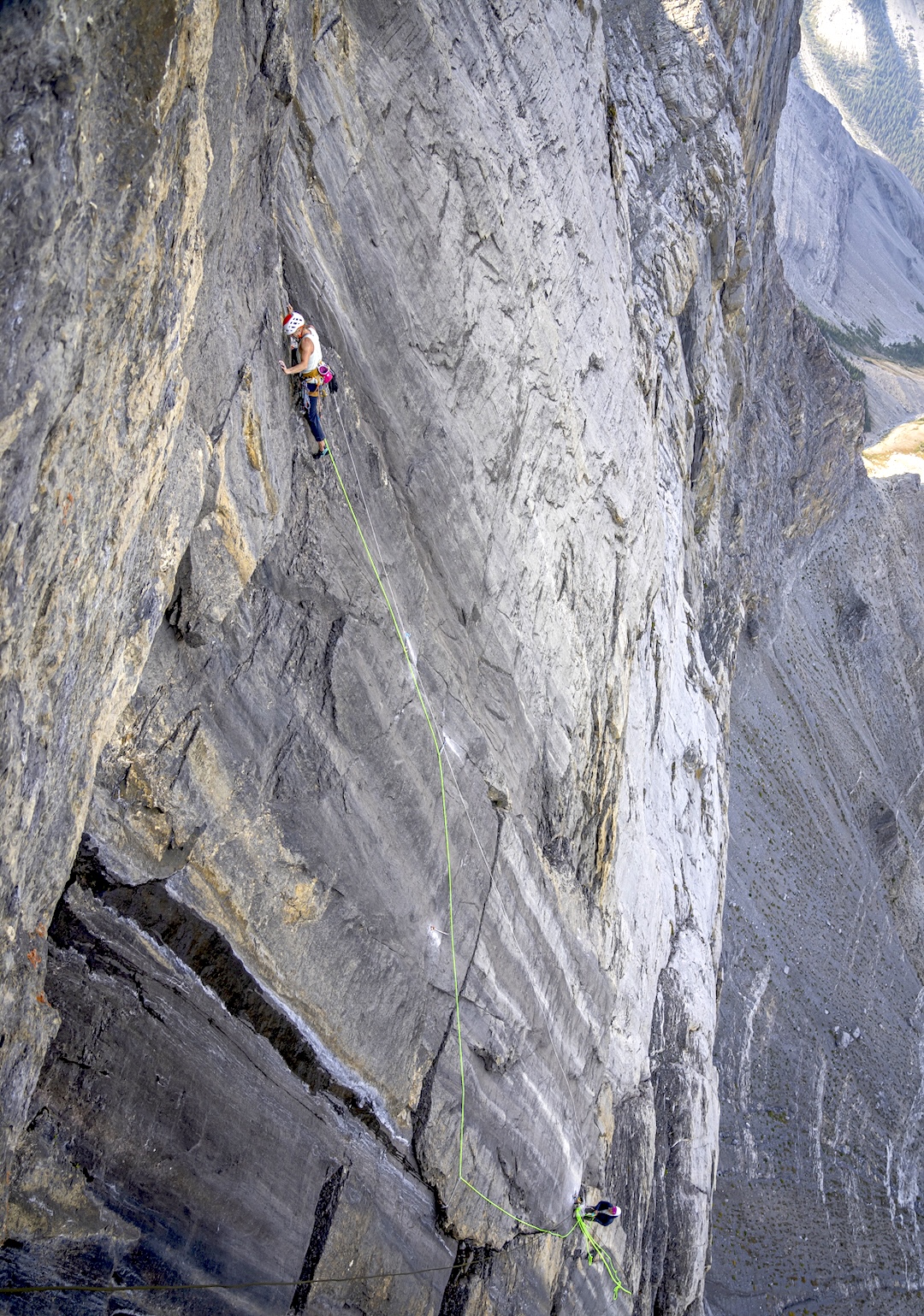
On the Wings of Maybe (400m, 5.12+/5.13-) is an alpine rock climb on the Rimwall, a 2,680-meter summit of high-quality Palliser limestones in the Goat Range, just southwest of Canmore. The sheer east face is 400 meters high and it is at least three times as wide, overlooking the pristine Wind Valley. At the time of this writing, there are five or six other established climbing lines on the cliff, mostly between 100 to 800 meters to the left of the new route. The steepest and highest section of the Rimwall falls in a plumb line below the summit, and this is where the route ascends.
Ines Papert (Germany) and I freed the entire route on September 7, 2025, but putting up this line was a team effort over many years. In 2018 and 2019, Pete Hoang and I established the first eight pitches ground-up, trying to keep the use of bolts to a minimum, and redpointed the first seven pitches. Pete then traded his climbing shoes for a mountain bike and has yet to return to the climbing world.
In 2022, I added a few bolts to the first three pitches to improve the line, tame some pointless runouts, help manage how the rope flowed over some lower-angle terrain, and make the pitches flowe better.
In 2025, Ines was visiting Canada to climb with Sarah Hueniken. I suggested that if they were up for an adventure, they could try to finish the route as they saw fit. They climbed the first six pitches to check it out, then, a couple of days later, they rappelled in from the top and established the last two pitches in the same ground-up style as the rest of the route.
To prepare for the free ascent, Ines returned to the top alone via the scramble route on the west side of the mountain and used the fixed lines to check out the crux moves. Four days later, on September 7, she sent the crux eighth pitch first try during our complete ascent of the route, which was done in 12 hours and 20 minutes car to car. I plan to return in 2026 to get my own free ascent.
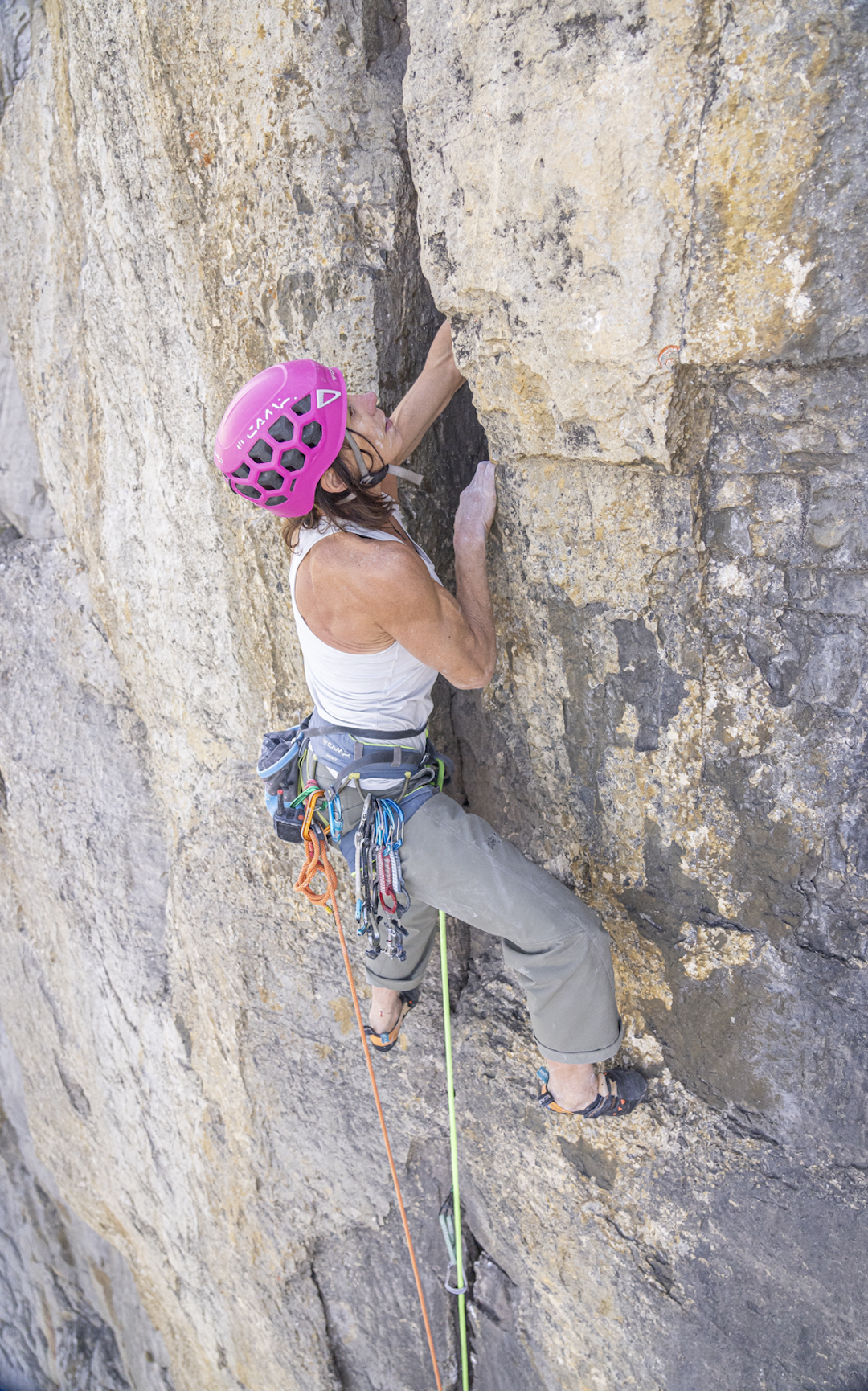
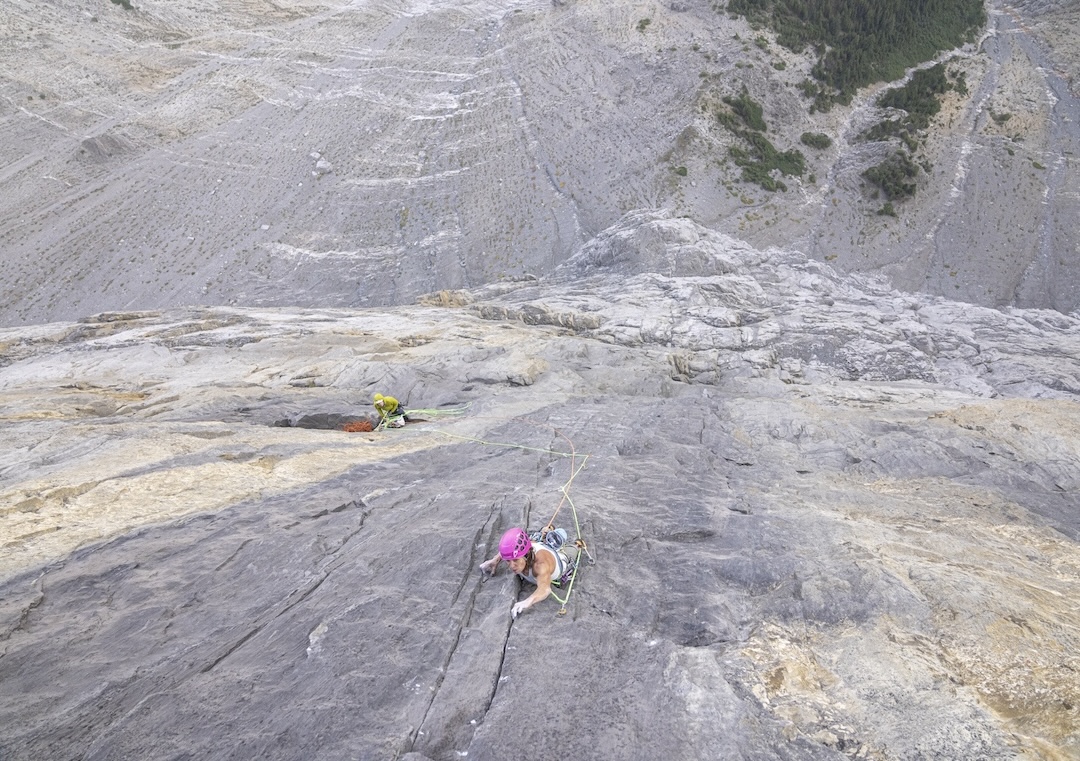
The route is characterized by a mix of crack and face climbing, and its protection is about 50-50 bolts and traditional pro. Four pitches up to 5.10 lead to a headwall, where four more pitches of 5.11 to 5.12 weave through a series of roofs. The 40-meter crux pitch was hard to grade but has sustained mid-5.12 face climbing past nine bolts on a rising traverse that leads to a perfect limestone finger crack for another 15 to 20 meters. I could see this pitch being 5.12+ at a crag, but it felt like a 5.13a effort on the first free ascent.
All belays are bolted, and it’s an easy walk-off descent via the west side scrambling route back to the parking area. Excellent rock and great natural protection make it somewhat unique for the area.
—Jon Walsh, Canada
Media Gallery