Pic Dondy, East Face, Regicide
Madagascar, Andringitra Massif
Mark Elton
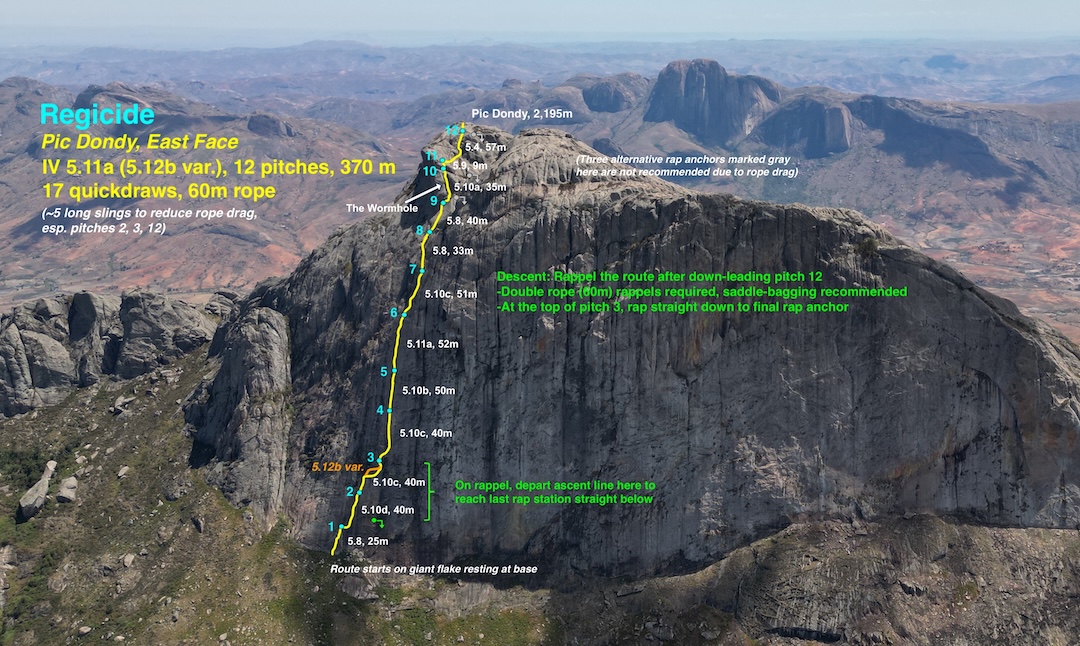
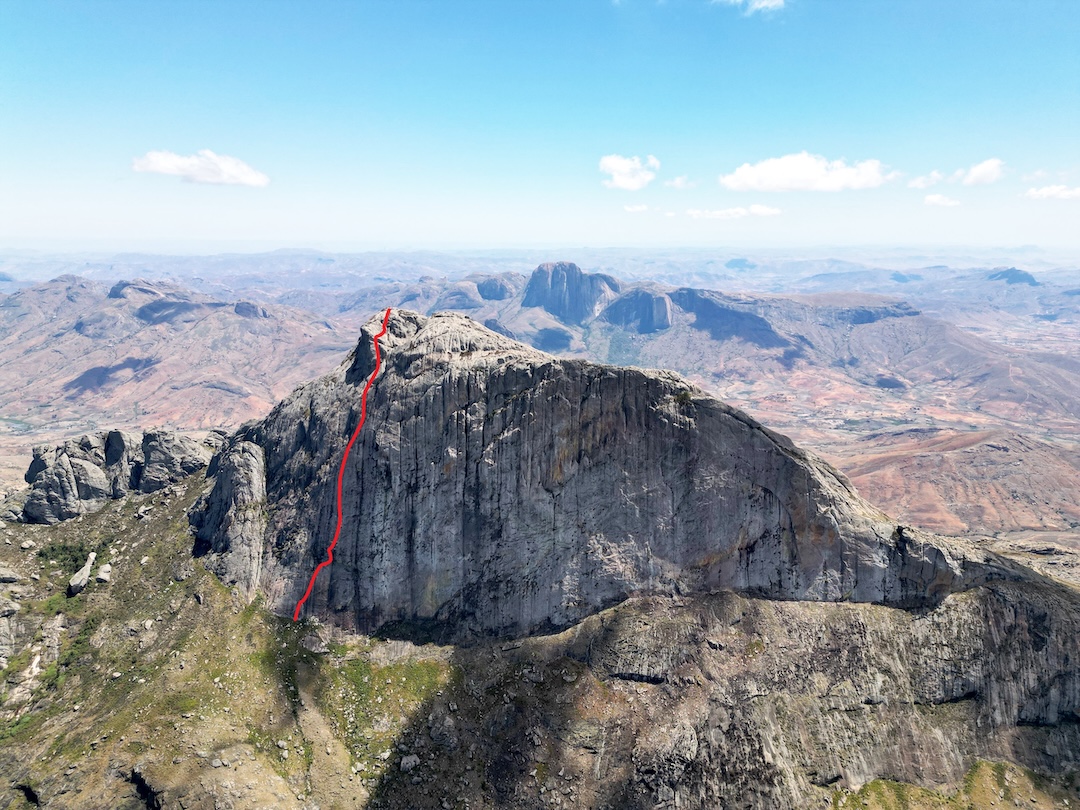
In October, Mark Elton (USA), Thibau Grandjean (France), and I (USA) established Regicide, a 12-pitch route on the steep east face of Pic Dondy (2,195m, 22.032S, 46.828E) in Madagascar’s Andringitra Massif, six miles east of the well-traveled Tsaranoro Massif. Dondy has one recorded route on its south ridge and three on its slabby west side. As far as we know, Regicide is the first route on Dondy’s east face.
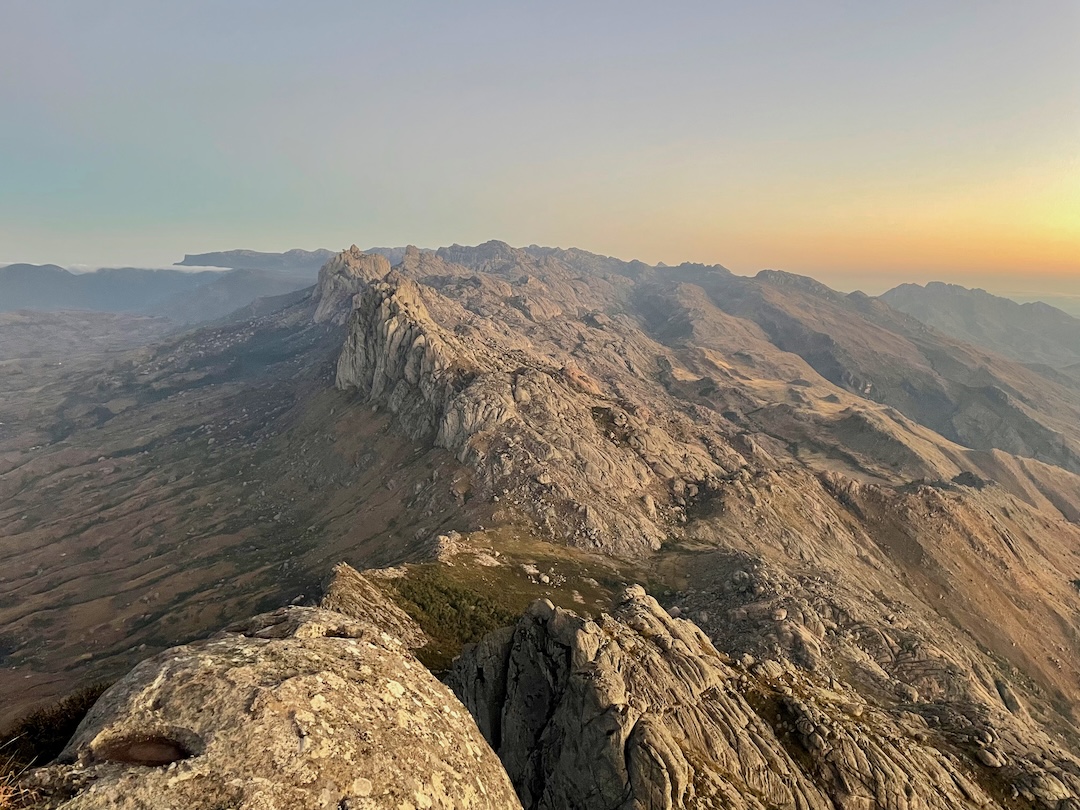
The peak is at the northern end of the Andringitra Massif, the bulk of which is within Andringitra National Park. To date, climbing has not been allowed within park boundaries. Like the Tsaranoro Massif, Dondy is outside the park, along with a handful of other impressive peaks with steep, sinuous east faces.
These majestic highlands, tall enough to have been glaciated in the last ice age, divide Madagascar’s coastal rainforests from the central scrubland. They capture orographic rain from the easterly trade winds and, except during the summer monsoon, cast a rain shadow to the west. Dondy and the rest of the Andringitra are often shrouded by clouds and mist rolling in from the Indian Ocean.
This moisture contributes to the high endemism here, from broad aloes to small orchids to chameleons found nowhere else. At the seventh belay of Regicide, I drilled an anchor beside a blooming spiny succulent, a member of the “elephant’s foot” genus (Pachypdoium), and noticed what I first took to be a giant armored mantis, chewing on a yellow blossom. It was, in fact, a giant hissing cockroach, bigger than a mouse; like a friendly lapdog, it motored over to me and pawed my gear.
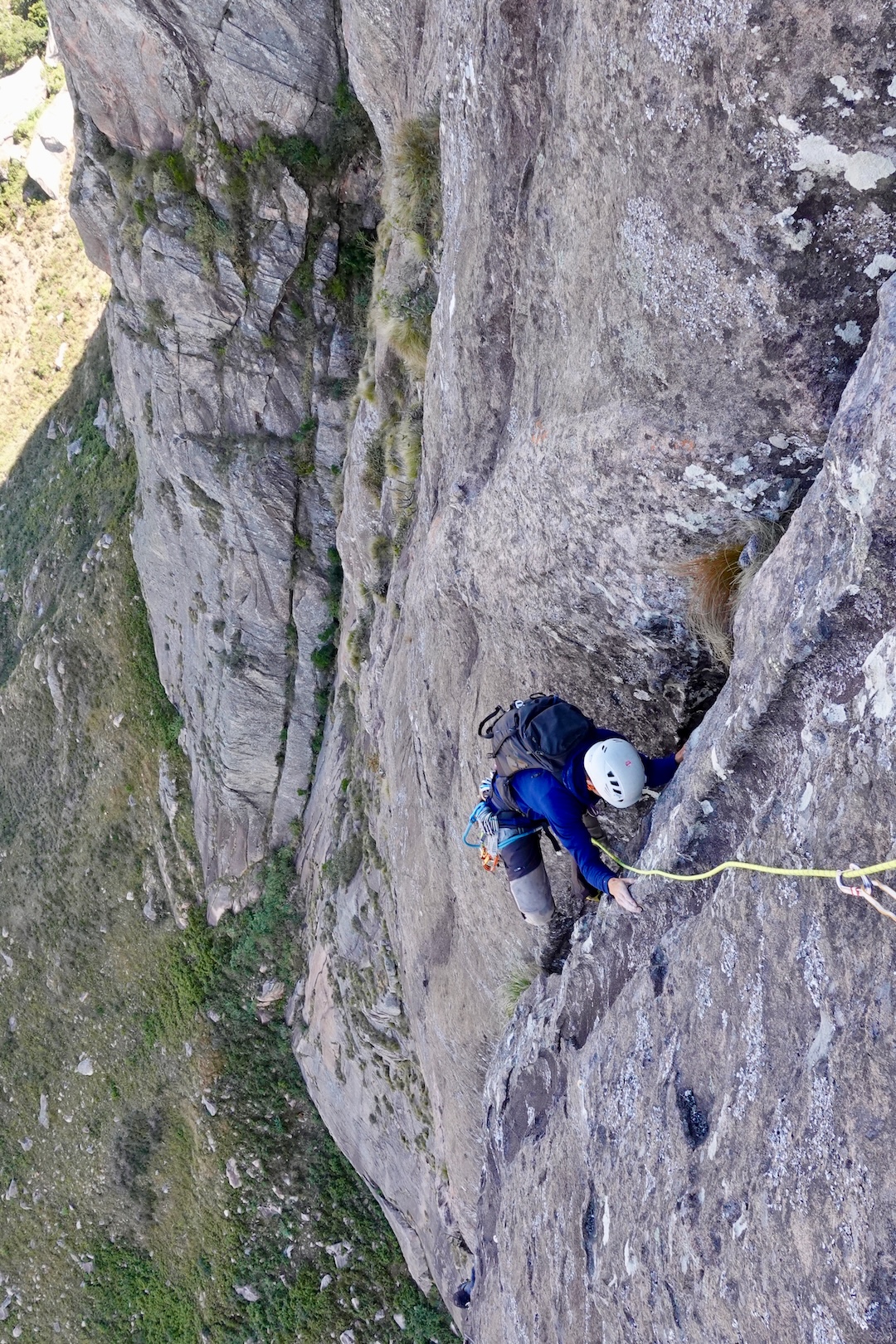
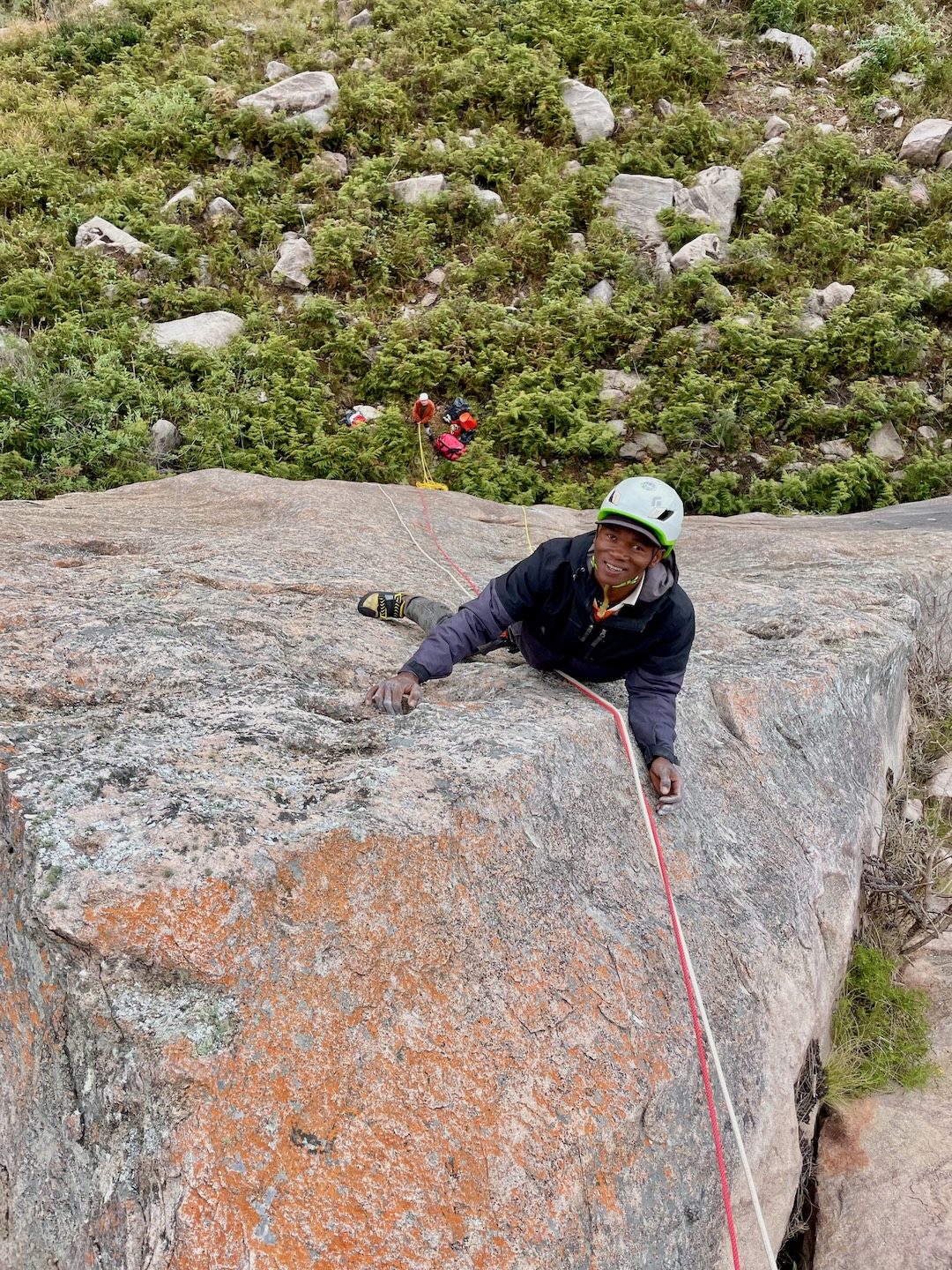
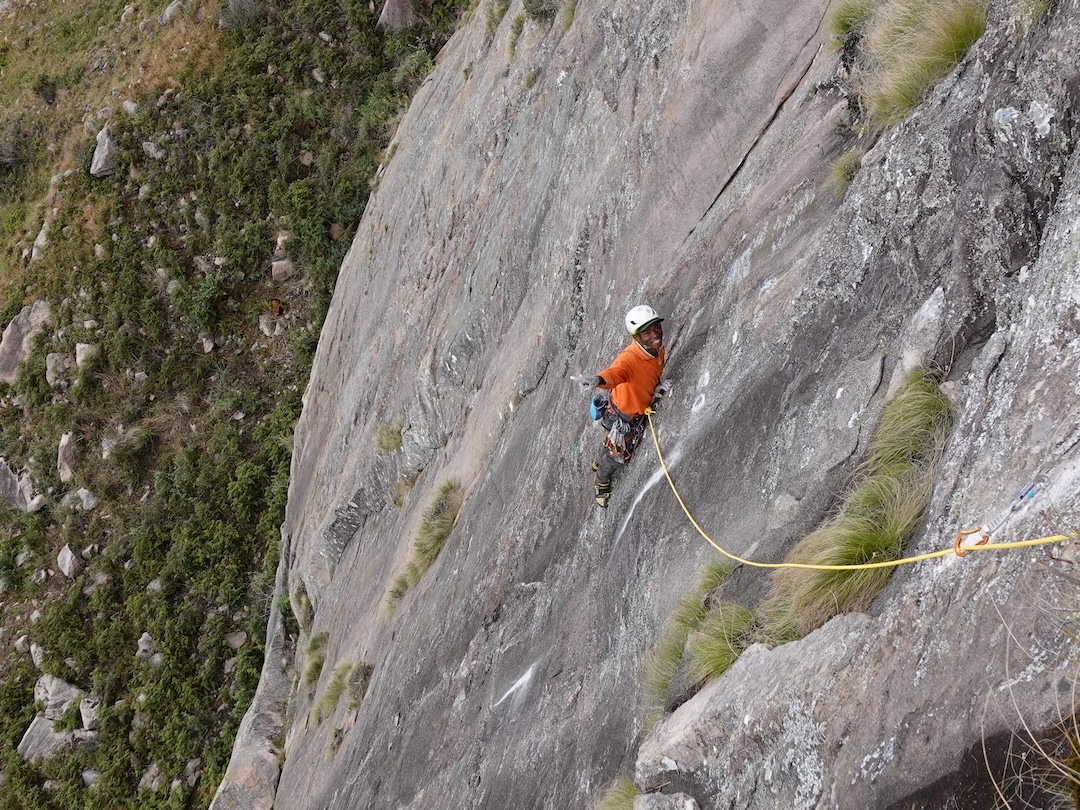
Amid these encounters, we found the climbing on Dondy just as high quality and fun as on the Tsaranoro routes, but different: more three-dimensional, with tufas and knee-bars in water runnels; sharp, juggy blobs peppering the face; and a mesh of pinkish pegmatite dikes that protruded enough to form holds. This contrasted with the endless ocean of cryptic crimps on many Tsaranoro classics. . The Andringitra peaks are overall more bulbous, with a touch of Gaudi, and they have more karst-like erosion features than the austere Tsaranoro peaks. Curious ring-tailed lemurs cavorting near the base and the ubiquitous water-jug-emptying call (glug-glug-glug) of the Malagasy coucal, a kind of cuckoo, add to the playful feeling created by the rock.
After consulting with a geologist who had completed field work in the area, we think the difference with Tsaranoro may boil down to Dondy (and much of the Andringitra Massif) being composed largely of an unusual high-potassium version of syenite, a cousin of granite that contains little quartz. (Hueco Tanks is a well-known example of syenite crag.) Its potassium feldspar may be more erosion-resistant than surrounding plagioclase, resulting in subtle depressions and the adjacent holds we observed. Whatever the cause, this diversity of holds and resulting movement patterns, within just a day’s walk of the nearly one hundred routes on Tsaranoro’s granite walls, could become an attractive new dimension of climbing here.
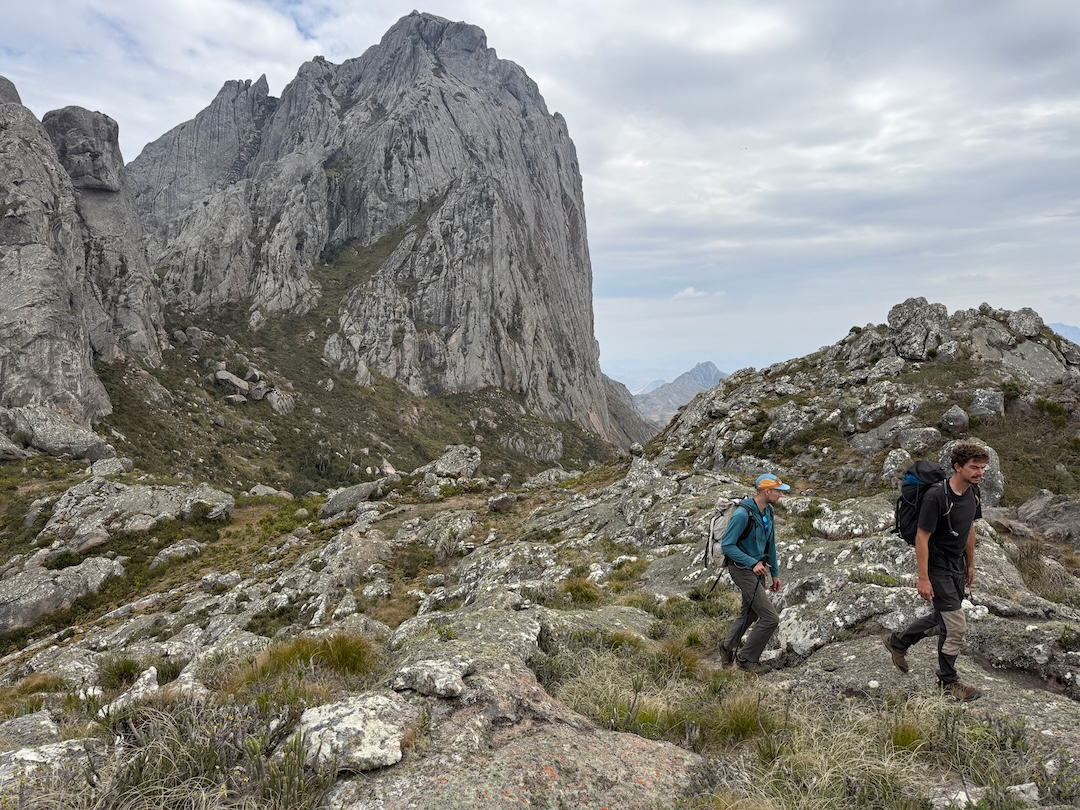
We approached the east face of Dondy from the Tsaranoro camps (three to four hours with loads; about 3,500 feet of elevation gain) and camped near the base of the wall. We targeted a line that had the best rock off the deck and the least vegetation visible up high. We hoped that establishing a trade route, with friendly bolting, would attract more parties to make the effort to reach the face. (As with Tsaranoro, there is very little natural protection, and our route is protected entirely with bolts.) We anticipated finding harder pitches through three overhanging sections, but big holds appeared, and this kept the grades moderate.
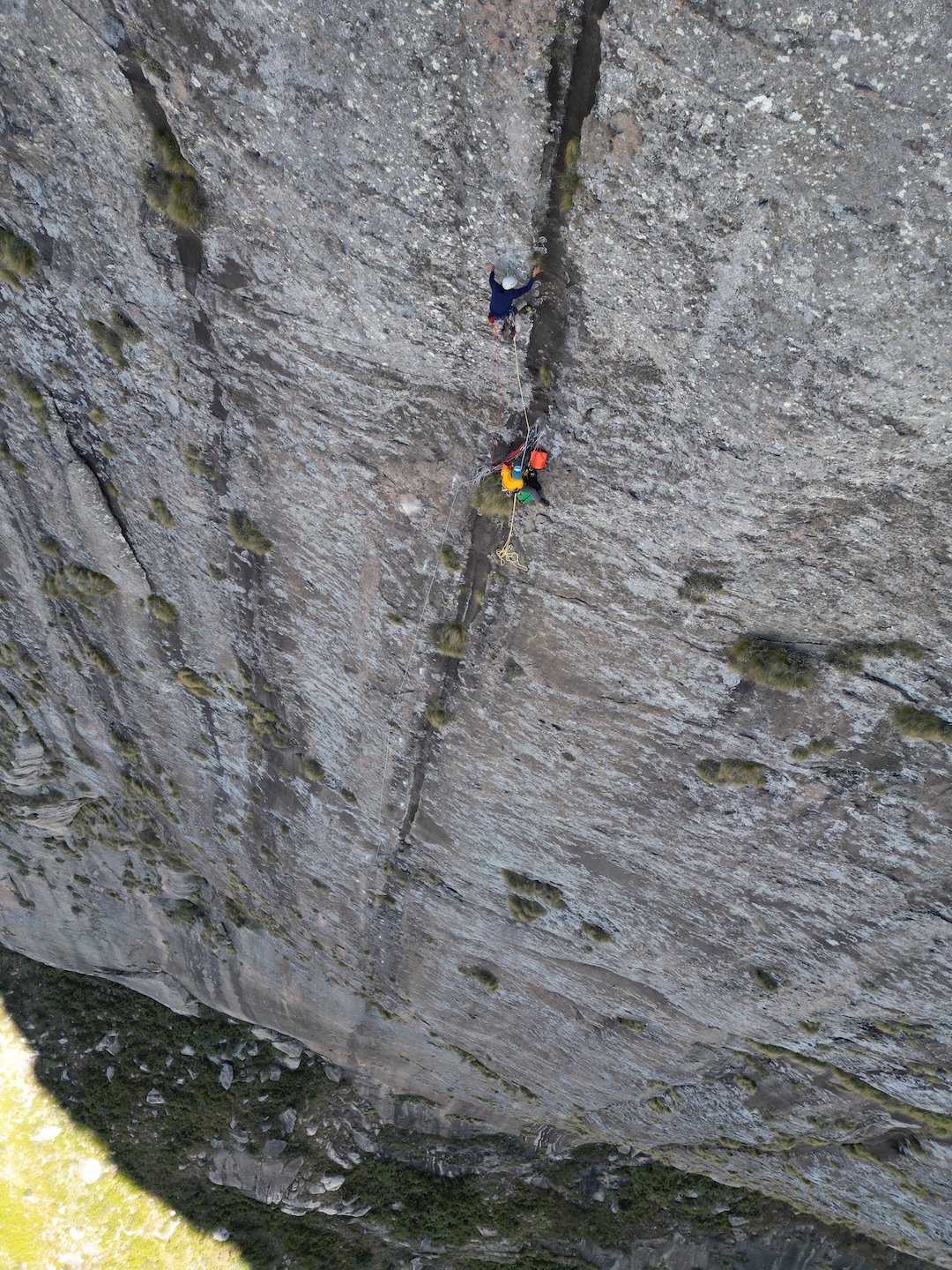
After six days of ground-up bolting (approximately 180 bolts) and one rest day, we climbed the full route in one day on October 10. Regicide (5.11a (5.12b var.), 12 pitches, 1,200’) follows an easy scooped face up a large block at the base, traverses slightly right past crimps and pegmatite rails, and breaks through a roof after a right traverse with two separate options (a 5.10c and a crimpy 5.12b). It joins a steep water runnel for several pitches, followed by a slab and what we dubbed the Wormhole Pitch (pitch 10), which culminates in a squeeze chimney just below the summit block.
We descended the route, with two 60m ropes, first down-leading the last 5.4 pitch (bolted for that purpose), then saddle-bagging the ropes on rappel to mitigate against snags on the many chicken heads. We did install three rappel anchors that offer a more direct descent off the summit block, but the rope pulls better on the actual line of ascent. If If more routes are added on Dondy’s east face, a shorter rappel line could be installed off the south ridge, or an existing semi-technical route from the north could be explored for more of a walk-off descent.
The village on the west side of Dondy, Ambalamisaony, charges a modest fee to enter what it manages as the “Village Reserve of Dondy.” At the request of Betsileo villagers on the east side, in the upper Zomandao (Namoly) Valley, we moved our camp farther from some ancestral tombs, and for the ten days we spent in camp, we bought vegetables and live chickens from them. These logistics were only possible with the help of Faly Nomenjanahary, a local climber and guide who ran camp for us, translated, and joined us on some of the lower pitches. Solar panels and inverters were essential for recharging our drill batteries. We also bolted top-rope anchors on several easy slabs at Dondy’s base to introduce the local kids (and some of their parents) to the joys of rock in their incredible backyard. They were naturals.
While we were climbing Dondy, civilian protests in Madagascar’s major cities precipitated a coup d’etat supported by the military. When I observed that the United States had also once overthrown an unpopular regime, burning King George III in effigy before defeating his army, Thibau reminded us that it was the French who were actual regicides. We couldn’t argue with that.
—Spencer Gray, USA
Media Gallery