
Cerro Steffen, West Face
Chile, Southern Patagonian Icefield
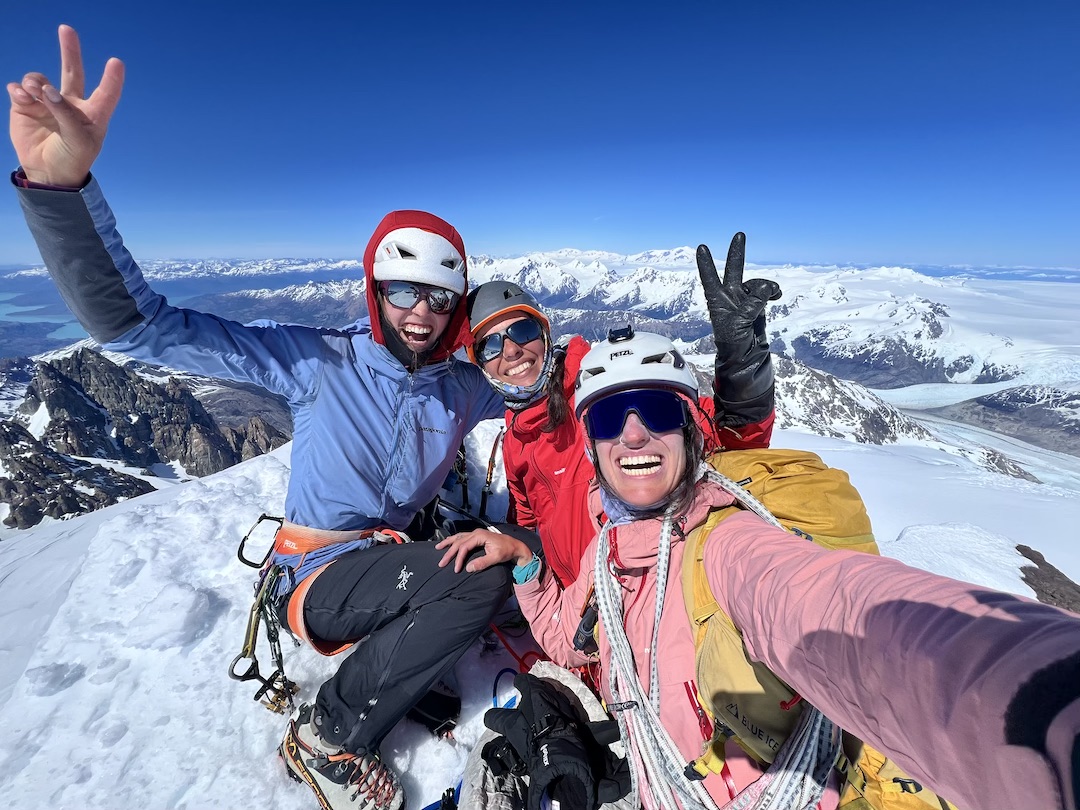
Our expedition began as an improbable idea. Angelina Di Prinzio (Argentina), Catalina Unwin (Chile), and I were three friends living in different countries, never having climbed together, yet all drawn to attempt a remote first ascent on the Southern Patagonian Icefield. A Grit & Rock award encouraging all-female climbing teams finally turned the dream into a reality.
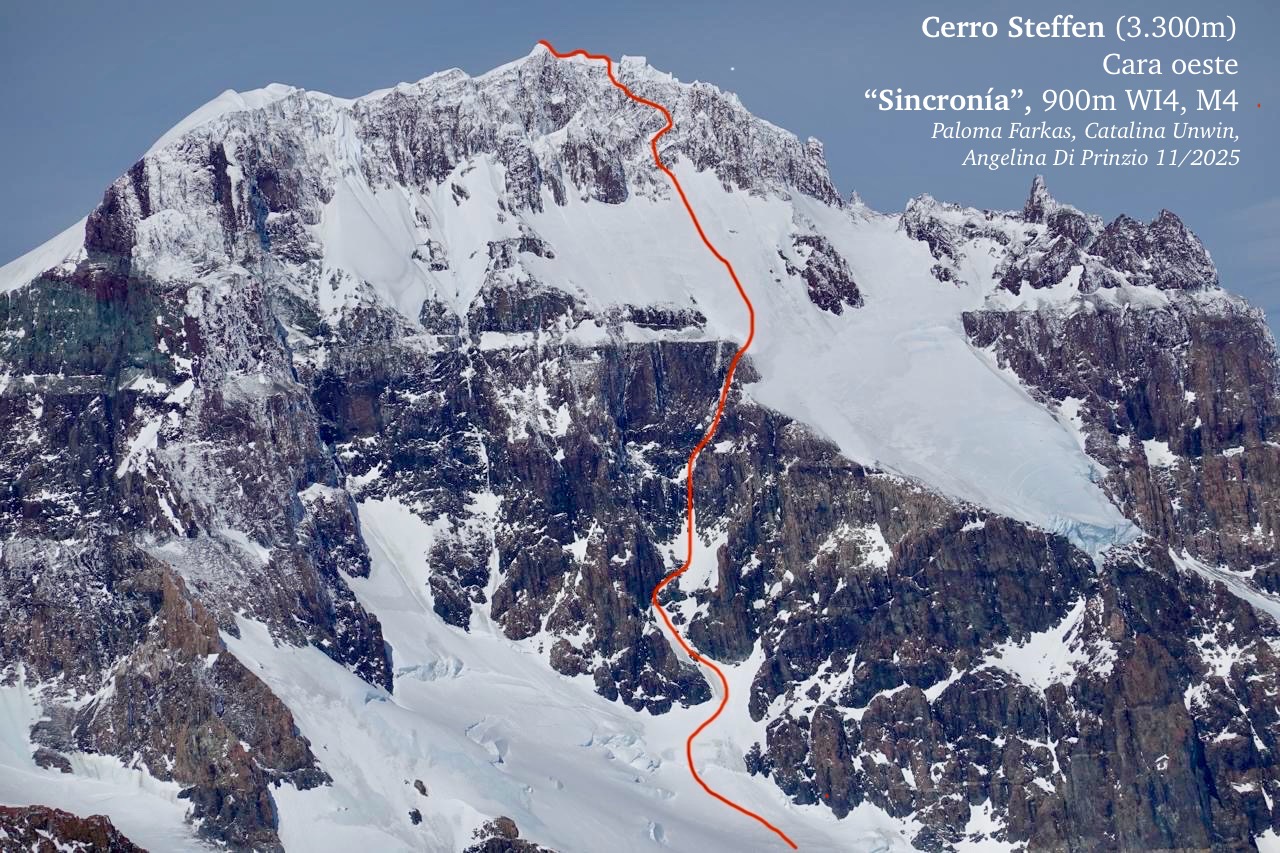
Planning took nearly a year and reflected the logistical challenges typical of the Icefield, with its unstable weather and complicated access. Our objective was Cerro Steffen (3,306m, 48°33’26.6”S, 73°08’29.0”W, shown on some maps as Cerro Mellizo Sur). This peak guarding the northeastern entrance to the Icefield was mentioned with awe by early explorers in Patagonia but had rarely been photographed. The mountain had been climbed only once, in 1965, by Argentine brothers Jorge and Pedro Skvarca, who ascended the northeast face (see AAJ 1965). We hoped to climb the west face.
We dug through historical notes, photos, and local knowledge, trying to understand a mountain that few had attempted. Online discussions helped us shape gear lists, potential lines, and boat logistics. But the expedition truly took form when we finally met in person in Villa Cerro Castillo, where Cata lives. While sorting gear, we checked the forecast and froze: Every model showed a massive high-pressure system, extremely rare, directly on our chosen dates. Suddenly there was no more debating.
In Villa O’Higgins, we trimmed our packs to 22 kilos, and on November 3 we boarded the Amigo Patagón to cross Lago O’Higgins. As the boat turned west, Cerro Steffen rose high among the surrounding peaks, its intimidating south face a web of ice runnels and looming cornices. When we set foot on the sandy beach of Bahía Santa Lucía, we wasted no time, caching food in case bad weather left us stranded on our return, then setting off toward the Huemul Glacier and the base of the mountain, 20 kilometers to the north.
The next morning, we transitioned from unstable moraine onto the glacier and continued up to the south side of Cerro Steffen, where we set up base camp. With lighter packs, we approached the west face via a 200-meter snow gully to begin a three-day push.
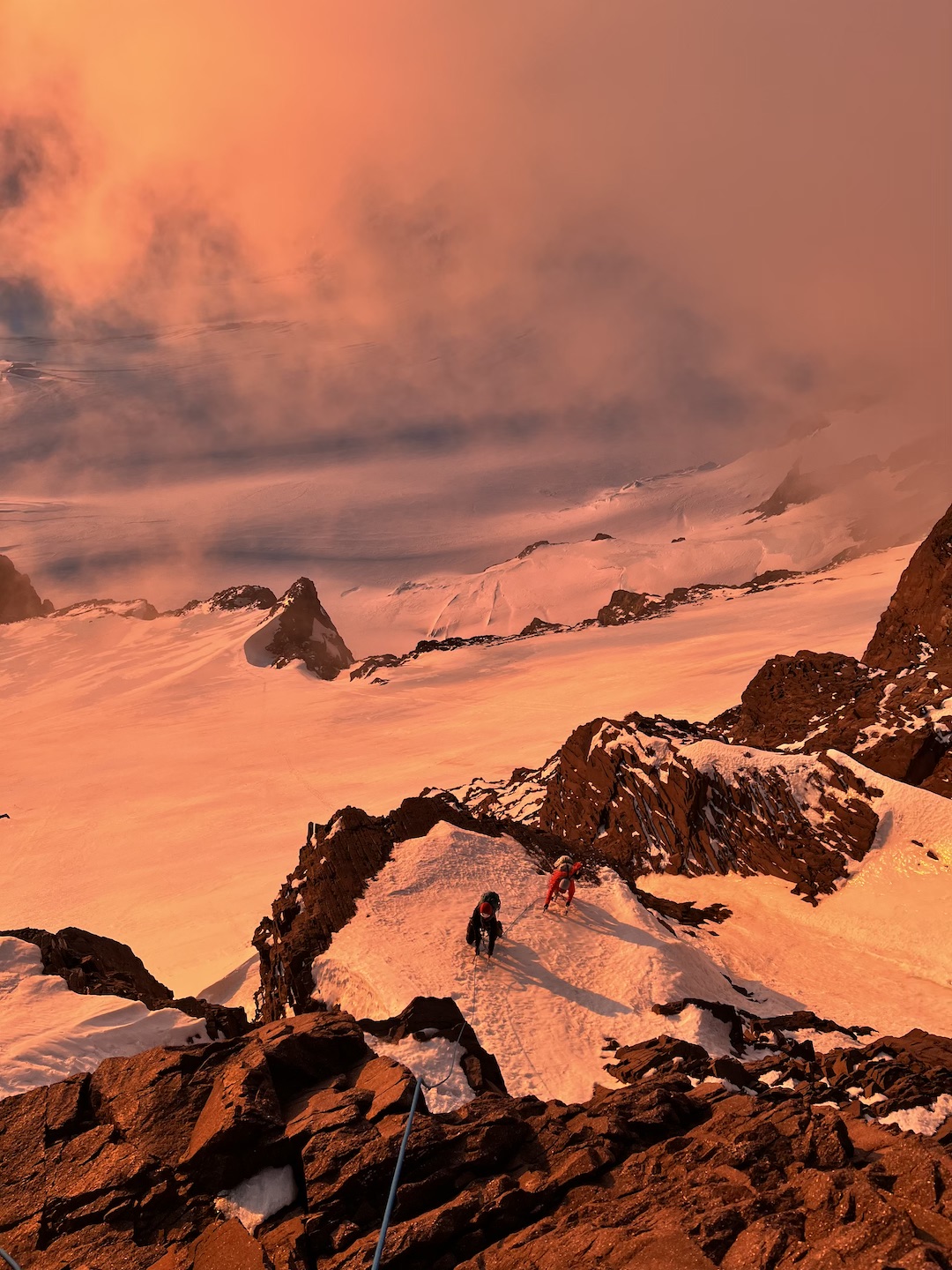
Below the west face, we traversed the broken edge of the glacier to search for a feasible line, comparing the terrain with what we could see in our single reference photo, taken years earlier by Bernabe Lopez from Cerro Celador, a neighboring peak. In the late afternoon, with our line chosen, we set up the tent in a small patch of snow without crevasses.
On November 6, the alarm went off at 2 a.m. Under the light of a full moon, we moved quickly under a serac and started simul-climbing up 60° snow, crossing a bergschrund and a few crevasses. Heading into the couloir proper, we progressed rapidly at first. Higher in the gully, the walls narrowed. A mixed pitch of heinously loose rock—one we hoped would connect into the upper couloir—sent rocks raining down on us. When we regrouped, we discovered that one of the ropes had been core-shot at the middle mark. With only one intact 60m rope, we committed upward.
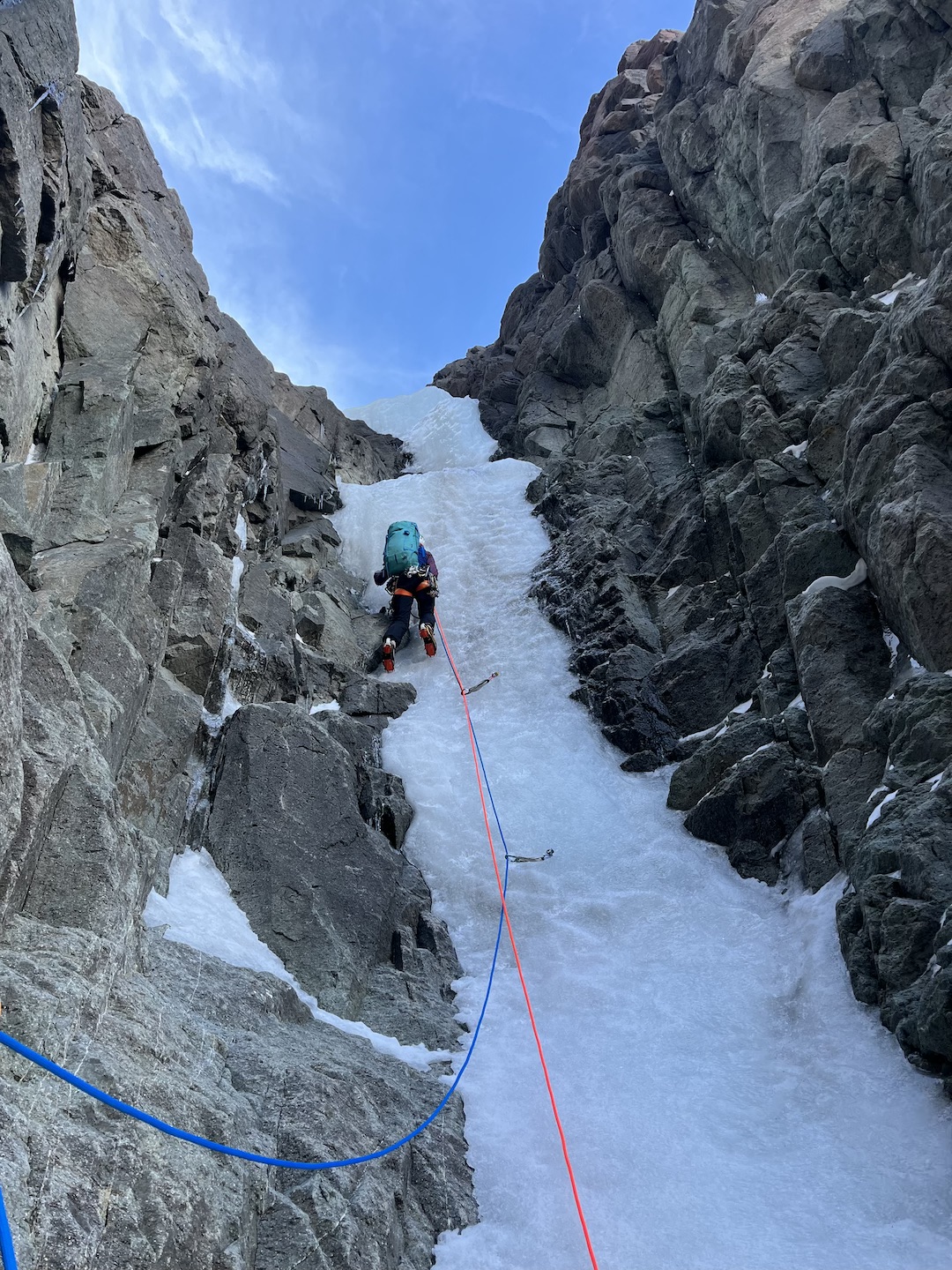
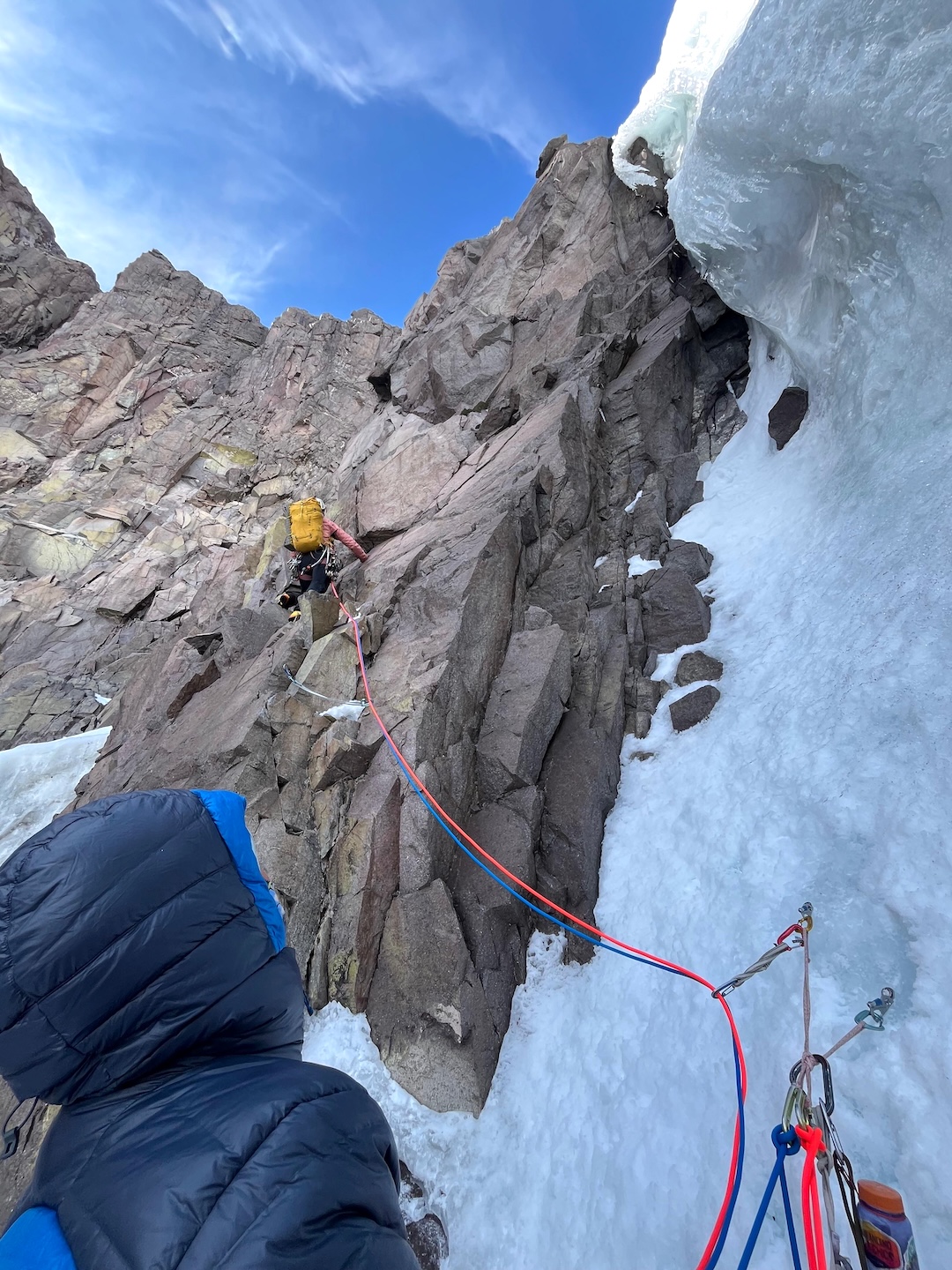
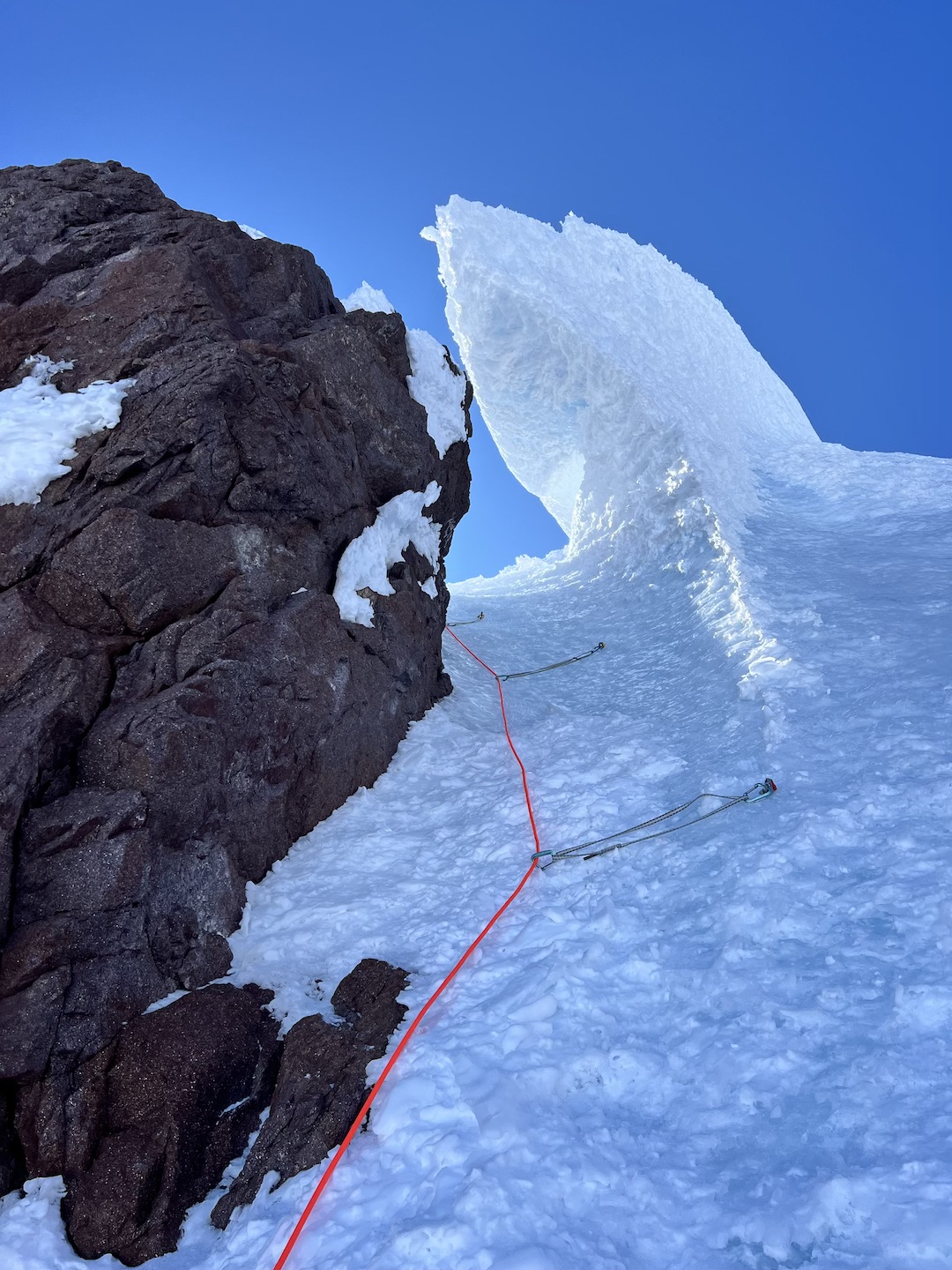
When the gully choked down again, I led a few beautiful pitches of steep ice and a tricky mixed step connecting to a snow ramp. Above, Angie opted for a mixed pitch out left, avoiding the sunbaked overhanging ice above the belay. As we exited the couloir and started simul-climbing again, we found to our dismay that the snow ramp we’d been aiming to reach actually was covered with hard glacier ice.
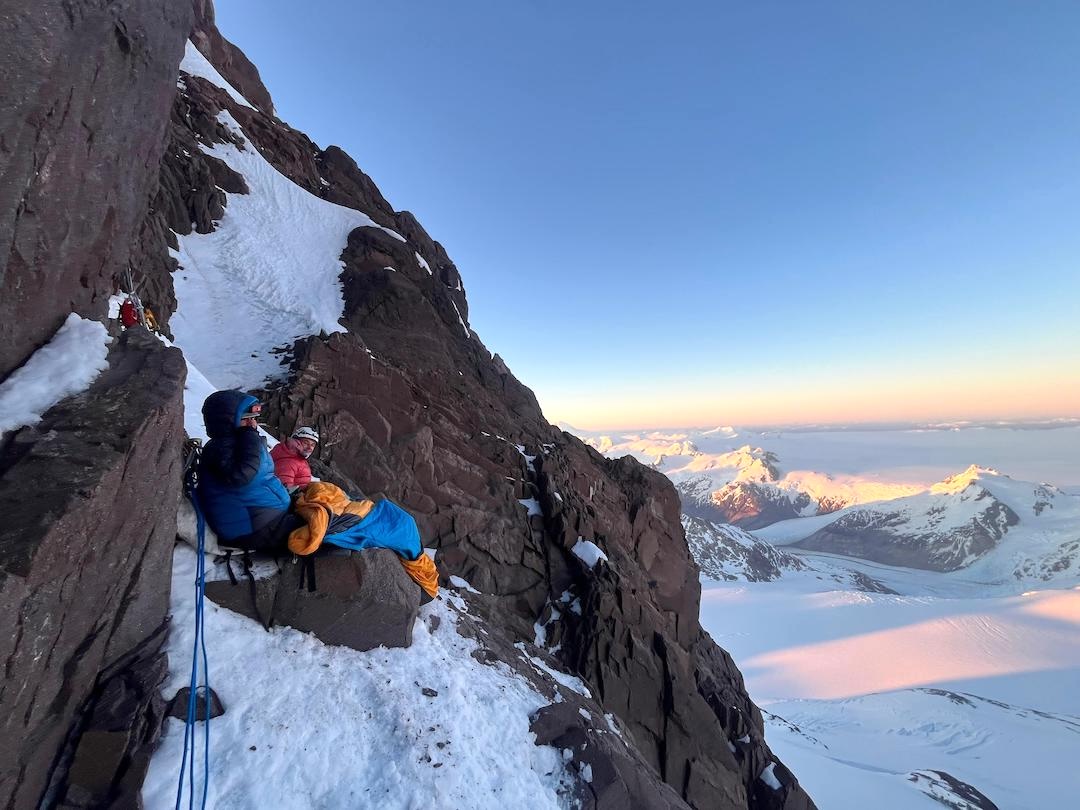
We pushed another long section until fatigue set in at the top of the hanging glacier. Above us, we could see rock and snow bands that looked like they connected to the summit ridge. Hoping to find a tent platform, we kept climbing into the evening. After 18 hours and no ledge in sight, we rappelled to a miserable sloping stance, barely big enough for the three of us. Harnesses stayed on as we sat on the narrow ledge, sharing sleeping bags in -5°C temps.
At 5 a.m., with yerba maté warming our hands and spirits, we checked the inReach. The weather window would hold for another two days! That was all we needed. We prepared for a summit push.
From our bivy, we climbed 100 meters of blocky mixed terrain to the summit ridge. In midmorning, Cata led us through a final ice step beneath an improbably overhanging serac, weaving through wind-sculpted snow mushrooms and over a precarious cornice. An easy final pitch of névé delivered us to a two-by-two-meter pedestal—the summit of Cerro Steffen.
We shared the joy of the moment together briefly before starting the descent. We made eight V-thread rappels straight down a gully to the left of the summit (looking down), which brought us to the hanging glacier. A further six rappels got us to the upper gully.
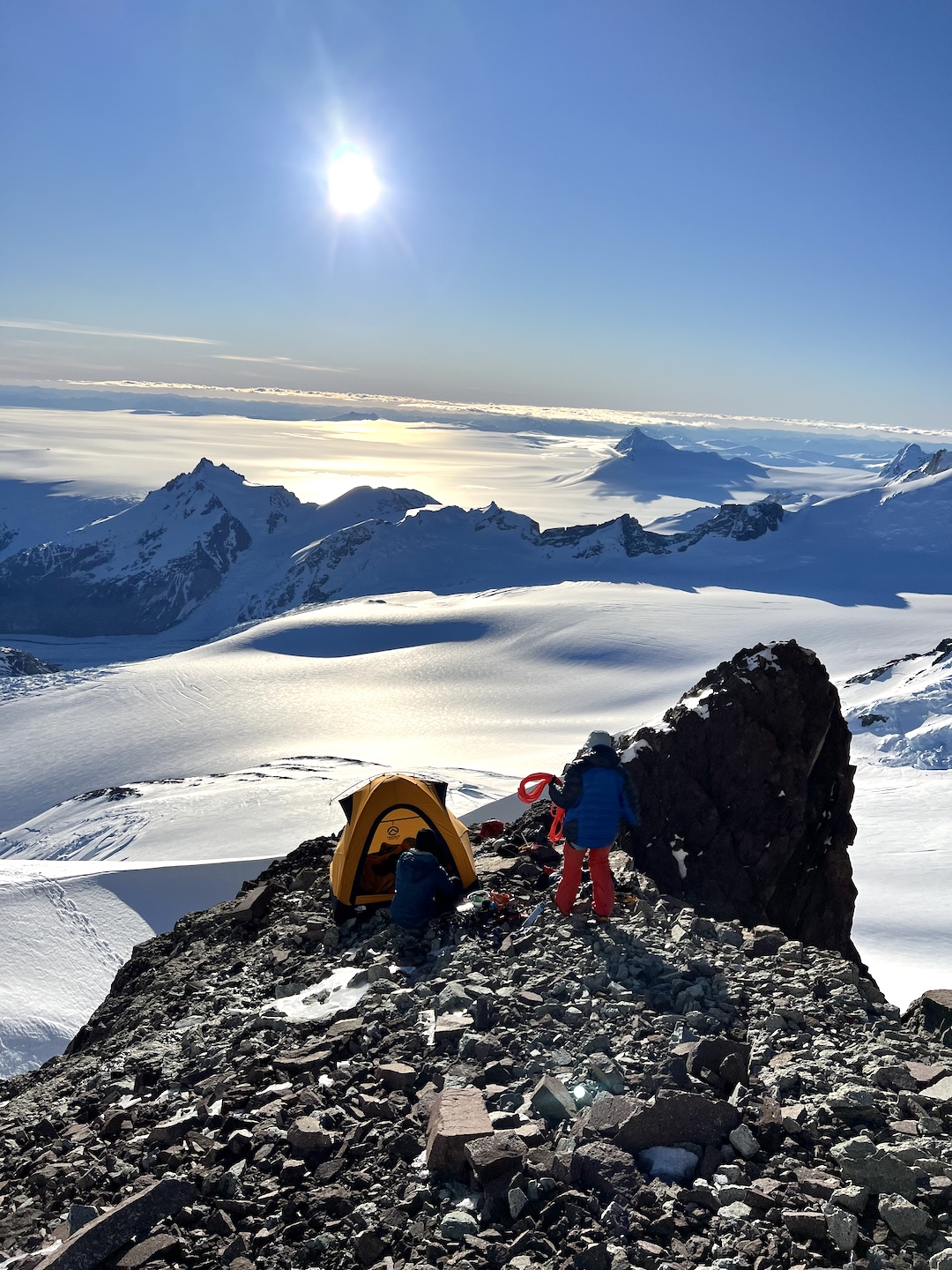
With the sun warming the walls, we decided to wait for colder temps before continuing down, pitching the tent on a small rock ramp above the entrance to the lower couloir. At dawn on November 8, we continued down, finishing eight more rappels to the glacier.
By November 10, we were back at Bahía Santa Lucía, where the boat retrieved us just as the weather window closed, raindrops touching our faces as we watched Steffen recede in the distance.
This expedition was a choreography of endurance, trust, and teamwork. In choosing a name for our line, one theme emerged: Sincronía (900m, WI4 M4 60°). So many factors had to align, at just the right moment, for us to be successful.
Looking back at this ascent, we realize how much it expanded our sense of what’s possible. Climbing as an all-female team unlocked something we don’t always access in mixed groups. On this trip, everything flowed differently. Climbing together didn’t just make the ascent possible—it also empowered us to dream bigger.
—Paloma Farkas, USA
Media Gallery