
Cerro Chaltén, East Pillar, First Free Ascent
Argentina, Southern Patagonia
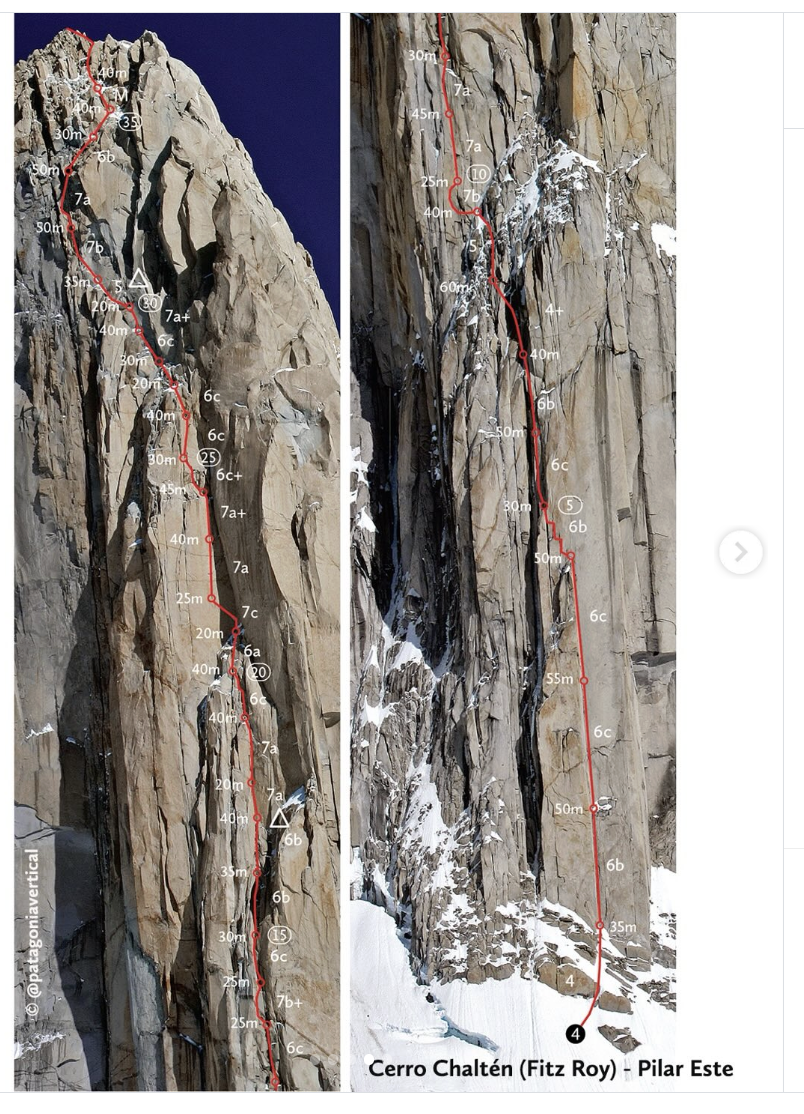
The East Pillar marks the left side of the imposing east face of Cerro Chaltén (Fitz Roy). The route that climbs it follows a series of crack systems on fine-grained, golden granite of exceptional quality.
After at least three attempts in previous years, in 1974, Swiss climbers Toni Holdener, Hans Peter Kasper, and partners came close to completing the line, reaching the end of the difficulties, about 200 meters from the summit, where they were forced down by bad weather. Two years later, in 1976, Italians Casimiro Ferrari and Vittorio Meles, part of a Ragni di Lecco team, completed the route after six days on the wall. As a result of those efforts, the first third of the route was left covered in fixed ropes and cable ladders. Between 2014 and 2015, many climbers collaborated to clean it up, and in 2016, David Bacci and Matteo Della Bordella free climbed much of the route over three days, using aid on nine pitches.
From March 6 to 8, 2026, late in the season, Tasio Martín (Spain) and Seán Villanueva O’Driscoll (Belgium) freed the East Pillar. Cold temperatures and snow-plastered rock following storms in the preceding days were not conducive to their goal. Still, there was nothing to do but try.
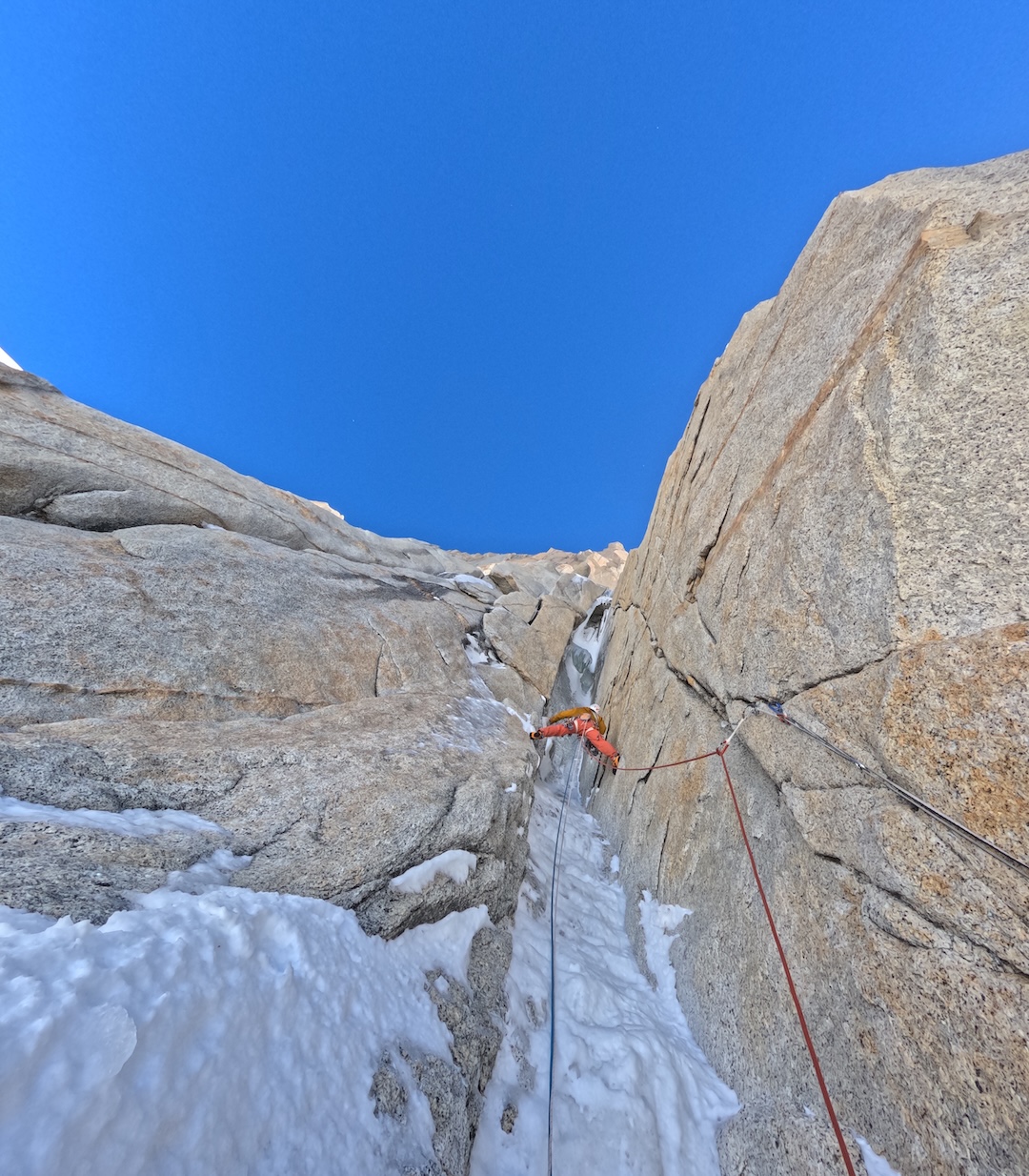
The two began climbing at 7 a.m., alternating leads. Only the first two pitches were completely free of snow and ice. From there on, the ice axe became an essential tool for clearing cracks, carried slung over the shoulder. They managed to onsight every pitch that day except the sixth, where a slip forced a second go.
Around 10 p.m., 17 pitches up, they stopped and set up their inflatable G7 portaledges, which were essential to resting well on the route because of lack of ledges. After melting snow and cooking, it was not until 1 a.m. that they fell asleep.
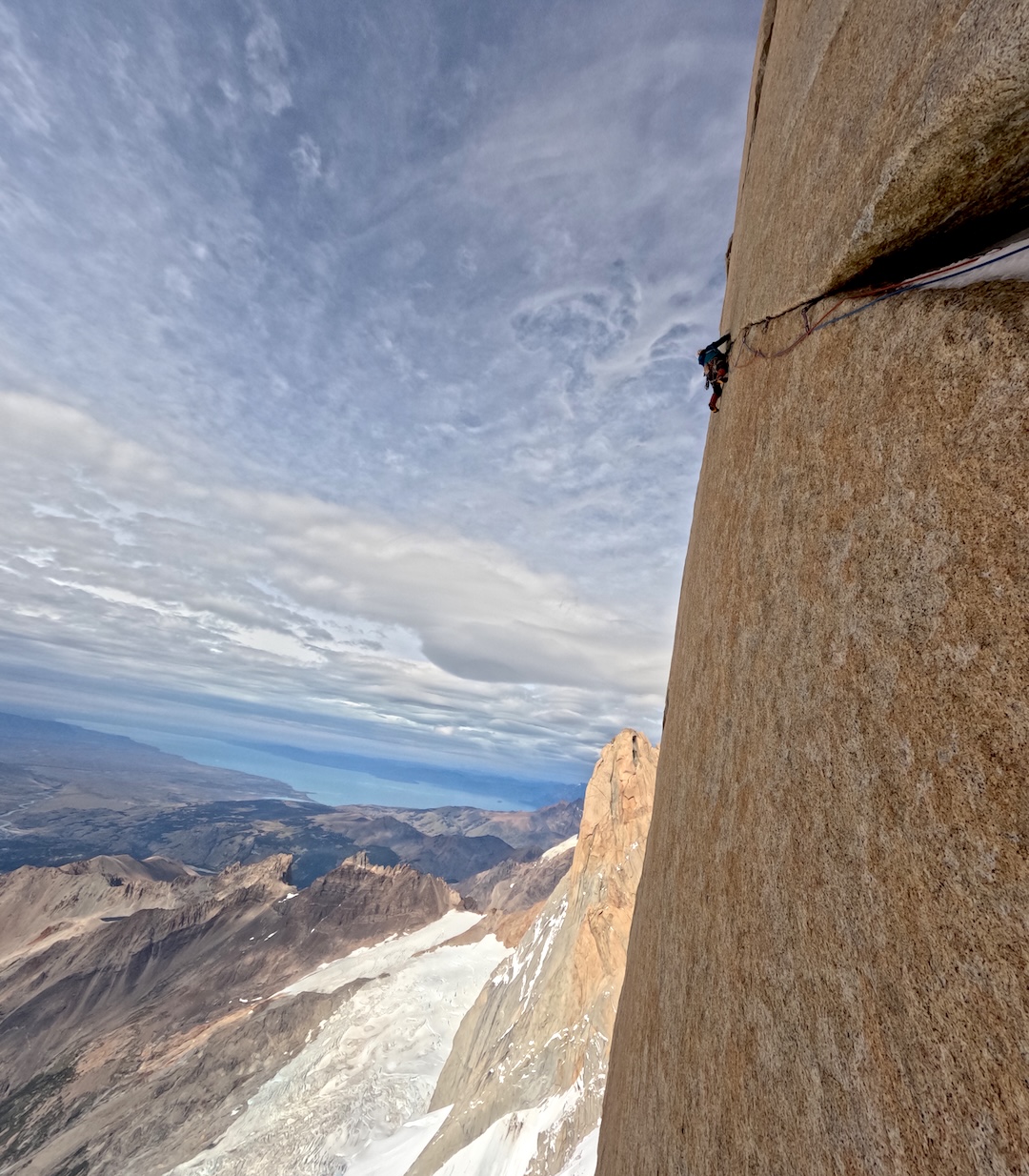
The following morning, they continued linking sustained pitches. Pitch 22, a leftward traverse along a clean crack, turned out to be the crux—and a particularly beautiful pitch. Villanueva O’Driscoll came very close to onsighting it, then sent it on his second attempt. They continued alternating leads, free climbing additional aid pitches, then stopped around 10 p.m. at pitch 31, where they once again set up their G7 Pods.
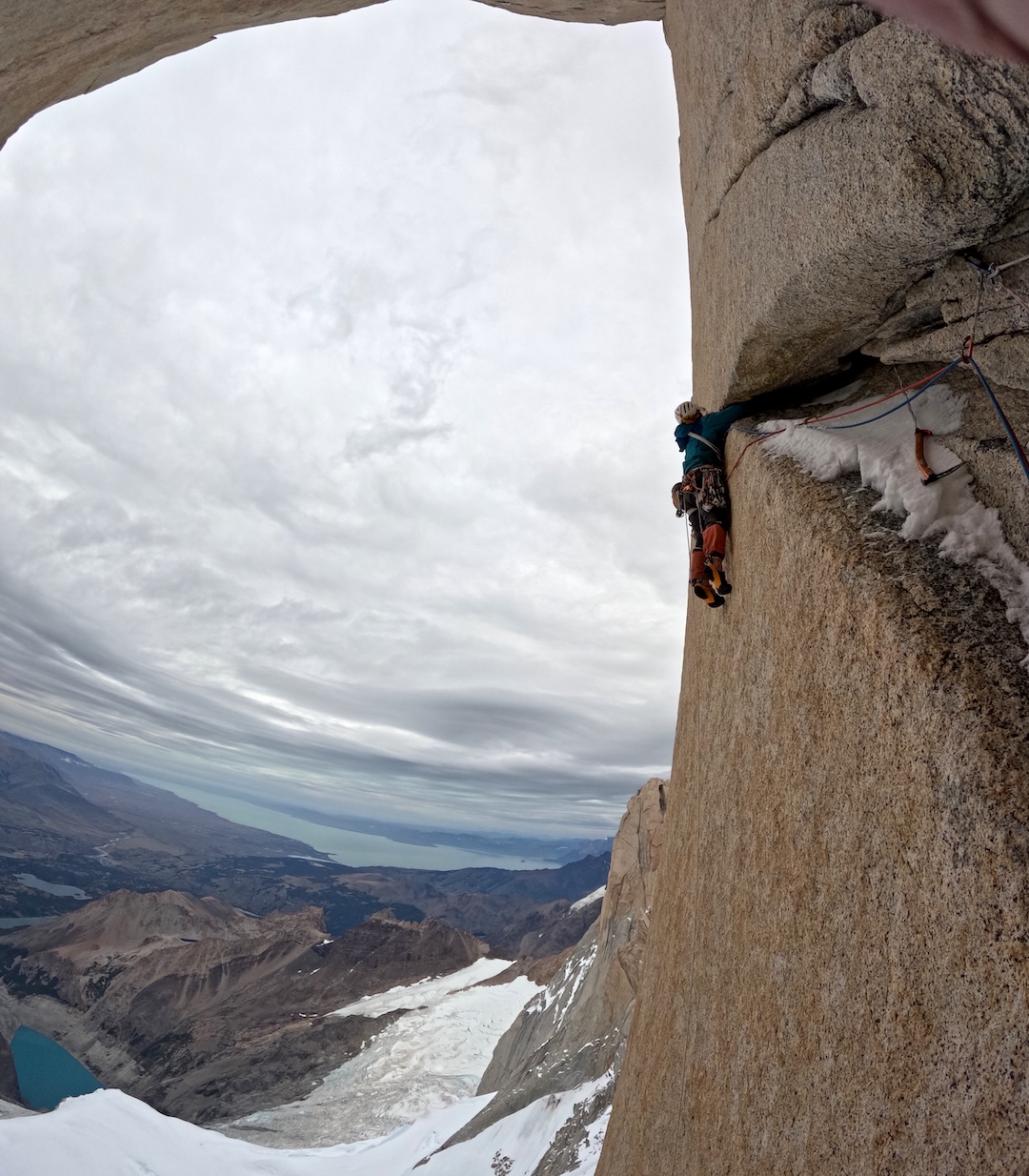
At dawn on the third day, the weather deteriorated considerably. Due to the icy rock, two more pitches required second attempts to free climb. (Only in this final section does the quality of the East Pillar drop slightly, with some loose blocks.) The last pitches required mixed climbing. With visibility reduced in a thick cloud, they reached the summit around 3 p.m. After a brief pause, they began the long descent via the French Route.
Given its length and sustained, demanding nature—1,200 meters, with free climbing up to 7c and mixed terrain—this line is unlikely to become a popular classic. However, it is undoubtedly one of the queen lines of Cerro Chaltén.
—Rolando Garibotti
Media Gallery