
The Salamander, Baring Point, and Cataract Mountain, New Routes
Montana, Glacier National Park
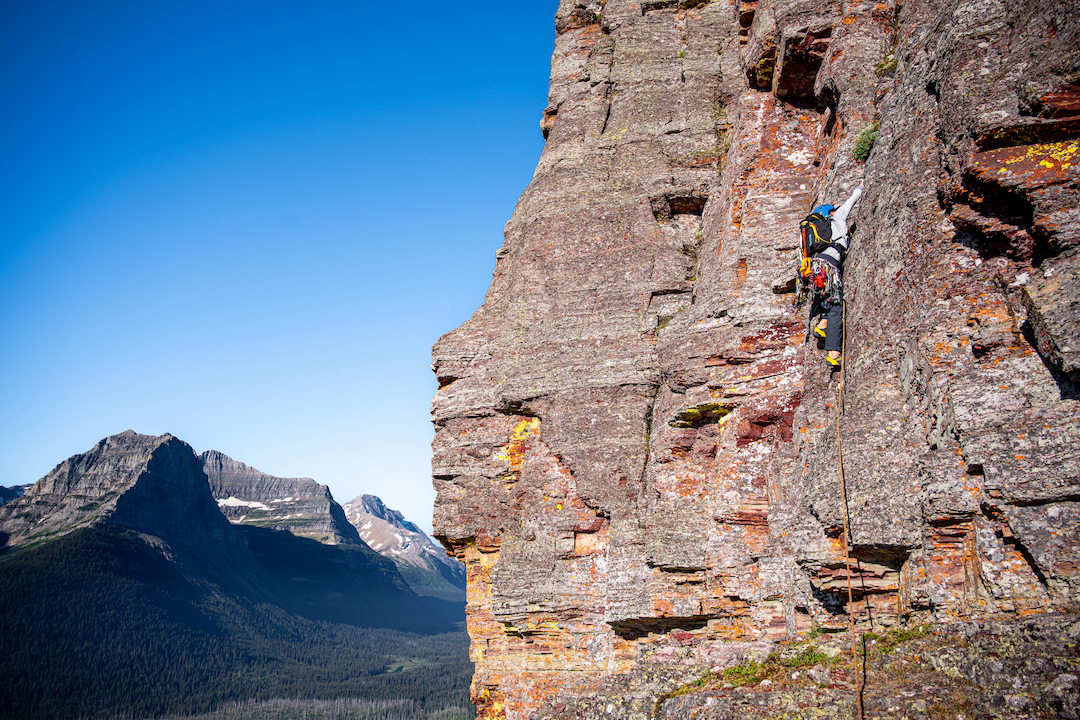
Over the summer of 2025, I established three routes with various partners in Glacier National Park, an area known for its rotten rock, murky history, and adventurous climbing.
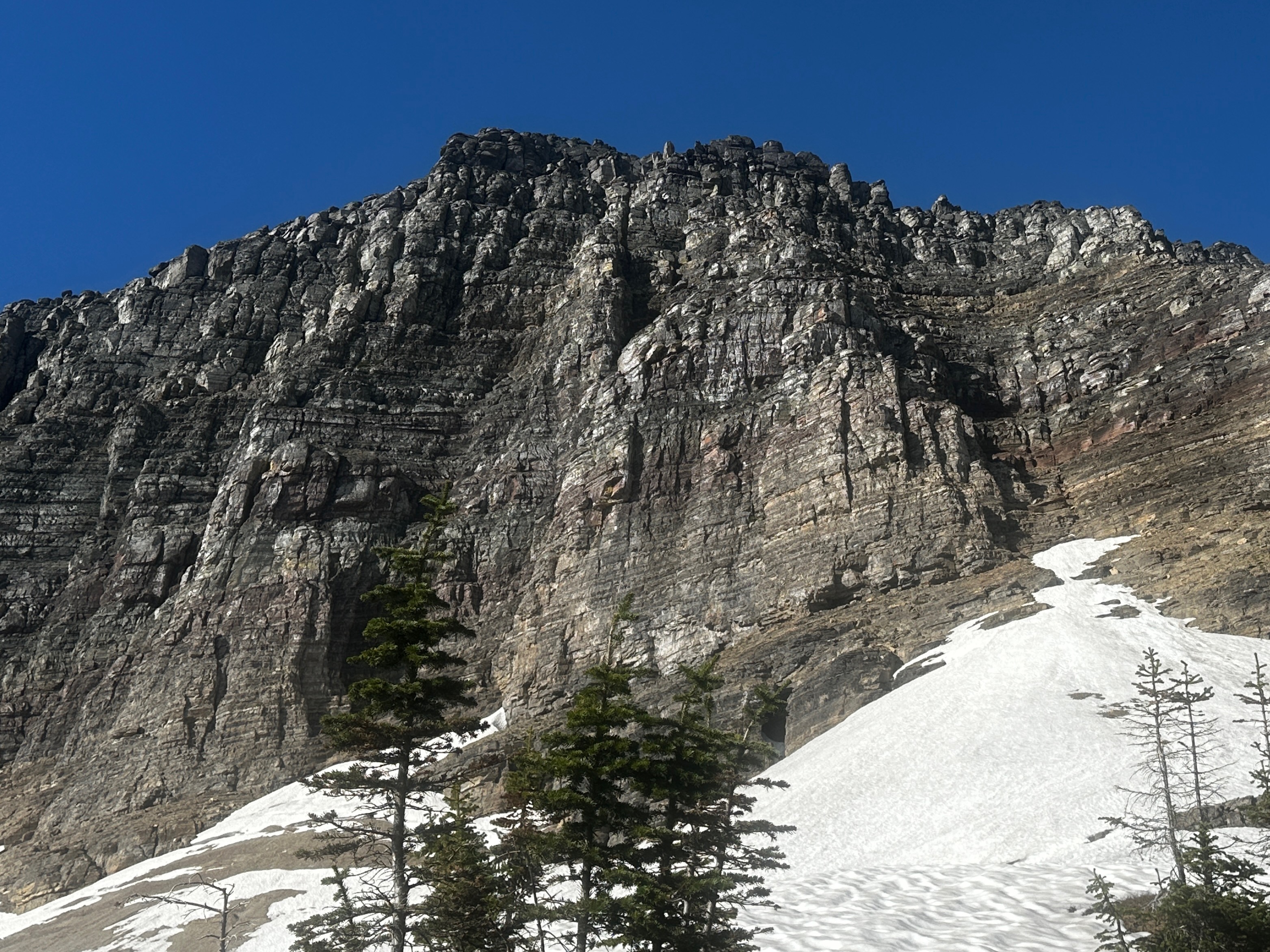
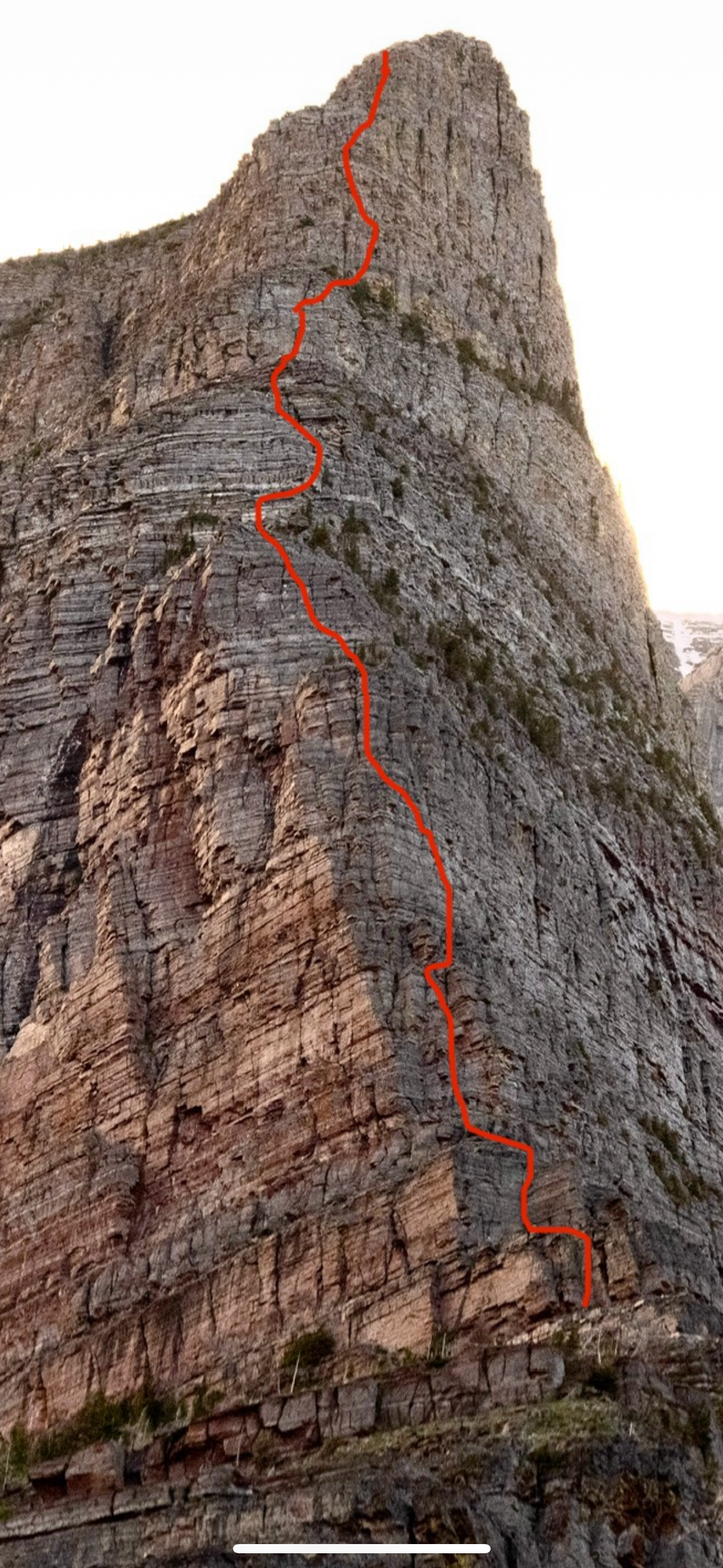
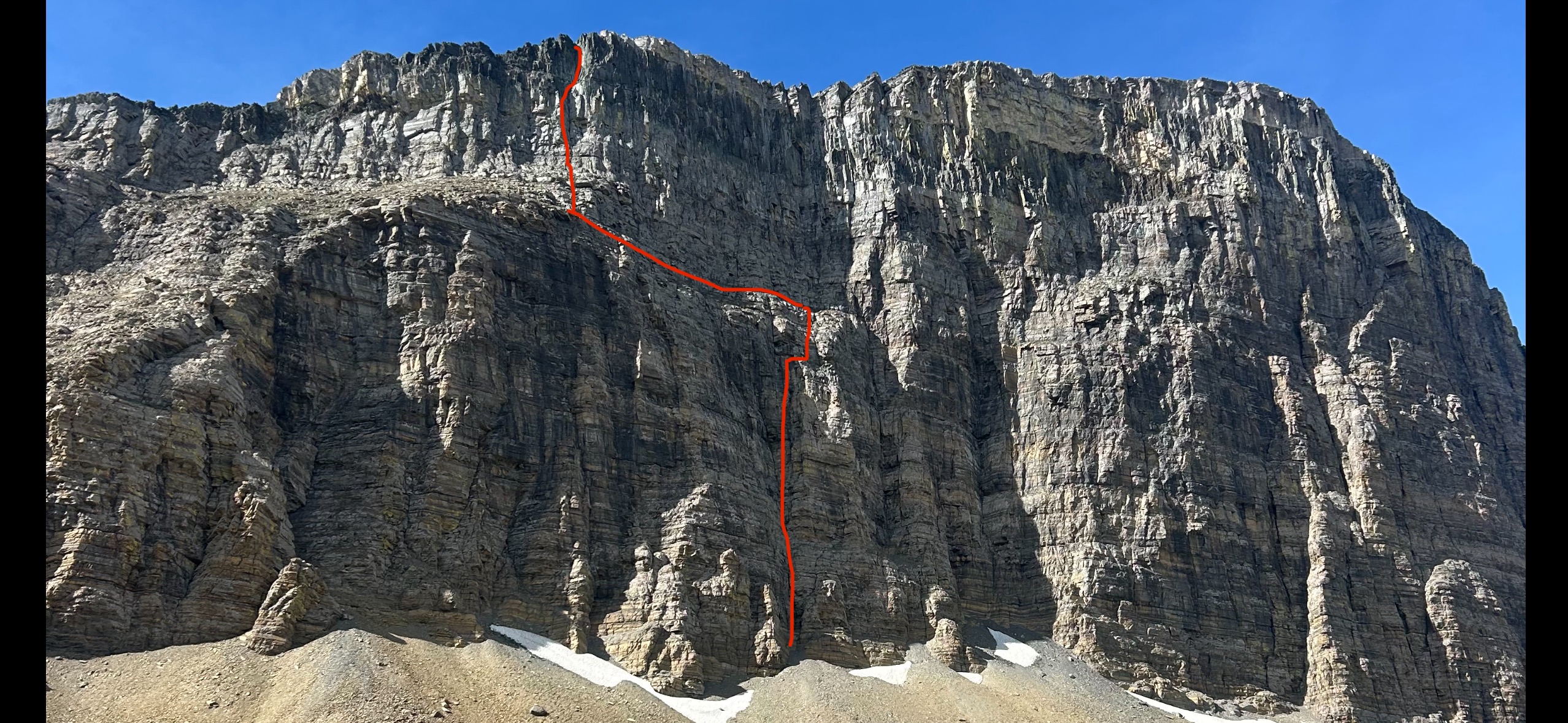
On June 18, Adam Clark and I climbed a direct line up the southwest face of Point 8,655’ (48.74948, -113.73519), a spine of rock along the Garden Wall, between Mt. Gould and the Grinnell Glacier Overlook. We called this point the Salamander, after the glacier of the same name that clings to the wall’s eastern flank.
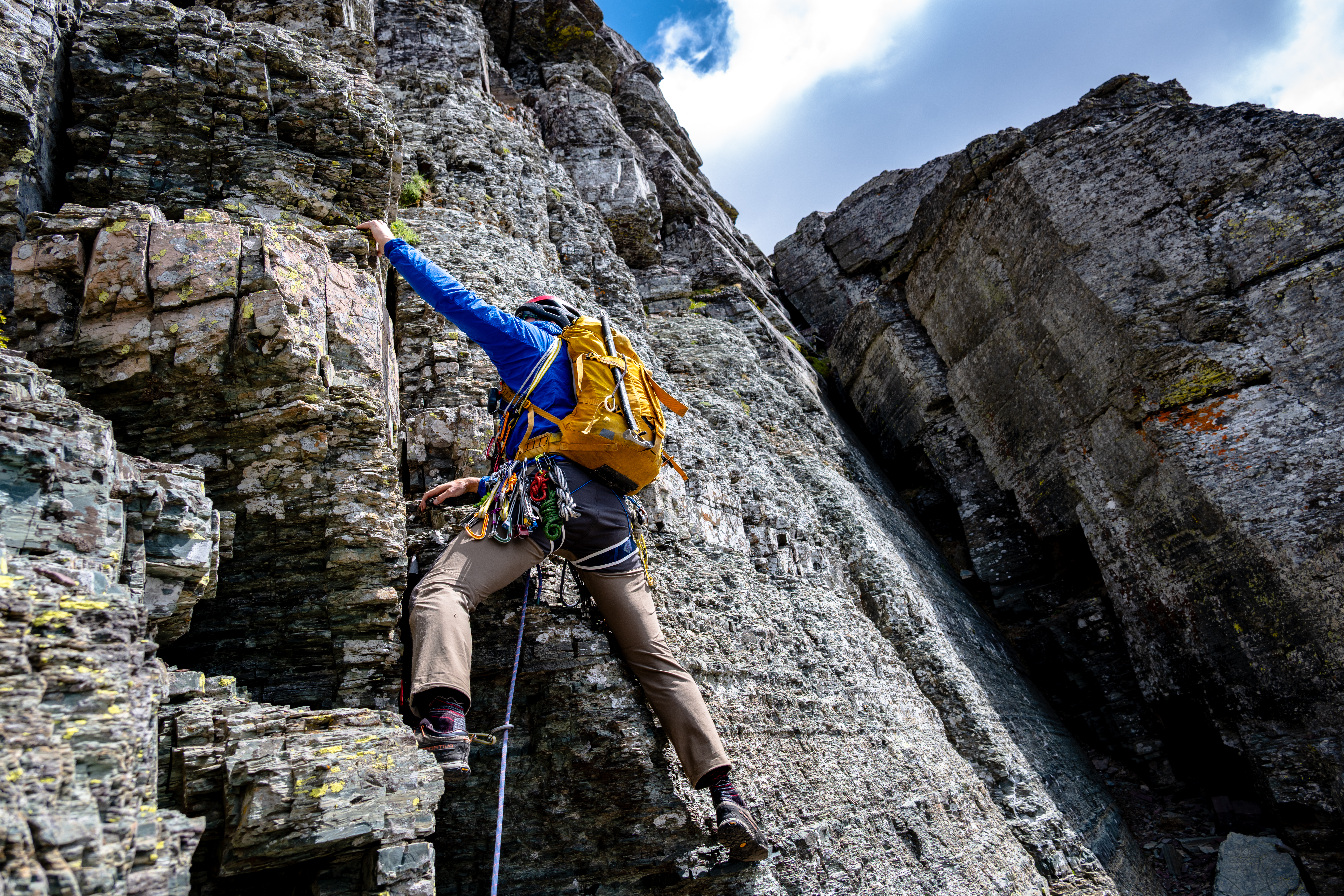
We approached the southwest face from the Highline Trail via steep snowfields, stashed our crampons and axes, scrambled up a gully, and tied into the rope, then climbed five 5th-class pitches interspersed with 4th-class scrambling. Loose rock was stacked on most ledges, but we found enough solid rock underneath to keep it reasonable. Our fourth pitch, a 5.10, can be avoided by moving climber’s right into a chimney—a much safer variation that puts the hardest moves of the route at 5.6: The Southwest Face Direct (III 5.10 or 5.6, 45° snow).
On July 27, Nick Sramek and I added a potential new route on Baring Point (48.68389, -113.60972), a 7,306-foot subpeak of Going-to-the-Sun Mountain on the east side of the park. Legendary Glacier alpinist Terry Kennedy and partner Dexter Hale completed the only recorded route on Baring in the late 1990s, ascending a line on the steep northeastern face, above Baring Creek, though Kennedy cannot recall details of their climb.
After a short approach, we started up the feature’s unclimbed eastern prow, to the left of the Kennedy-Hale route. Nick led a 5.7 offwidth corner to start off. Swapping leads, we worked through five more pitches of quality climbing, with short cruxes around 5.8, generally staying on the prow and working north whenever overhangs blocked progress. The rock quality deteriorated as we ascended. Once on the ridge, we scrambled to the summit and descended the south face. Compact rock, great position, and plentiful ledges characterized the Eastern Prow (8 pitches, III 5.8), making it a worthwhile alpine adventure within view of our parked car at St. Mary Lake below.
While backcountry skiing the previous winter, Adam Cazell and I traversed below the north face of Cataract Mountain (8,180’, 48.72507, -113.68148), historically overshadowed by its bigger neighbors, Gould and Siyeh. To our knowledge, the face had not seen an ascent, and we cached the objective in our brains for the summer.
On August 15, we hiked up Lunch Creek, gained the Piegan-Pollock saddle, and descended to the north face of Cataract Mountain by Piegan Pass. Our eyes were drawn to a prominent crack system of higher-quality rock left of the main buttress. At around 7,400 feet, we roped up and I started on compact yellow rock, following an obvious weakness for two pitches of well-protected climbing. Next, a series of cracks provided the first crux, requiring long runouts and careful climbing through intermittent piles of loose blocks; a wild roof pull leading to a tiered belay ledge capped off this 5.9 pitch.
After moving a rope length left, we established a belay below a diorite headwall. We then climbed two more pitches of tenuous face climbing, followed by a chimney leading to a semi-hanging belay. Adam then picked his way through the moss-filled cracks leading to the ridge crest, pulling on gear through the steepest difficulties. He reached the ridge at nightfall, and I arrived shortly after, freeing the pitch while following (5.9 C0 or 5.10).
We scrambled to the summit of Cataract before dropping down to Piegan Pass and back up and over the Piegan-Pollock saddle to the Lunch Creek trailhead, having completed the first ascent of Cataract Mountain’s north face (7 pitches, III 5.9 C0 or 5.10).
—Seth Anderson
Media Gallery