Iris Peak, southwest face, Karma
India, Himachal Pradesh, Lahaul and Spiti, Miyar Valley
For more than six months, we had prepared for our expedition, planning for every contingency, from border delays to bad weather. But life reminded us you cannot plan for everything.
Our goal was the Kishtwar Range, with an approach from the south. This area has been accessible to foreigners over the last few years. However, in April, a terrorist attack in Kashmir killed many civilians, and when we reached Kishtwar town in September, local police denied us access to the mountains. “Come back in 2029,” the police chief said flatly.
We decided on the Miyar Valley as an alternative. With new permits, we reached a base camp below Castle Peak, then split into three teams to acclimatize and explore potential objectives. An all-women’s team—Nadia Muzhikina, Olga Paducheva, Nadia Pilshchikova, and I—opted to try the east face of Three Peaks Mountain (a.k.a. Mahindra). We climbed seven pitches the first day, then an unexpected snowstorm and a forecast for around three meters of snow sent us back down.
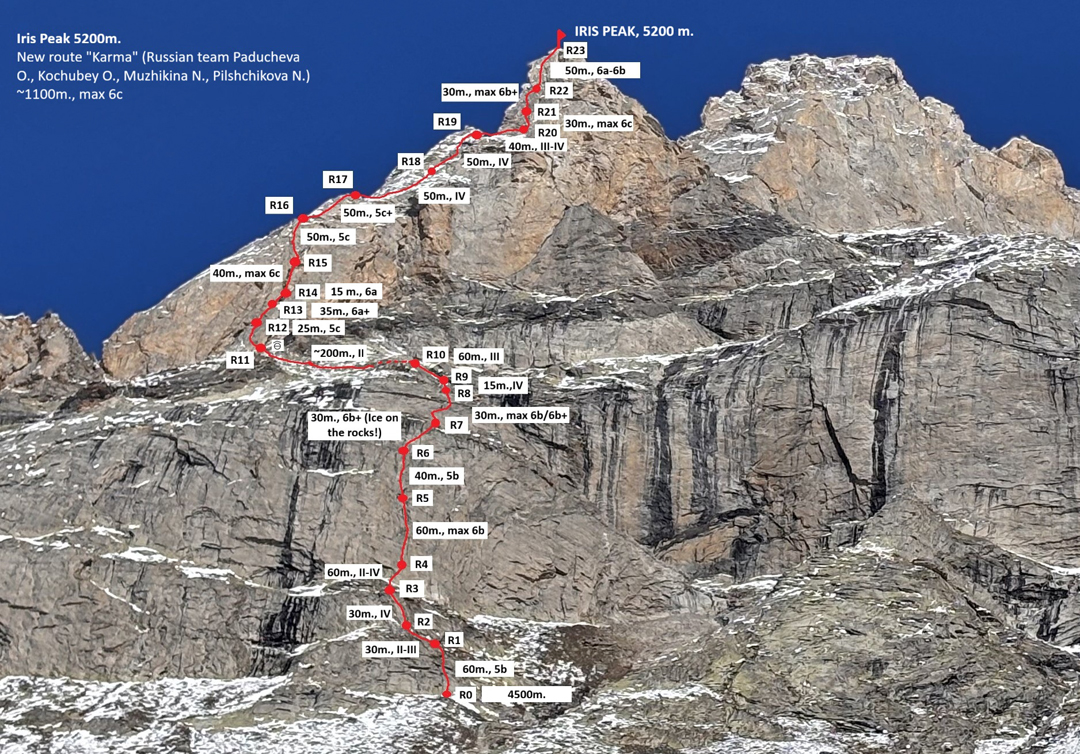
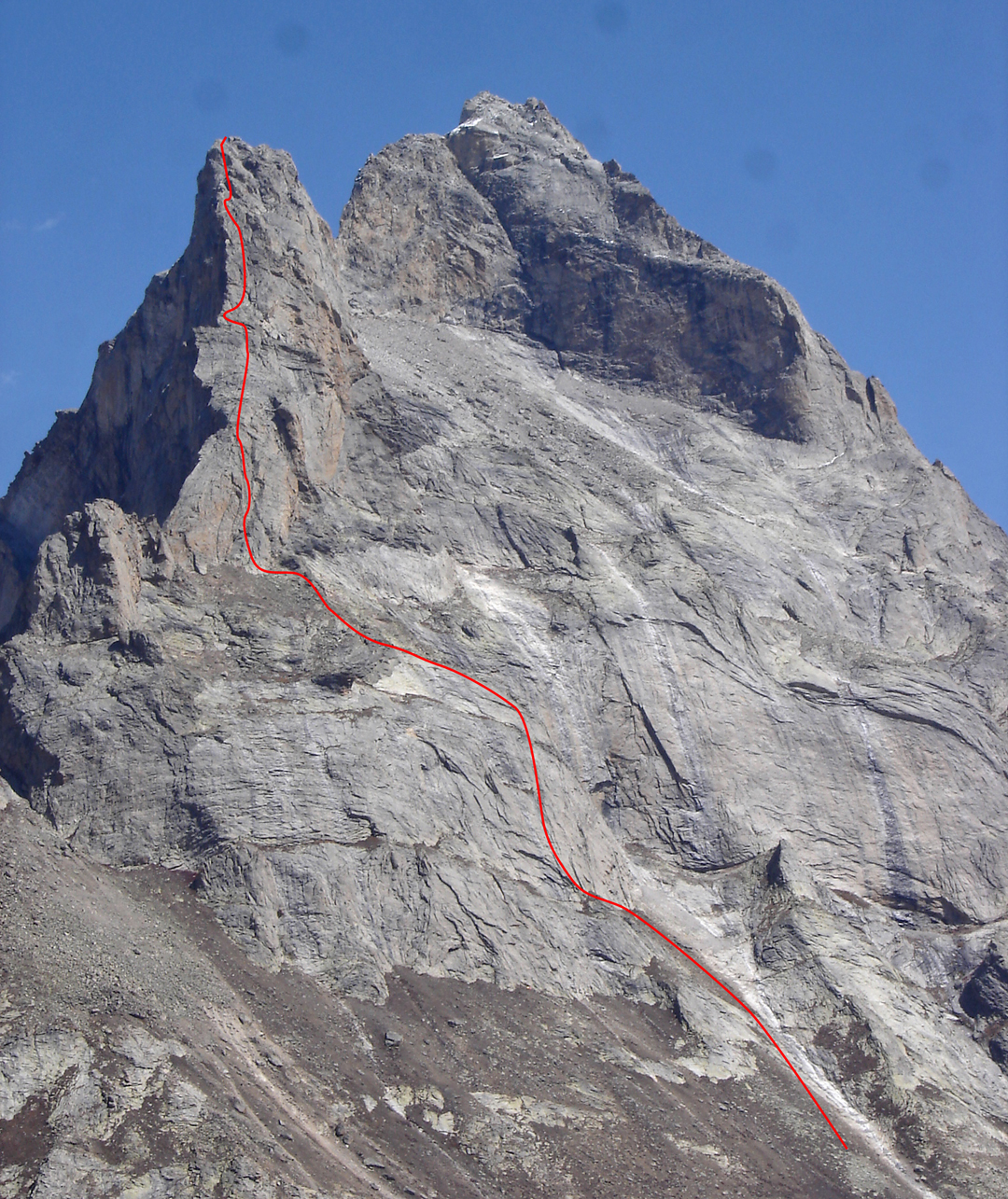
The forecast proved correct, and back at base camp, with the mountains blanketed in white, we eventually realized our only hope lay in a nearby route, specifically the southwest face of Iris Peak (5,200m, 33°2’23.98”N, 76°49’42.61”E, a subsidiary summit of Castle Peak). We decided to travel light and complete the route with one bivouac. Luckily, we brought a full gas cylinder, as the mountain turned out to be more serious than it looked.
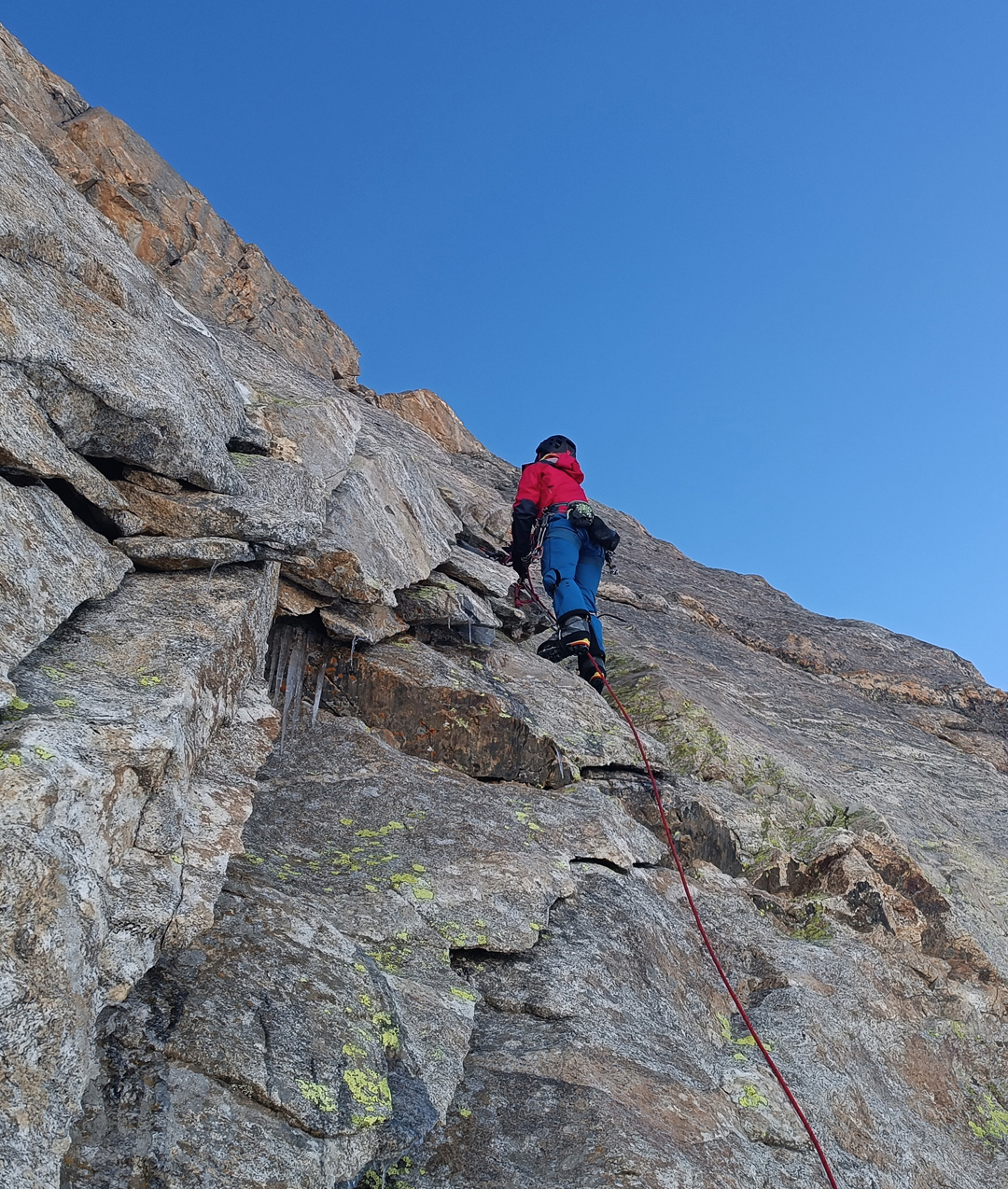
On October 11, we climbed the initial buttress. The sun quickly disappeared, taking the warmth with it. There was no flat ledge for the tent, just a snow-covered, rocky slope. While Olga and I built a reasonable site, the two Nadias fixed a couple of ropes above.
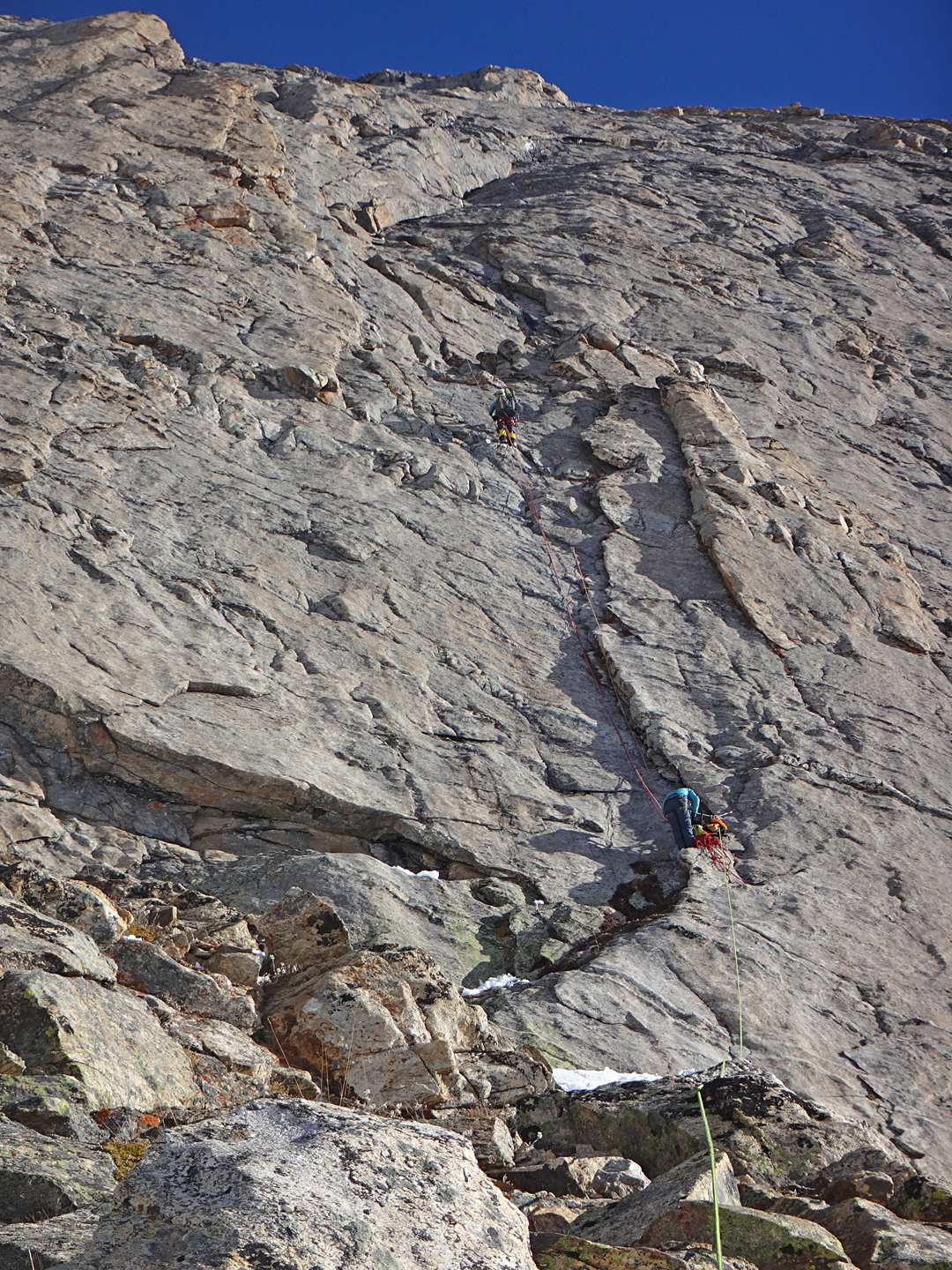
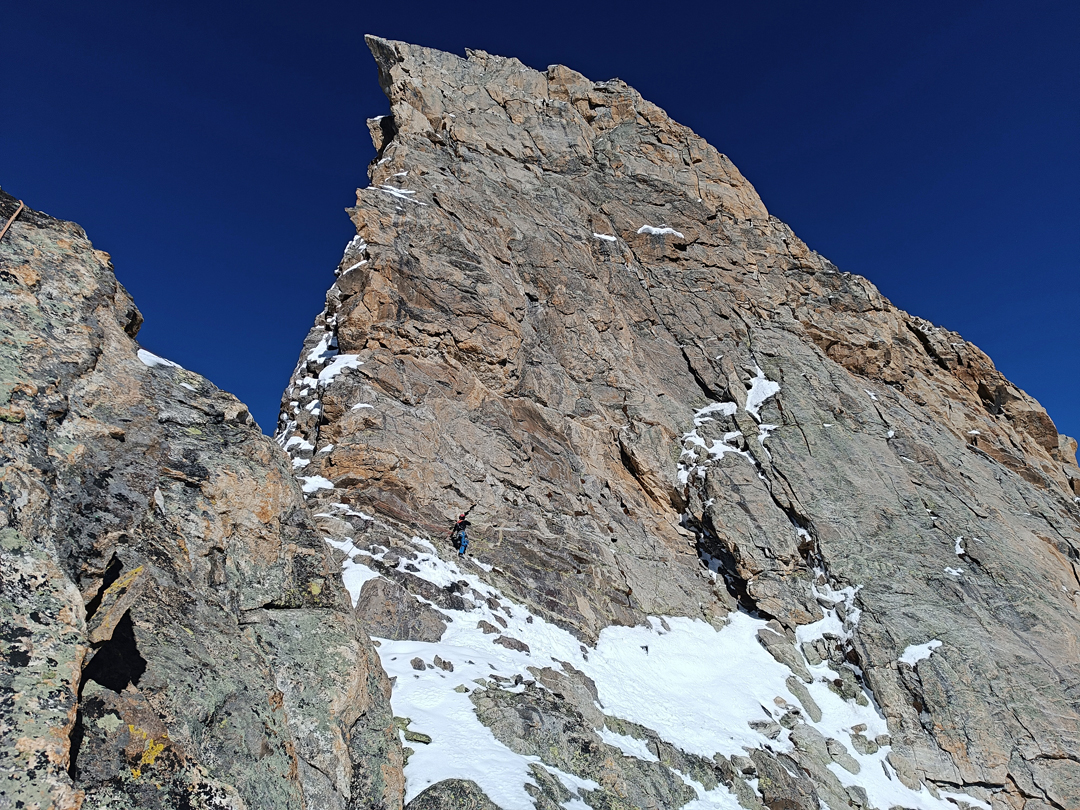
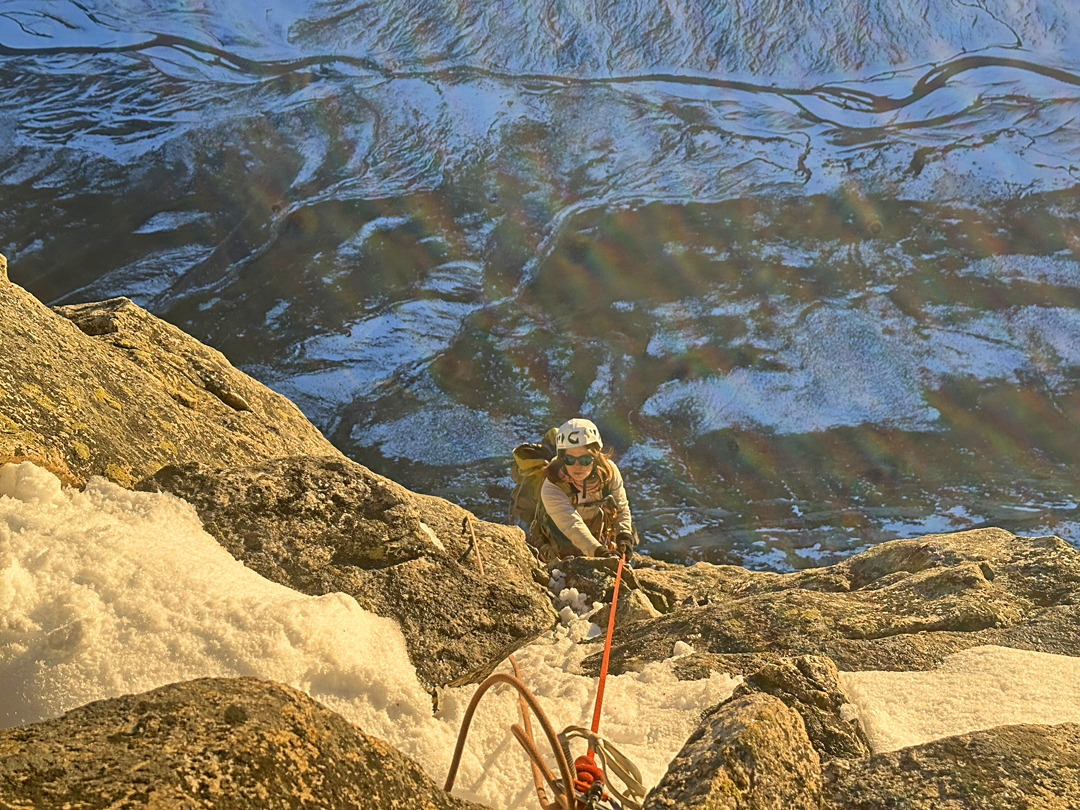
The next day, we planned to summit and descend to base camp, but we had either overestimated our strength or underestimated the route. After crossing a depression, we climbed a second buttress, followed by a snowy ridge, which led to the slabby headwall. Olga led; the rest of us jumared. The cold and altitude were draining. We reached the summit at 6:10 p.m. and began rappelling into the night. At midnight, and in a temperature of -20°C, we regained our tent on the ledge. Our reward was hot water and leftover snacks.
Base camp was being dismantled that morning, so our work was not over. After five and a half hours, we reached the site of the former base camp, had some more leftovers, then shouldered packs for the 30-kilometer walk down the valley. That took another nine hours.
After the expedition, I reflected on the trials and realized we succeeded because we kept a good team spirit, a sense of humor, and an ability to accept whatever came our way. We named the route Karma (ca 700m, 1,100m of climbing, 23 belayed pitches, 6c). We would like to thank Grit&Rock for their expedition award. [Editor’s Note: On the initial buttress, Karma is very similar to Mustang Café (1,500m of climbing, 6c, Iannilli-Perri, 2004), and toward the top of the face, it may share some ground with Four Seasons in One Day (650m, 6b+, Peschel-Schaar, 2011) and Bollywood Drama (6b, Boesch-Gmuender-Kamandulis-Simutis, 2014). However, much of the route is new.]
—Oksana Kochubey, Russia
Media Gallery