Baspa Valley, Rakcham Plateau: Peak 5,400, northwest face; Ray Peak Fourth Pillar
India, Himachal Pradesh, Kinnaur
In late October and early November, Ryan Griffiths and I climbed new routes on two unclimbed peaks above the Baspa Valley. We were based out of the village of Rakcham at around 3,150 meters, with a small camp on the Rakcham “plateau” at 4,100 meters.
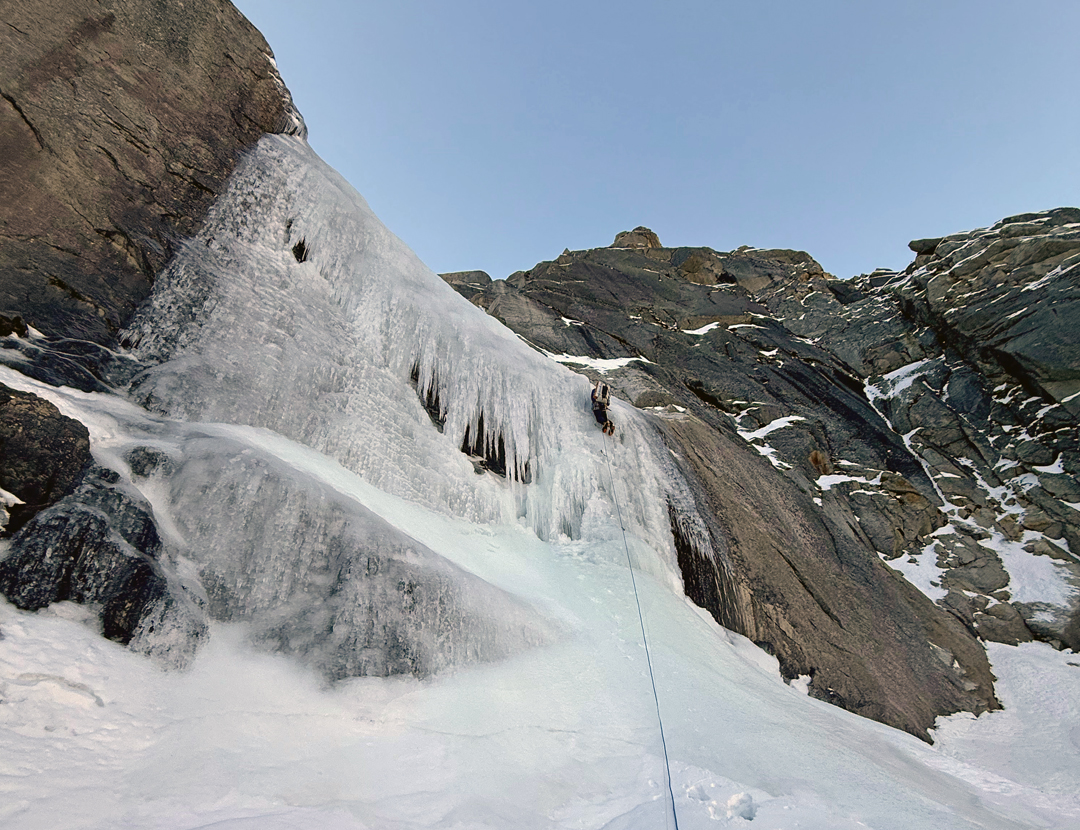
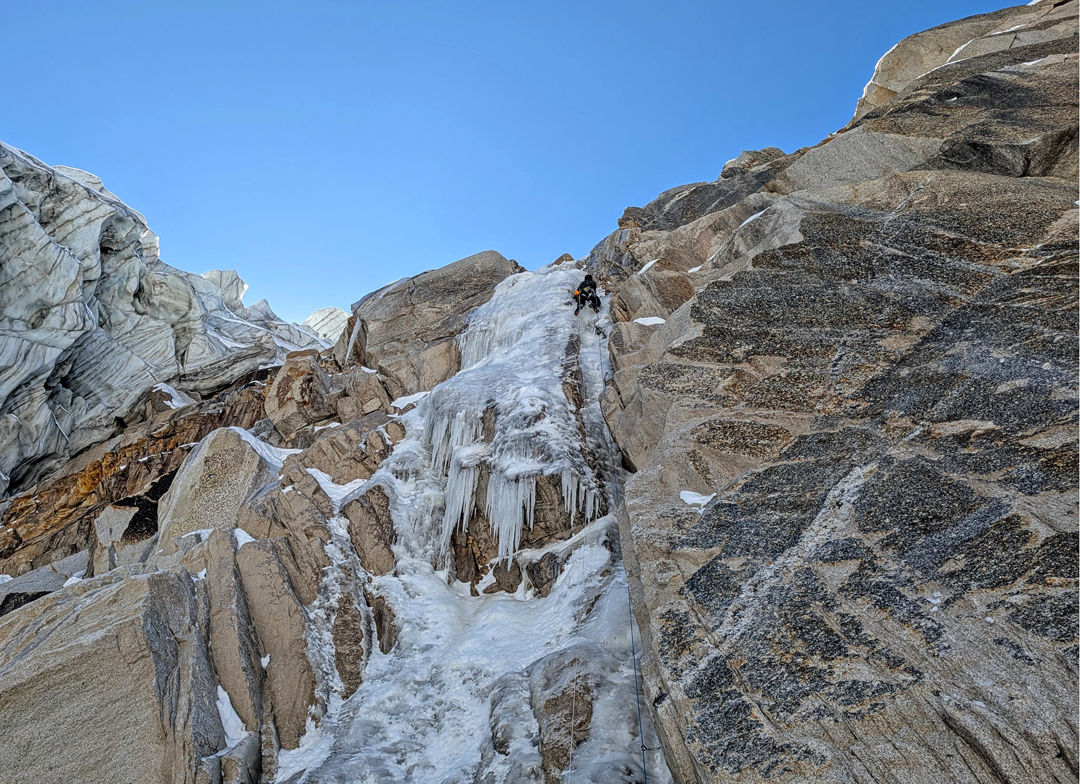
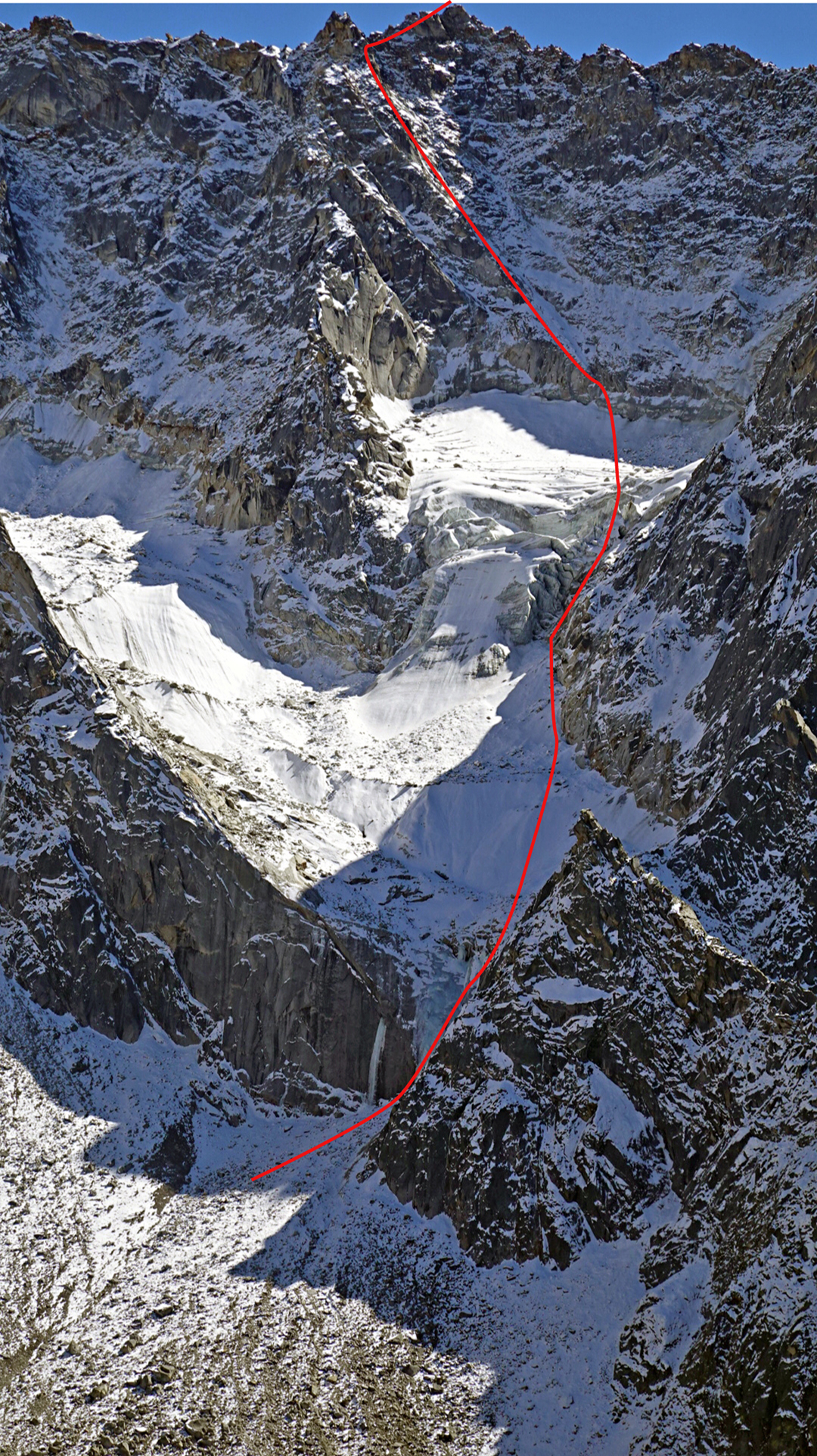
After a week of acclimatizing, we spent October 21 and 22 climbing the northwest face of Peak 5,400m (31°24.2241’N, 78°23.5016’E). This gave quality moderate ice and mixed climbing, but was not particularly sustained, as the route was split by a small pocket glacier, which we used for a bivouac. The 800-meter ascent had difficulties up to WI4 M5.
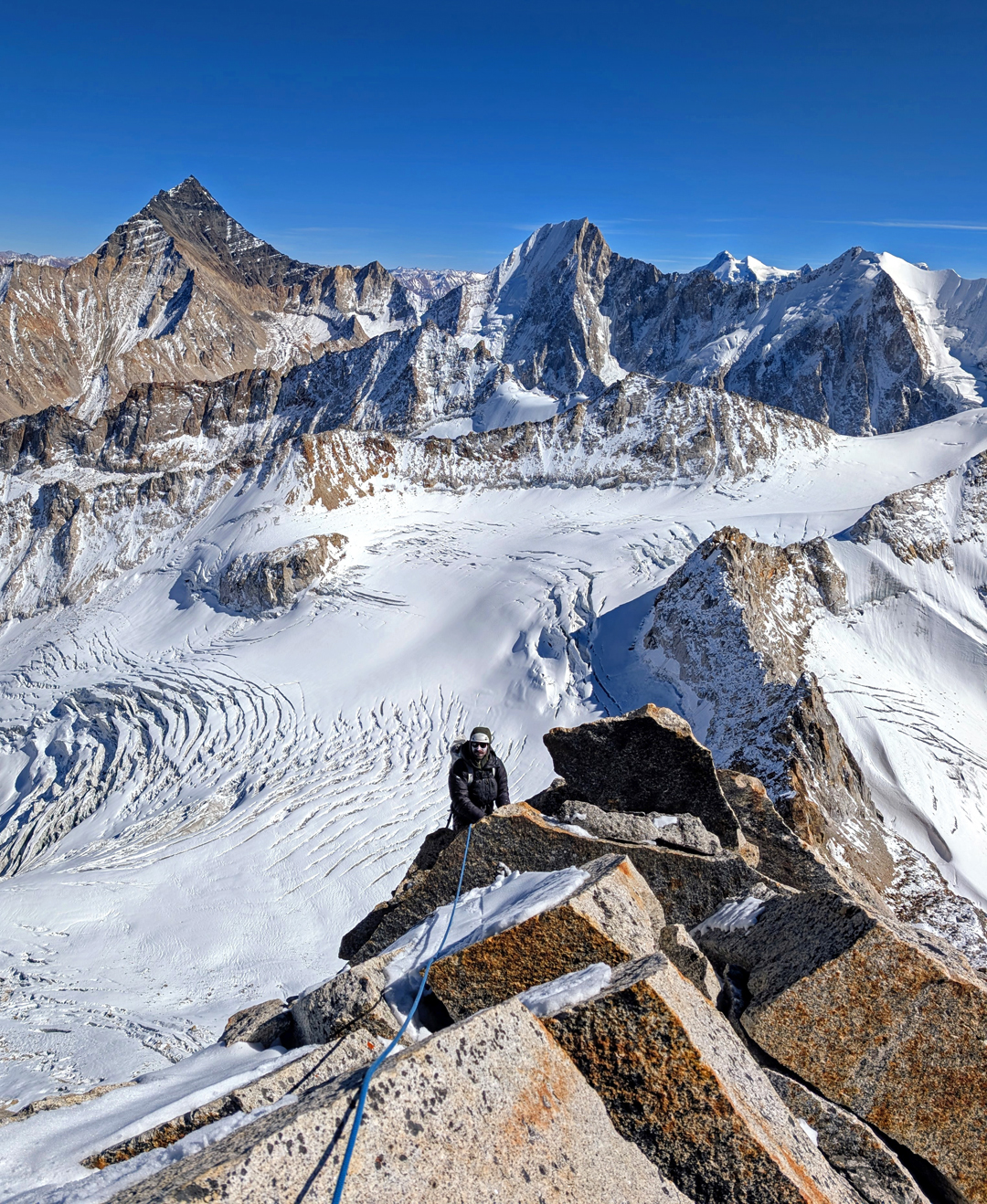
From a high camp at around 5,400 meters, we next tried the east ridge of unclimbed Daboling (ca 6,050m, 31°27’9.85”N, 78°24’2.98”E) at the head of the valley. We climbed 13 pitches on mostly good granite, although at times the climbing was tedious and the terrain felt like stacked Jenga blocks. The line was classically alpine in nature, and as a result it is difficult to assign a rock or mixed grade. Our high point was around 5,850 meters. Four or five more pitches would have taken us to the summit slopes, but without bivouac gear, and knowing the descent would be complex, we made a conservative call to retreat. Our descent involved a dozen rappels off rock anchors, first down the ridge, then onto the steeper south face.
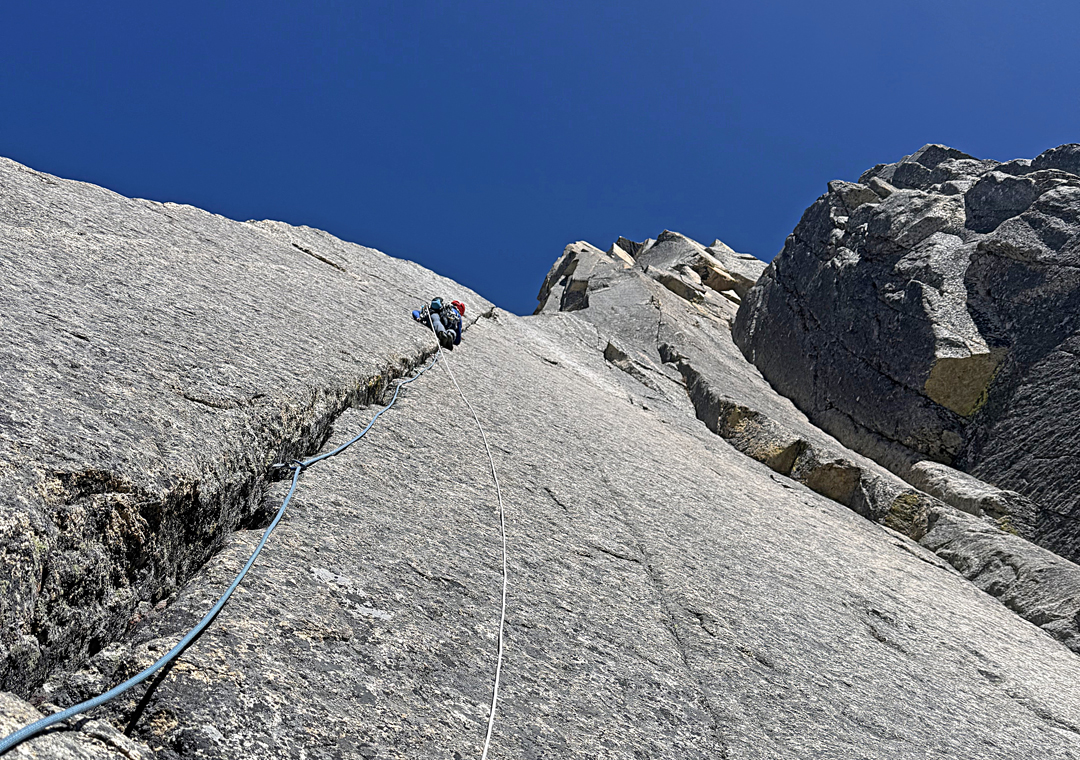
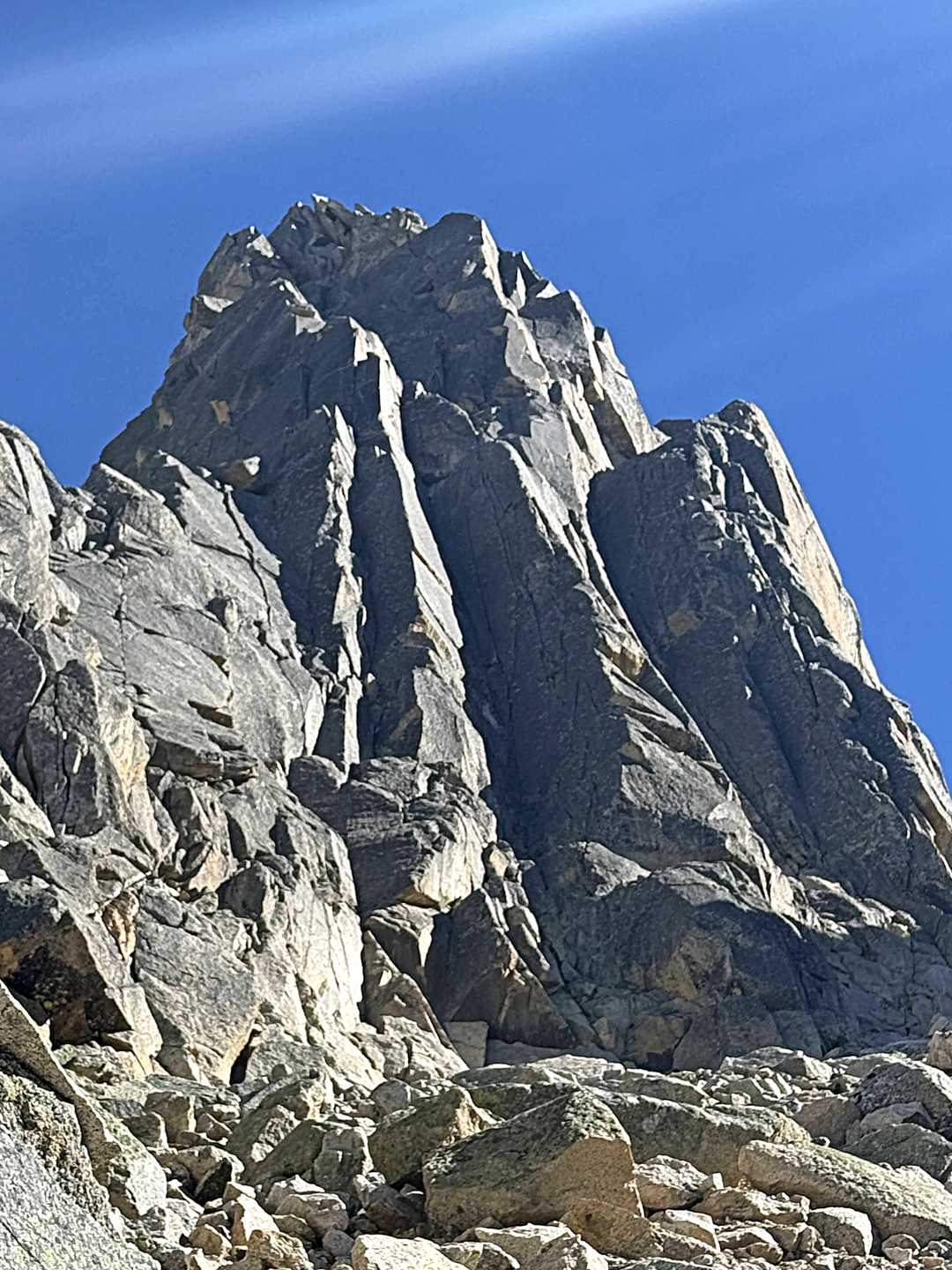
After a short rest in town, we ended the trip by climbing a 200-meter granite tower of about 5,100 meters (31°25.6751’N, 78°23.0850’E). This is the Fourth Pillar of Ray Peak, as defined by the Austrian team that visited the area in 2019 (AAJ 2020). Ryan and I climbed the south face of this tower in five pitches, four of which were 5.9 or 5.10 and composed of perfect granite. We rappelled our route.
Overall, we found this to be a beautiful area with impressive boulders and excellent alpine rock potential. However, the alpine ice will require very specific—perhaps rare—conditions, as the mountains are losing their perennial snow.
—Seth Timpano, USA
Media Gallery