
Duhangan Valley: Chupa Rustam and Temptation Tower
India, Himachal Pradesh, Kullu
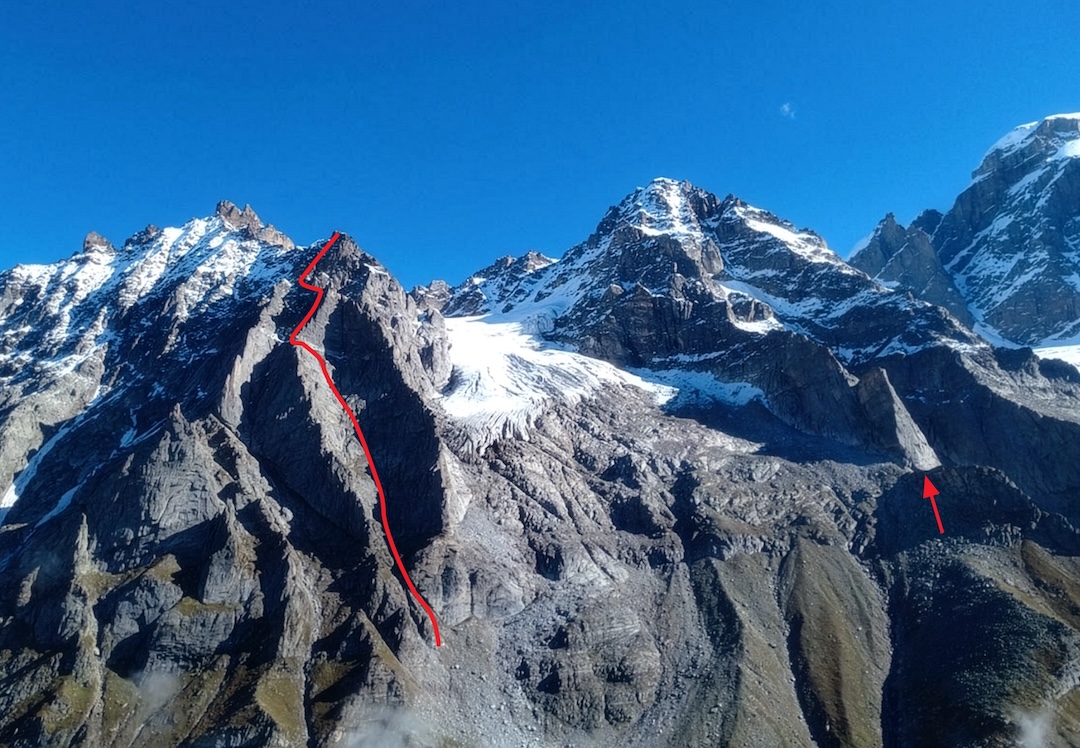
During September, Ernest Bernabeu Venturini (Catalonia), Dave Gates (USA), Kelsey Pacera (USA), and I completed new climbs on rock towers on the north side of the upper Duhangan Valley. Also known as the Jagatsukh Valley, this is a popular area close to Manali, leading east to Duhangan Col and the normal route up Deo Tibba (6,001m, first climbed in 1952).
Our expedition was organized by Swapnil Rachelwar of Pahadi Bakra Adventures, with the aim of bringing six villagers from southern India into the mountains. We took our time on the approach, enjoying single- and multi-pitch first ascents on cliffs and towers near our camps while teaching the Indian members basic climbing skills.
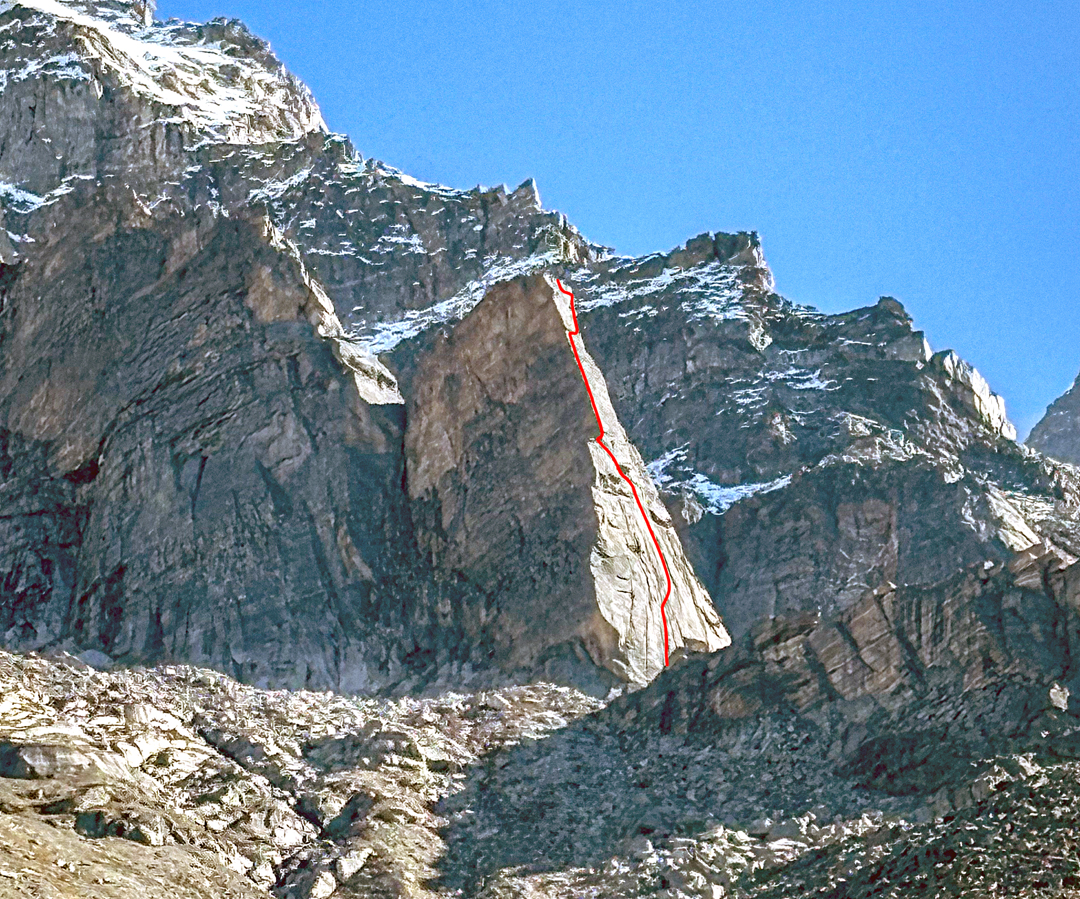
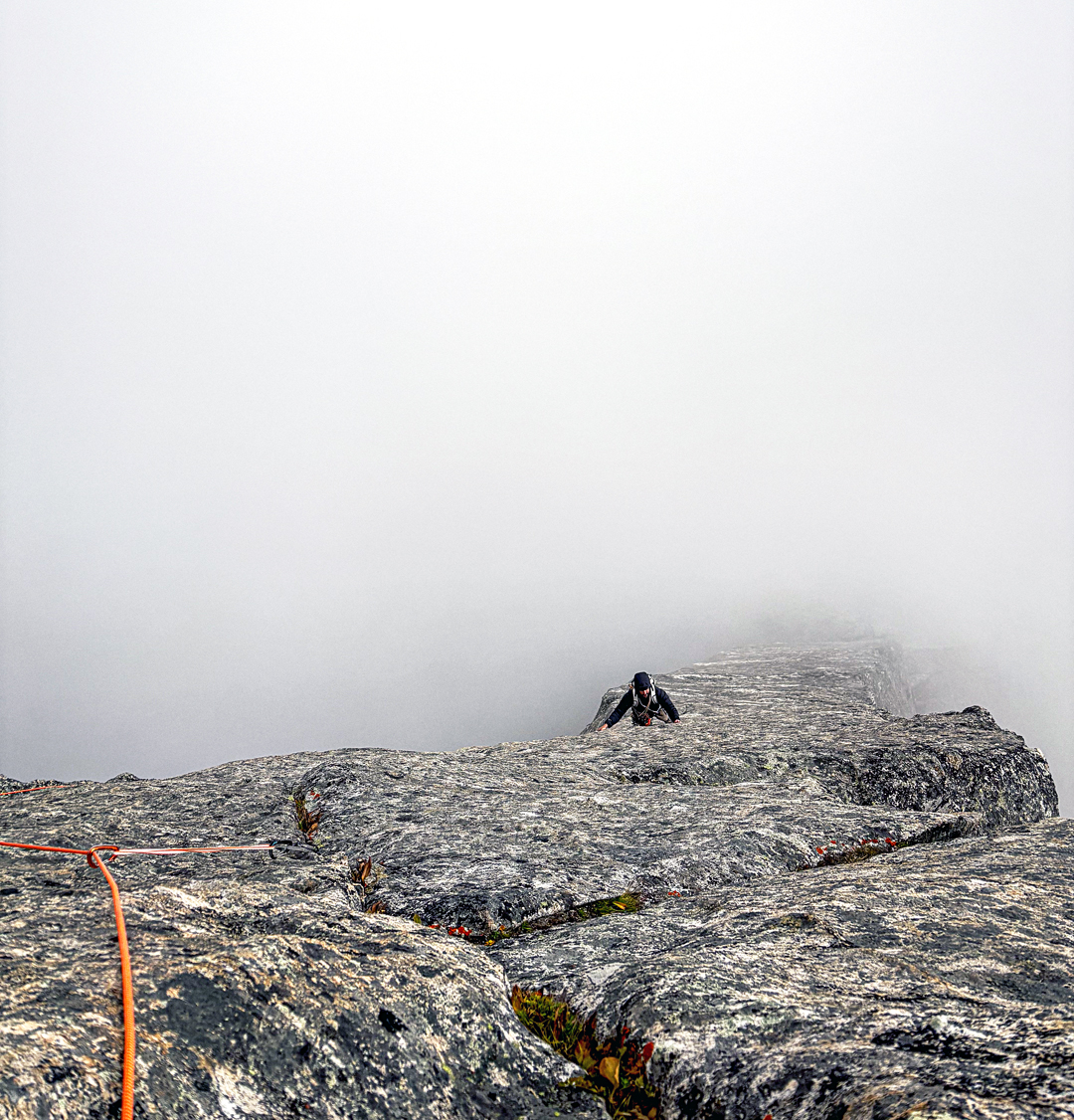
While acclimatizing near our base camp at Tainta (4,100m, 32°10'39.5"N, 77°21'06.8”E, often used as the base camp for Deo Tibba), Dave and I noticed a striking granite tower to the northwest. [The tower is at approximately 32°11'13.0"N, 77°21'43.9”E, on the south flank of Peak 5,605m, the first peak on the ridge immediately west of Deo Tibba.] On the 16th, with a single rack and a 40-meter, 8mm rope, we started up the tower, only to find that the cracks that looked so inviting from below were flaring, leaving sparse possibilities for protection. Fortunately, the climbing was mostly moderate slab with a few crux roofs with good gear. Above a good midway ledge, the wall narrowed and steepened into an airy arête above a nameless glacier. The final crux traverse—an exposed 5.10 R slab— brought us to the summit.
With our 40m rope, Dave worked magic with our Beal Escaper, and after five rappels we reached the moraine in darkness. We named the formation Temptation Tower (4,930m) and the route Etta (500 meters of climbing, 5.10 R).
The following day, the whole team climbed Jagatsukh (ca 5,050m), a popular trekking peak on the opposite side of the valley, which helped with our acclimatization.
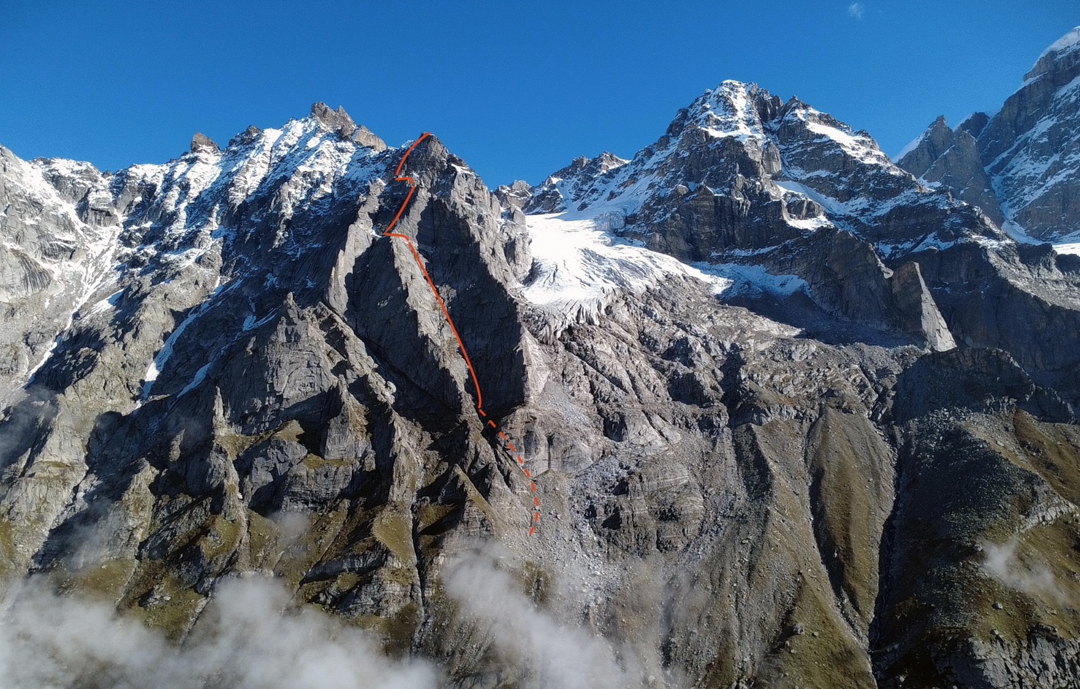
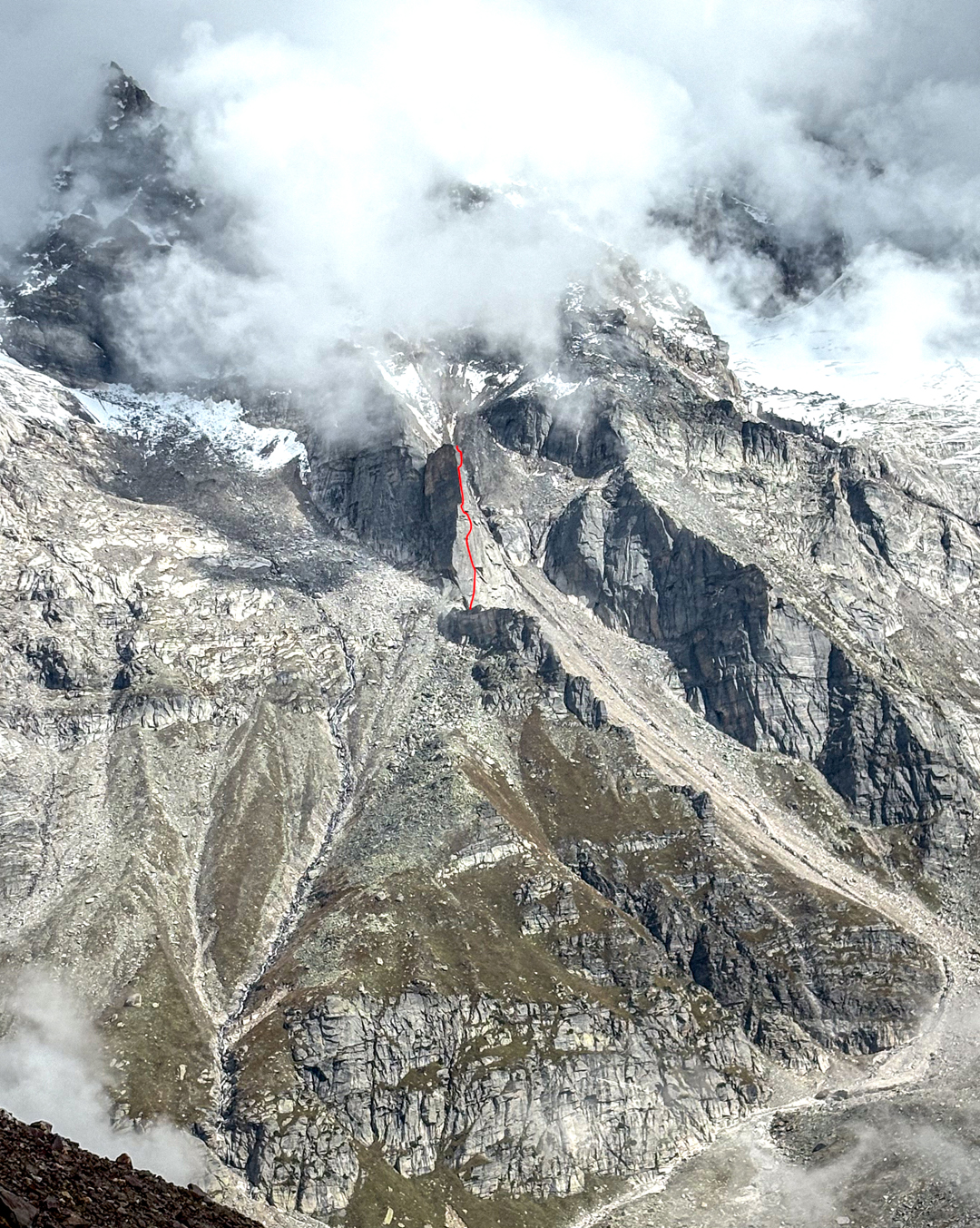
The next day, Dave, Kelsey, and I inspected our main objective, a large rock tower at 32°11’30.4”N, 77°21’20.2”E, on the south flank of Peak 5,384m, the second peak on the ridge west of Deo Tibba. The lower section is characterized by two long ridges. A couple of roped pitches brought us into the drainage between these two ridges, where we climbed unroped over fifth-class terrain for 400 meters to where the wall steepened. A beautiful 5.9 corner led to a ledge, where we fixed one rope, rappelled, downclimbed the drainage, and were back in camp by sunset.
That night Ernest decided to join us—in retrospect, this proved vital to the climb. On the 19th, the four of us left camp at 5 a.m., and by the time the sun rose, we had reached the previous day’s high point. The headwall above involved excellent mixed climbing, from snowed-up ledges to steep 5.9 stemming. However, the summit was much higher. Knowing thunderstorms would likely form in the afternoon, Dave and Kelsey stayed put, while Ernest and I continued.
Switching to approach shoes for the increasingly snowy terrain, we eventually reached a corner that provided the crux, with moves of 5.10 in a crumbling quartzite dike, led brilliantly by Ernest in his now drenched loafers. Shifting snowfields and loose boulders led to the eight-meter summit block, which we surmounted before making a series of rappels, interspersed with sketchy downclimbing, to rejoin Dave and Kelsey. All four of us made it back to camp, exhausted, after dark.
We named the peak Chupa Rustam (“Hidden Warrior” or “Dark Horse”) and called our 1,200-meter route up the south face and west ridge Cúrcuma (Catalan for “turmeric”), after the local spice we used to heal our shredded hands. The grade was 5.10 R/X).
—Boe Marion, Norway
Media Gallery