
Stargyuk Valley, Two First Ascents
India, Ladakh
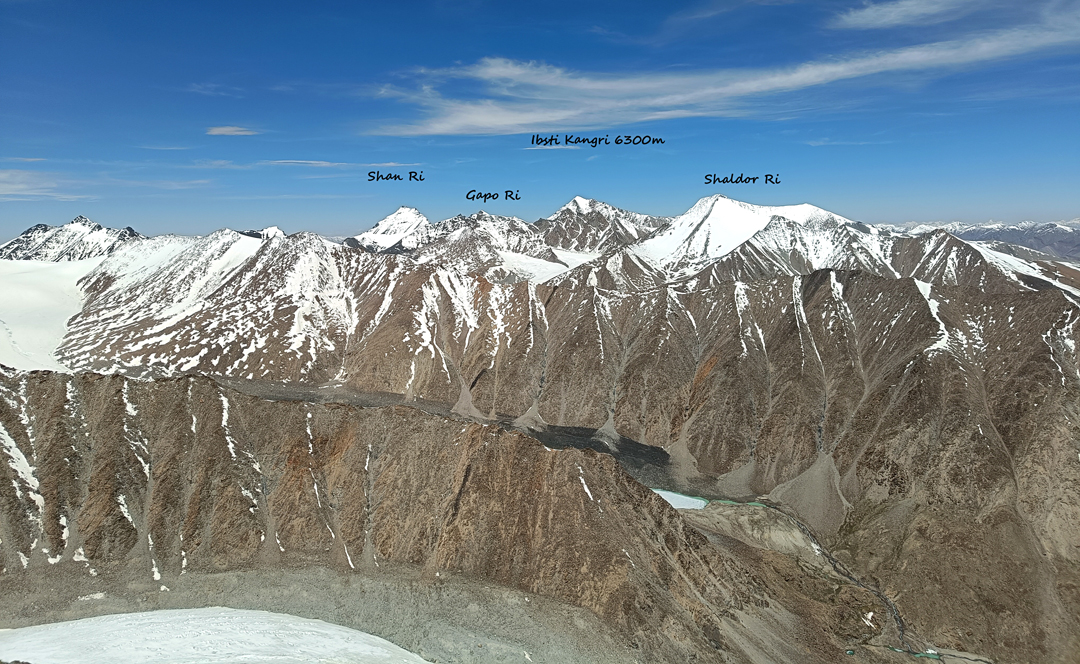
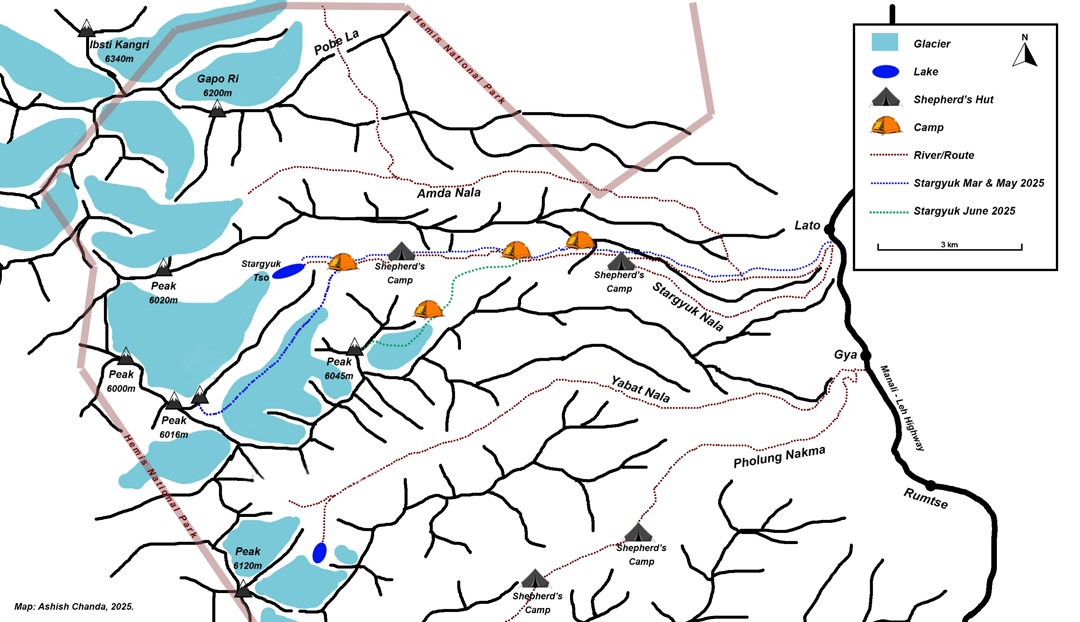
Following a winter reconnaissance to the Stargyuk Valley, south of the Kang Yatze Group, our four-member team returned to this area in late May. Our plan was to explore the upper glacier system and attempt unclimbed summits. With the valley approaches snow-free, part of our load was transported by ponies to a shepherds’ camp, beyond which all movement and climbing was carried out unsupported.
We established base camp at 4,920 meters on May 25, and the following day moved up-valley to a high camp at approximately 5,140 meters, near the confluence of the North and South Stargyuk glaciers.
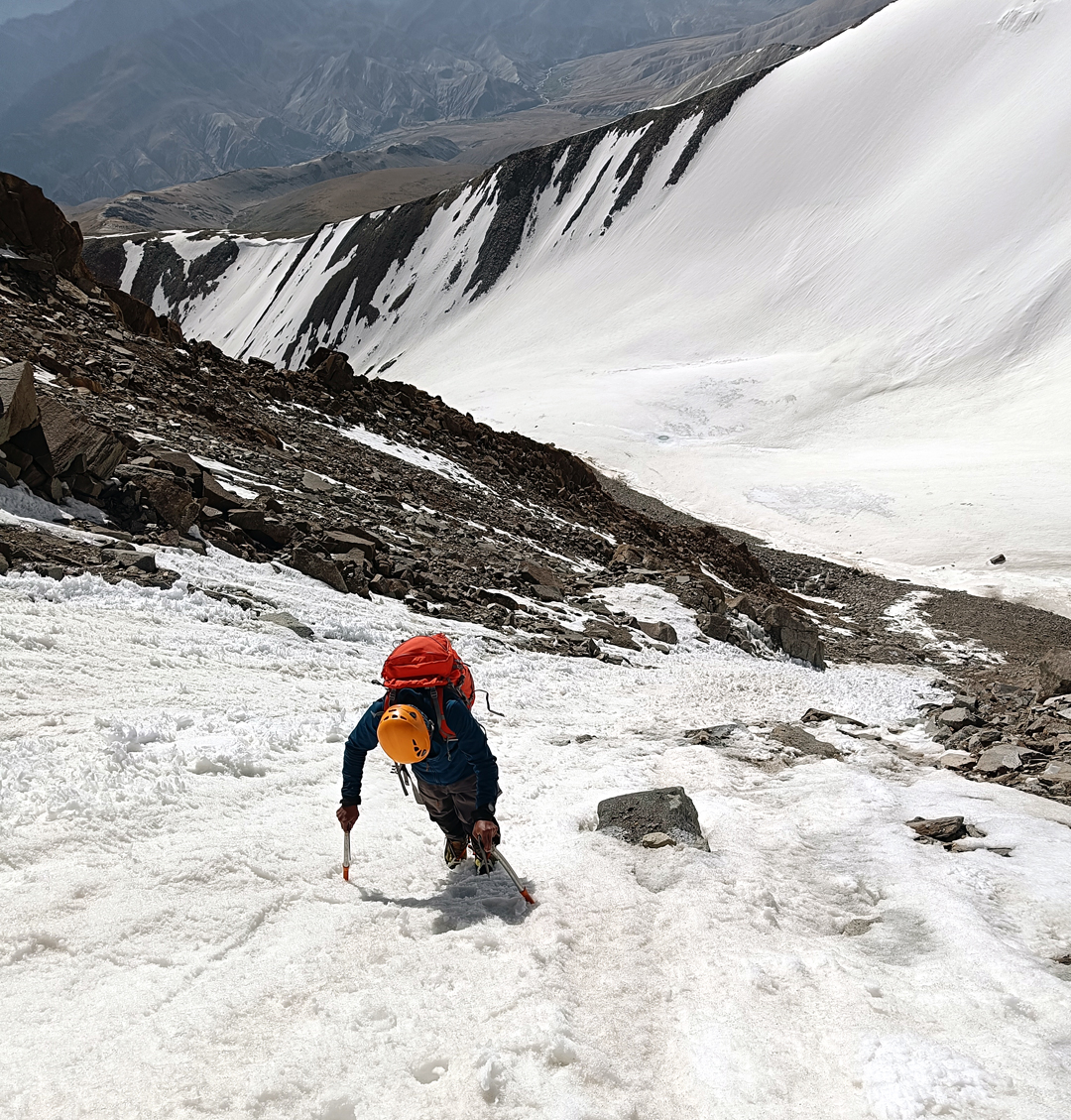
On the 28th, after previous reconnaissance, Sourav Das, Ananda Mukherjee, and I traversed the South Stargyuk Glacier end to end and ascended the south face of the northeast ridge of Peak 6,016m. We reached a small top of 5,966 meters (33°38’50.78”N, 77°35’10.86”E) on this ridge after climbing a 400-meter snow face at an average angle of 45° (PD+). Softening snow stopped us short of the main 6,016-meter summit, and we descended to our high camp, which we regained 14 hours after leaving.
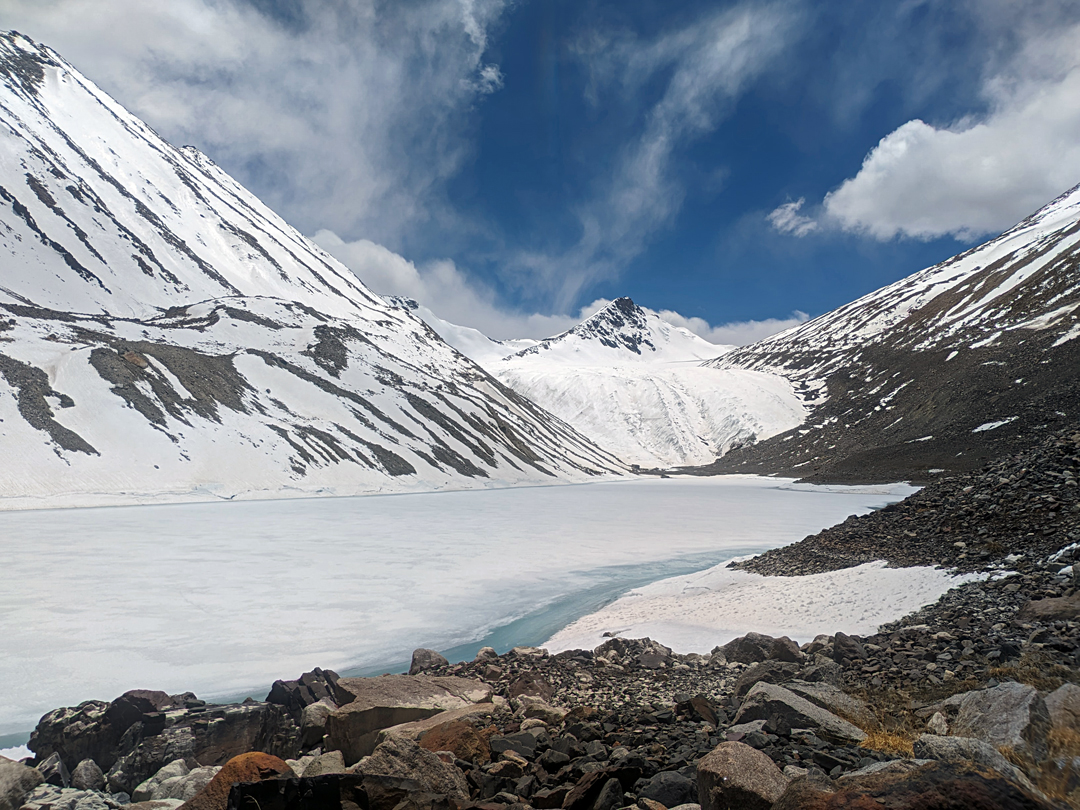
On the 29th, we made a brief reconnaissance of the North Stargyuk Glacier, where we documented a large moraine-dammed lake at its head, then exited the valley on the 30th.
In mid-June, I returned with Phurtenji (Lakpa) Sherpa. We approached, as before, from Lato village, and on June 19 camped at 4,919 meters. The next day, we made a camp at 5,377 meters in a glaciated cirque to the east of the dominant summit in the valley: Peak 6,045m (33°39’20.86”N, 77°37’16.85”E).
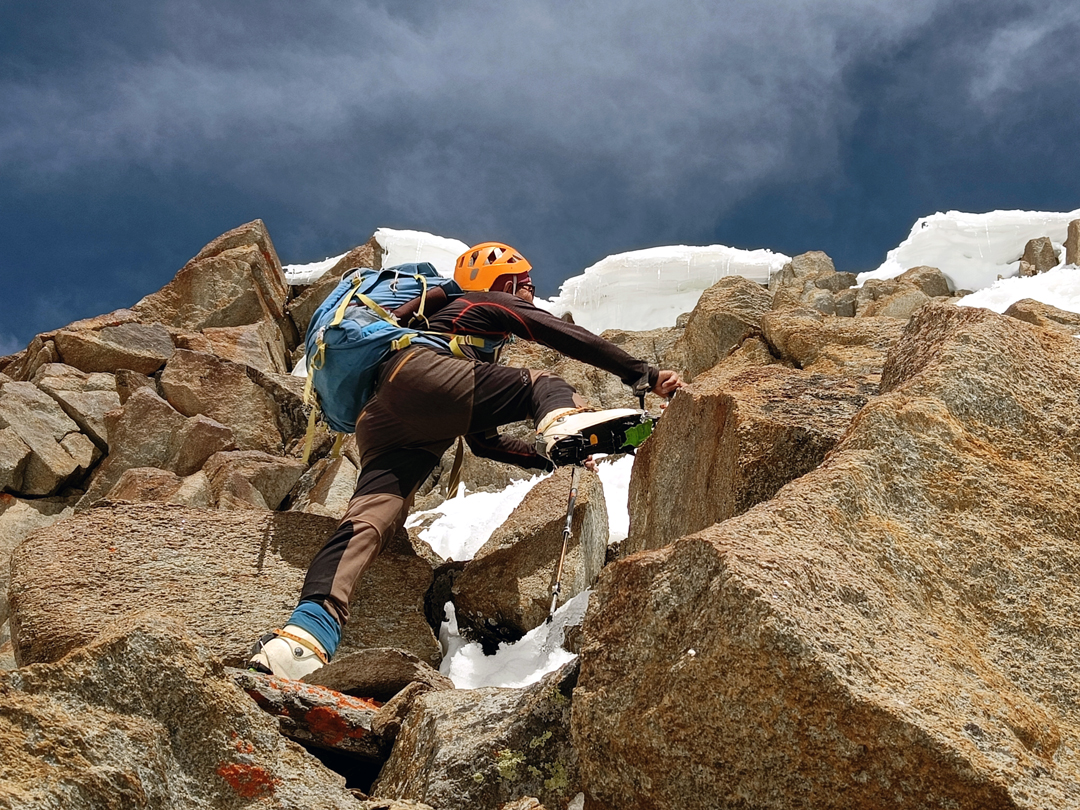
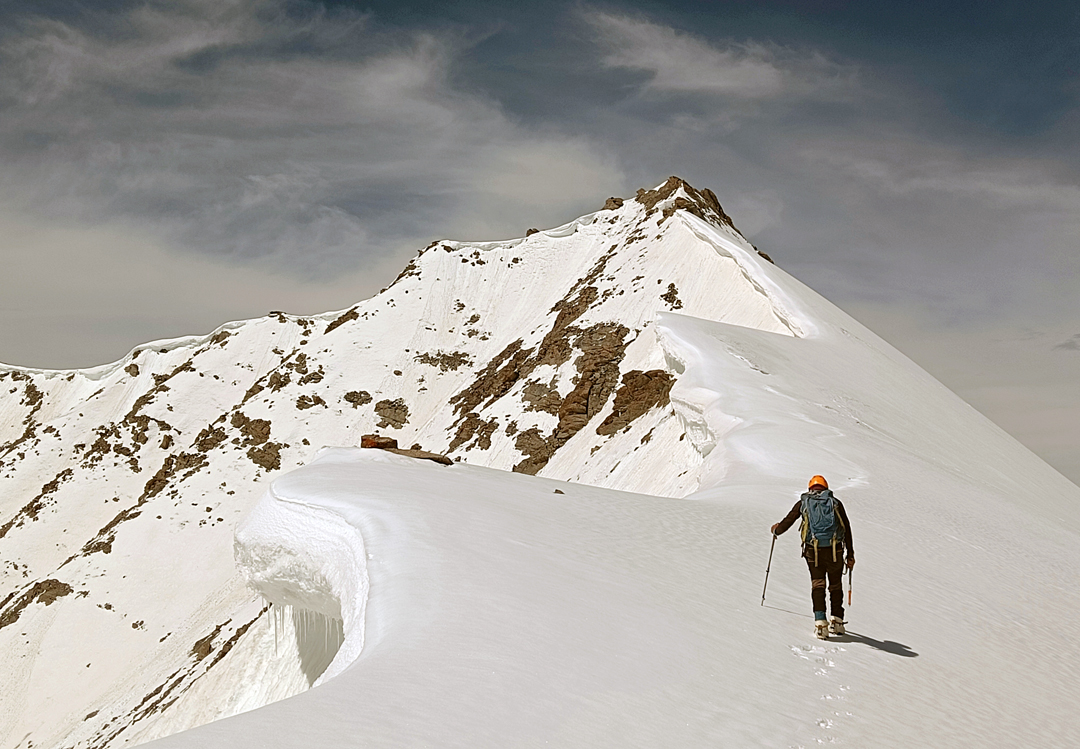
On June 21, we ascended a narrow, mixed couloir on the east face of Peak 6,045m, which involved firm névé, thin ice runnels, and sections of unstable rock. Above the couloir, we reached the sharp northeast ridge and followed it to the summit, staying roped as we moved together past cornices and crevassed sections. We descended the route, dismantled our high camp, and returned to the roadhead the same day. The ascent (350m, AD+ 45°–50°) was completed in three days, Leh to Leh, entirely unsupported.
—Anindya Mukherjee, India
Media Gallery