
Bijora Hiunchuli, first ascent, via northeast ridge
Nepal, Kanjiroba Himal
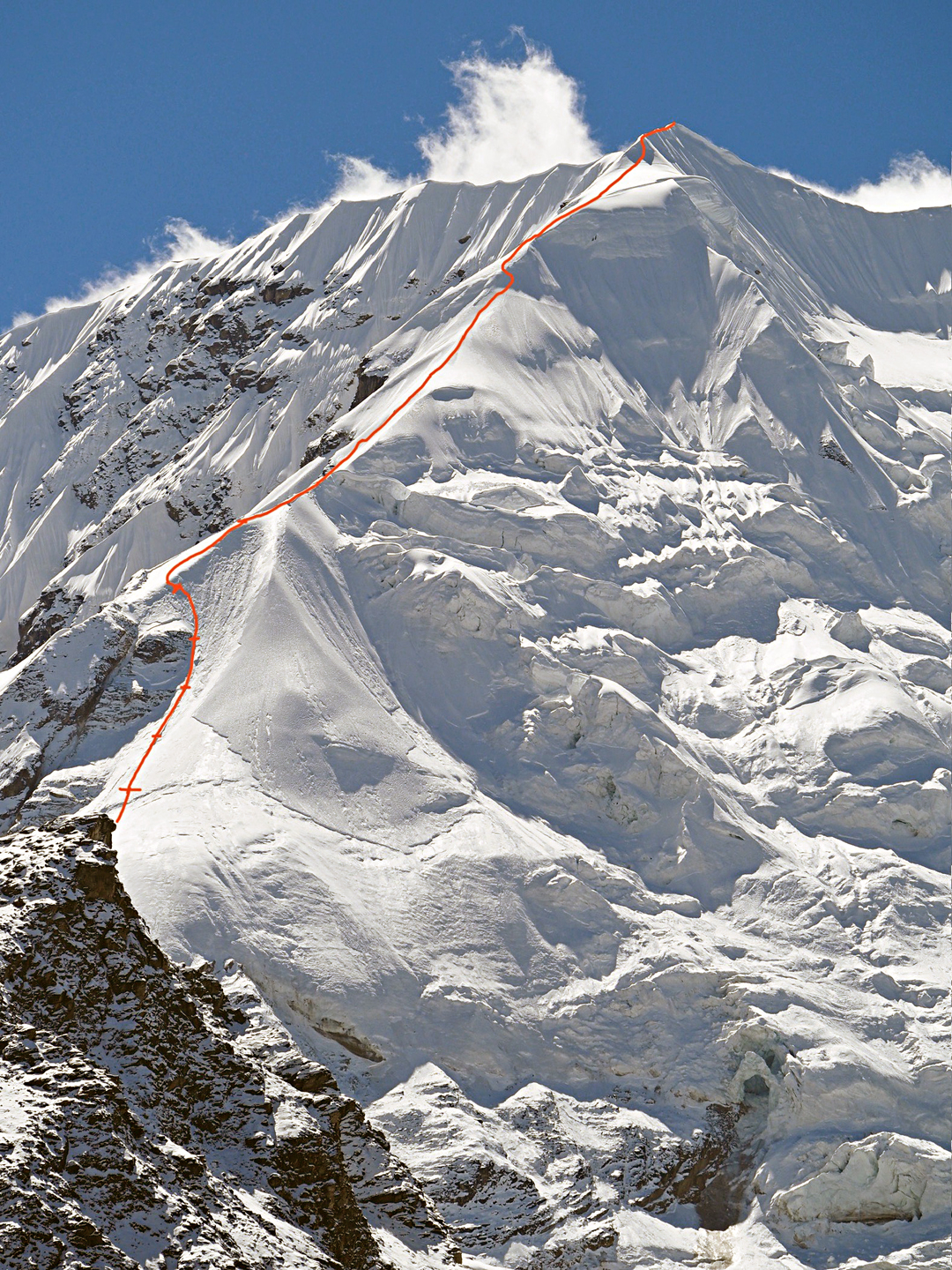
The Himalayan Camp is an initiative to pass the Japanese Alpine Club’s strong mountaineering culture to future generations. Young alpinists undergo a training program that culminates in an expedition to a 6,000-meter Himalayan peak. In 2025, we chose unclimbed Bijora Hiunchuli (6,111m, 29°17’34.86”N, 82°31’38.95”E) in western Nepal.
After acclimatizing in the Langtang Valley, Masatake Higa, Sota Kodama, Mei Okajima, Masayuki Takenaka, Akiyoshi Tanaka, and I began our trek on October 7 from the remote village of Pere. On the 11th, we established base camp at 4,100 meters in the Chaudhabise Valley to the north of Bijora Hiunchuli.
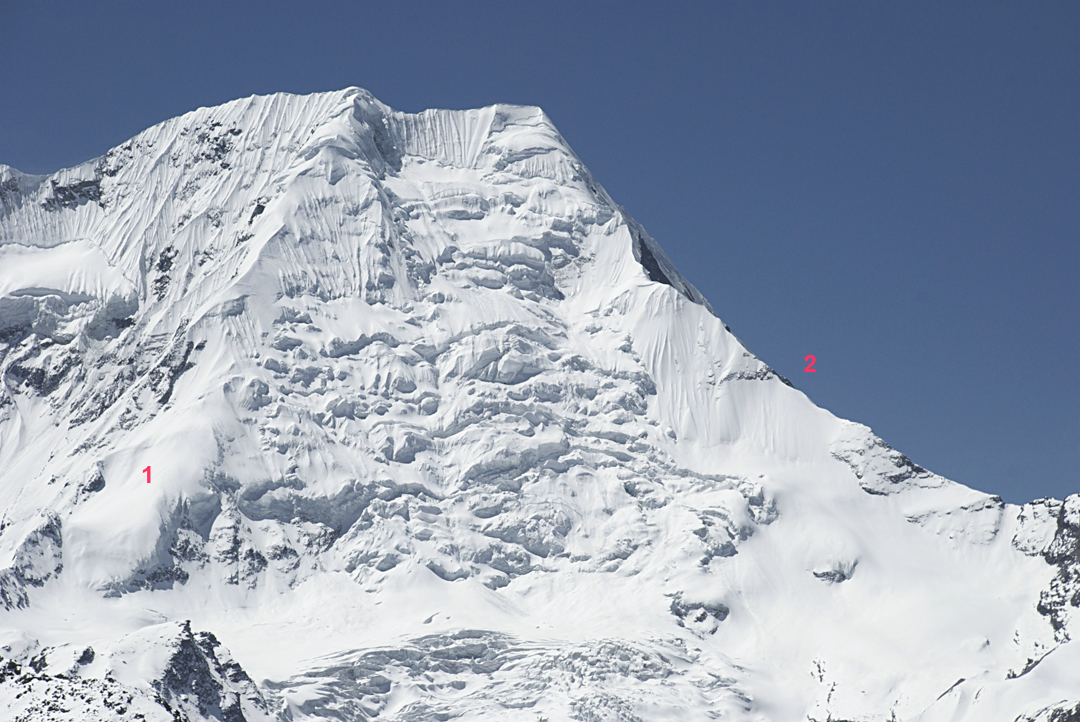
We had planned to climb the north-northwest ridge, but during reconnaissance decided the line looked hard and posed safety risks. Instead, we opted to try the northeast ridge.
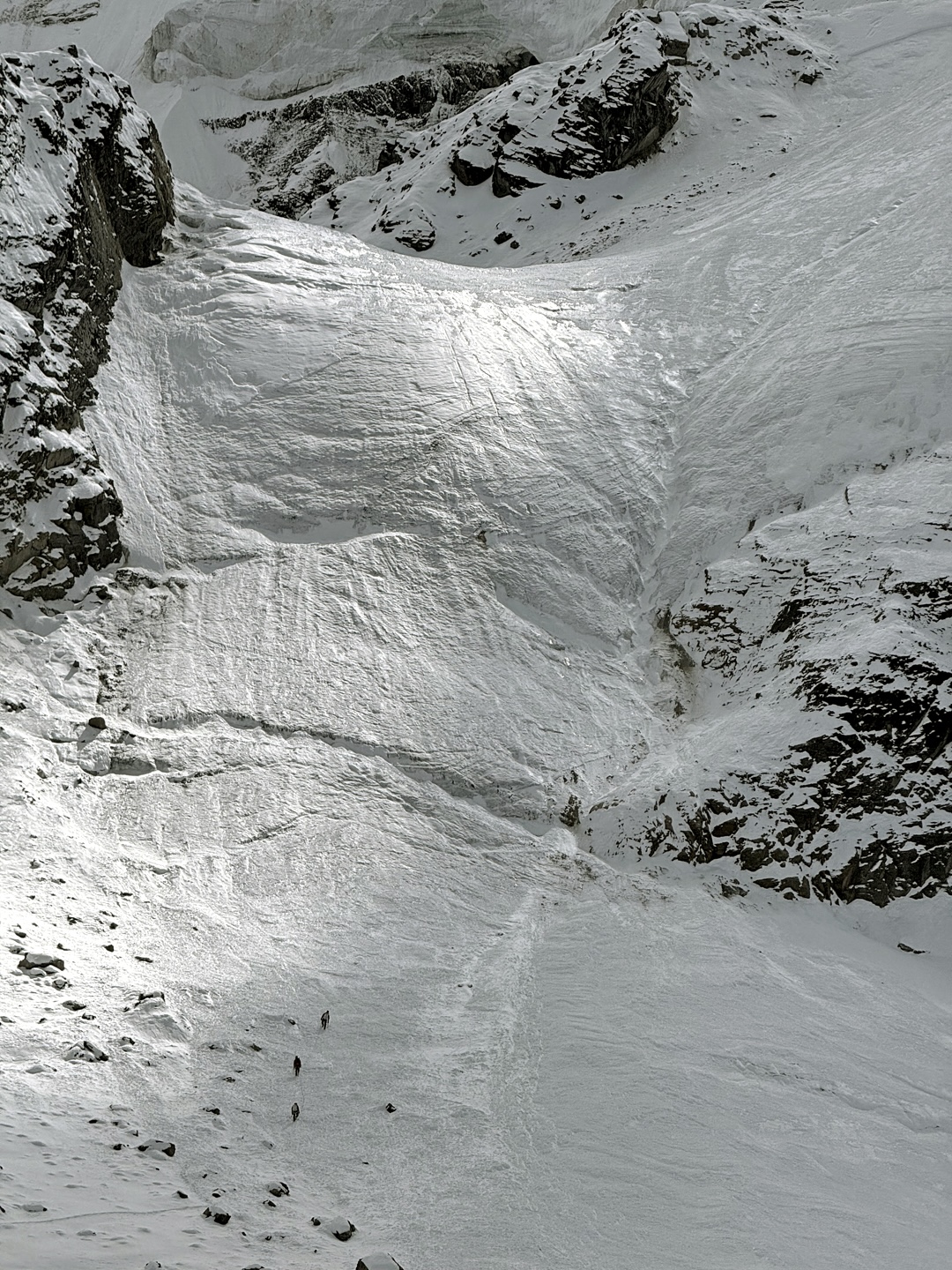
On October 22, we left base camp for our summit attempt, spent that night in the already established Camp 1 at 5,020 meters, and on the following day placed Camp 2 on the northeast ridge at 5,240 meters.
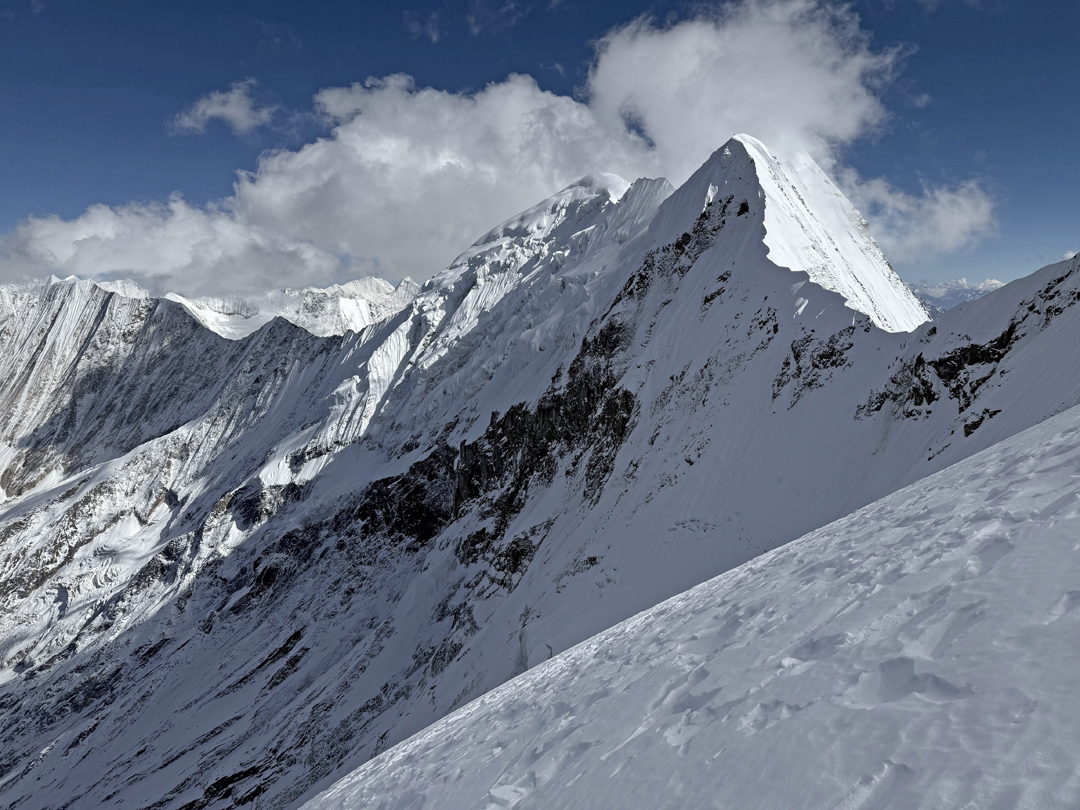
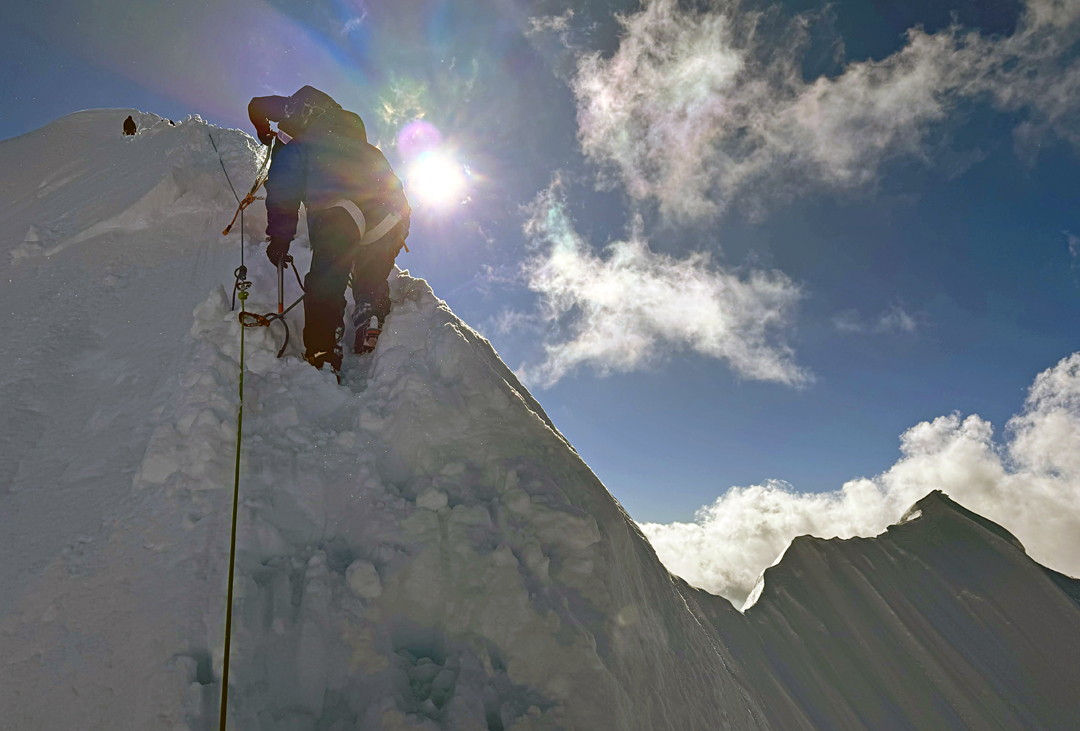
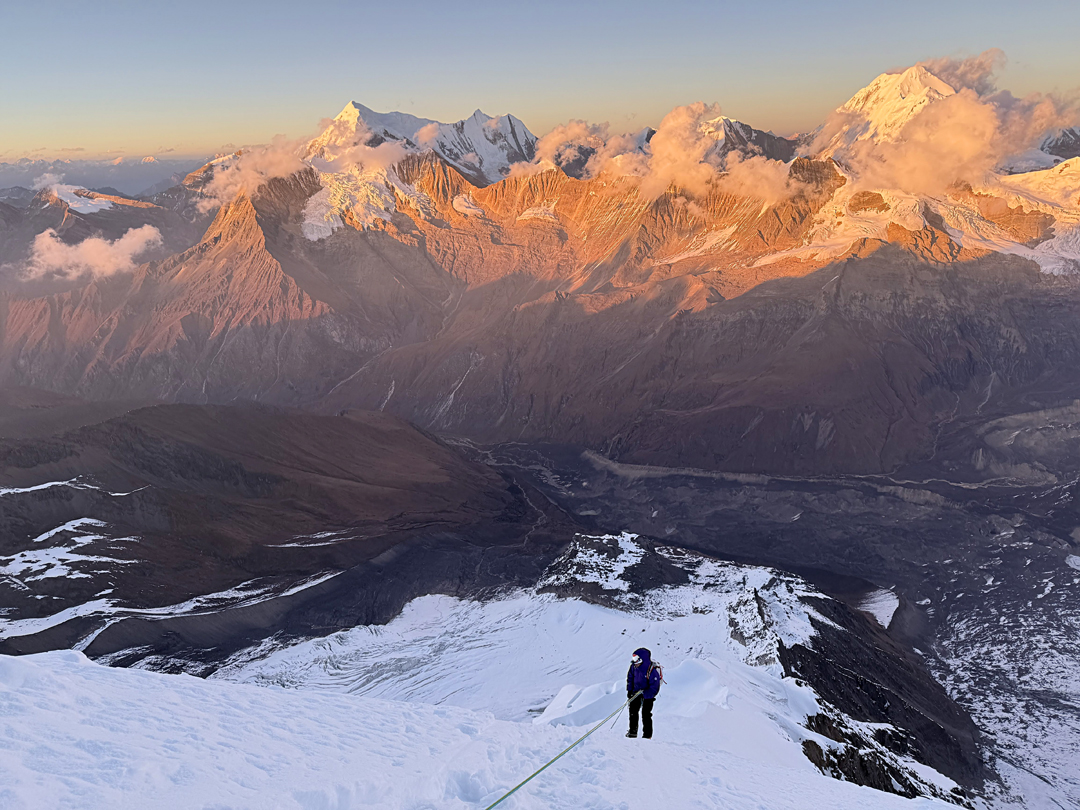
All six team members left Camp 2 for the summit at 2 a.m. on October 24. The steepest section of the northeast ridge proved to be snow/ice at 70°. With a combination of pitching and simul-climbing, we climbed (and fixed) around ten rope lengths. From 5,700 to 5,800 meters, we had to break trail through deep snow. After negotiating a difficult knife-edge just below the top, all climbers reached the summit at 3:30 p.m. Descending primarily by rappel, we were back at Camp 2 at 10 p.m.
Snowfall affected our trek from the range, but we arrived safely back in Kathmandu on November 3.
—Yasuhiro Hanatani, Japan
NOTES ON BIJORA HIUNCHULI: Located at the end of the northwest ridge of Kasi Dalpha (6,386m), Bijora Hiunchuli was the goal of a Paulo Grobel expedition in 2009, but heavy snowfall made it impossible to set foot on the mountain. Grobel tried again in 2013 and reached 5,600 meters on the north-northwest ridge before being forced to retreat. A USA-Nepal team led by Tendi Sherpa tried again in 2024; Sherpas fixed ropes to 5,600 meters then abandoned the attempt due to avalanche danger.
Media Gallery