
Kasi Dalpha, Historical First Ascent
Nepal, Kanjiroba Himal
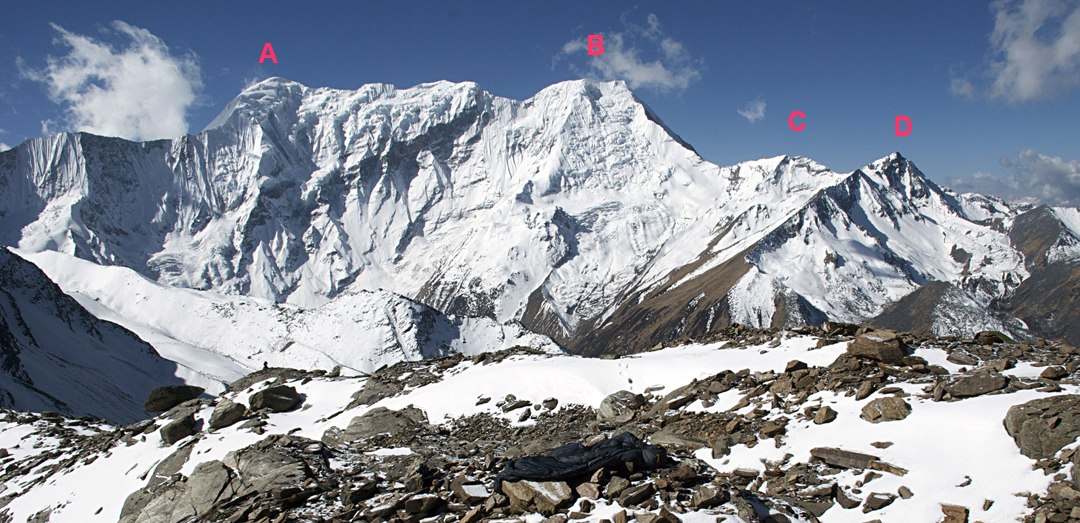
Although the 1974 expedition from Yamagata University in Japan to West Nepal was widely covered at the time (including briefly in the AAJ), recent communication with journalist Tatsuhiko Yoshizawa has shown this team did not climb a new route up Kanjiroba (6,883m), as was reported, but instead made the first and only ascent of Kasi Dalpha (6,386m, 29°17’0.01”N, 82°33’10.74”E).
The expedition members were Kachio Ito, Eiji Kamei, Morishige Nakano, Naoshi Otake, Akiyoshi Sakurada, Akira Shiraishi, and a doctor, Juro Kamei. Anu Sherpa was the sirdar. They were drawn to the Kanjiroba Himal by its unexplored valleys and unclimbed 6,000-meters peaks.
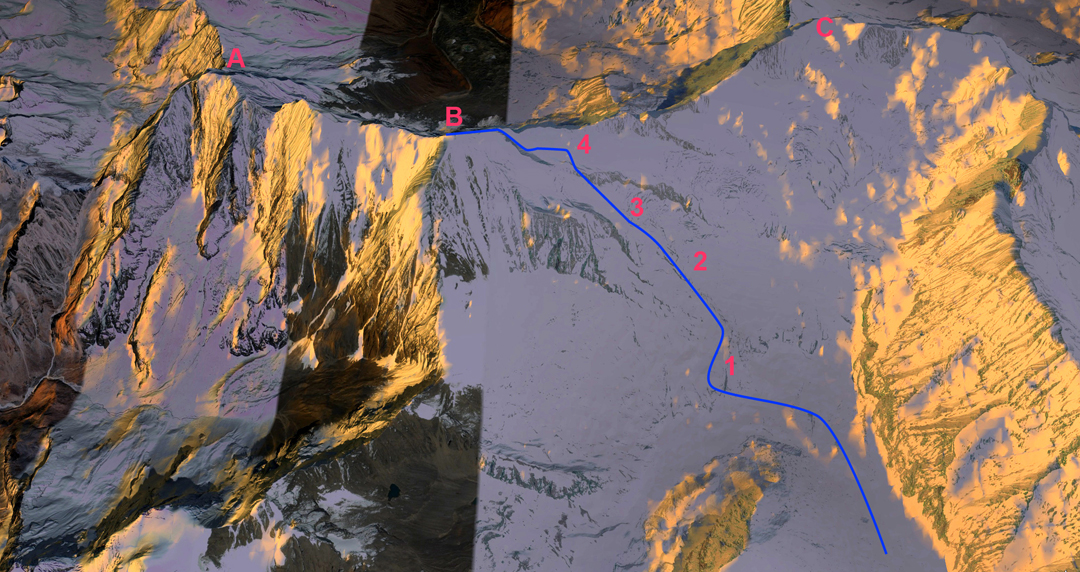
Their original target was Kande Hiunchuli (6,627m); however, when they discovered this peak had been climbed in the autumn of 1972, they changed their objective to “unclimbed Bijora Hiunchuli.” [This name now refers to a 6,111-meter peak (climbed in October 2025); however, in 1974, Bijora Hiunchuli applied to the massif as a whole.] They opted to attempt the main summit—Kasi Dalpha—from the east, approaching via the villages of Chaurikot and Hurikot, then up the Jagdula Khola, before branching northeast up the Panipalta Khola.
The expedition left Jumla on March 29 and trekked up the Jagdula Khola and Panipalta Khola. On April 6 they reached 3,800 meters, the site of a previous base camp used by the British mountaineer John Tyson. [Tyson was the most prolific explorer of the Kanjiroba Himal, visiting the area mostly during the 1960s and climbing several of its lower peaks.] The next day, the Japanese established base camp at 4,200 meters, below the glacier flowing southeast from Kasi DalpaOn April 8 they established base camp at 4,200 meters, below the glacier flowing southeast from Kasi Dalpha.
Two ridges descend approximately east from the summit area, and the team decided to climb the northerly one. They first headed west from base camp, then ascended south-facing slopes and established three camps, occupying Camp 3 (5,400m) on April 24. Over the next two days, the team climbed tricky terrain up the south face of the east ridge (fixing 120 meters of rope) to reach the crest. They then ascended to the start of a steep rock arête, where they placed Camp 4 at 5,800 meters.
Nakano, Shiraishi, and Anu Sherpa left this high camp at 6 a.m. on the 27th in good weather and, with Anu in the lead, reached the top at 12:40 p.m. The following day, Kamei, Ito, Otake, and Sakurada followed in their footsteps. By the 29th, all of the team were back in base camp, where they celebrated late into the night.
—Lindsay Griffin, AAJ, from information provided by Tatsuhiko Yoshizawa and Iwa to Yuki, Japan
Media Gallery