
Nanga Parbat, Schell Route, First Alpine-Style Ascent, and First Ski Descent from Summit
Pakistan, Himalaya
In 2024, Boris Langenstein and I attempted the first ski descent of Nanga Parbat from its 8,125-meter summit by the south-southeast or Rupal side. We climbed the Schell Route (1976) but stopped at 7,524 meters due to poor weather and snow conditions. By coincidence, we joined David Goettler for this attempt, and since we got along well, we decided all three of us would return in 2025. [Previously, in 2019, Tiphaine Duperier and Boris Langenstein skied most of the Kinshofer Route on the Diamir Face of Nanga Parbat; Langenstein summited but left his skis less than 50 vertical meters below the top. See AAJ 2020.]
One of the realizations from 2024 was that it was far from easy to acclimatize in the Rupal Valley, so in 2025 we first went to Nepal and climbed Island Peak (6,165m) and Baruntse (7,129m). We arrived at our 3,500-meter base camp below Nanga Parbat on June 10. On June 13 and 14, we carried some gear up to 6,000 meters on the Schell Route, finalizing our acclimatization.
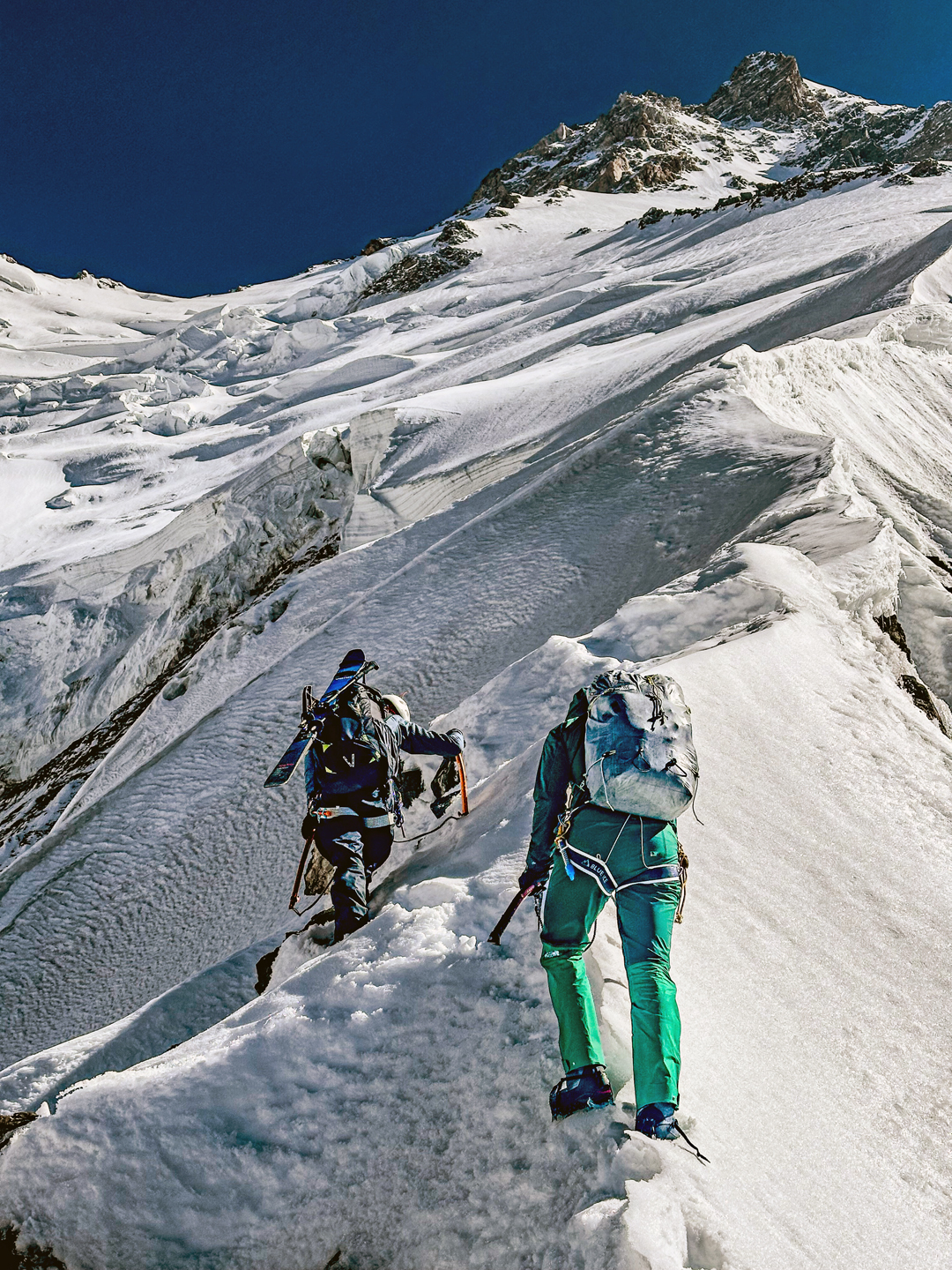
We left base camp for our summit attempt at 1:30 a.m. on June 21. The first day ascends the steepest part of the route, with a succession of couloirs leading to a 60-meter gully that reaches 80°. Above, just before a long snow shoulder at 6,000 meters, we made Camp 1.
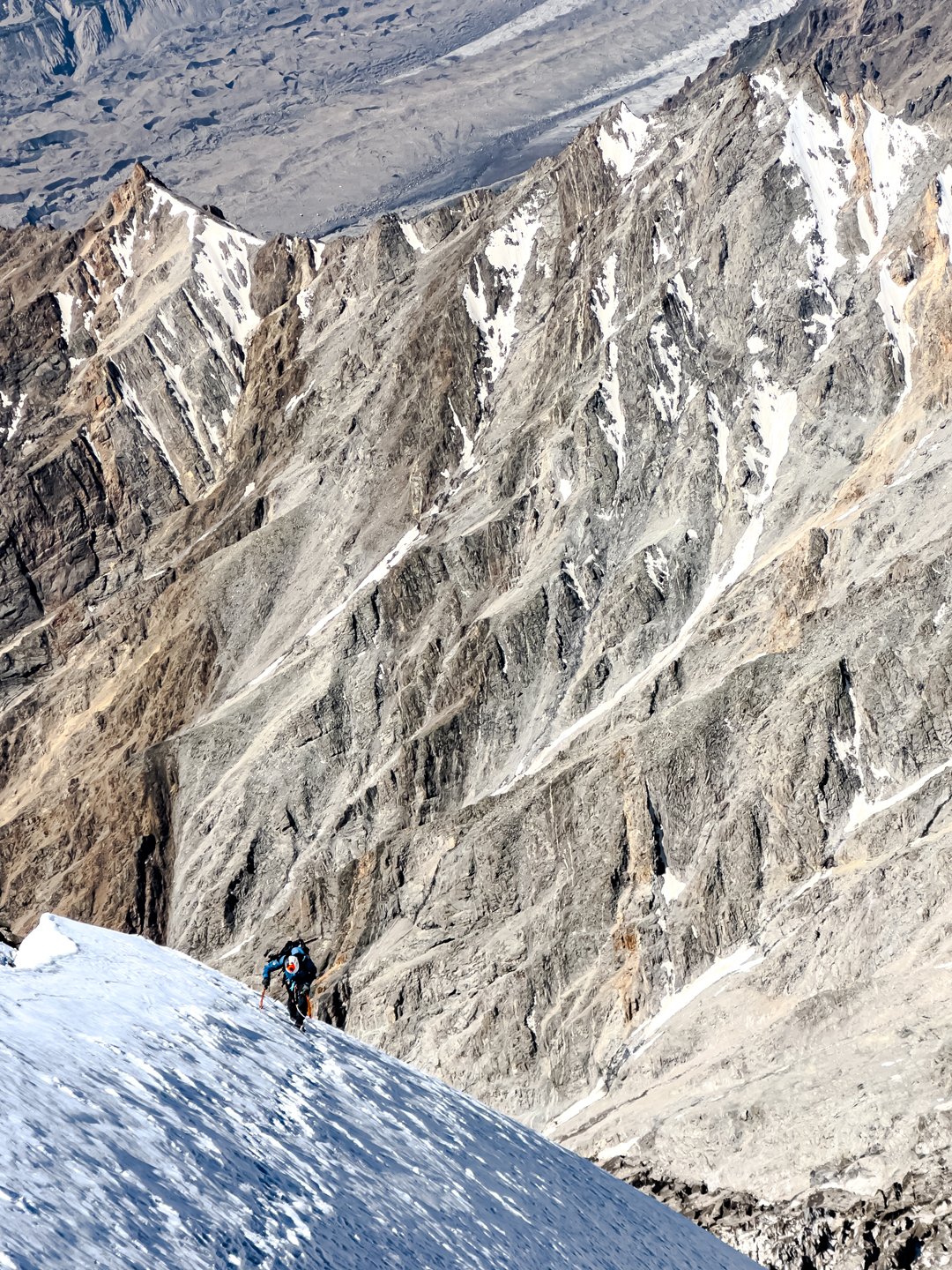
Early on the 22nd, we climbed to 6,800 meters. The snow conditions were way better than in 2024, allowing us to climb faster. However, this section has few safe spots in case of avalanches.
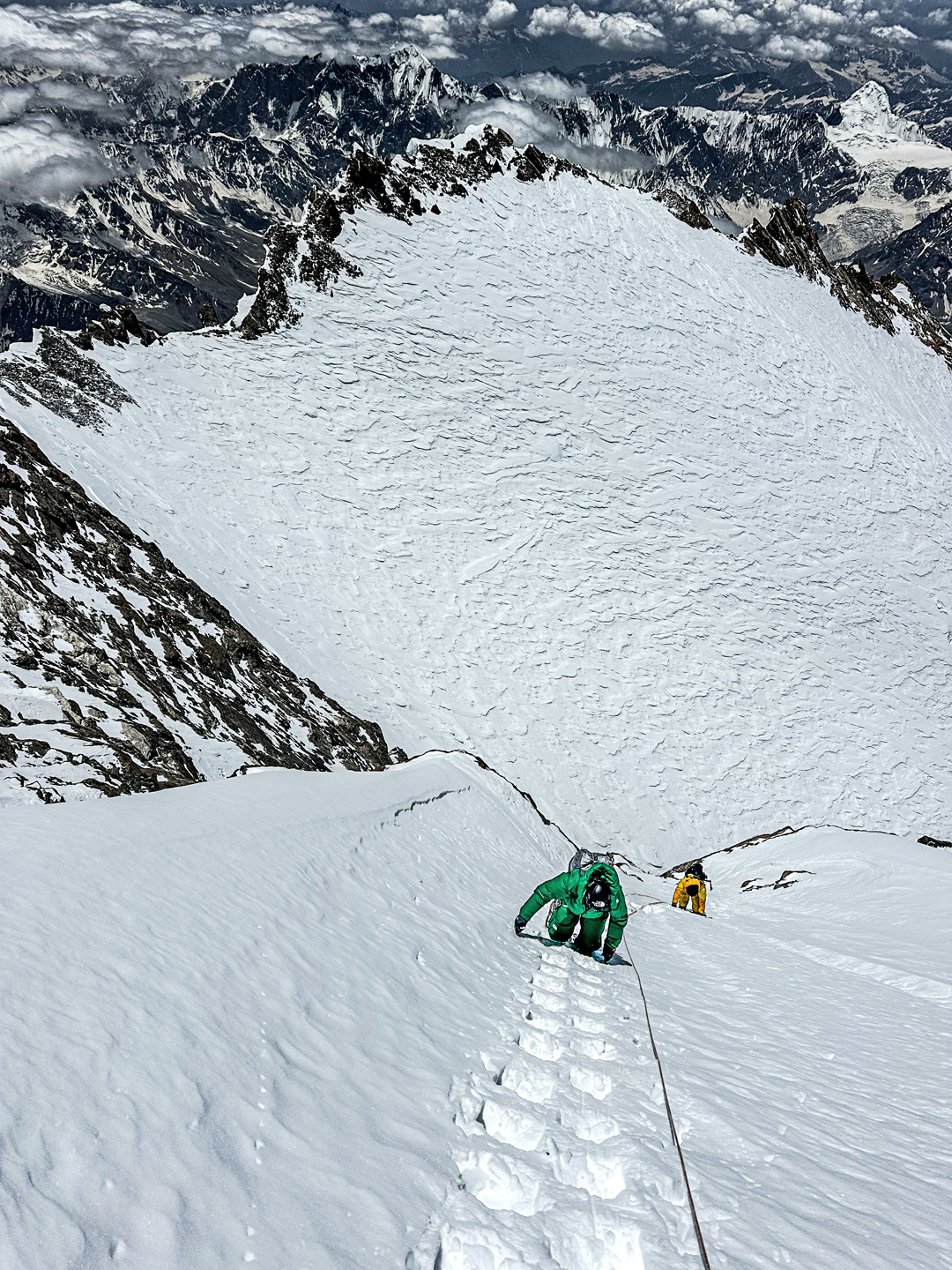
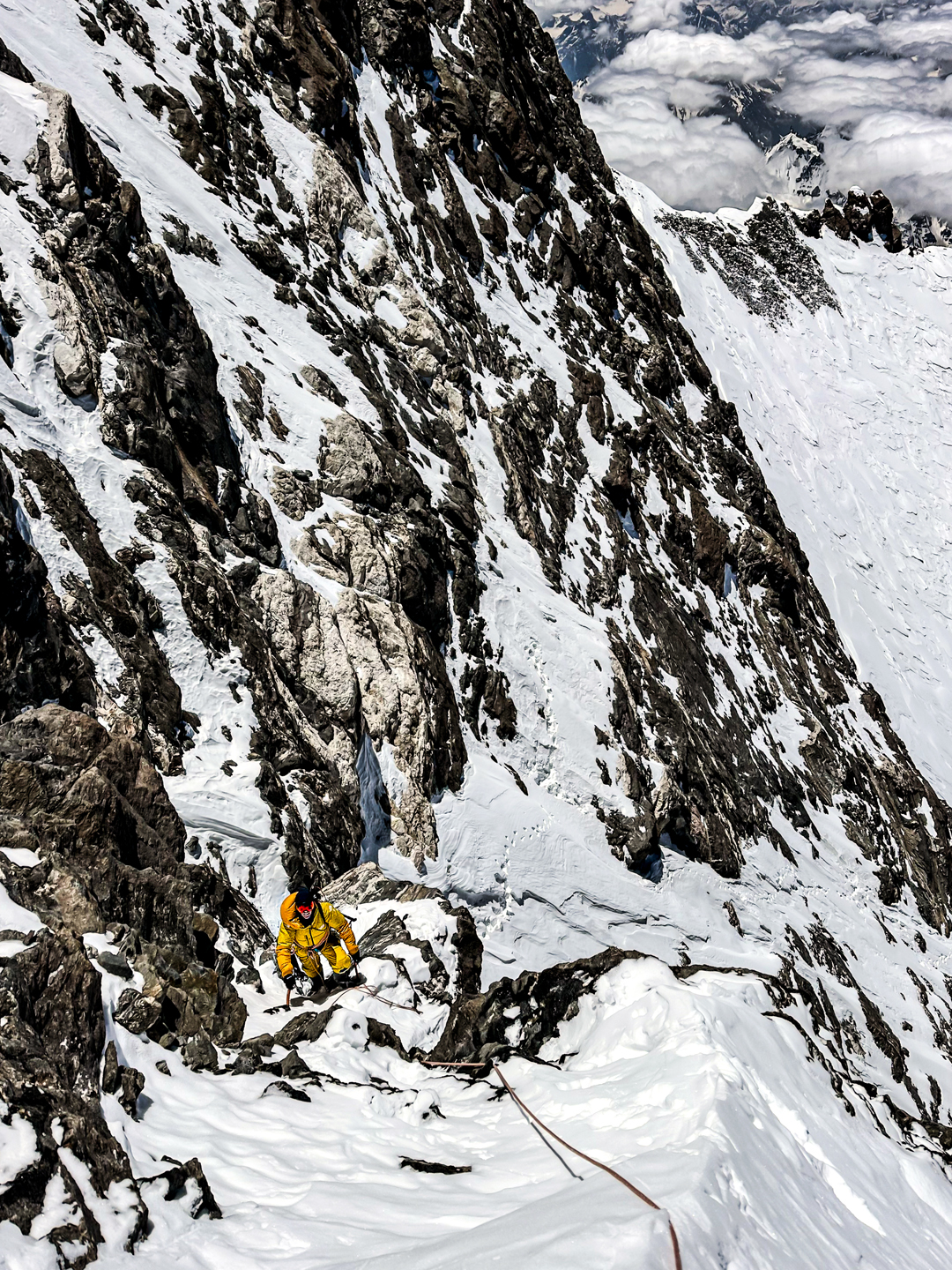
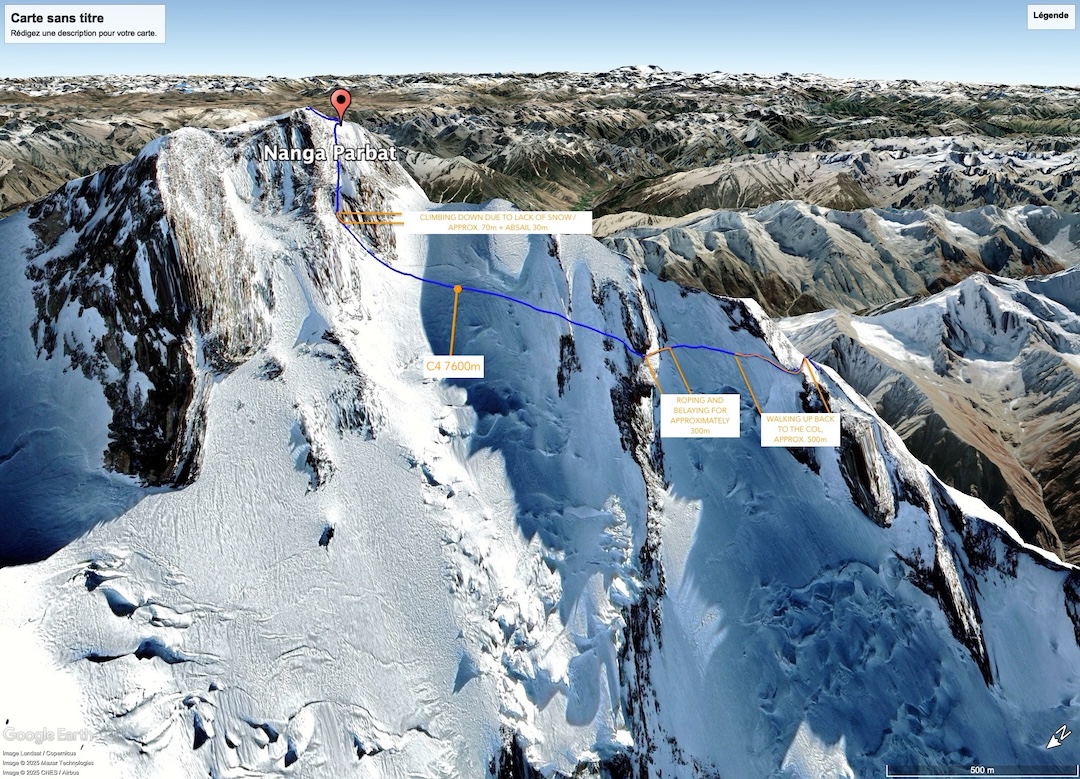
On the third day, we climbed 35°–45° snow and a system of couloirs at around 45° to gain the 7,400-meter col on the Mazeno Ridge, where the route crosses onto the mountain’s northwest side. The next day, after a bit of a descent, we started the long traverse across the Diamir flank, crossing a rocky barrier where we needed to use the rope; the rock here was shitty and offered little in the way of protection. More snow took us to 300 meters of mixed, which brought us close to the Mazeno Ridge again. At around 7,800 meters, we roped up again (M3 60°–70°) to gain a snow platform on the ridge, then continued up to the summit by midafternoon on June 24.
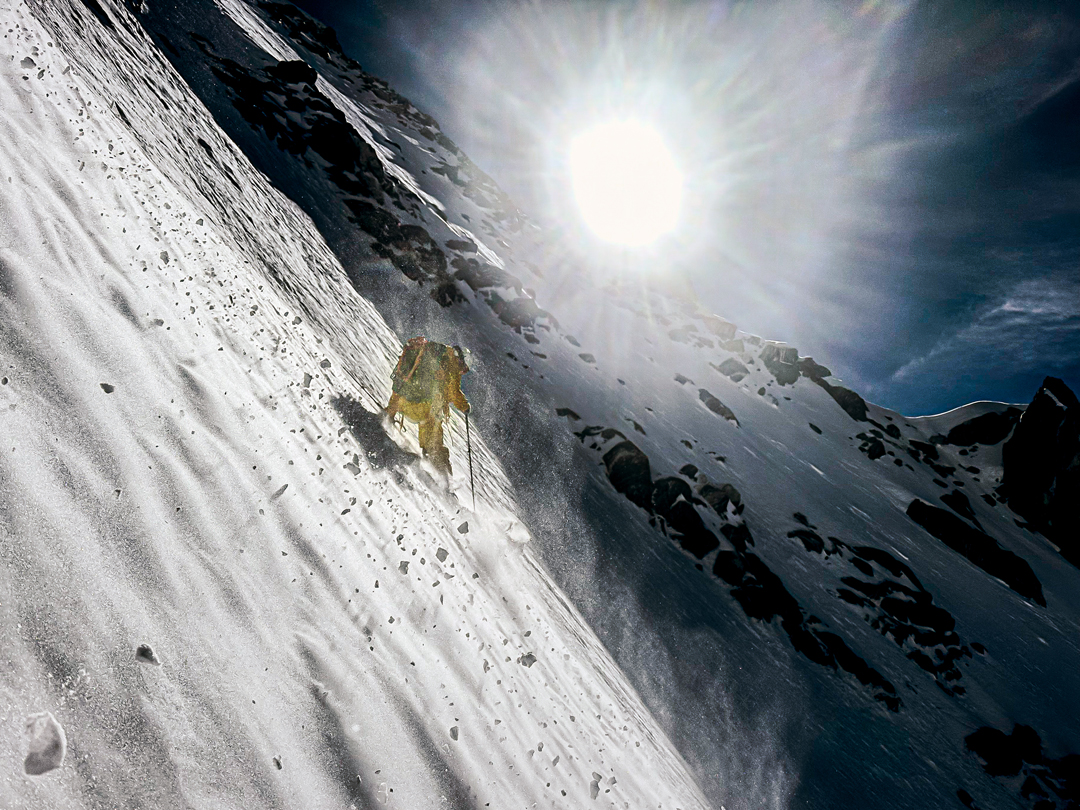
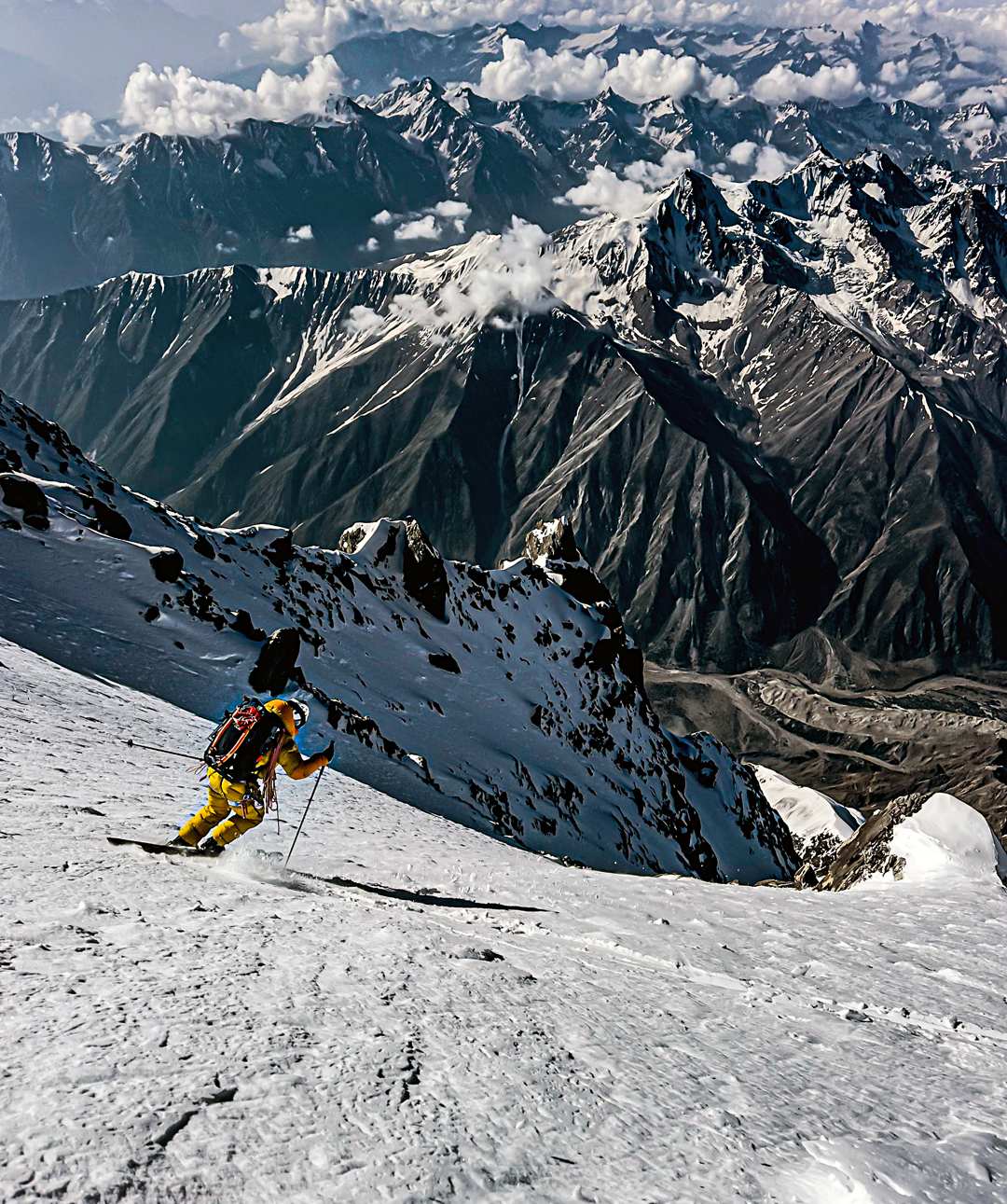
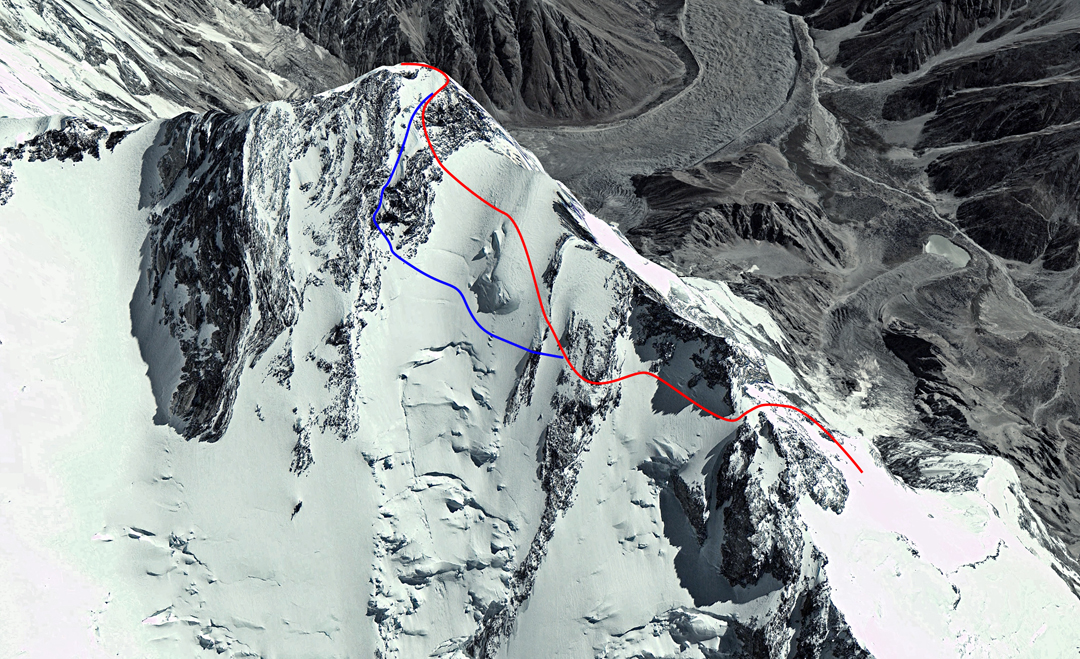
On skis, we descended to the snow platform and then, rather than rappel the mixed section, we took a snow ramp directly down the Diamir Face. We were able to ski around 75 percent of this ramp—lack of snow forced us to remove skis for the remainder. At one point we made a 30-meter rappel. At around 6 p.m., and from an altitude of 7,700 meters, David deployed his paraglider and was able to fly down to base camp in around half an hour. He had hoped to launch from the summit, but it was too windy.
Boris and I continued down, he on foot, I on skis. Fading light and exhaustion forced us to stop at 7,600 meters and camp. As well as carrying skis to the top, we had taken a tent, mattress, and stove (but no sleeping bag), as we knew we wouldn’t make it back to our 7,400-meter camp that day.
The night was very cold, and we didn’t leave the next day until around 10 a.m. We skied to the rocky barrier, where we had to rope up and belay a traverse of approximately 300 meters, then reached our 7,400-meter camp on the col at 4 p.m. We enjoyed a better night there, with a sleeping bag. The next day, with heavy packs, we descended to Camp 1 at 6,000 meters. We skied almost all the way, though a 60-meter ice pitch required rappels.
Due to the heat, the lower route looked like a battlefield, the snow filled with rocks. On June 27, we rappelled the first 200 meters to reach the main couloir, skied for another 200 meters, then downclimbed and skied (in survival mode) to 4,500 meters. From there, we walked to base camp. This climb and ski descent were the fulfillment of a seven-year dream for Boris and me. [Editor’s Note: This was the first ski descent of the Rupal side of Nanga Parbat and first ski descent off the summit. It was also the first alpine-style ascent of the Schell Route (which itself has received fewer than 10 ascents) and only the second by a woman.]
—Tiphaine Duperier, France
Media Gallery