
Hasho Peak II, east pillar and south-southeast ridge
Pakistan, Karakoram, Tagas Group, Lachit Valley
Yudai Suzuki, Hiroki Yamamoto, and I arrived in Lachit village just four days after leaving Japan. We trekked north and established base camp on the Lachit Glacier at 4,200 meters, then spent much time in reconnaissance and acclimatization.
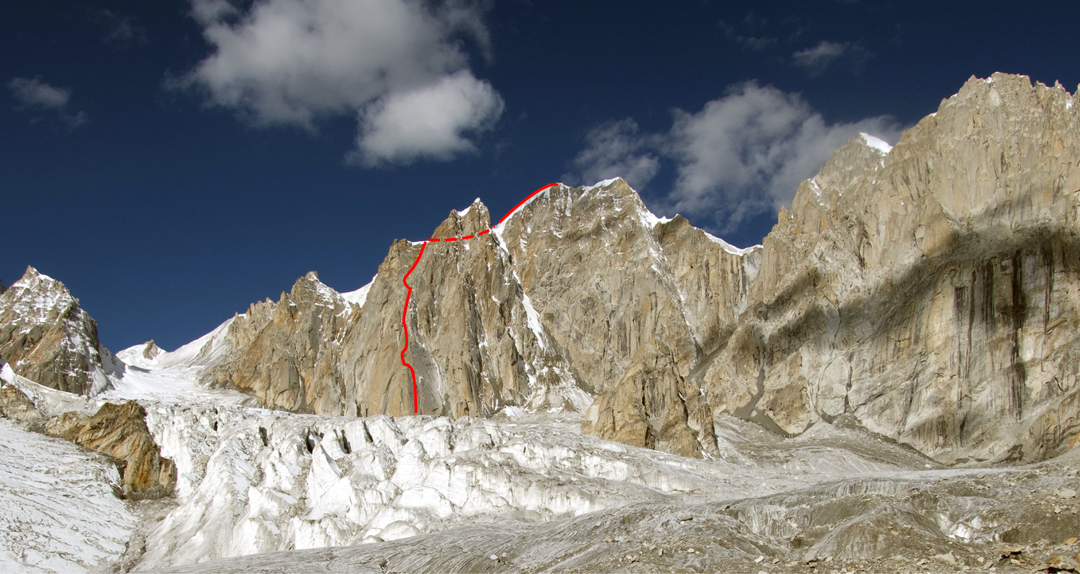
Our original objectives had been the north face of Ogre (a.k.a. Ogre Pyramid, map height 6,058m) from the Fourth Lachit Glacier (a western arm of the main glacier) and the south face of Changi II (6,250m) from the East Lachit Glacier. However, both mountains were in poor condition. Impressed by the sight of sound rock and a logical line on the east pillar of Hasho Peak II (6,080m, 35°20’42.28”N, 76°29’24.38”E), we made this our main objective. The pillar appeared sheltered from the frequent nearby rockfall on the east side of the mountain, and the seracs and snow slopes above also looked feasible.
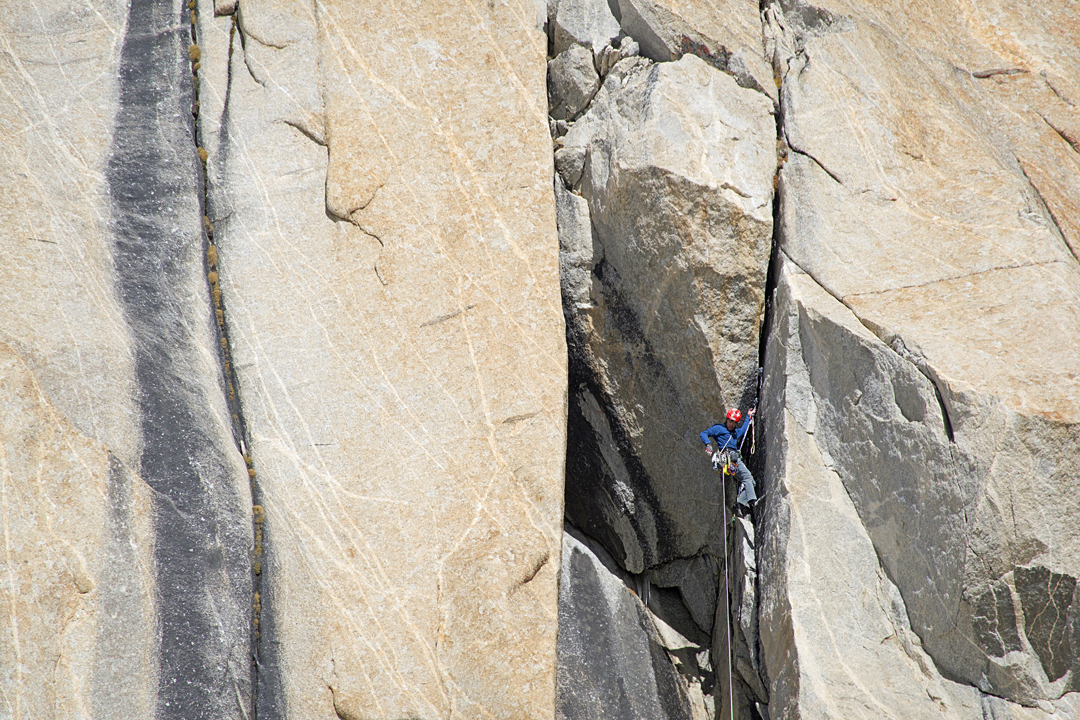
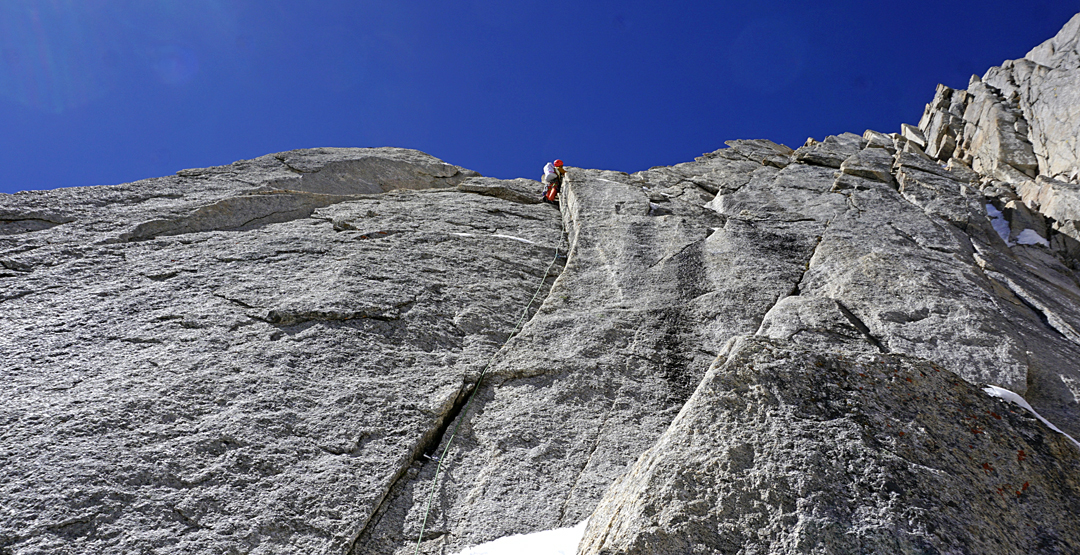
On September 10, we moved to an advanced base on the West Lachit Glacier. We left at 2 a.m. the following day, reaching the foot of the pillar at dawn. The wall looked steep, but it featured a continuous crack system. Yudai took the first lead.
We quickly found the cracks choked with dirt, making free climbing difficult. When the initial crack met a roof, Yudai traversed right using aid. A No. 5 Camalot barely fit. Toward the exit, he switched to free climbing, reached a small ledge, and continued on easier ground for another 20 meters to a belay. Hiroki led left into a steeper crack system, where he had to scrape out mud with his axe. It was all taking longer than expected, and by late morning we realized a two-day round trip was unlikely.
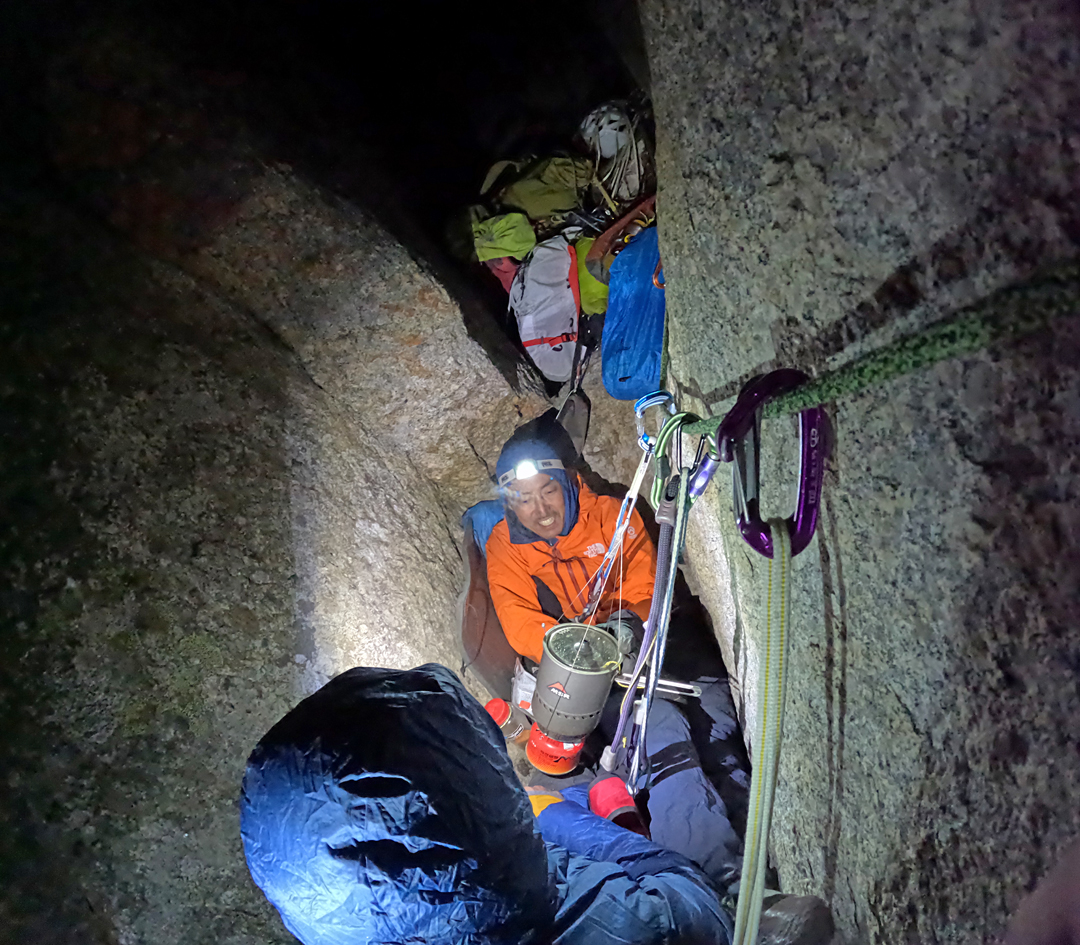
On the shaded north side, Hiroki led several damp, grassy pitches until he yelled down to us, “This is flat enough to sit on.” In the twilight, Yudai and I climbed up in anticipation, only to find a narrow recess between rocks, like a narrow bathtub in a Tokyo studio apartment, though at least sheltered from the wind. The ridge above was sharp and exposed, so we stuffed the cavity below us with boots, packs, and food and tried to settle in. Hiroki eventually elected to sleep outside the crevice on a sloping platform while Yudai and I curled up together inside.
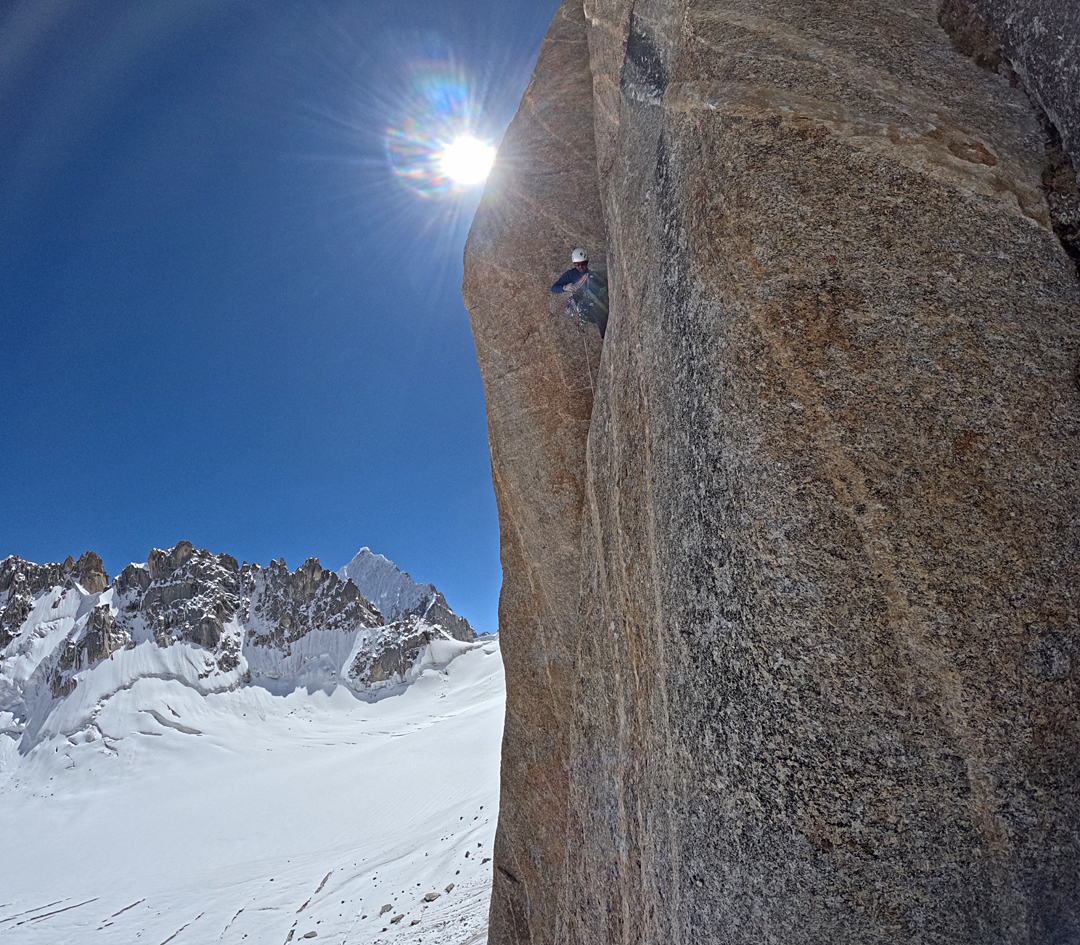
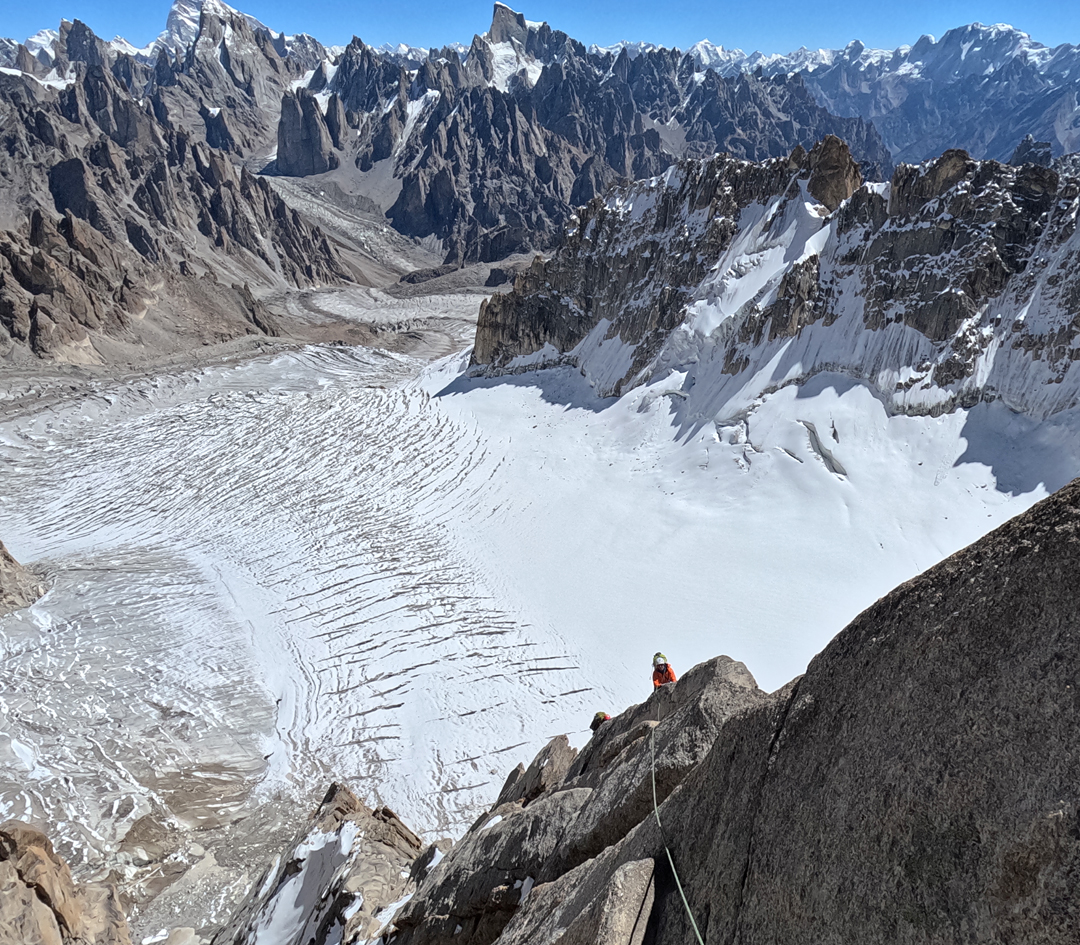
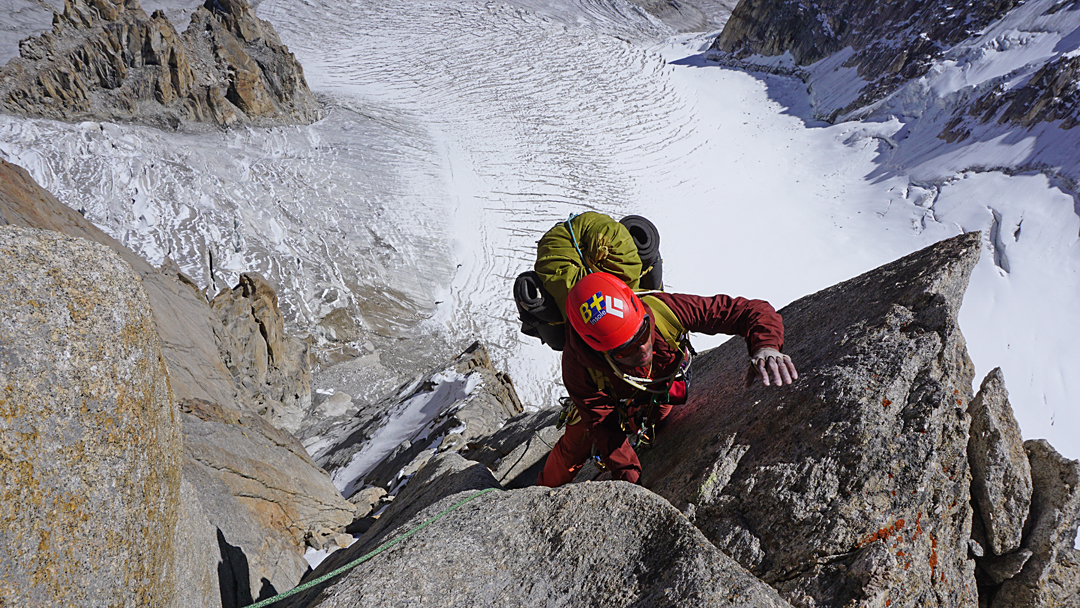
In the morning, I led along the ridge, finding small seams for protection. The angle eased as we entered mixed terrain. Several crack systems branched upward like an Amida-kuji ladder diagram; the cracks we chose gave fine climbing that led directly to the upper ridge, an elegant arête with Chamonix-like granite. We simul-climbed toward a hanging serac barrier, fearing we might have to tunnel part of this section. However, Hiroki found a gully that led safely past the serac to a snow shoulder on the summit ridge, where we could finally pitch the tent. The night was cold, particularly for Hiroki, who had only a lightweight sleeping bag.
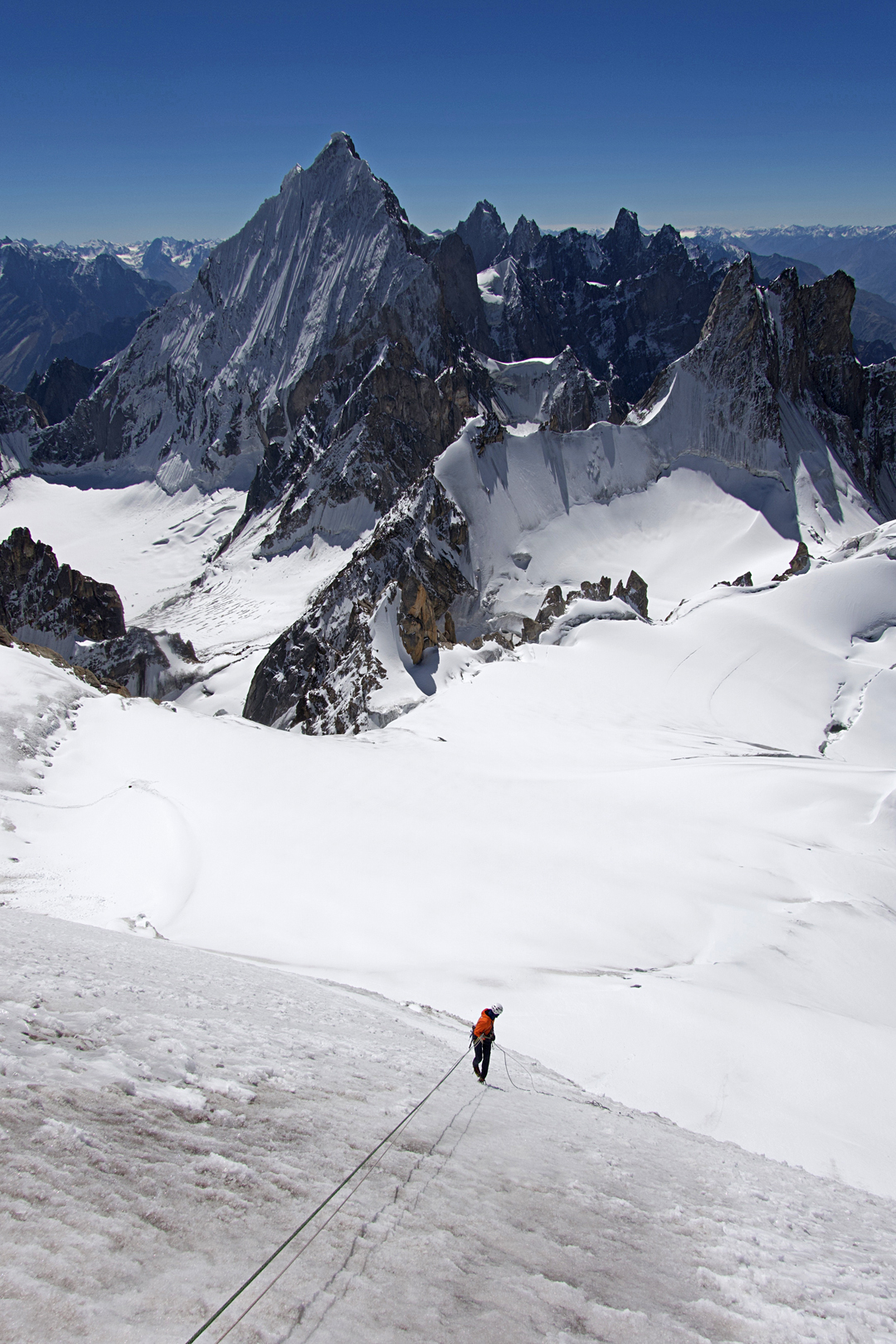
The morning of September 13 dawned clear. We were now on the south-southeast ridge, with blue ice ten centimeters below firm snow. [This ridge was climbed to make the first ascent of the peak in 2019, approached from the Khane Valley to the west. See AAJ 2020.] Hiroki had brought winter boots, monopoints, and two technical axes, and he led this section; Yudai and I followed in summer boots and with one aluminum axe each. After nearly 300 meters of steady climbing, we reached the summit at around 9 a.m.
Good ice on the ridge allowed a smooth descent from Abalakov anchors, and we quickly regained our high camp. We continued down the ridge to a wide plateau. Crossing this toward the West Lachit Glacier proved serious: There were many hidden crevasses, into which I fell around ten times, stopping on each occasion below waist level. Several rappels were needed to reach the glacier, and we returned to advanced base around 5 p.m. We named our route Fuku (880m, 5.10 A1 60°).
—Genki Narumi, Japan
Media Gallery