
Hidden Peak, Northwest and South Faces, Nearly to Summit, and Trident South Face Attempt
Pakistan, Karakoram, Tagas Group, Khane Valley
At the start of July, after completing the necessary logistics in Skardu, Joseba Iztueta, Ekaitz Maiz, Ibon Mendia, and I drove in a 4x4 to the Hushe Valley. By this time, several of us were struggling with severe stomach issues, and I personally doubted whether I’d be able to start the approach to base camp the following day. However, after waking early, we all began walking, and after two, long, hot days, we finally reached a base camp at 4,500 meters in the Khane Valley.
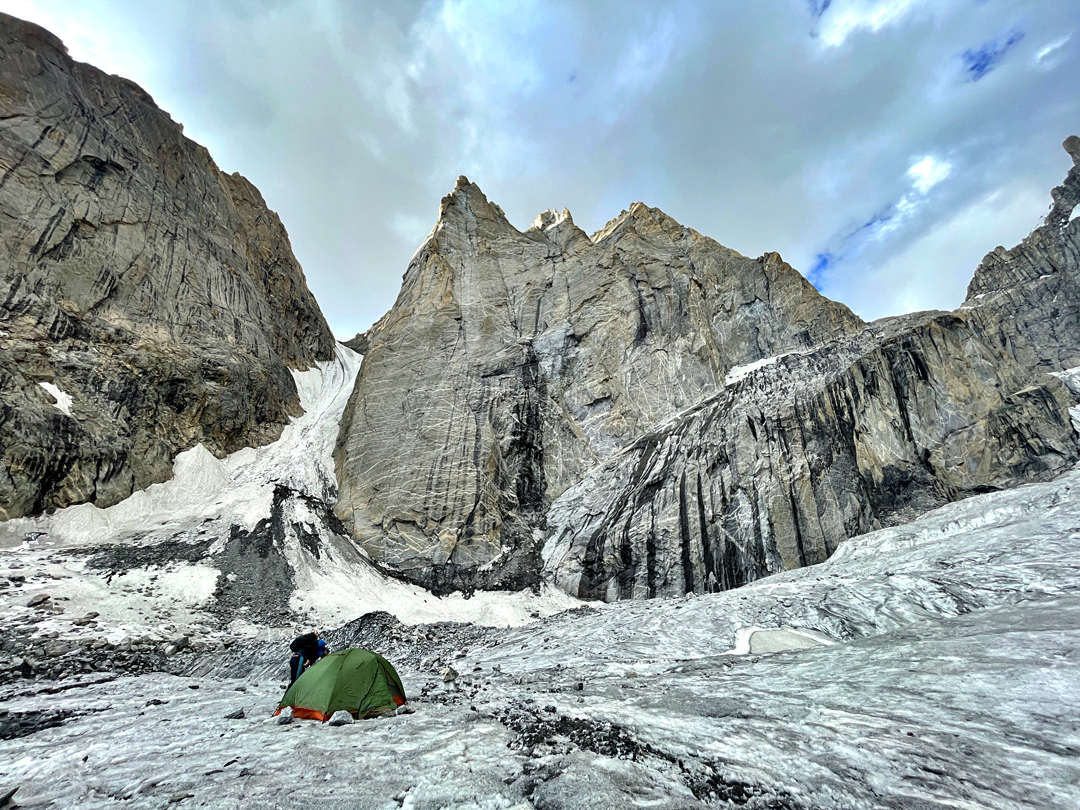
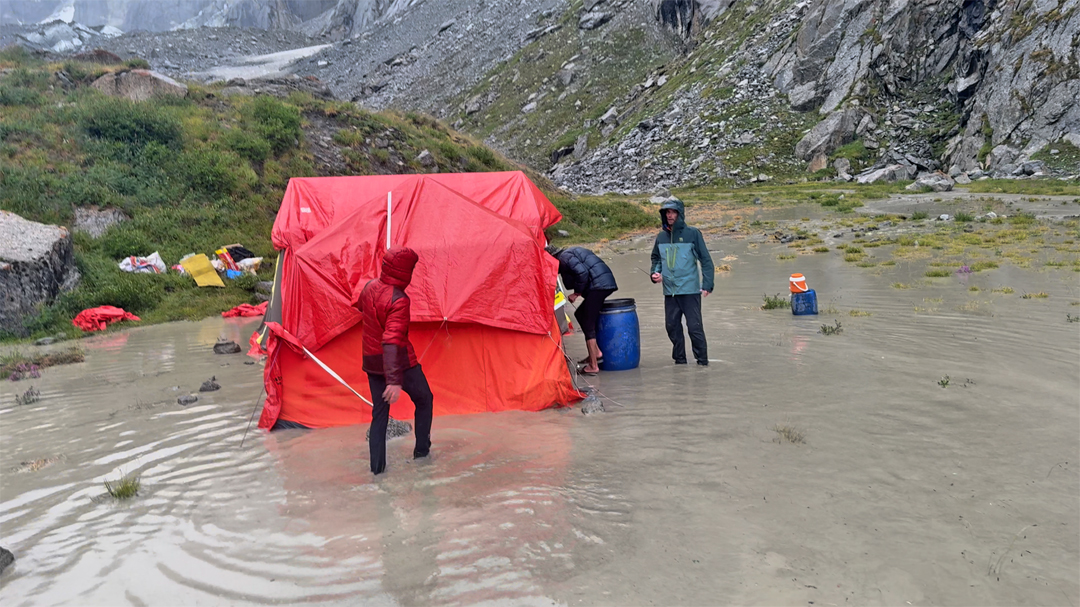
The valley was beautiful but turned out to be much narrower and more exposed to objective danger than we had expected. The high temperatures triggered frequent rockfall from all sides, making it extremely hazardous to approach most of the walls and peaks. Despite the possibilities the area offered, it was difficult to find safe, natural lines. The weather didn’t help either: Persistent rain made it impossible to undertake climbs that required more than a night away from base camp.
During the endless waits for better weather, it was strange to think that we came from a world where everything moved at an incredibly fast pace — permanently connected to the internet, social media, and a reality so far removed from the calm that surrounded us here. I find these experiences deeply enriching. They’ve taught me to manage frustration and motivation, to disconnect from the chaos of daily life, and to reconnect with myself, the natural world, and the people with whom I share it.
On July 7, Ibon and I carried gear to the base of Hidden Tower (5,830m or higher, Peak 59 on the Wala map, 35°19’35.69”N, 76°29’10.04”E; this peak was named by a 2011 Bulgarian expedition, with an estimated altitude of 5,830 meters, but thought to be higher; see AAJ 2012). We had spotted a possible line on the tower. At the same time, Ekaitz and Joseba scoped the Trident (5,550m or higher, Peak 26 on the Wala map, 35°20’33.00”N, 76°27’51.77”E). They found a promising crack system on the left side of the south face, and on July 13, they went back and fixed the first 200 meters.
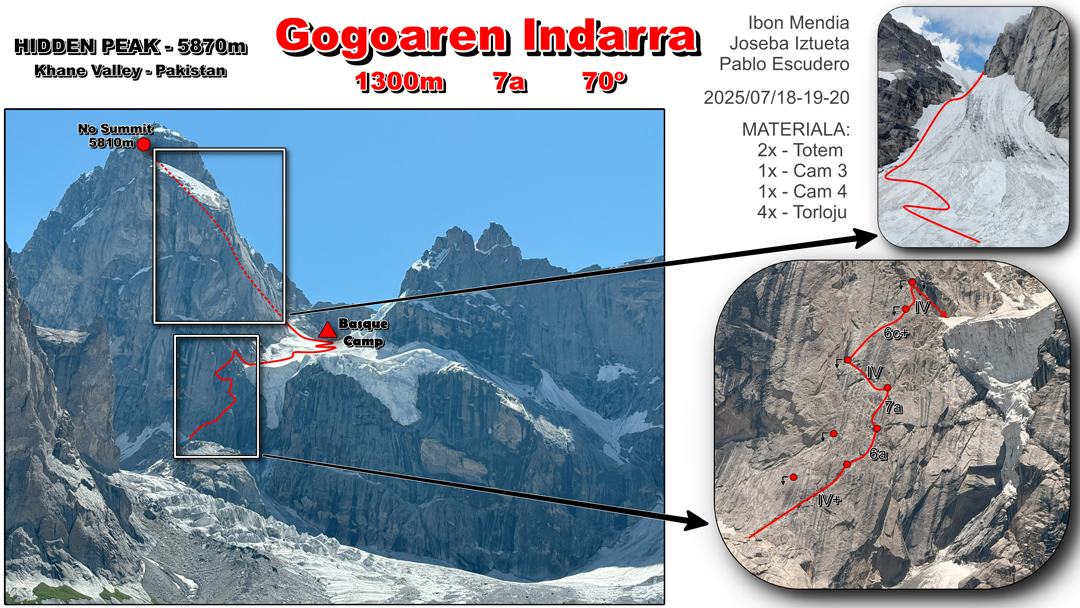
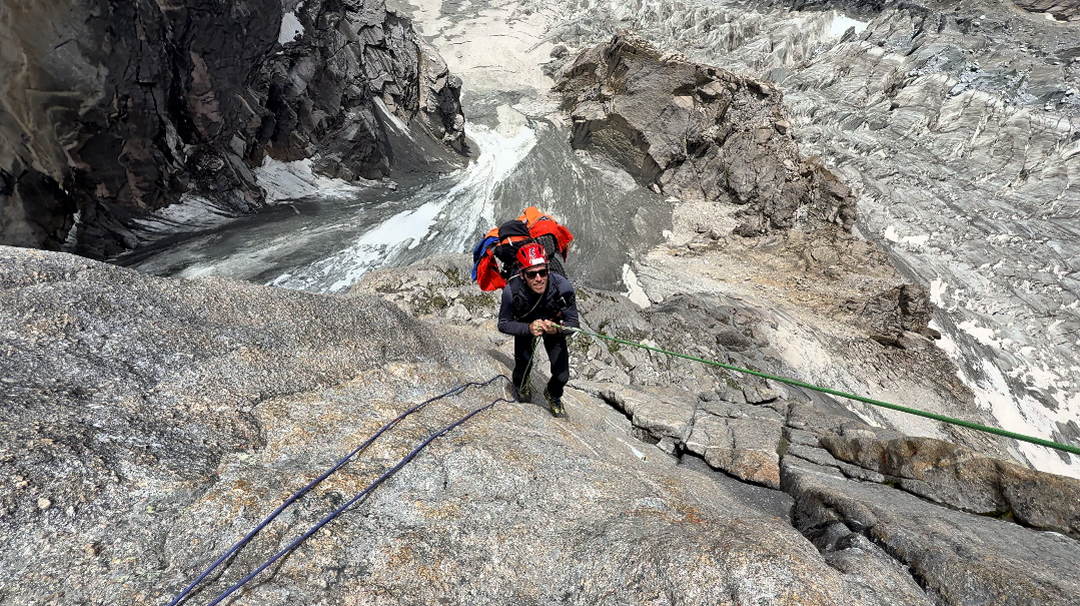
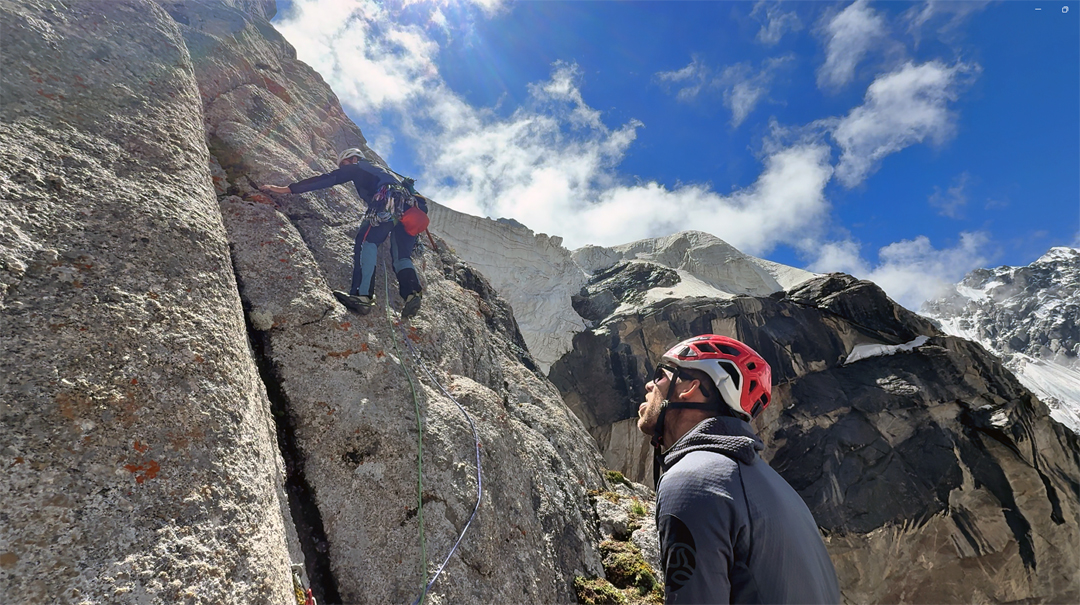
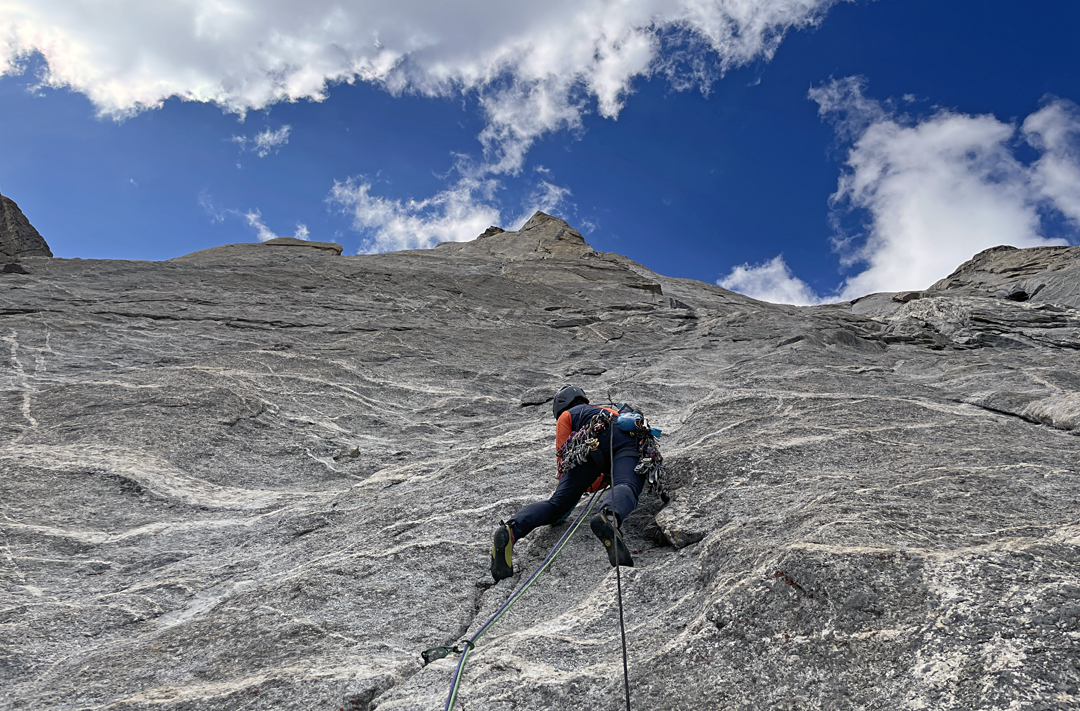
After weeks of rain, a short weather window was promised. On July 18, after much deliberation due to the deteriorated snow conditions, we started up the lower rock section on the northwest face, staying as far as possible left of the threatening hanging serac that growled above. We climbed efficiently and reached a small col where we camped. The mountains rewarded us with an unforgettable sunset.
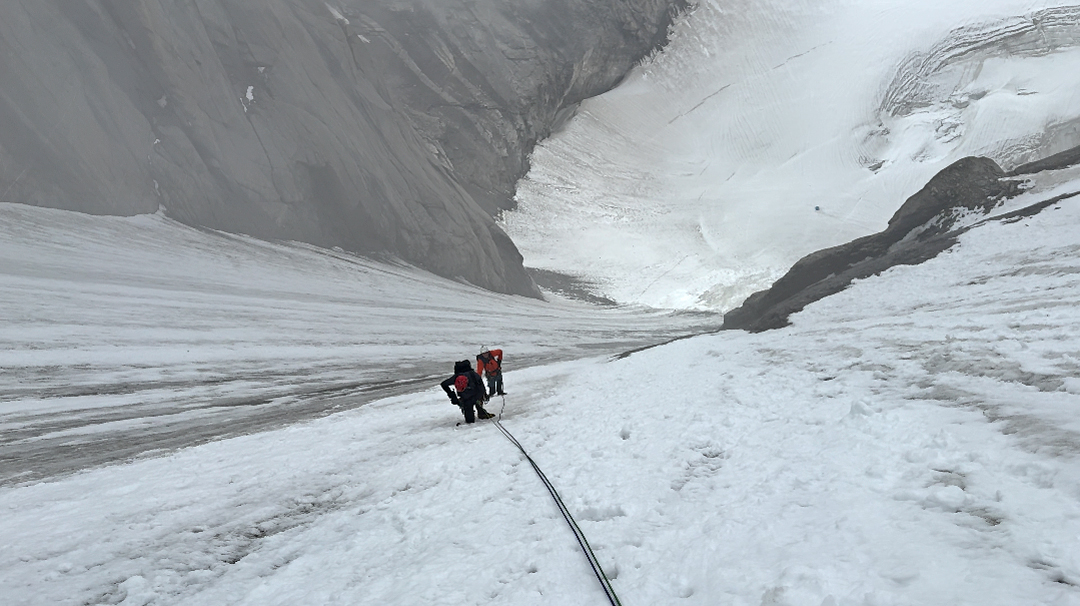
The next day, we continued up a broad snow and ice ramp (70° max) on the south face. We were eventually caught in a storm and forced to retreat just 60 to 70 meters below the summit. To that point, we had climbed 1,300 meters at 7a 70°. We rappelled the ramp, completely soaked, and finally made it to our small tent, where the stove’s heat eased our shivering. We returned to base camp having missed the cherry on top but eaten the whole cake.
After more very poor weather, Ibon and I attempted the south-southeast ridge of Hasho Peak II (6,080m, 35°20'42.28"N, 76°29'24.38"E; see AAJ 2020) but were turned around by a chaotic maze of seracs. Then, on July 28, Ekaitz and Joseba made another attempt on the Trident. Conditions were poor, their fixed ropes were soaked, progress was slow, and continuous rockfall forced them to retreat.
On August 2, we started our return, our porters helping us to navigate swollen rivers, where many bridges had been washed away. Even a 15-meter-wide concrete bridge at Khane village had disappeared. The power of nature is astounding.
Before returning to Skardu, we trekked into the Nangma Valley, which we found wider, safer, and less prone to rockfall. It's a place to which we will surely return.
Pablo Escudero, Basque Country, Spain
Media Gallery