
Arches Peak, North Face, Central Buttress
Washington, North Cascades
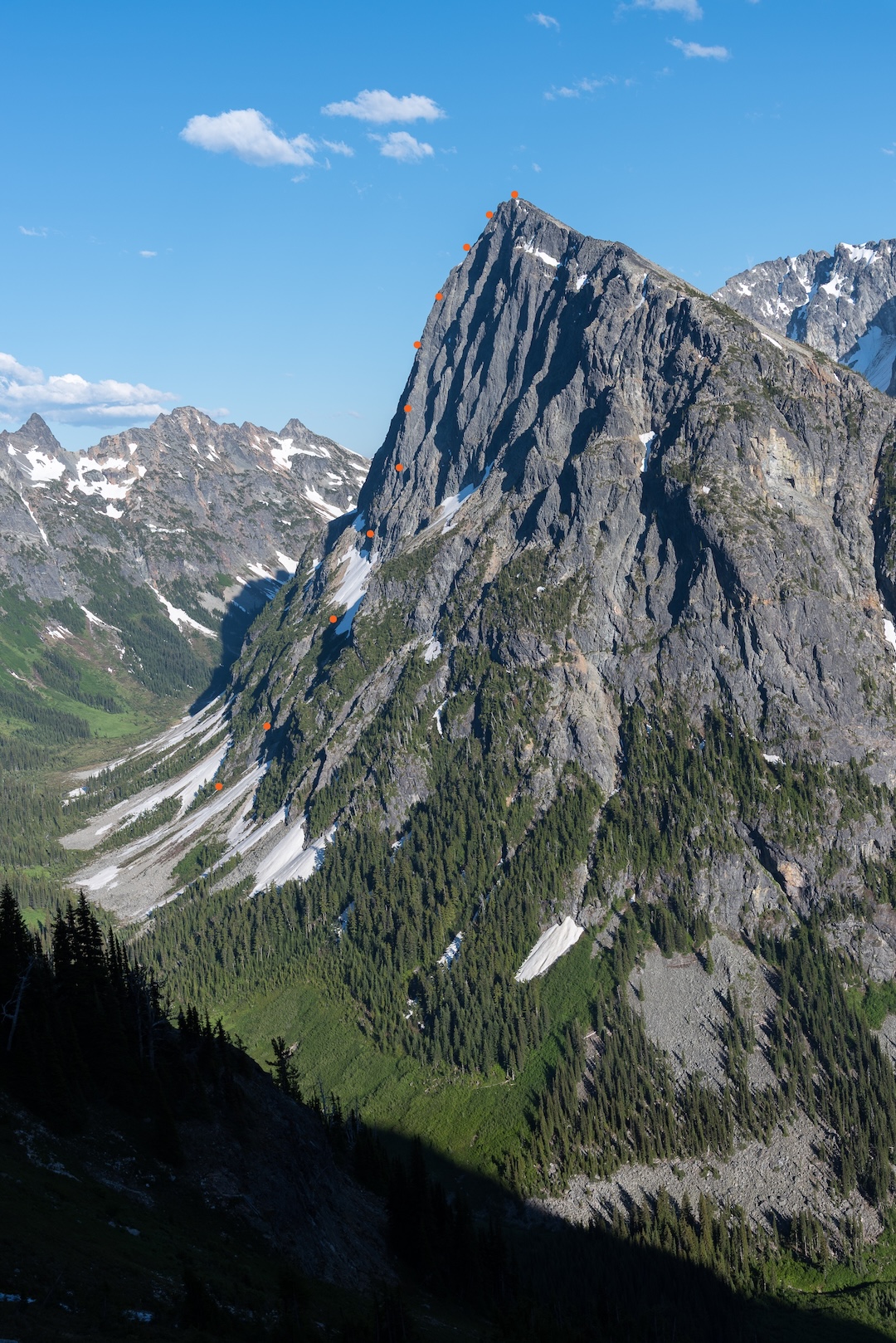
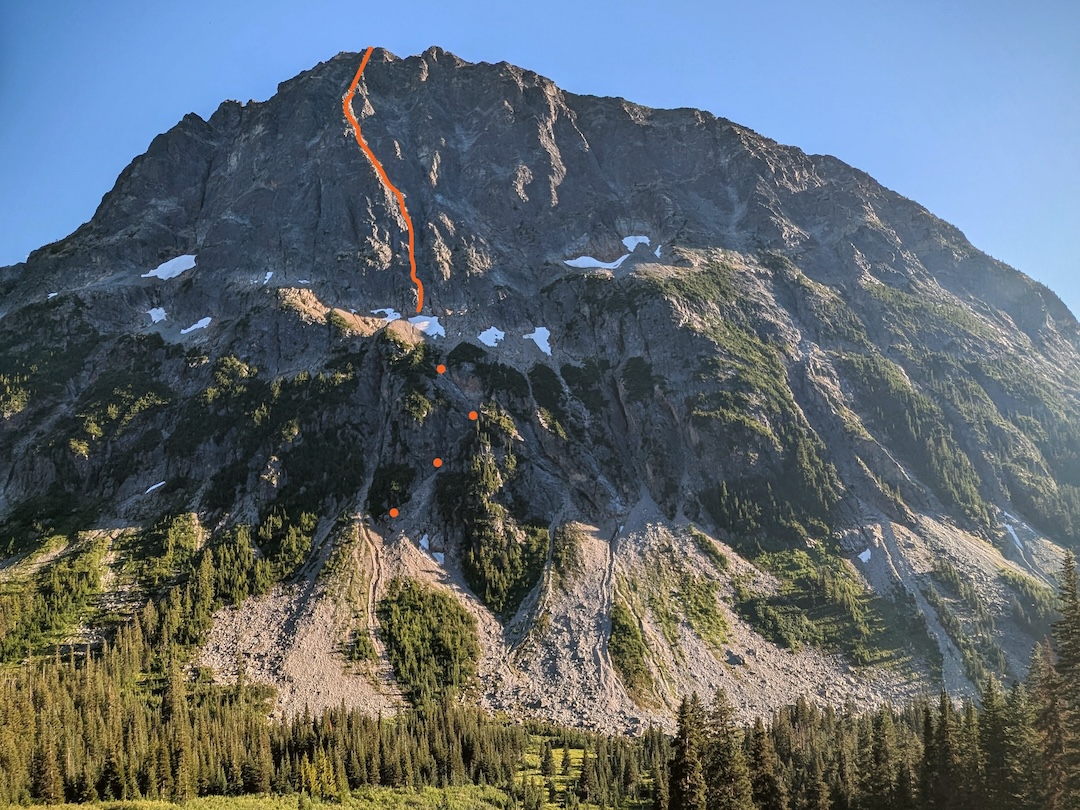
Visible to anyone cresting Easy Pass, the striking north face of Arches Peak (7,945’, 48.559545, -120.853425)—affectionately known as “Little J-Berg” for its structural resemblance to the more formidable Johannesburg Mountain, 12 miles to the southwest—features three primary buttresses that demand attention. On August 3, Rolf Larson and I established what’s likely the first route up the central and most prominent buttress.
After nearly 1,000 vertical feet of hiking and fourth-class scrambling through a weakness in the lower rampart, we began roped climbing from a prominent shelf directly below the sunlit central buttress. From here, our route gained another 1,600 feet or so. The first pitch proved to be the most sustained, featuring steep 5.7 moves on high-quality Skagit gneiss. The climbing then wound through occasional hand cracks and laser-cut finger cracks, interspersed with mini-headwalls that offered plenty of alpine character. We encountered a few stretches of fourth- and low-fifth-class terrain that allowed for unroped scrambling; the more technical sections provided solid, engaging movement and adequate protection.
We completed the ascent in ten roped pitches plus scrambling. After topping out on the western false summit, we scrambled easily to the main top. The descent was a gentlemanly walk-off to the southeast—no crampons required, but indulgence in the ample blueberries is mandatory.
To our knowledge, only one other route has been recorded on the north face: Plumline Buttress (Costie-Filley-Martenson-Small, 1977; see AAJ 1978), which ascends the easternmost buttress. (The late, prolific Roger Jung also apparently soloed the face, but who knows which way he went.) For those comfortable with moderate runouts on easier ground, we recommend the Central Buttress (1,600’, III 5.7) as a fine alpine ramble with reasonable access. Ambitious folks might target the steeper, thinner buttress just west of our climb.
—Eric Wehrly
Media Gallery