
George Foster Hurley, 1935–2026
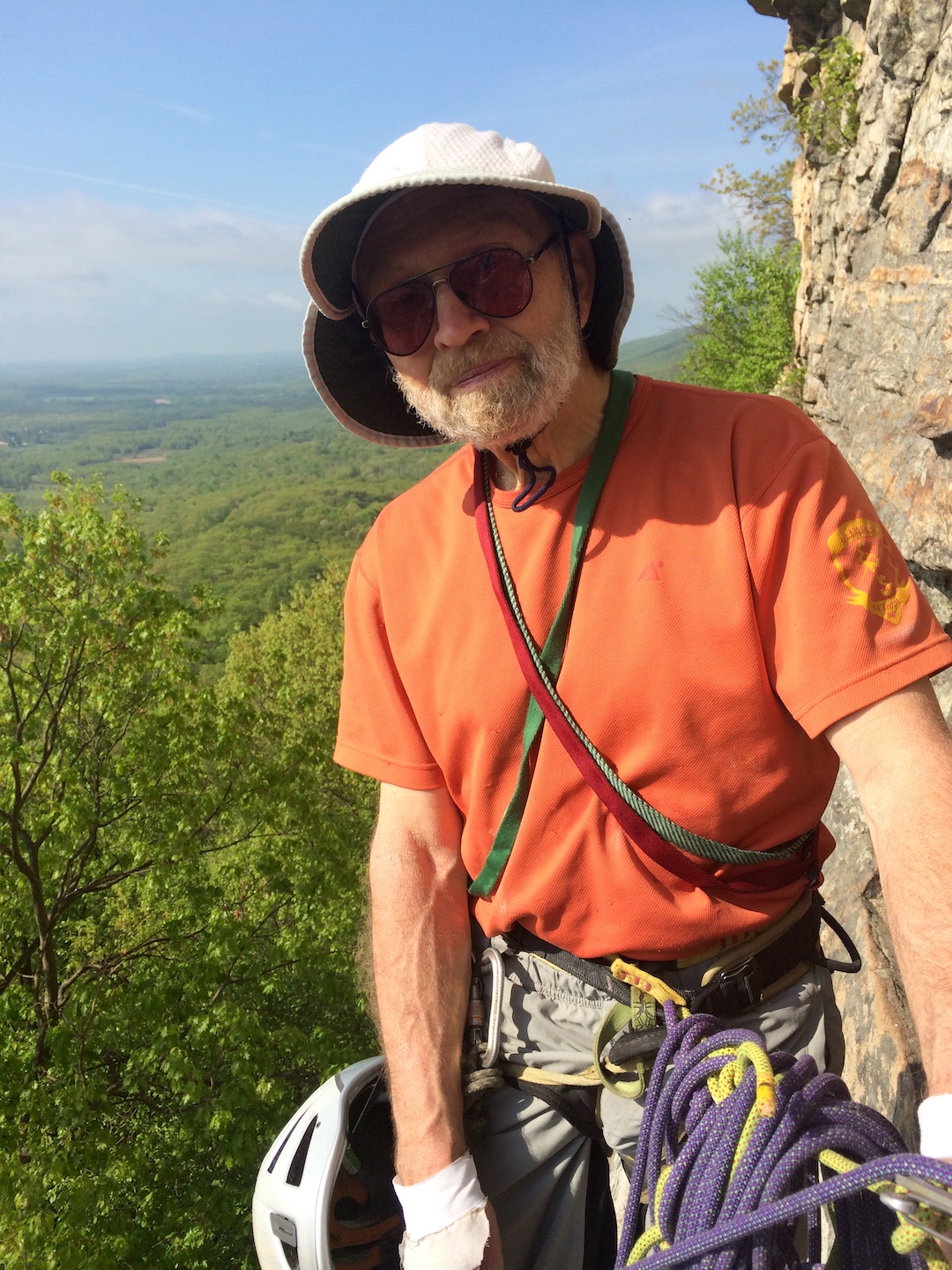
George Foster Hurley, 91, died on March 6 at Taylor Community assisted-living facility in Wolfeboro, New Hampshire, after a short decline.
It’s difficult to write about someone who has spent 91 years living life on his own terms and traveling around the world, which is what George and his wife of over 60 years, Jean, did. I’ve known George for close to 35 years, and yet there was always something new and interesting to learn about him. We shared dinner tables, bottles of red wine, coffee, erudite conversation, road trips, and both ends of a rope, and I intently listened to him recite Chaucer in Middle English—outdoors, across cliff walls. The last time for Chaucer was at the Gunks, in 2017, as I followed him on the last part of the three-pitch Yum Yum Yab Yum.
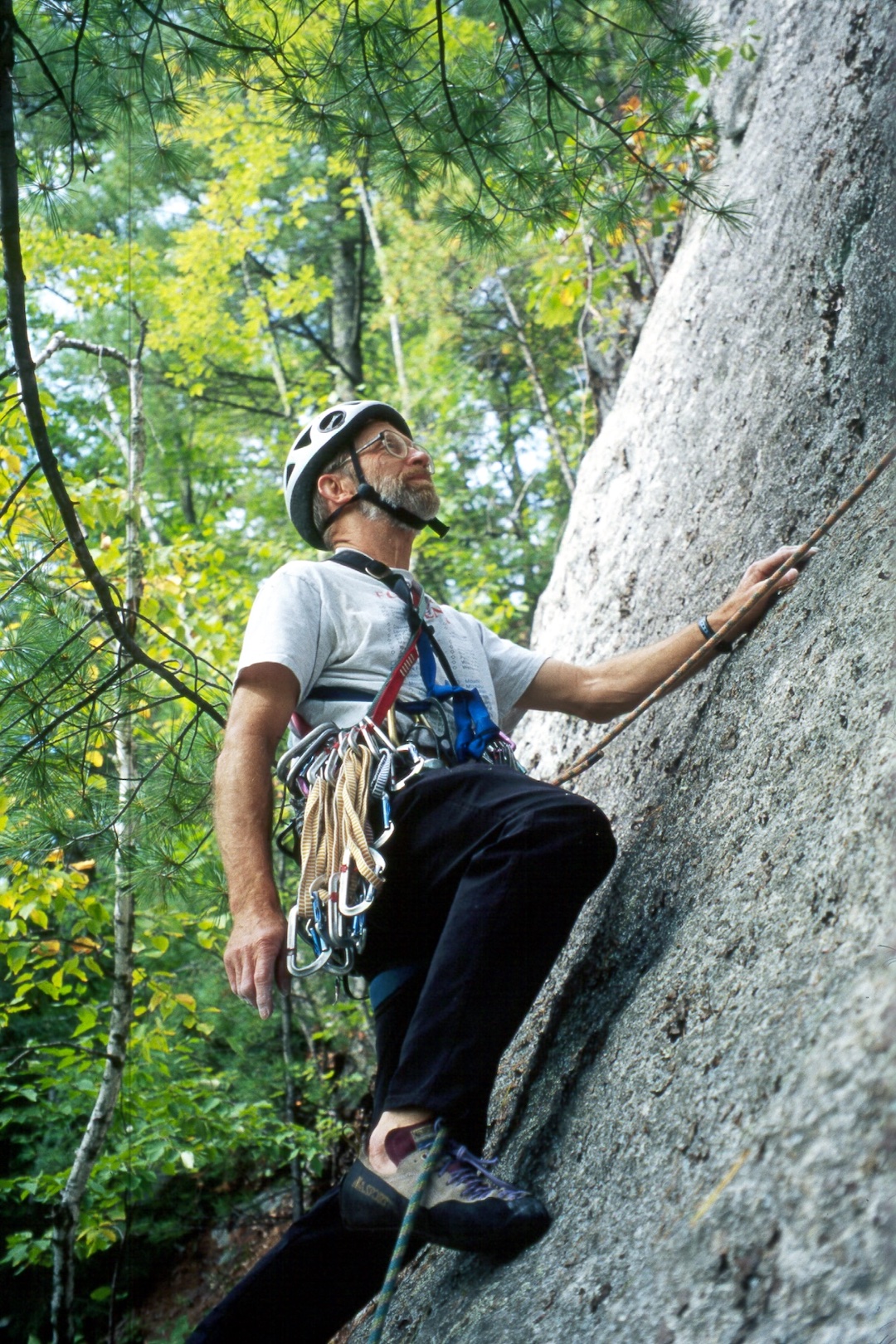
George, in his quiet way, was a major American climber, continuing until age 90 and establishing new routes up until age 89. While no one has catalogued the number of his first ascents, when asked at age 50 he admitted to “several hundred,” and then he climbed for another 40 years!
George is possibly best known for his role in the first ascent of the Titan, a roughly 900-foot spire in the Fisher Towers of the Utah desert, with Layton Kor and Huntley Ingalls in 1962. Their climb was funded and documented by National Geographic magazine (and reported in the 1963 AAJ). Among his other routes was the popular D7 on the 900-foot Diamond face of Longs Peak, done in 1966 with Larry Dalke and Wayne Goss, one of several firsts on the Diamond and many other new routes in Rocky Mountain National Park, along with scores of routes across New Hampshire.
Chris Noonan of Intervale, New Hampshire, says, “He was always looking for something new, whether chossy or clean and solid. I think that's why climbing kept his interest until the end.”
George was born January 20, 1935, in Mount Vernon, Indiana. He graduated from Antioch College in Ohio in 1958 and moved to Boulder, Colorado, where he earned a master’s in literature from University of Colorado, and at one point taught a course on the "Bible As Literature."
During his years in Colorado, he climbed extensively in the Utah desert as well. George’s slideshow of his many desert climbs was highly regarded, done with an enthusiastic presentation and dry humor. He spoke not only at climbing shops and related gatherings, but also local libraries and nursing homes.
George met Jean Tuomi, a botany student, in 1959 when he helped rescue her and a friend from a ledge near Eldorado Canyon. The two married a year later. In 1962, after a season in the Alps, the couple began teaching at Numilyango College in Uganda, where they stayed for two years. They lived in a bungalow where, as a 1985 profile in Climbing magazine by Alison Osius noted, “they could hear panthers coughing at night and see monkeys, spitting cobras, green and black mambas, and gabon vipers.” Twice, the pair made the three-day walk-in to the Ruwenzori (“The Mountains of the Moon”), where they climbed half a dozen peaks. While they were in Uganda, the Austrian mountaineer Heinrich Harrer contacted them, having heard they were climbers, and asked them to join him in climbing Mt. Kenya.
From 1971 to 1972, they traveled the world again, climbing in Australia, New Zealand, Sri Lanka, India, and even southern Russia. In the 1970s, George taught climbing variously at Colorado Academy, Outward Bound, Jackson Hole Mountain Guides, Fantasy Ridge School of Alpinism, and the Boulder Mountaineer School. In 1978, he and Jean moved to North Conway, New Hampshire, where he became chief instructor at International Mountain Climbing School and a director at the local Mountain Rescue Service.
In 1984, George started guiding independently, both locally and internationally. His trips were to Mt. Kenya in East Africa, areas of North Wales and the Lake District in the U.K., and the Dolomites of Italy, as well as Colorado and Utah. He eventually formed the Mountain Guides Alliance with his fellow guides Alain Comeau and Kurt Winkler.
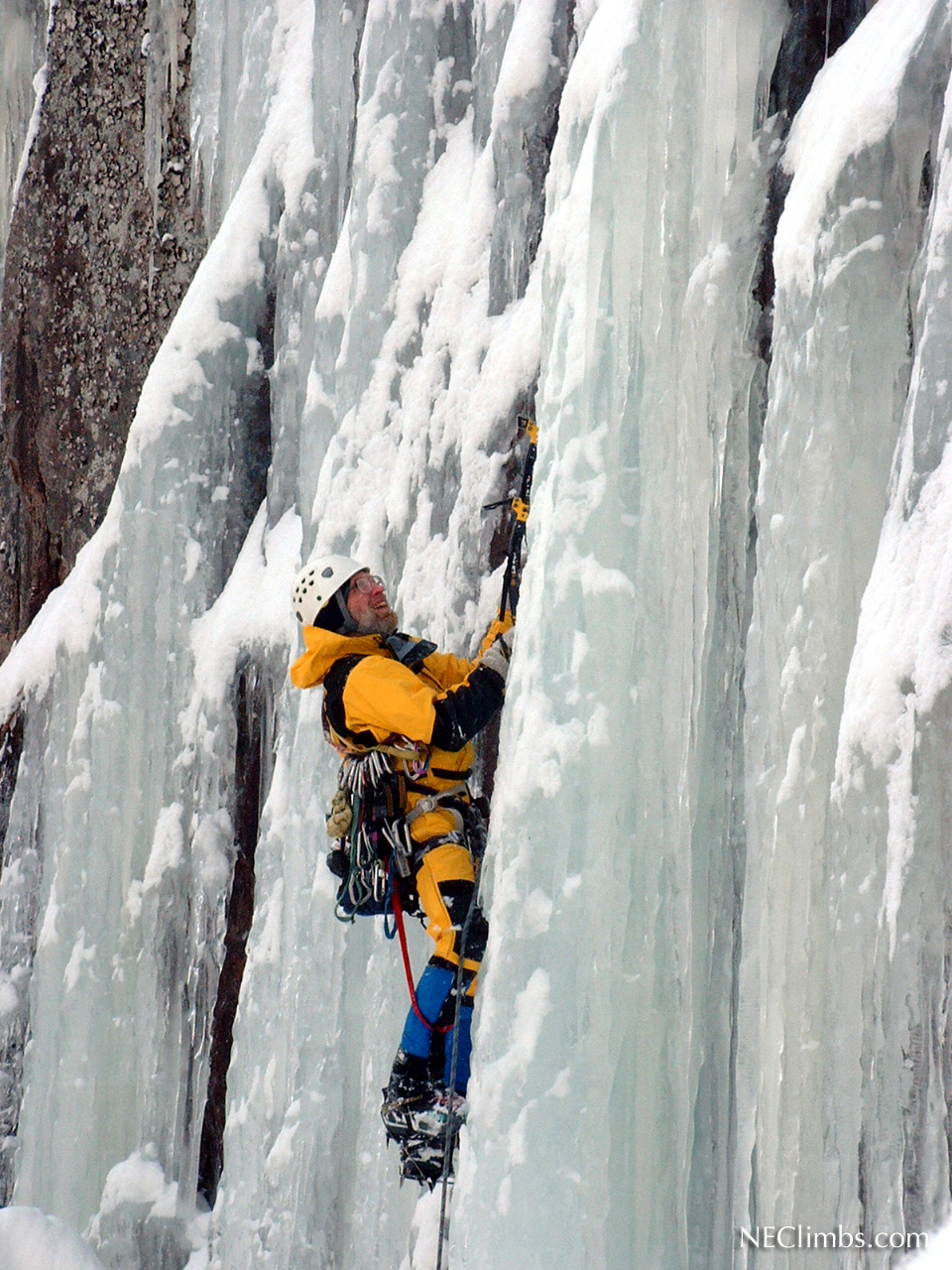
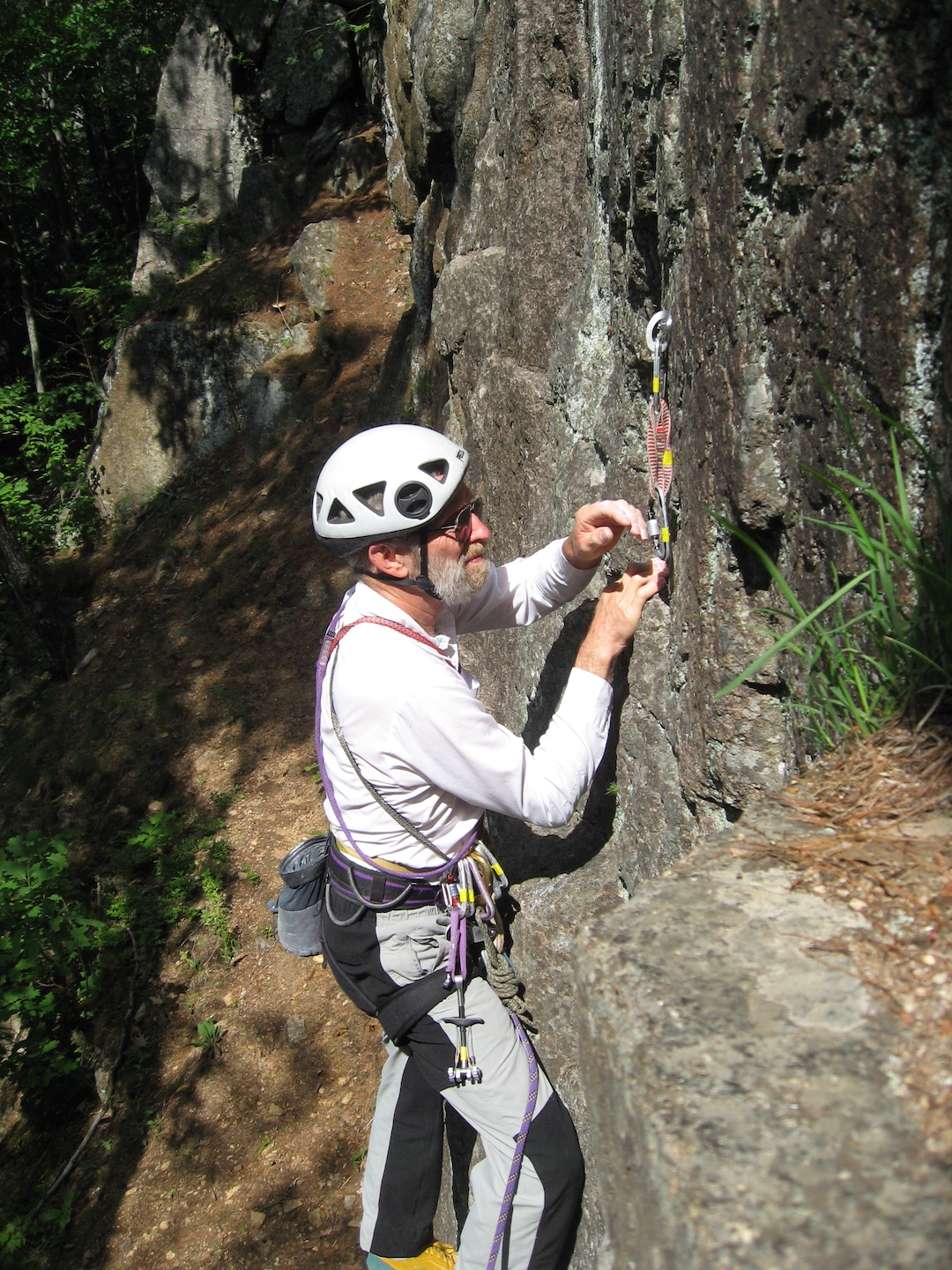
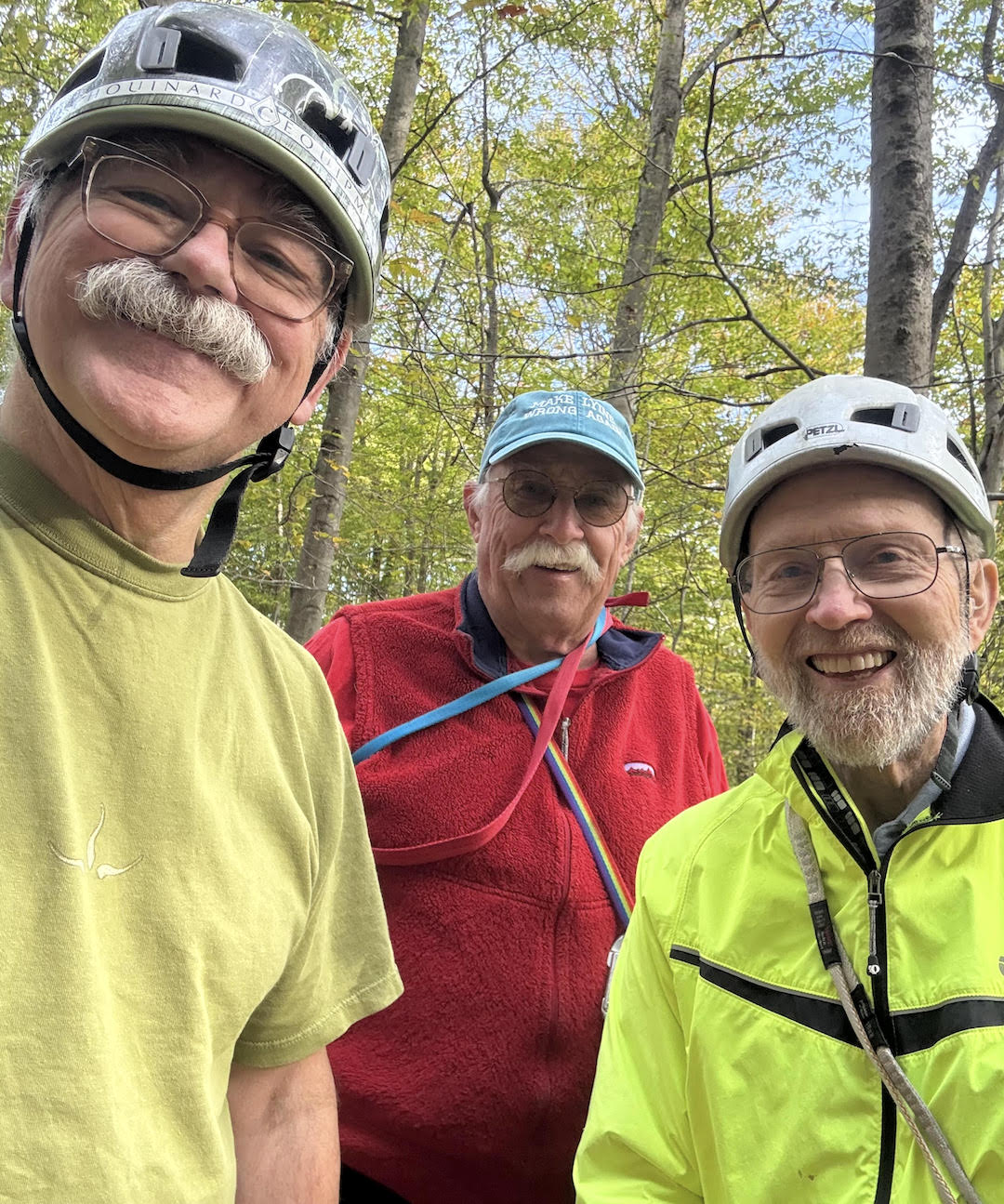
Over his 48-year tenure in New Hampshire, George made many first ascents, some moderate and many quite committing. At 64, he put up the aptly named Obsession (5.11a) on a cliff left of Humphrey’s Ledge, and later, at 88, he did Octogenesis (5.8) at Longstack Precipice. As his last ice climb, at 81, on March 13, 2015, he led the local ice test-piece Widow’s Walk (WI5). During his guiding career, he often took willing clients out on first ascents, and they might end up with their names in the guidebook.
Says Erik Nelson, a New Hampshire State Parks ranger in North Conway, who long enjoyed the sound of George’s voice shouting belay commands at various cliffs: “We all hoped we would climb as long as he did.”
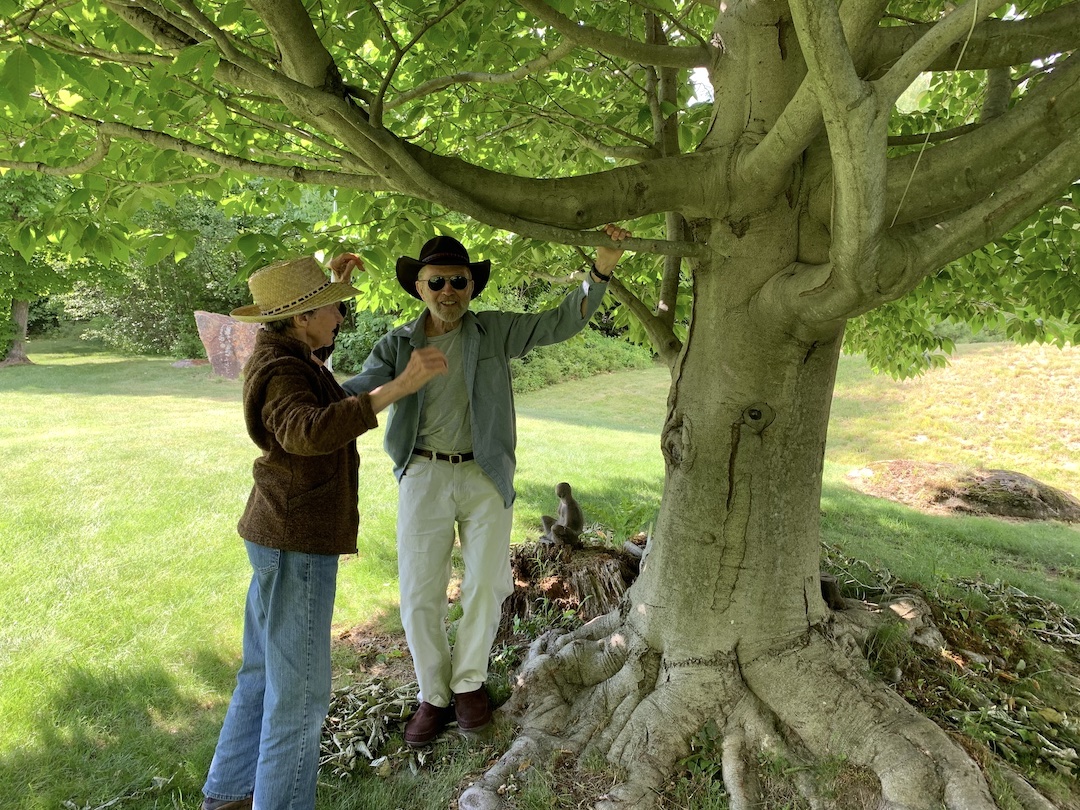
Alyssa Franks, my former wife, says George was a “gentle soul,” and others, such as Noonan, have called him a Renaissance man. There were always many books in the Hurley household, a piano for Jean, a radio tuned to NPR, and a CD player emitting a mix of jazz and classical music. The Hurleys both were fans of Thelonious Monk, and George named several climbs after Monk tunes. George cooked many of their meals, and, as a renowned baker, he was always offering visitors his homemade cookies, cake, and pie topped with homemade whipped cream. A personal favorite was his delightfully moist carrot cake.
His brother-in-law, Ken Tuomi, wrote in an obituary in The Conway Daily Sun: “George was a [cross-country] skier, chess player, dancer, and avid reader. He was a member of two book clubs and for many years, with Jean, hosted his own. In his final days, he was in his third reading of Homer’s Odyssey.
“The Hurleys enjoyed a simple, austere lifestyle [with] a household full of books, several fat dictionaries, volumes on chess moves, science, art, and climbing,” Tuomi observed, and were often seen “dancing on the sidelines of local concerts.”
There was never a television or computer in the Hurley household, and a cell phone was only acquired in the mid-2000s, when George was often out climbing by himself.
When I posted about his passing on my web site, NEClimbs.com, dozens of people responded and commented.
“I climbed with George quite a few times when l was a kid, in the early 1960s. We played chess also a fair bit. He demanded a high standard of me, which l could never quite live up to,” Pat Ament posted.
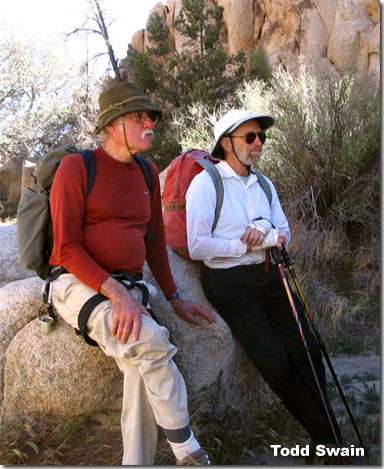
In a tribute on Facebook, Cam Burns, a writer and climbing historian in Colorado, highlighted George’s place among leading climbers of many eras. “His best-known partners,” Cam wrote, “included the top climbers of the day, including Earl Wiggins, Andy Ross, Chris Reveley, Dave Rearick, Bill Forrest, Charlie Fowler, Billy Westbay, Pat Ament, Al Reid, Todd Swain, Henry Barber, Walter Fricke, Charlie Roskosz, Craig Luebben, Jim McCarthy, Chris Walker, Ray Jardine, Larry Dalke, Wayne Goss, and of course dozens of others.”
Dave Kelly of Denmark, Maine, wrote on my NEClimbs Facebook page: “I remember when Peter Lewis and I were putting up routes at Squaredock, George came with us and always found the most intimidating, ugly offwidths, and [would] say, “Oh, that looks like a nice line,” and of course climb it with style and grace. It was an honor to know him, work with him, and climb with him.”
—Al Hospers
Media Gallery