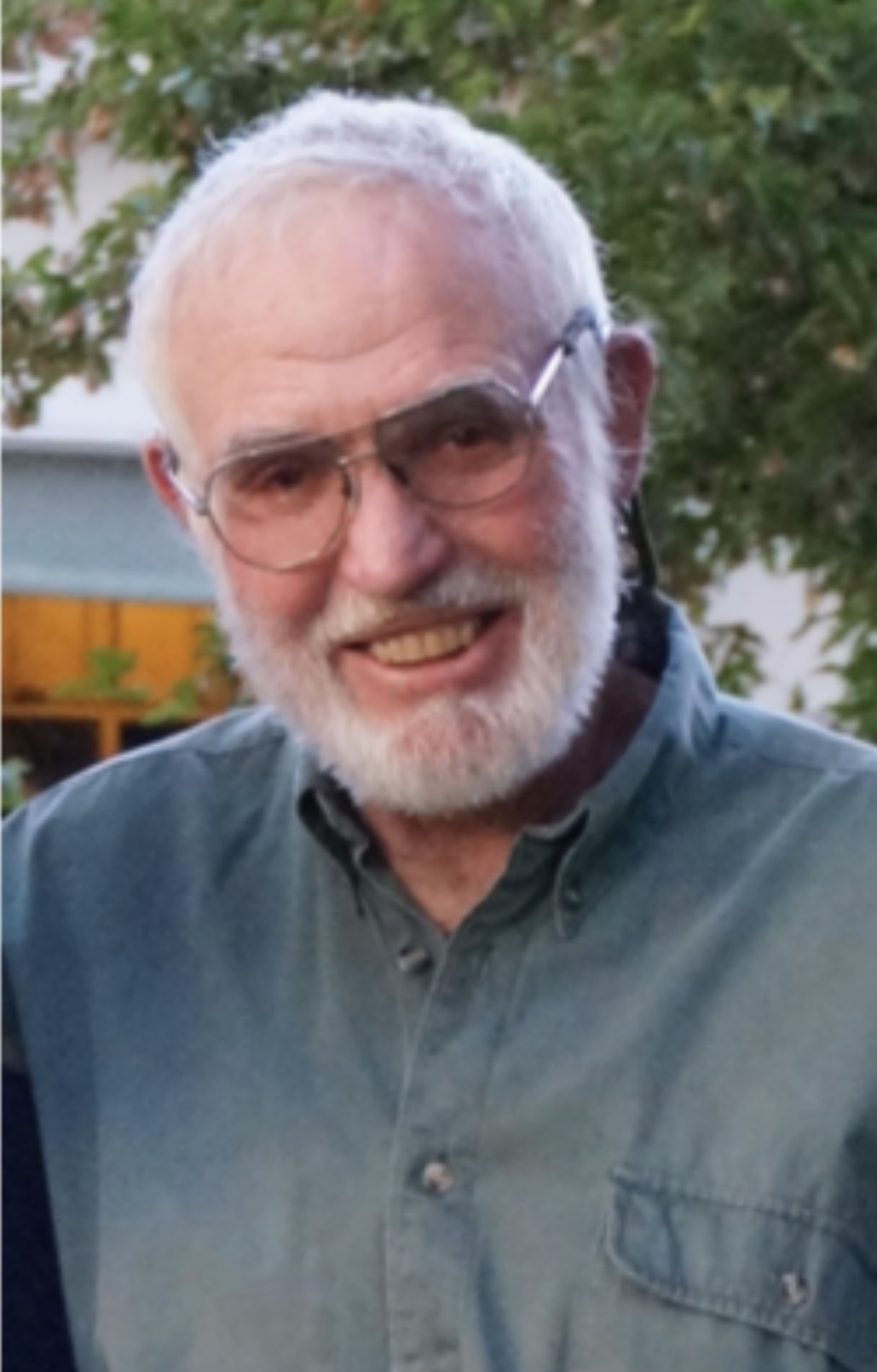
Robert "Rusty" Baillie, 1940–2025
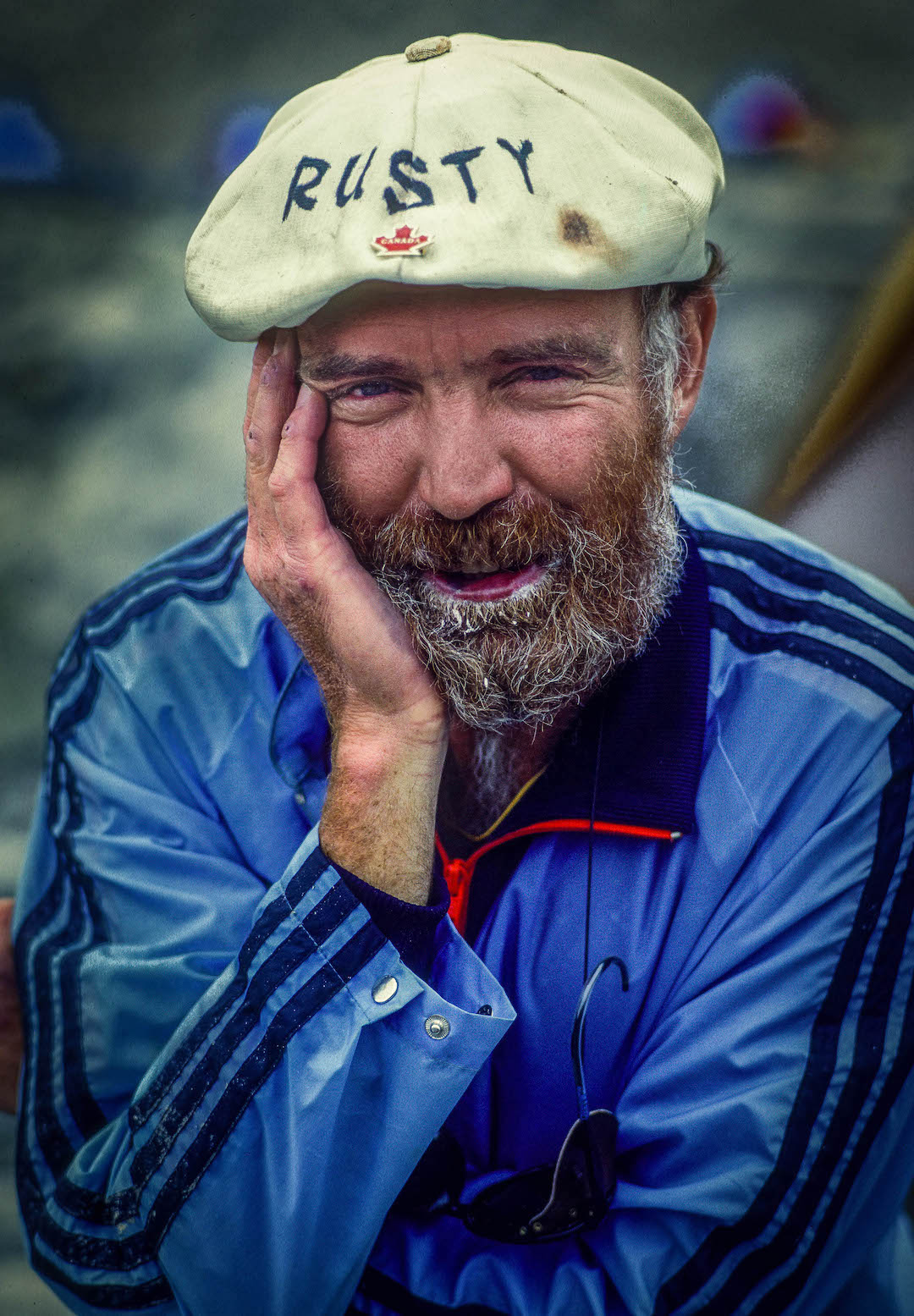
Born in Zimbabwe (formerly Rhodesia), Robert “Rusty” Baillie became a rock climber and mountaineer of international acclaim. His introduction to adventure, and specifically rock climbing, came with the Boy Scouts at an early age and quickly grew in Capetown, South Africa, where he attended college and where many of his early exploits took place on Table Mountain.
In Kenya, where he worked as an outdoor educator at the Driftwood Beach Club, he met Pat Skelton from northern England, who became his wife and globe-trotting partner for the next 60 years. Adventures and employment took them to Switzerland, France, England, Wales, Scotland, the United States, and Canada, with short stints in many other locations.
Rusty’s climbing accomplishments are too numerous to detail, but at the top are the second British ascent of the north face of the Eiger, Switzerland, with Dougal Haston, 1963; the first ascent of the Old Man of Hoy, Scotland, in 1966 with Chris Bonington and Tom Patey; the first ascent of the Søndre Trolltind Wall, Norway, with John Amatt in 1967; and the first ascent of the Dragon Route on the Painted Wall, Black Canyon, Colorado, with Scott Baxter, Karl Karlstrom, and David Lovejoy, in 1972.
Phil Broscovak wrote on Mountain Project of the 2,000-foot Black Canyon route (VI 5.9 A4 R): “Rusty Baillie’s visionary line up the gnarliest stretch of the Painted Wall. It is a serious helping of old school, whup azz. It has 16 pitches of diverse, mixed, and wandering climbing on often uninspiring stone…a classic route with historic importance.”
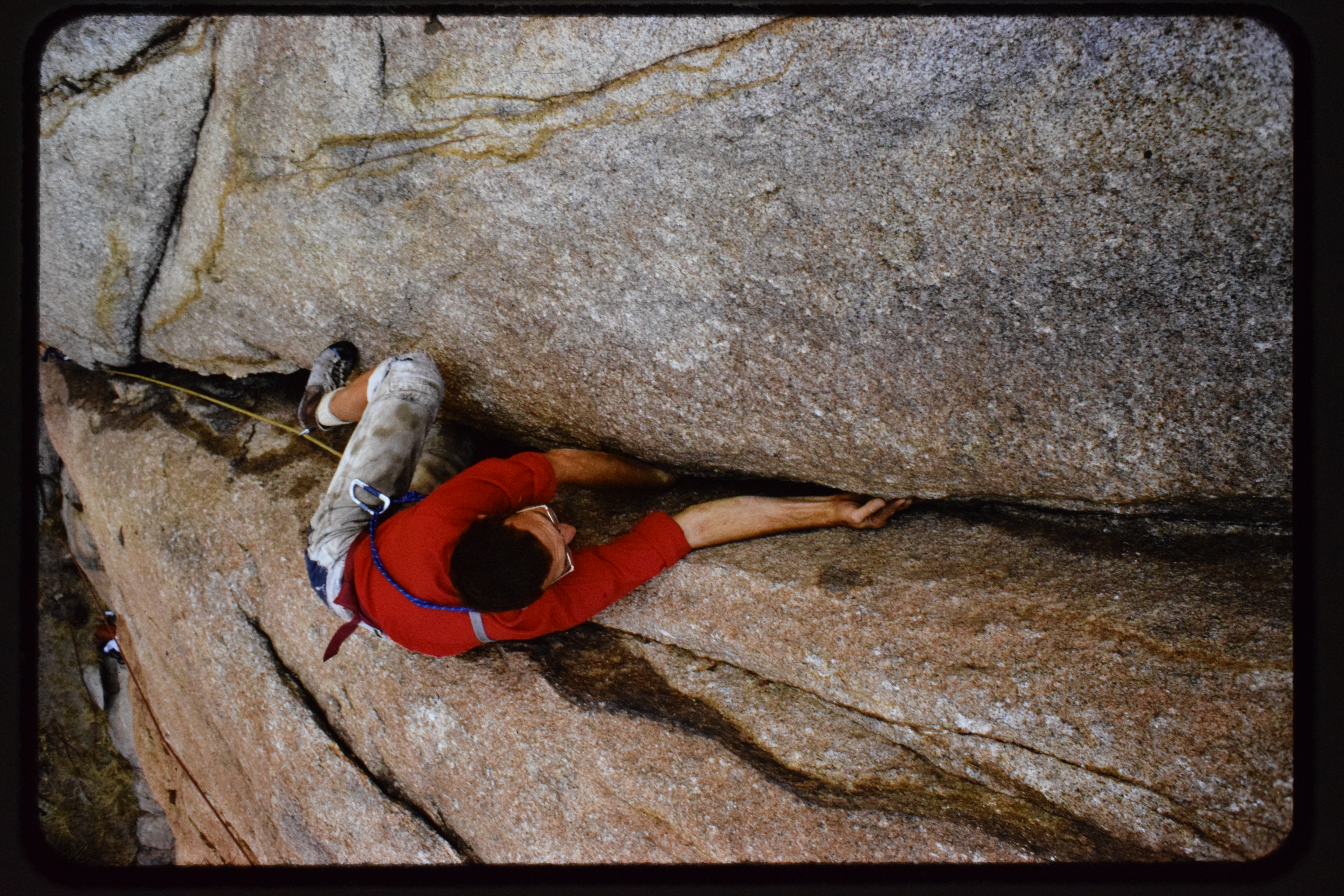
Rusty was featured in the classic 1966 compendium Rock Climbers in Action in Snowdonia, by Tony Symthe and John Cleare, which included magnificent photographs by Cleare of the golden age of North Wales rock climbing. In a famous shot, Rusty is shown stemming on Cenotaph Corner, a cutting-edge route of the era.
A Rocky Mountain Outlook obituary by Rusty’s family recalls a famous 1964 caper in which he and Barry Cliff set a Guinness speed record of 21 hours and 40 minutes for traveling from the summit of Kilimanjaro to the summit of Mt. Kenya. “They used a Jaguar car for the 497 km (309 miles) ground portion. They attempted the record for the award money, as said car needed new parts.”
Rusty’s dynamic likability put him in the company of many well-known climbers of the times, including, as well as those listed above, Royal Robbins, Tom Frost, Layton Kor, Willi Unsoeld, and Bill March. His climbing roots and participation in the 1982 Canadian Mount Everest Expedition, on which he survived burial in an avalanche, are well characterized in the film “Rusty’s Ascent” (2019), directed by Jordan Halland, with Rusty, Laurie Skreslet, Blair Griffiths, and Pat Morrow.
Morrow, a photographer and historian who summited Everest during the 1982 Canadian expedition, wrote on Instagram after Rusty’s passing: "I had a deep admiration for Rusty Baillie. Fascinated by his early adoption of tai chi, I was struck by how he applied its mind-over-matter principles to his climbing…and life—quiet focus, balance, and efficiency." He adds in correspondence, “He was a hell of a nice guy with a great sense of humor and compassion.”
In addition to a number of magazine articles over the years, Rusty wrote the Arizona guidebooks Thumb Butte: A Climbing Guide in 1991 and The Promised Land & Lower Sullies in 1995. In 2020, he collaborated with Robert H. Miller on a collection of stories titled Mr. Quarter-to-Two: Life & Death with Mother Nature’s Misfits.
Rusty was also a beloved husband, father, and teacher. Most of his livelihood involved outdoor education and guiding. He was an instructor for Outward Bound (U.K. and USA), the Benmore and Glenmore lodges in Scotland, and at Prescott College, Arizona. He also instructed at the University of Calgary, Alberta, while he earned a Ph.D. from Union Graduate School with a dissertation titled “Mental Training for Mountaineering.”
He believed in his students and their abilities. In 1986, Doug Chabot, then 21, and David Corkett, 23, of Prescott College, only had one season of ice climbing under their belts when he told them, "You lads should climb Polar Circus,” a nine-pitch WI5 testpiece in the Canadian Rockies. “It's not as hard as everyone makes it out to be," he added. Calling Rusty “the eternal optimist,” Doug says, “I didn't know any better, so off we went and climbed it.”
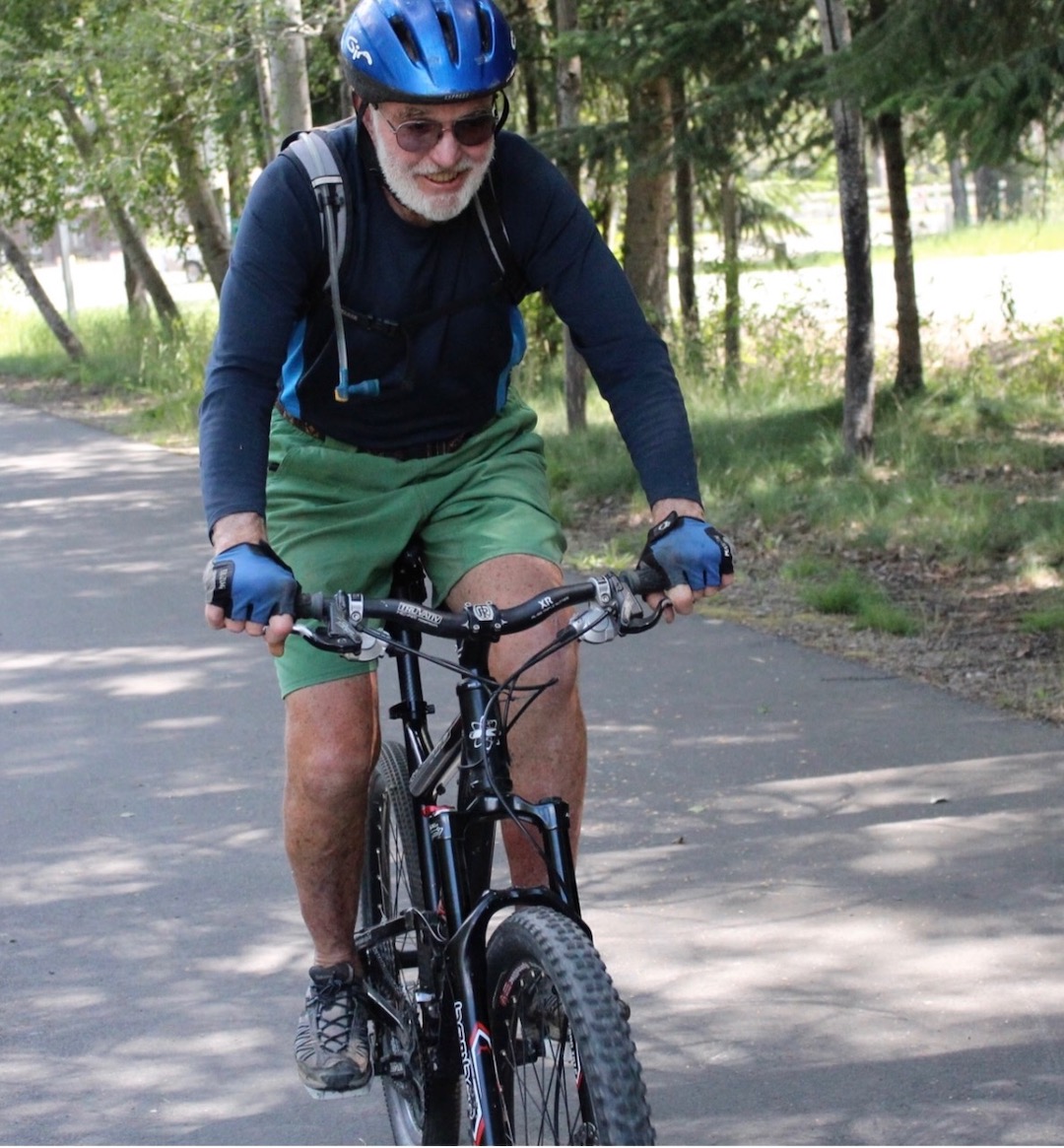
Wherever Rusty was, he made a memorable impact, engaging with the local climbing community and advocating for climbing area access and management. He stayed remarkably active, rock climbing into his 80s.
Rusty was a dreamer, a gentleman philosopher, and a persistent debater, whether about the meaning of life, or style and ethics in climbing. Often, I wasn’t sure what was more rewarding, the climb or the conversation. One of the great privileges of my life was the honor of tying into a rope with Rusty, a sentiment I have heard from many others.
He passed away at home in Dalton Gardens, Idaho, after fighting skin cancer. He is survived by Pat and their daughters and families: Sheila and Randy Hughes and their children, Tristan and Colin; and Rowan and Greg Hill, parents of Jessie and Indigo.
—David W. Lovejoy
Media Gallery