Dale Bard, 1953–2025
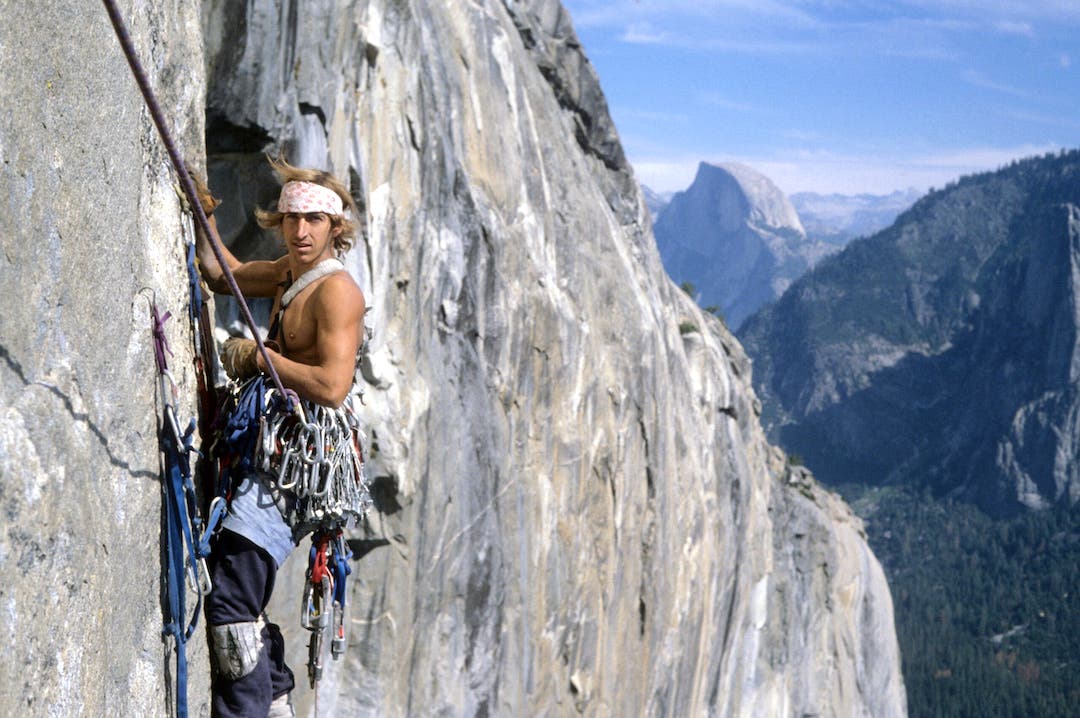
When Dale Bard was informed that he had only about a year to live, he took the news calmly, and even joked about it. His doctor, surprised, remarked that this was an uncommon reaction to a terminal diagnosis.
Dale responded by asking, “How many lives have you had?”
The physician murmured, “One.”
Dale said, “Well, I’ve had nine.”
During the 1970s and 1980s, Dale—who died October 1 in a Grand Junction hospital, at age 71, from cancer and complications from an intestinal tumor—spent 17 straight seasons in Yosemite National Park, climbing every day he could and establishing some of the boldest and most difficult rock climbs of the era.
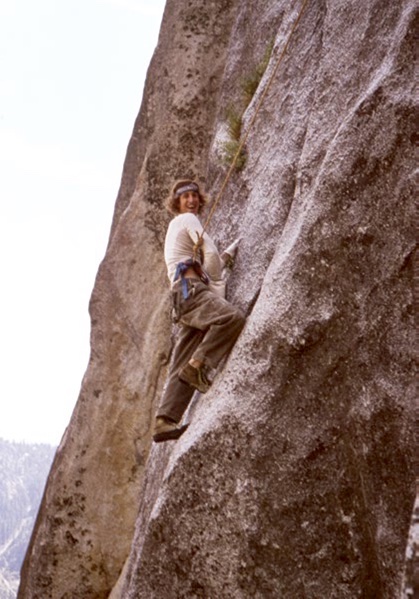
In the 1970s, whether free climbing or aid climbing, bouldering or on big walls, Dale had mastered rock craft in Yosemite Valley. He was unsurpassed in finger, hand, fist, and offwidth cracks, and on liebacks, too; he could dance up face climbs, on terrain from the low-angle Apron to the steeper Middle Cathedral and the domes of Tuolumne. These talents made him a quintessential Yosemite Stonemaster (the name adopted by our 1970s climbing collective).
I climbed frequently with Dale in the 1970s, including in 1975 on the first free ascent of Wailing Wall on Medlicott Dome, along with Jim Bridwell, who recruited us for the project. Wailing Wall was the first route in Tuolumne Meadows rated 5.12 (now 5.11d), and I watched in awe as Dale glided up a finger to offwidth crack with the deliberateness of a cat stalking its prey.
Dale was on the first ascents or first free ascents of numerous now-classic climbs in the Valley, such as Freestone (5.11c) with Bridwell and Ron Kauk; the perennially popular Central Pillar of Frenzy (5.10) with Bridwell, Ed Barry, and Roger Breedlove; Catchy Corner (5.11) with Bridwell; Blind Faith (5.11+) with Kauk; the technical and strenuous Owl Roof (5.12c) with Kauk; Roadside Attraction (5.12a) with Kauk and Werner Braun; and Fatal Mistake (5.12) with Braun. In 1978, Dale onsighted Phoenix (5.13a) using only nuts and hexes, when it had only previously been climbed with Friends, the prototype camming devices.
In Tuolumne, his major routes included Horseshoes and Hand Grenades (5.12a); the lovely Scorpion (5.11c) and the amazing and airy Oz (5.10d), both with Bob Locke; and the beautiful crack line of Blues Riff (5.11) with Locke, Claude Fiddler, and Allan Bard, Dale’s brother. Allan would later die tragically, guiding on the Grand Teton in icy summer conditions in 1997.
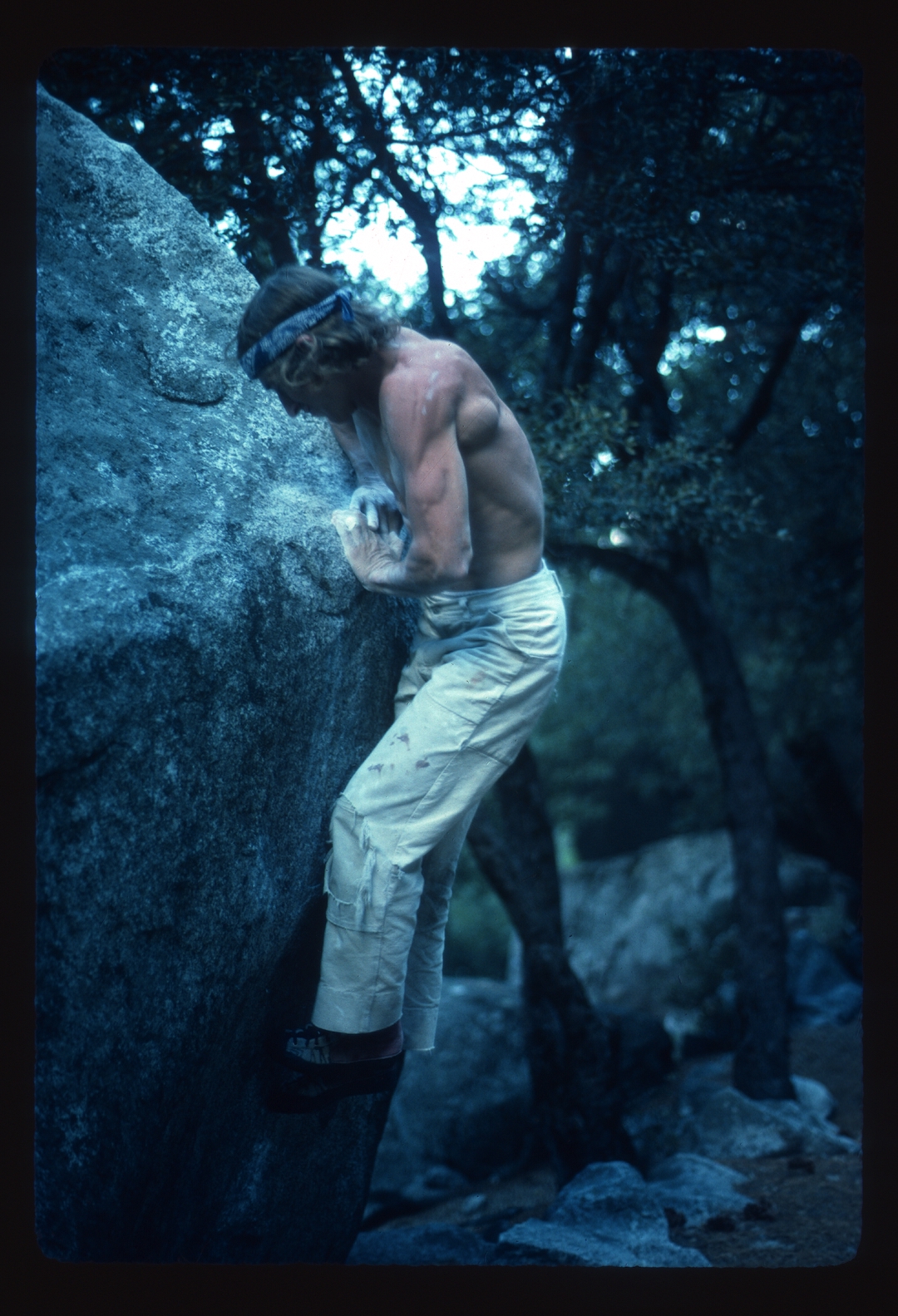
His list of boulder first ascents in Camp 4, Tuolumne, and the East Side, where he established the highball High Planes Drifter (V7) at the Buttermilks, is equally impressive, and all were done before the use of pads to protect landings. (Though most sources spell High Planes Drifter as Plains, Dale intended a pun regarding the planes of rock that make up the holds.)
Dale could not get enough of El Capitan. He told me he thought he’d logged over 120 ascents, including FAs of New Jersey Turnpike (VI 5.10 A4+) with Hugh Burton, Kauk, and Bruce Hawkins; Sunkist Wall (VI 5.8 A3) with Bill Price; Iron Hawk (VI 5.9 A4) with Kauk; and Sea of Dreams (VI 5.9 A4)—at the time considered the hardest and most sustained El Cap route—with Bridwell and Dave Diegelman. On Half Dome, Dale climbed Bushido (VI 5.10 A4+) with Bridwell, who reported in AAJ 1978 that the new route was “extremely steep, strenuous, and dangerous, with no retreat possible.”
Just before he died, Dale speculated about how much of his life he had spent on the flanks of El Capitan. Was it months or even years? He estimated more than a year. He told me that at times he stayed up there continuously: coming down the East Ledges after multiple nights on the wall and going right back to the base to join a prearranged partner for more.
Dale found affordable housing right in Yosemite National Park: a tent in Camp 4, with a roomy, box-like van (previously used for bread delivery) parked nearby. He lived for months on minimal calories (subsisting for one season primarily on brewer’s yeast and honey) and pennies a day. He was arrested for scarfing a cup of coffee off a cafeteria table, spent a week in a hellish Mariposa jail, and was sentenced to a 90-day eviction from the park. Dale simply moved his tent to a secret place in the boulders behind Camp 4 and kept climbing every day.
He was regularly recruited to provide big-wall expertise as a member of the Camp 4 search and rescue team, including for a dangerous nighttime attempt to save his friend Bob Locke, who had fallen 150 feet midway up Mt. Watkins. Knowing that Locke was critically injured, the legendary rescue ranger John Dill ordered eight climbers and rangers helicoptered to the summit. Dale was loaded with medical equipment and, with a headlamp and walkie talkie, lowered 1,500 feet, but reached Locke too late to save his friend. I was then lowered down the face to help Dale with the body recovery, a heart-wrenching duty we completed the next day.
Dale was a brilliant ice climber as well, frequenting the ephemeral flows of the Valley and the more solid ice of the Eastern Sierra. He and Ron Kauk made the second ascent of the Widow’s Tears in Yosemite Valley (WI5), after they bailed from a first attempt when Ron survived an avalanche. On the north face of 13,710-foot Mt. Mendel, Dale and Doug Robinson climbed a variation they called Ice Nine (AI 5+), which added harder vertical sections to the Left Hand Mendel Couloir, done ten years before and considered the most difficult Sierra ice route. In the Canadian Rockies in 1976, he and Jack Roberts achieved the first one-day free ascent of the famous 1,650-foot Polar Circus (WI 5), incorporating the first ascent of the Pencil variation (WI6). The first ascent of the route the previous year had taken fixed lines and eight days.
In later years, Dale worked in the outdoor industry, including at 5.10, Petzl, and Black Diamond, where in the 1990s he managed its team of climbing and ski professionals. His other outdoor pursuits included skiing and mountain biking.
One of my favorite images of Dale is from 1974, when Ken Wilson’s Mountain magazine (U.K.) was reporting on the free-climbing revolution in Yosemite. Accompanying an account of Dale’s “outstanding series” of repeats of some of the era’s testpieces is a photo of him in a thick wool Dachstein sweater and with a winsome smile, braces on his teeth. He has just returned from climbing, and in his tincture-stained hands are a gear rack and EBs with leather sewn on the uppers. The caption reads, “Yosemite hopeful.” That is how I’ll remember him: hopeful, cheerful, and cranking through those nine lives.
—Rick Accomazzo
Editor's Note: This online story was updated after the print edition was completed to correct the name of High Planes Drifter and the date of Phoenix's first ascent.
Media Gallery