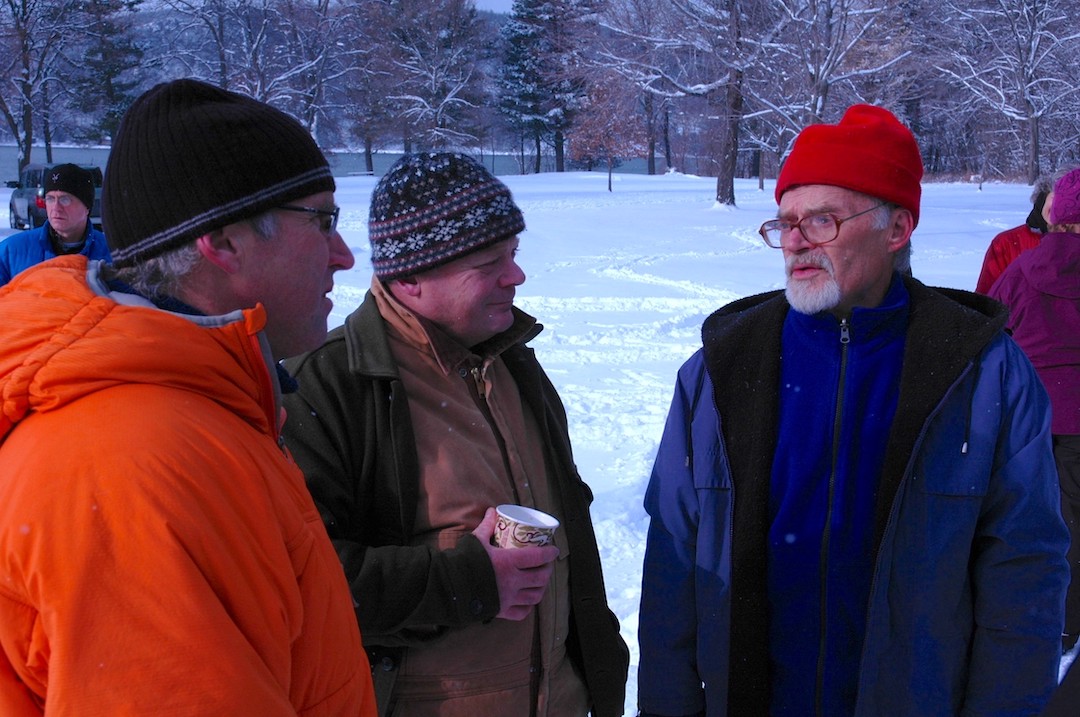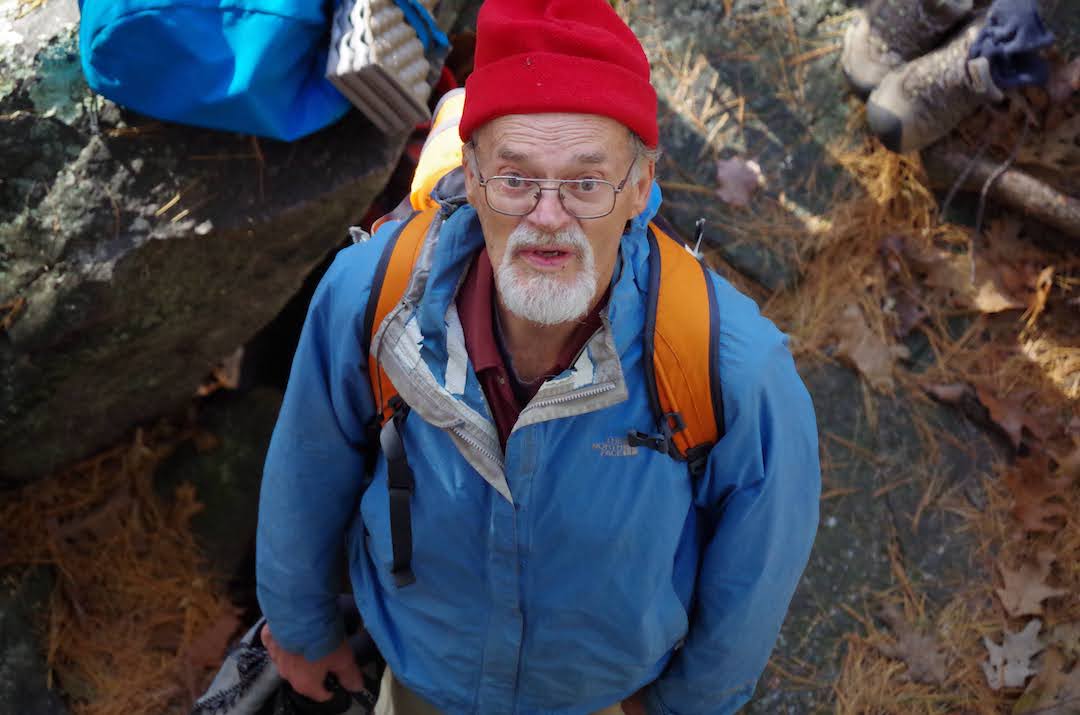

Pete Cleveland, 1941–2025
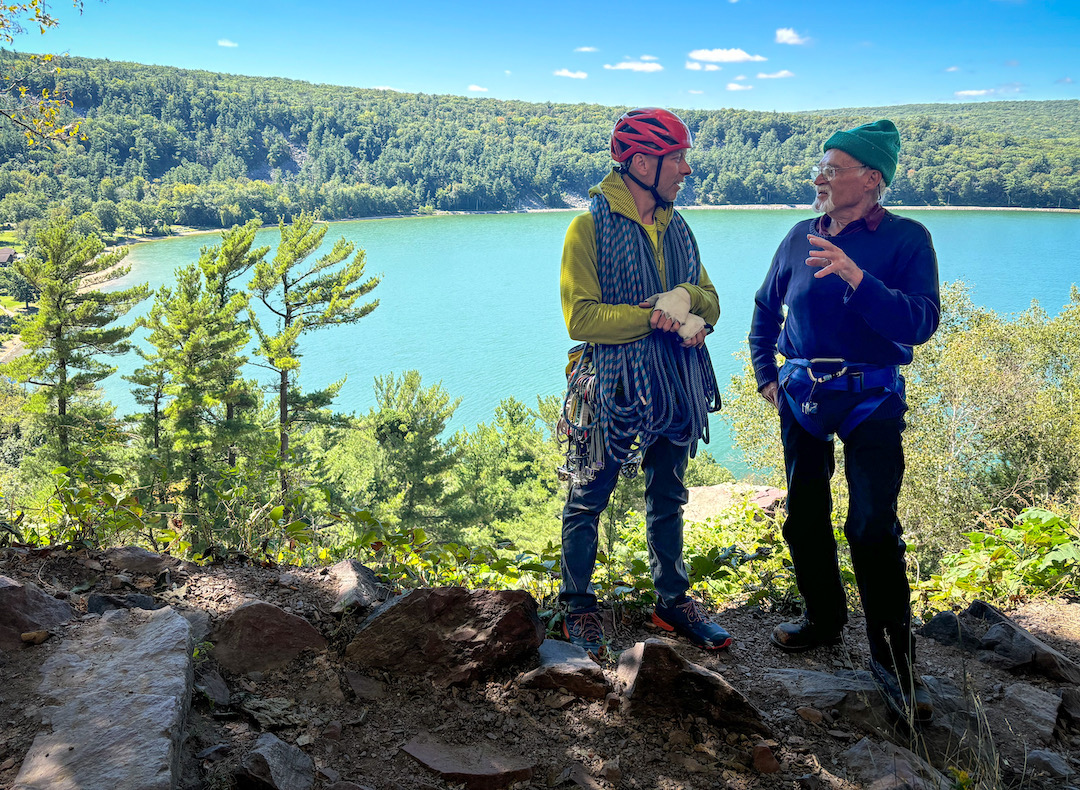
There are no mountains in the Midwest, so it is left to certain climbers to cast long shadows. For well over half a century, Pete Cleveland loomed omnipresent over the crags at Devil’s Lake State Park in Wisconsin and beyond.
Cleveland, who died October 5 after falling about 12 feet in a rappelling accident at Devil’s Lake, first raised eyebrows in 1967 with his onsight and essentially free solo (unprotected) ascent of Superpin (5.11d X) in the Needles of South Dakota.
Over the next ten years at Devil’s Lake, Pete’s first ascents pushed free climbing standards, from hard 5.12 with Bagatelle (1969, an R/X done on top-rope, technically one of the very hardest routes in the country at the time) into 5.13a/b territory with Phlogiston (1977, also top-roped but also well ahead of its time)—both often overlooked in histories of groundbreaking climbs.
Whether it was because Pete’s achievements occurred in the relative backwaters of American climbing, or because Devil’s Lake guidebook authors clung for decades to an antiquated NCCS grading system that rated Bagatelle at F10c, or because some of his hardest routes were established on top-rope, as was common to the area, Pete’s name may not be as familiar as other trailblazers. Yet both his ascent of Superpin and his paradigm-busting 1968 onsight of Devil’s Lake’s Son of Great Chimney (5.11c), which he led while pounding in pins, confirm an assessment by no less than John Gill that “Pete was the gutsiest lead climber I knew.”
Pete’s route up Superpin had no protection other than low down, far below the crux, which is why his belayer walked away halfway through his lead. After Pete’s first ascent, no one touched the spire’s summit again until ten years later, when Henry Barber climbed a slightly easier, slightly better protected variant, which became the standard way up. Pete’s onsight of his own route on Superpin remains unrepeated to this day.
Pete grew up in New England and graduated from MIT with a degree in chemistry, but, ironically, his passion for hard climbing ignited after he moved to Iowa (to attend graduate school, for a Ph.D in organic chemistry from Iowa State), where he began a lifelong association with the Chicago Mountaineering Club. He later earned a medical degree at Rush Medical College in Chicago, was employed by the state correctional system, then raised his two children in Baraboo, Wisconsin, a stone’s throw from Devil’s Lake, where he remained, firmly rooted in the Midwest. That is, except for climbing trips, significantly to Wyoming, with some pretty hairy ascents in both the Tetons and Wind River ranges, and the Black Hills.
But it was in Wisconsin where Pete focused his efforts. Dave Groth, another longtime Devil’s Lake activist, explains: “A whole bunch of his 5.12s here sat for years waiting for a second ascent. Pete took the rock climbing standards in America and pushed them into a realm of previously unthinkable possibility. He was just freakishly strong.”
What local climbers also remember about Pete are his eccentricities, such as tying in with just a bowline-on-a-coil around his waist, or his frugality, as manifested by his unorthodox climbing garb (polyester pants or layered flannel shirts rather than tech clothing).
But mostly it was the talk, both his distinctive rhotacism (pronouncing r’s and l’s like w’s) and the sheer length and breadth of his discourse. Again and again, Devil’s Lake regulars affirm: “Pete would talk your ear off!” But, they stress, he was not a braggart nor in any way self-obsessed. He just seemed to thrive on connection. Breaking the mold of many bigshot climbers, Pete was neither intimidating nor unapproachable at the crags he haunted.
With the news of Pete’s passing, nonclimbers were stunned by the fact that an 84-year-old had died while rock climbing (it made The New York Times). Climbers, especially at Devil’s Lake, are simply shocked he is gone. Cleveland had a presence that seemed to upend time itself.
Pete Cleveland’s family survivors include his children, Dan (Stefanie) Cleveland and Amy (Marvin) Cullins; and his grandchildren, Jackson Cleveland, Emily Newman, and MJ Cullins. His Devil’s Lake climbing family is legion.
—Dave Pagel
Media Gallery